Oedipus and the Sphinx
Gustave Moreau · 1864
Explore the painting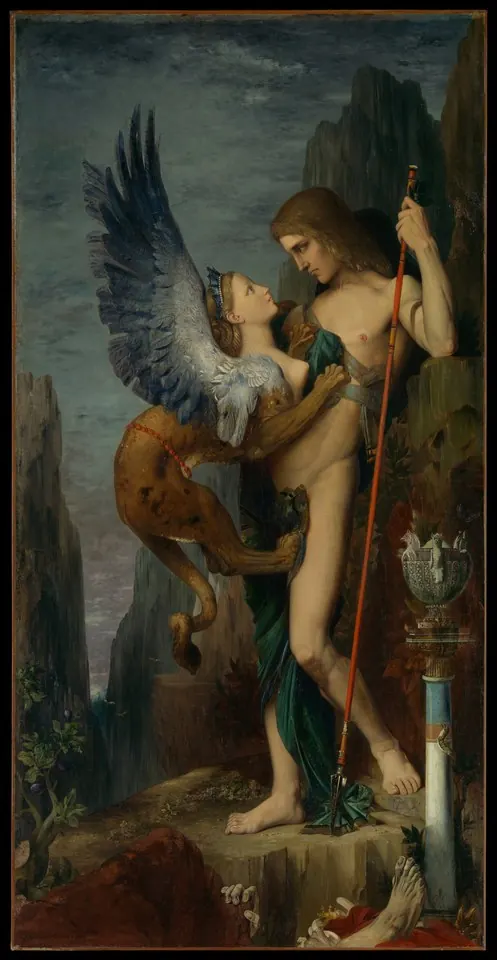
The painting’s story and details
The Sphinx blocks Oedipus on the road to Thebes with a riddle. What walks on four legs in the morning, two at midday and three in the evening? A wrong answer means death. The answer is a human, from crawling infant to an old person with a stick. Moreau painted their encounter in 1864, as French painters increasingly turned to contemporary life. His ancient subject became a success at the Paris Salon.
Oedipus holds a long spear with its point lowered. For now, the outcome depends on his answer. His feet rest firmly on the ledge and his head bends towards the Sphinx. On this narrow upright canvas, the two bodies almost fill the passage between the rocks. There seems scarcely any room to step away.
Lion paws press against Oedipus’s chest and thigh; a woman’s face comes close to his own. The encounter resembles a dangerous embrace. Moreau himself described the Sphinx as seductive matter confronting a steadfast soul. This opposition between rational man and threatening femininity belongs to the culture of his time, and it is open to challenge.
The bird’s wing is painted feather by feather. It joins a spotted animal body, human breasts and a crowned head. Close observation of surfaces makes an impossible creature physically convincing. A red chain around the hips adds jewellery where we might expect nothing more than an animal’s hide.
A vessel stands on a slender column at the right. Tiny figures, pattern and coloured bands demand almost a jeweller’s precision. Moreau packs human skin, feathers, cloth and metal into a very small area. Such richly furnished imagery later attracted Symbolist artists and writers to his work.
Below are a dead person’s hand and foot, a crown and a laurel wreath. Power and previous distinction failed to save those who could not answer. Moreau knew Ingres’s earlier treatment of the subject. He retained the grim remains at the edge but brought the Sphinx closer and gave her much more space.
Almost vertical cliffs rise beneath a dull sky, leaving only a narrow glimpse into the distance. The pale skin of both figures stands out. Their eyes meet near the centre, while the expected outcome is postponed. Moreau allows time to examine an encounter that a retelling of the myth could cover in a few sentences.
Prince Napoleon bought the painting after the Salon. Critics discussed it and caricaturists made fun of it; this ancient myth became a conspicuous event in contemporary artistic life. Later, Moreau taught Henri Matisse and encouraged his pupils’ independence. An artist who furnished antiquity in such detail helped another generation find its own language.
More paintings to compare
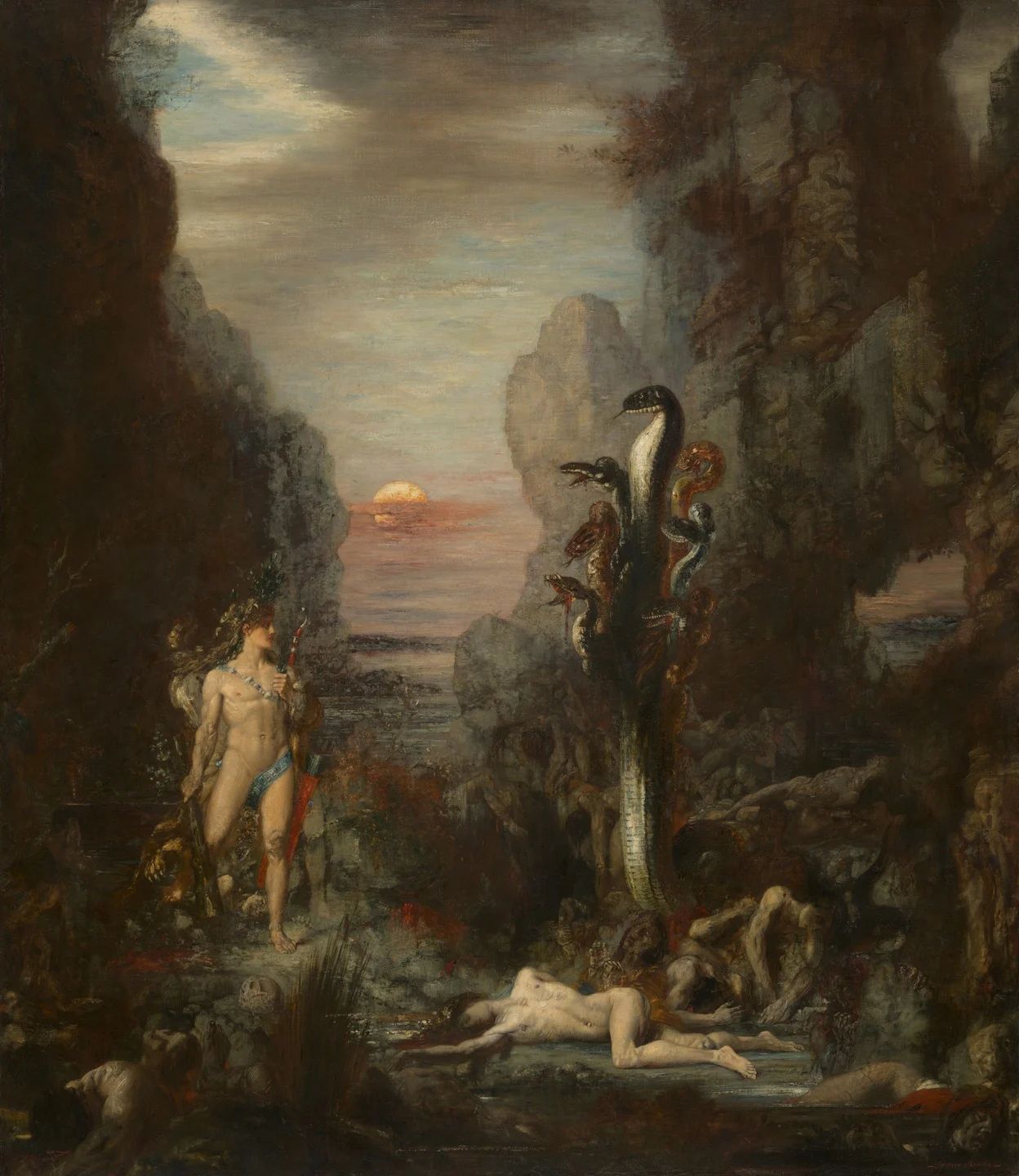 Gustave Moreau
Hercules and the Lernaean Hydra
1875–76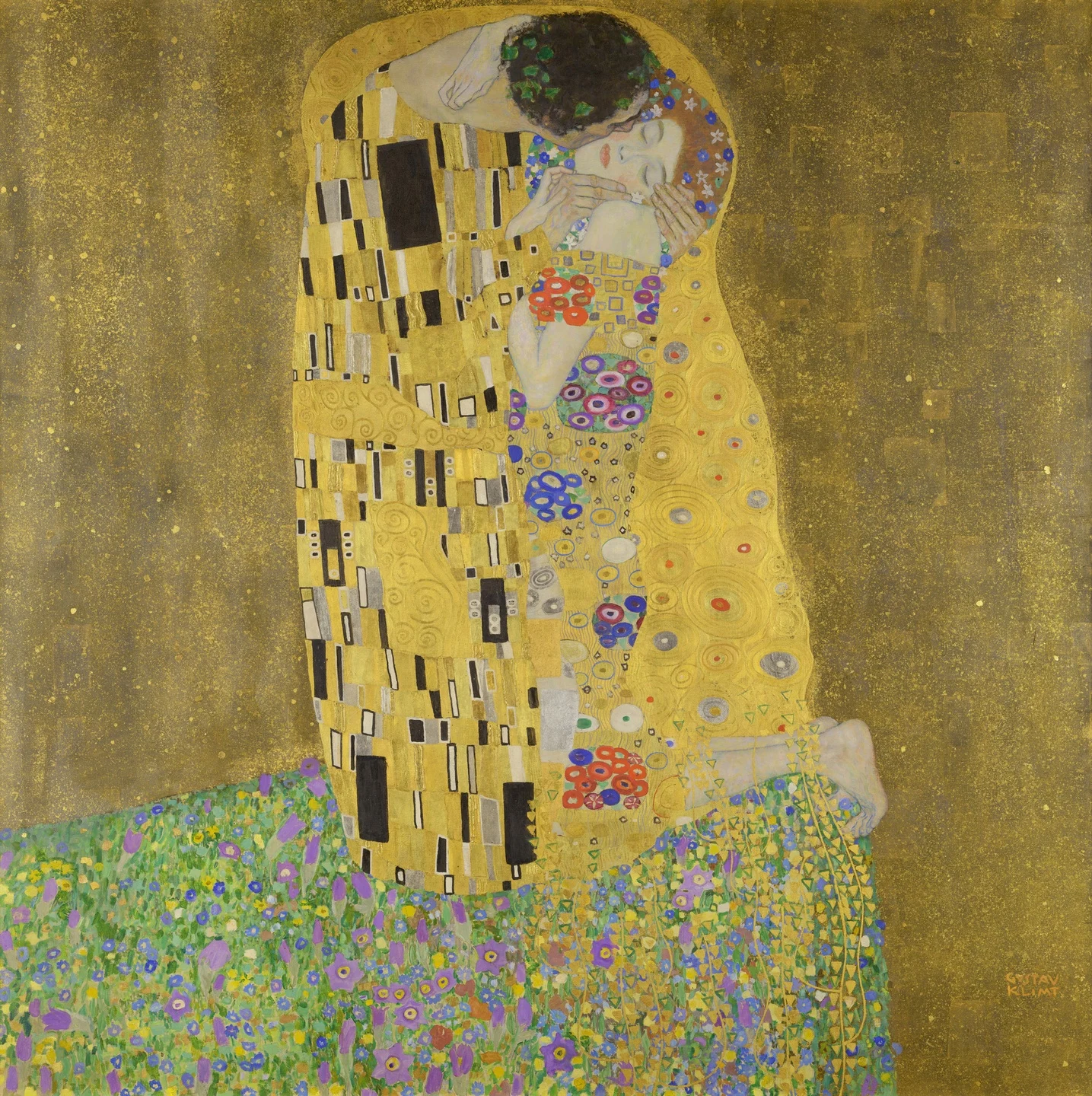 Gustav Klimt
The Kiss (Lovers)
1908 (completed 1909)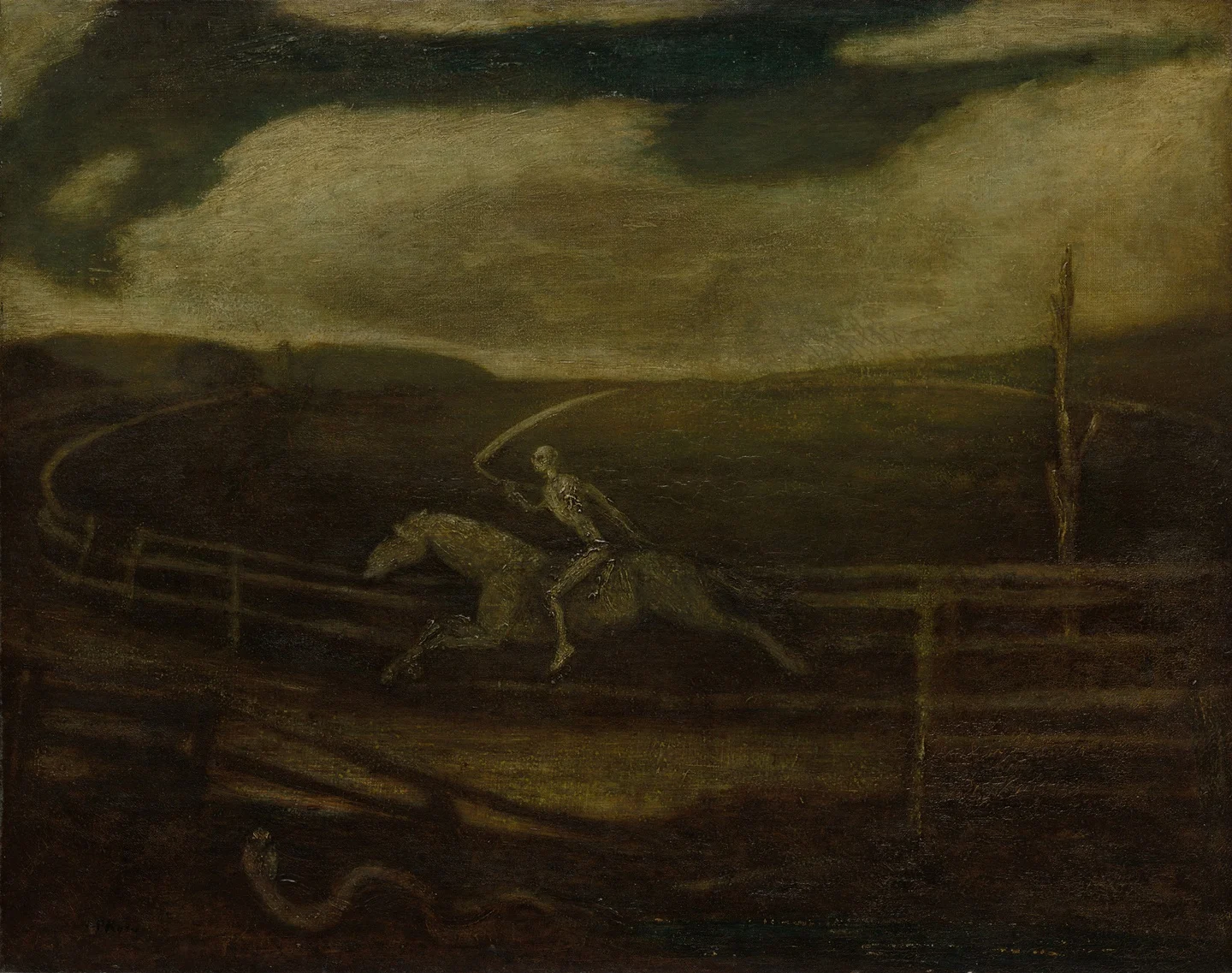 Albert Pinkham Ryder
The Race Track (Death on a Pale Horse)
c. 1896–1908 Mikhail Vrubel
The Swan Princess
1900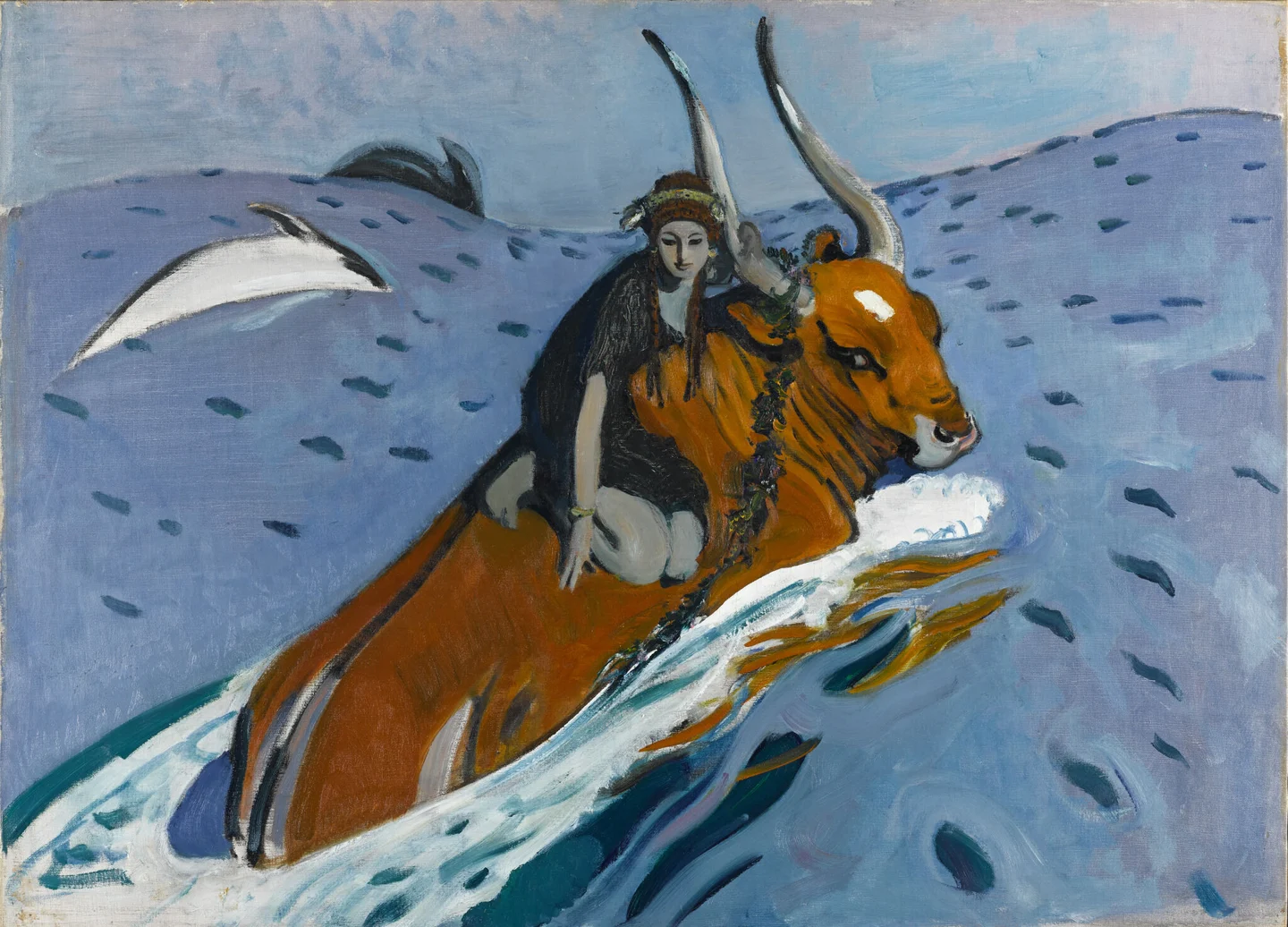 Valentin Serov
The Abduction of Europa
1910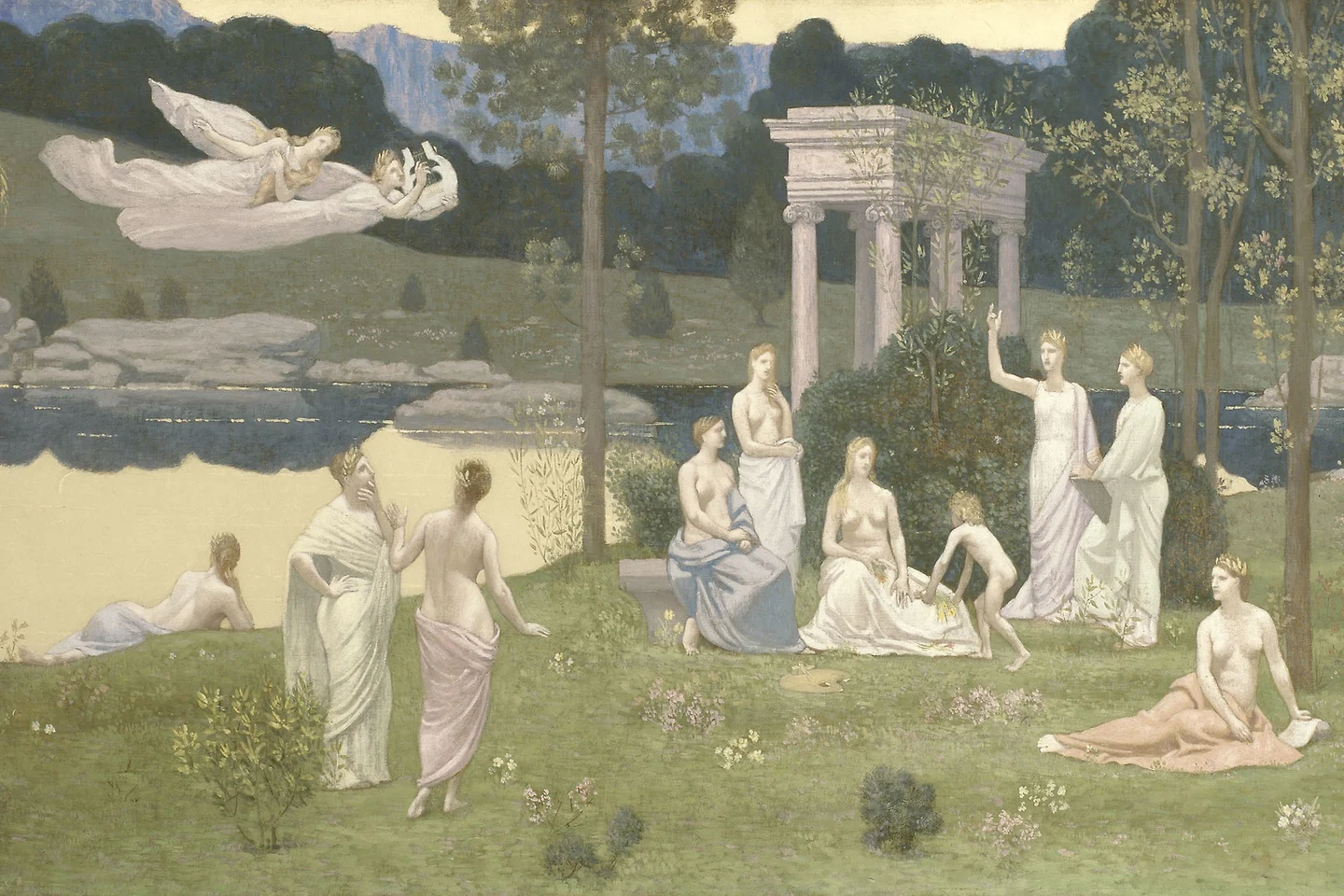 Pierre Puvis de Chavannes
The Sacred Grove, Beloved of the Arts and the Muses
1884–89Period, style and subject
- Movement
- Symbolism
- Genre
- Myths & allegories
- Medium
- Oil on canvas
- Collection
- The Metropolitan Museum of Art
- Dimensions
- 206.4 × 104.8 cm
- Accession number
- 21.134.1
Sources
Image provided under CC0. Image licence