Still Life—Violin and Music
William Michael Harnett · 1888
Explore the painting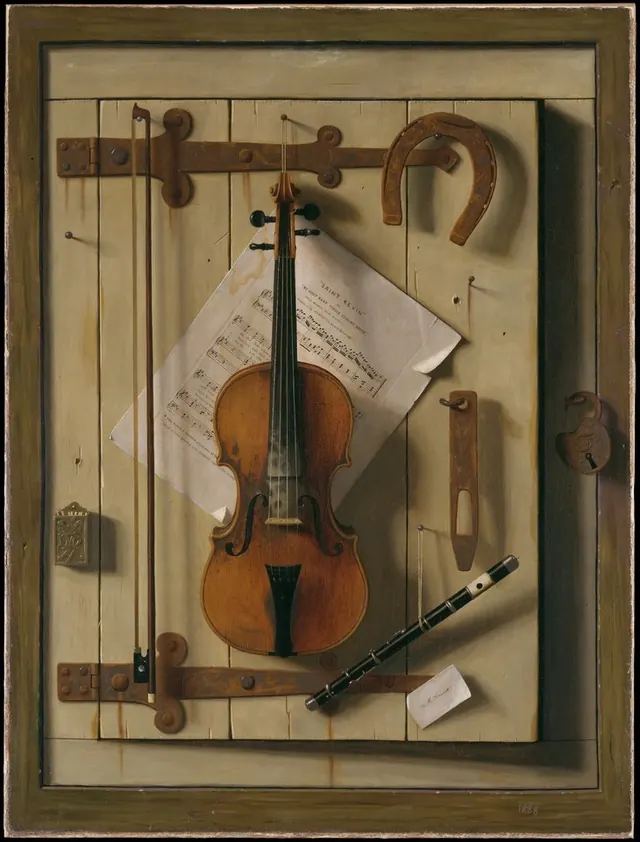
The painting’s story and details
Harnett painted this still life in 1888. A violin, bow, piccolo and sheet music hang against a wooden door. Such paintings are called trompe-l’œil: they make a flat surface resemble an arrangement of actual objects. This skill brought the artist recognition among American middle-class buyers.
The violin is worn around its edges and strings. Its body casts a shadow to the right on the door, while a thin cord reaches up to a nail. The illusion depends on both the large instrument and the inconspicuous fastening that explains why it remains suspended.
Behind the violin hangs a page headed Saint Kevin. The museum identifies the music as an Irish ballad. Harnett was born in Ireland and brought to Philadelphia as a child. Viewers familiar with the song could recognise that connection; for others, the page remained part of a musical still life.
The edge of the music is torn and curls outwards. Nail holes mark the pale wood nearby. Small injuries give the objects an apparent age. Harnett carefully paints wear that might reduce an object’s own value, while turning it into evidence of his skill within the painting.
The horseshoe and broad hinges are rusty. At the right edge, the door stands slightly ajar, leaving a dark gap behind it. The still life’s supporting surface is also painted. The illusion of depth extends from the hanging objects to the space behind the door.
A piccolo, a small transverse flute, hangs diagonally below. Under it is a card bearing the artist’s name, with one corner lifting away from the board. His signature becomes an object inside the imagined cupboard. Its pale paper and underlying shadow join the same illusion.
Before becoming a painter, Harnett worked as a silver engraver. His still life gives metal, paper and wood distinct surfaces. As industrial production expanded in the late nineteenth century, he made old, worn objects the subject of costly handwork. Art historian Nika Elder connects this contrast with his paintings’ emphasis on craftsmanship.
Featured in tours
Still life. The value and structure of things
Food, flowers, vessels, books and instruments in an owner’s life and a painter’s work.
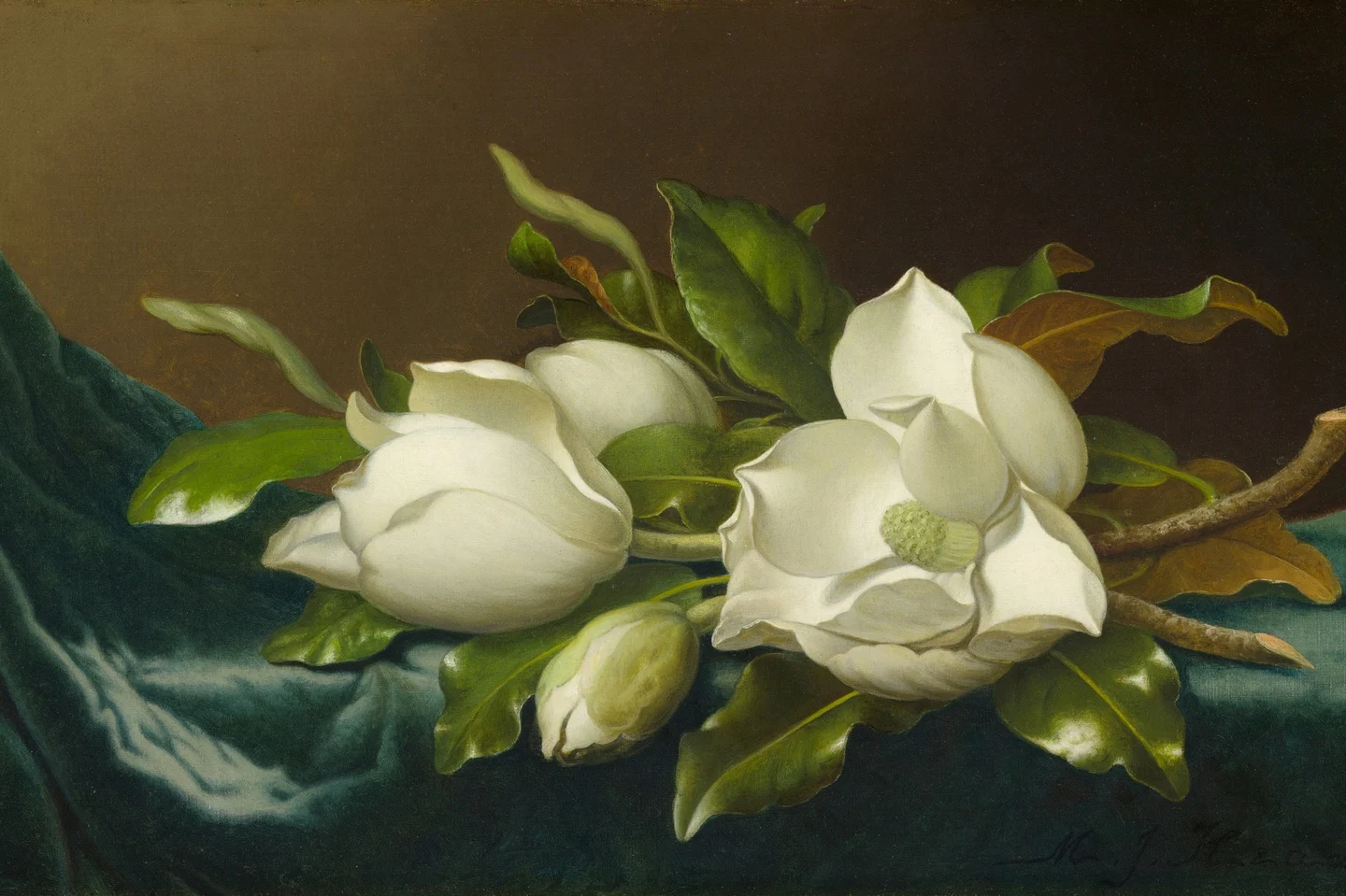
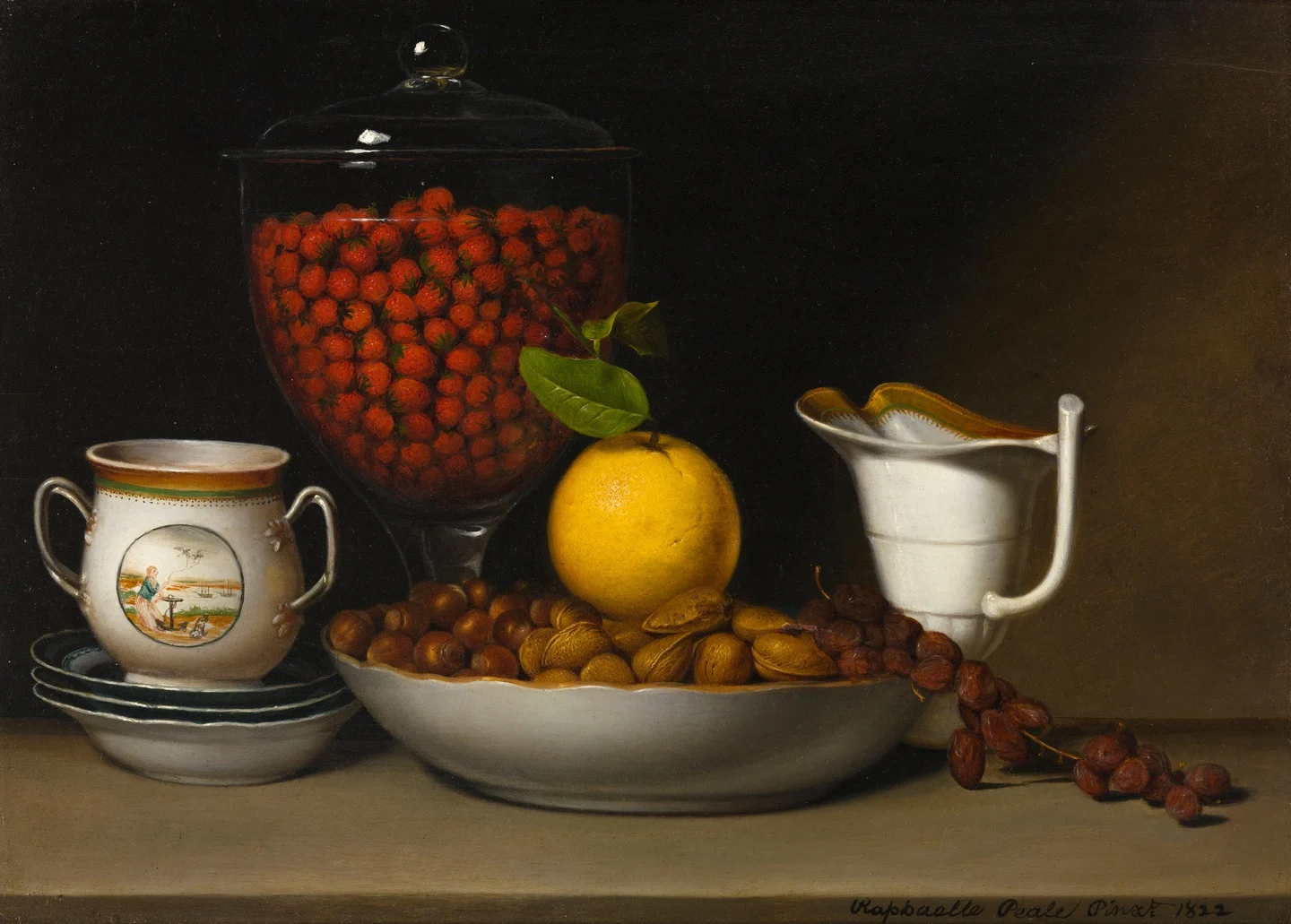
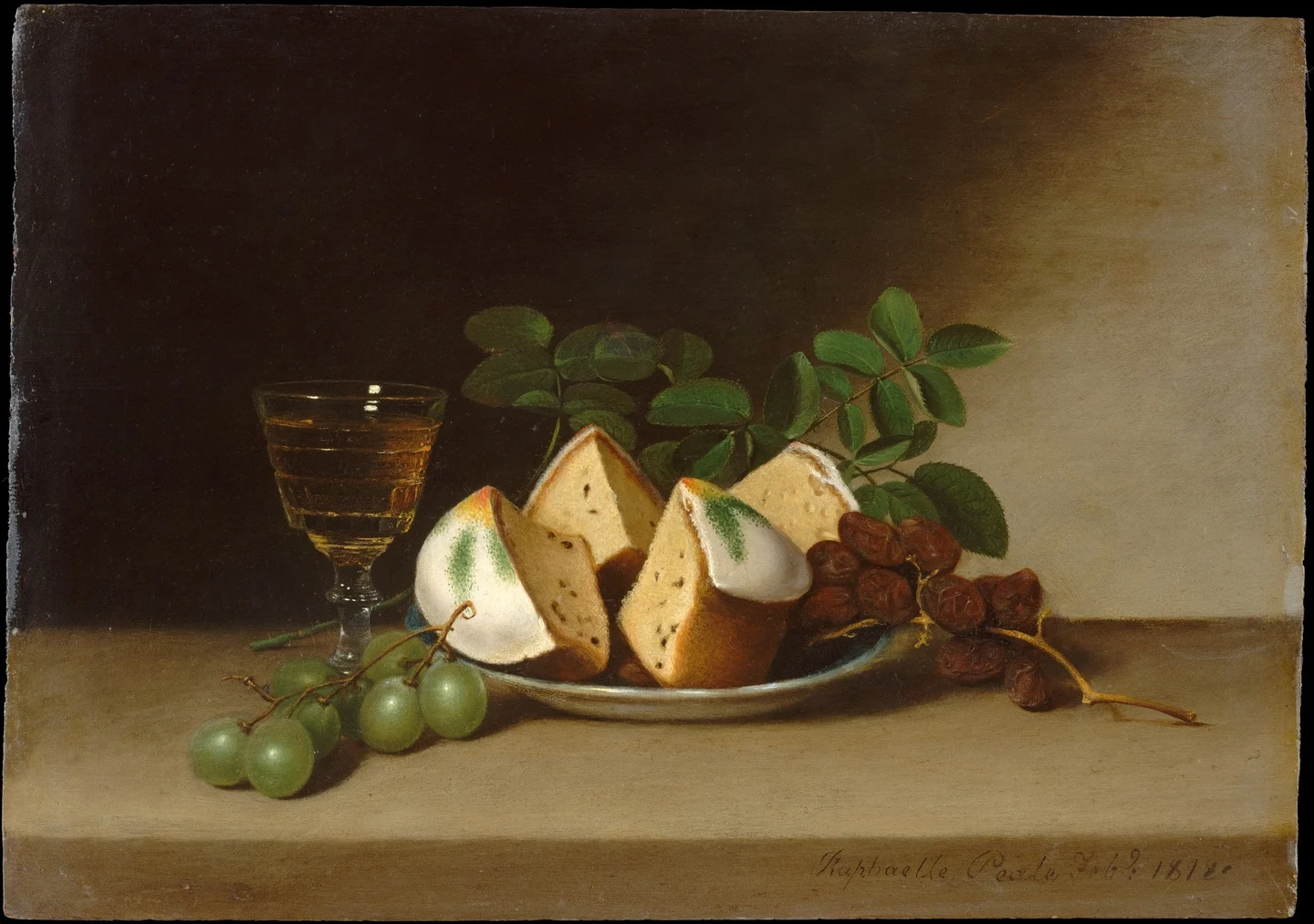
More paintings to compare
Period, style and subject
- Movement
- American painting
- Genre
- Still life
- Medium
- Oil on canvas
- Collection
- The Metropolitan Museum of Art
- Dimensions
- 101.6 × 76.2 cm
- Accession number
- 63.85
Sources
Image provided under CC0. Image licence