Arrangement in Flesh Colour and Black: Portrait of Theodore Duret
James McNeill Whistler · 1883
Explore the painting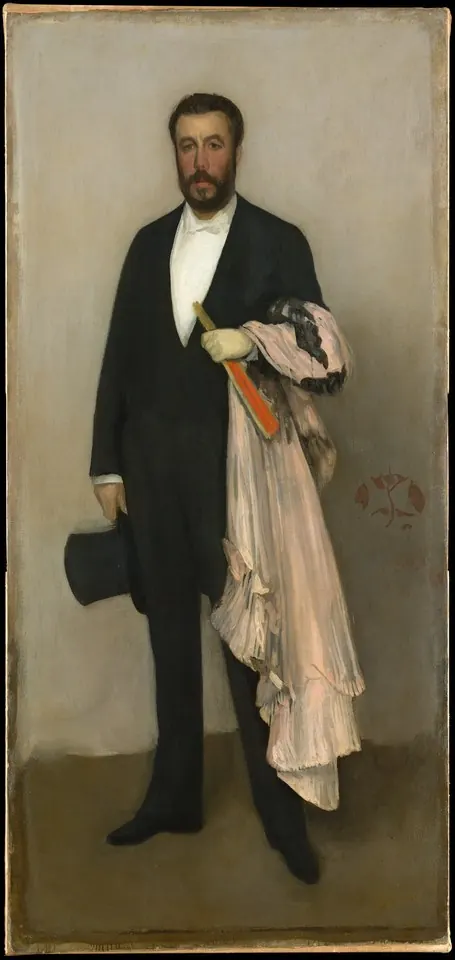
The painting’s story and details
The Paris critic and collector Théodore Duret supported Courbet, Manet and the Impressionists when their work met resistance. In 1883 he posed for Whistler in London and asked to appear in evening dress. The painter proposed adding a pink masquerade cloak. The sitter’s preferred self-presentation met the portraitist’s need for a particular colour.
Duret stands full-length against an almost empty background. His black suit forms a long silhouette with slightly separated legs. Objects and setting are reduced, but the figure does not look cut out: soft transitions in the grey surroundings give it air. The tall, narrow canvas presents his full height at once, from head to shoes.
The white shirtfront opens beneath the face as a pale triangle, with a small bow tie visible against it. Warm skin tones become especially noticeable between white and black. The full title begins Arrangement in Flesh Colour and Black. Whistler names the portrait’s colour problem while preserving the features of a particular man: hair, beard and heavy eyelids.
The pink cloak descends from his left arm almost to the floor. It is a domino, a loose hooded masquerade cloak. Long strokes describe thin fabric, with lilac and orange passages inside the pink. Dark trimming connects it to the suit. The pale mass balances the tall black silhouette and repeats the face’s warmth.
The folded fan points diagonally downwards. Its red-orange strip is the strongest small accent among subdued tones. The fan works chiefly through position and colour, interrupting the calm vertical rhythm.
Duret holds a top hat in his lowered hand. Examination shows that it originally sat slightly higher; the legs and feet also changed position. Whistler repeatedly refined the silhouette. Duret recalled that he began with a few marks on the canvas and immediately placed the main colours. The relaxed surface resulted from numerous sittings and revisions.
In 1884 London’s Grosvenor Gallery refused the portrait as insufficiently finished. The Paris Salon accepted it the following year. The difference in judgment connects with Whistler’s handling: thin paint and restrained finish could look incomplete. Duret kept the painting and sold it to the Metropolitan Museum in 1913, securing its public life.
More paintings to compare
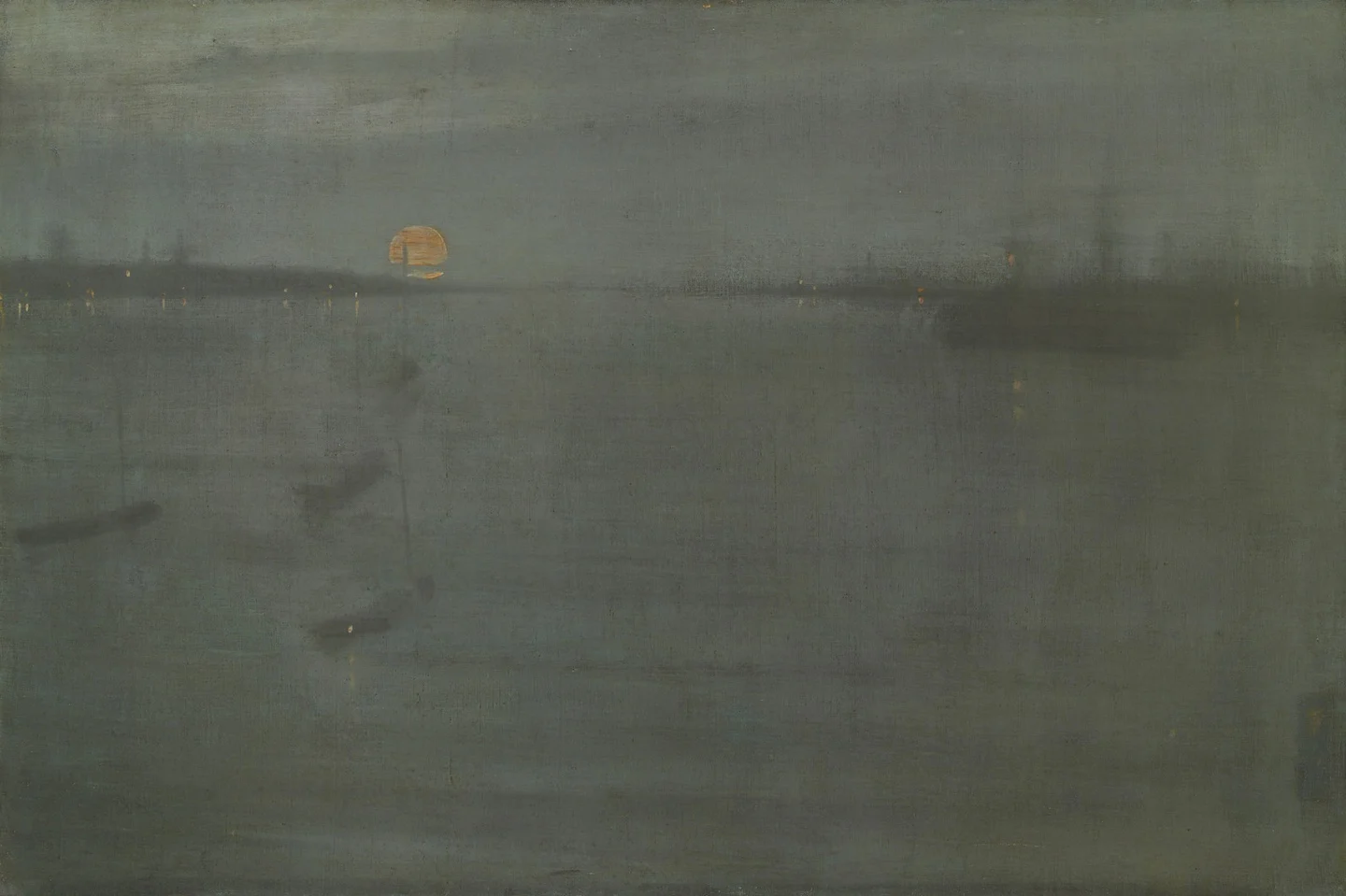 James McNeill Whistler
Nocturne: Blue and Gold—Southampton Water
1872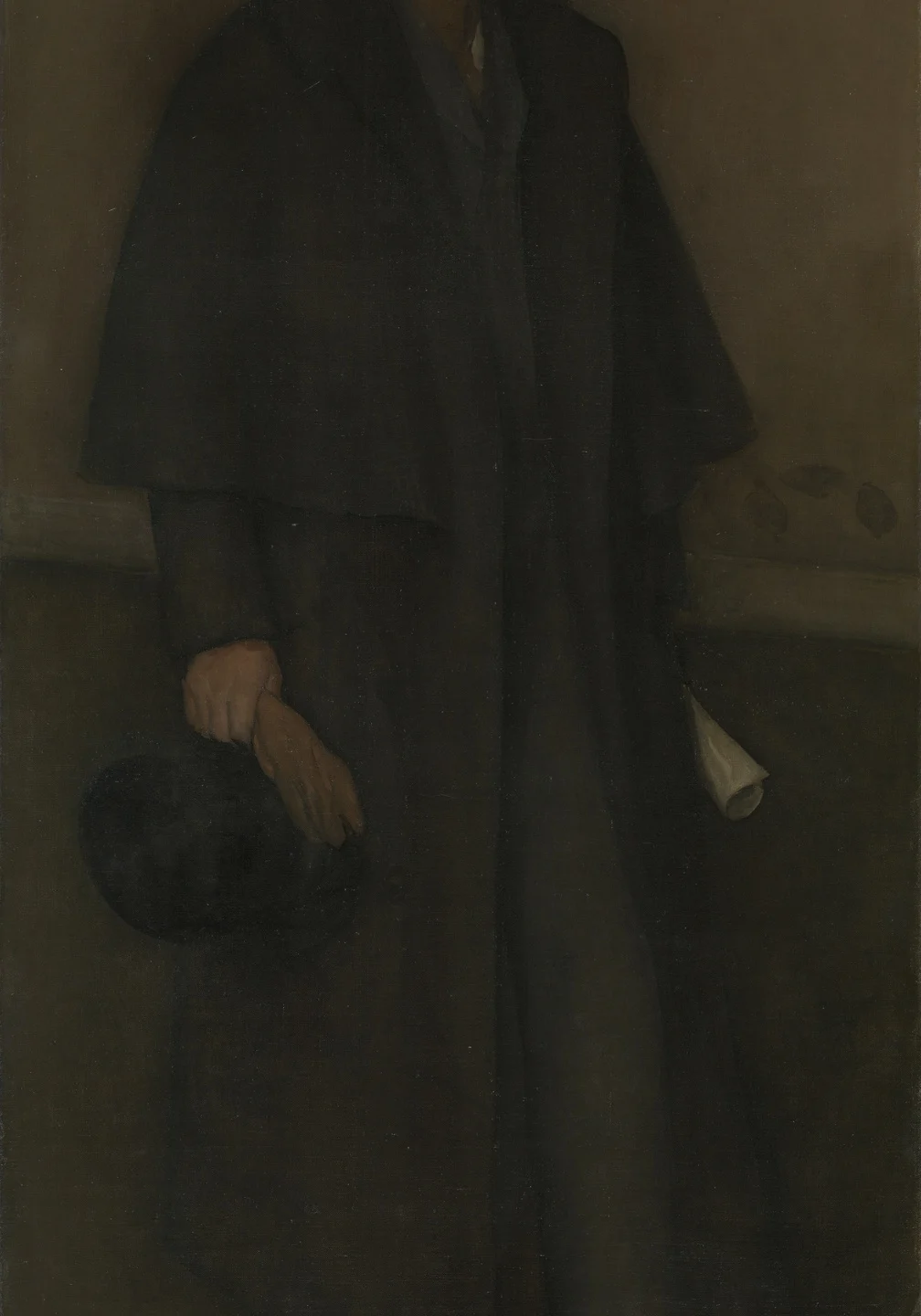 James McNeill Whistler
Arrangement in Flesh Color and Brown: Portrait of Arthur Jerome Eddy
1894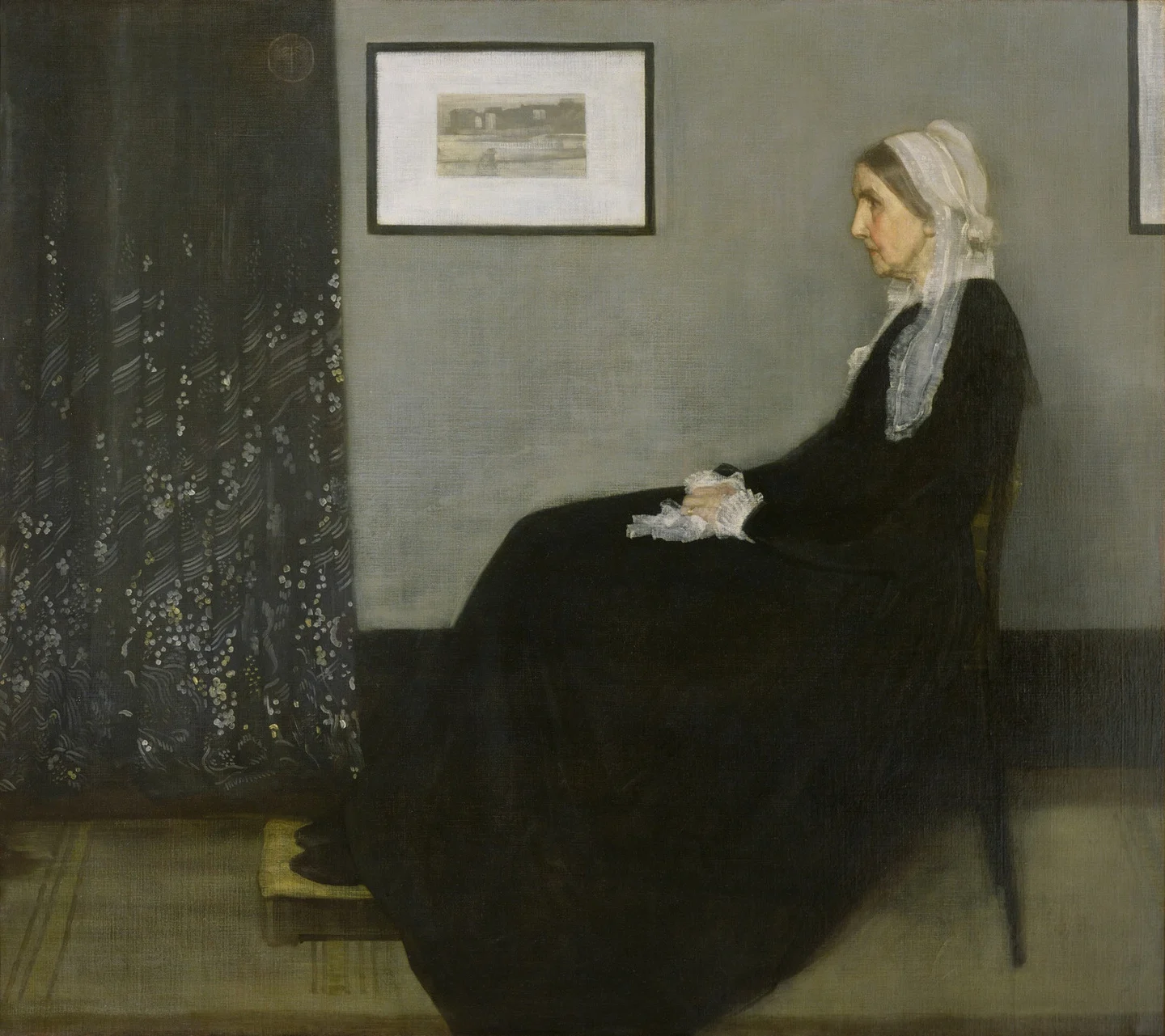 James McNeill Whistler
Arrangement in Grey and Black No. 1 (The Artist's Mother)
1871 Paul Gauguin
Self-Portrait
1889 Nikolai Sapunov
Columbine
1910Period, style and subject
- Movement
- Symbolism
- Genre
- Portrait
- Medium
- Oil on canvas
- Collection
- The Metropolitan Museum of Art
- Dimensions
- 193.4 × 90.8 cm
- Accession number
- 13.20
Sources
Image provided under CC0. Image licence