Madame Charpentier and Her Children
Pierre-Auguste Renoir · 1878
Explore the painting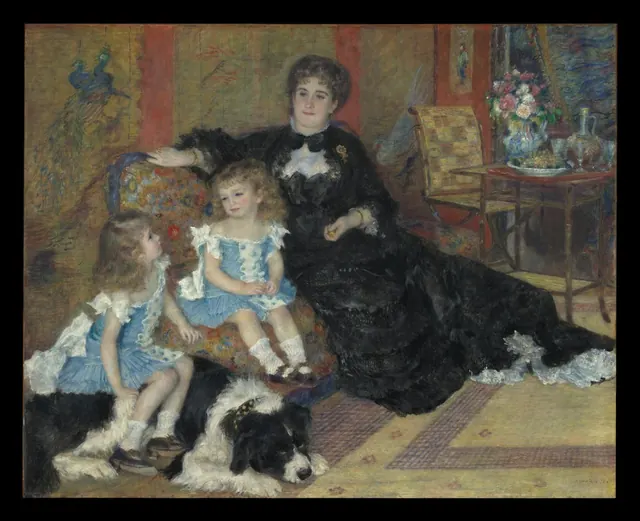
The painting’s story and details
In 1878 Renoir painted Marguerite Charpentier in her Paris home with her daughter Georgette and son Paul. Marguerite’s husband was a publisher, and Flaubert, Zola and the Goncourt brothers attended her literary salon. This large family portrait combines domestic intimacy with a display of taste and social standing. It became one of the commissions that strengthened Renoir’s income and reputation.
Marguerite sits informally, extending an arm along the sofa back. Her black dress spreads widely to the right, occupying almost half the lower canvas. Lace, shining fabric and white ruffles remain distinct among the dark folds. She appears in familiar surroundings, yet the figure’s scale and luxurious clothing preserve the grandeur of a substantial commissioned portrait.
On the left, six-year-old Georgette sits directly on the family dog. She turns towards her brother, resting a hand on the sofa’s edge. Her blue dress with white lace separates her from the black fur. This seating introduces informality into the group. Renoir brings a child’s habit of making use of the whole home into a painting intended for public exhibition.
Three-year-old Paul sits beside his mother. His dress closely matches his sister’s, and his long hair has not yet been cut. Young boys could be dressed this way at the time. A modern viewer may initially take both children for girls; their names and ages alter that first impression. The detail reveals historical changes in the clothing through which gender and age become recognisable.
The large black-and-white dog lies across the foreground, its head lowered towards the floor. Its colouring repeats the main tones of Marguerite’s dress. The animal connects the children with the picture’s lower edge and gives the group stability. On a canvas almost two metres wide, this household companion acquires a compositional role comparable to a substantial piece of furniture.
A table with flowers and vessels stands on the right. Pink blossoms echo warm patches in the upholstery, while the bluish vase recalls the children’s clothing. Renoir distributes related colours across different objects to keep the richly furnished setting from breaking into separate decorations. Loose strokes preserve a sense of living light within a carefully arranged portrait.
Birds on the golden panel belong to the room’s Japanese decoration. Following the expansion of trade with Japan in the mid-nineteenth century, its prints, ceramics and decorative objects increasingly influenced European taste. In the Charpentier home, this enthusiasm signalled an engagement with current artistic fashion. The family chose both a distinctive interior and a painter who had participated in the Impressionists’ independent exhibitions.
Marguerite used her connections to secure a prominent position for the portrait at the Salon of 1879. Its success drew attention to Renoir and supported his commissioned portrait practice. At the Charpentier home he also met the banker Paul Berard, who became an important patron. The family scene’s apparent ease rested on a concrete network of introductions, commissions and public recognition.
Featured in tours
Early Impressionism. Paris 1860–1879
The Salon, the first independent exhibition, railway stations, studios and leisure on the Seine.
Portraits. How people presented themselves
Rulers, merchants, artists and private patrons before a viewer.
More paintings to compare
 Pierre-Auguste Renoir
Two Sisters (On the Terrace)
1881 Pierre-Auguste Renoir
Acrobats at the Cirque Fernando (Francisca and Angelina Wartenberg)
1879 Pierre-Auguste Renoir
By the Seashore
1883 Pierre-Auguste Renoir
Dance at Le Moulin de la Galette
1876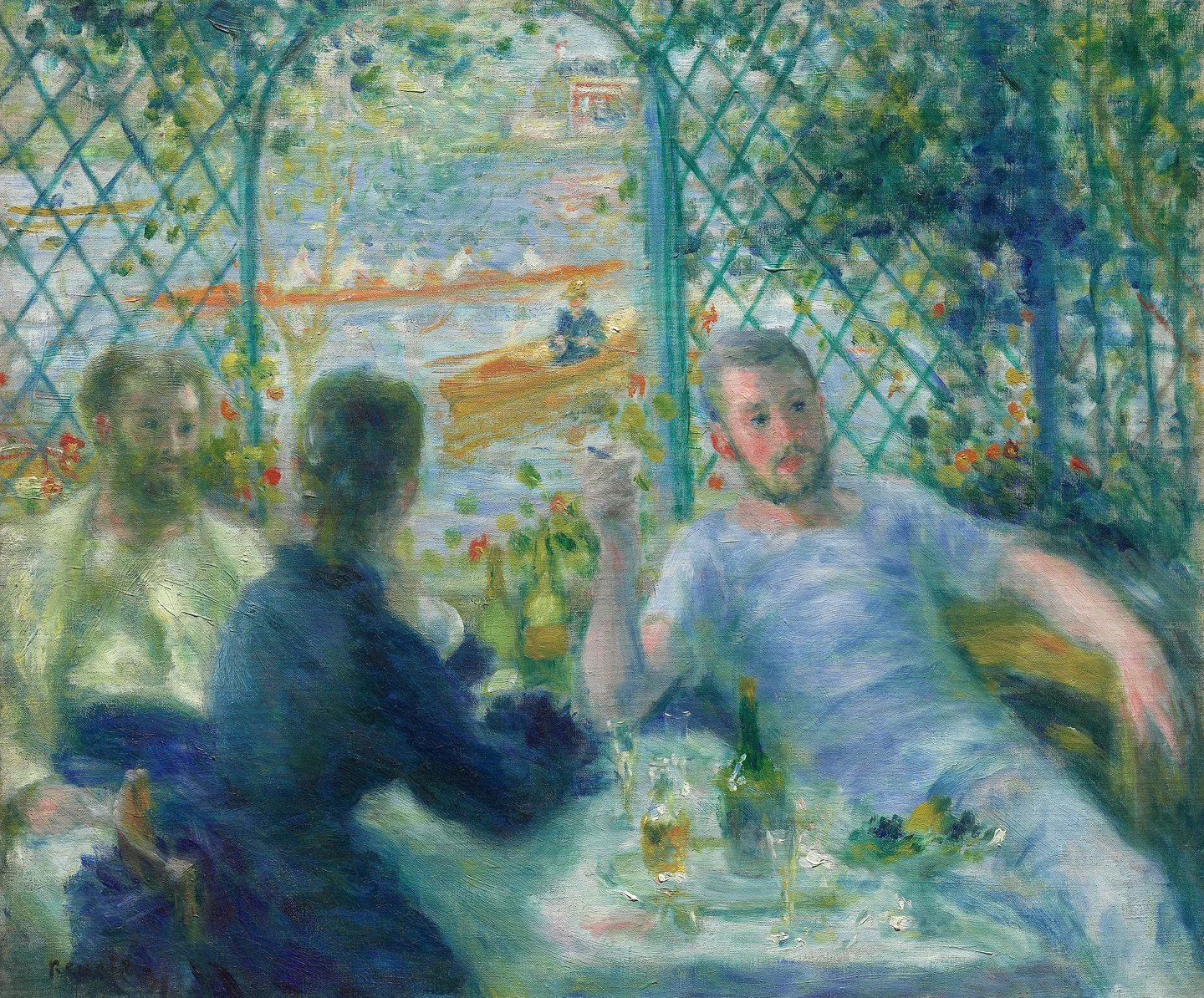 Pierre-Auguste Renoir
Lunch at the Restaurant Fournaise (The Rowers' Lunch)
1875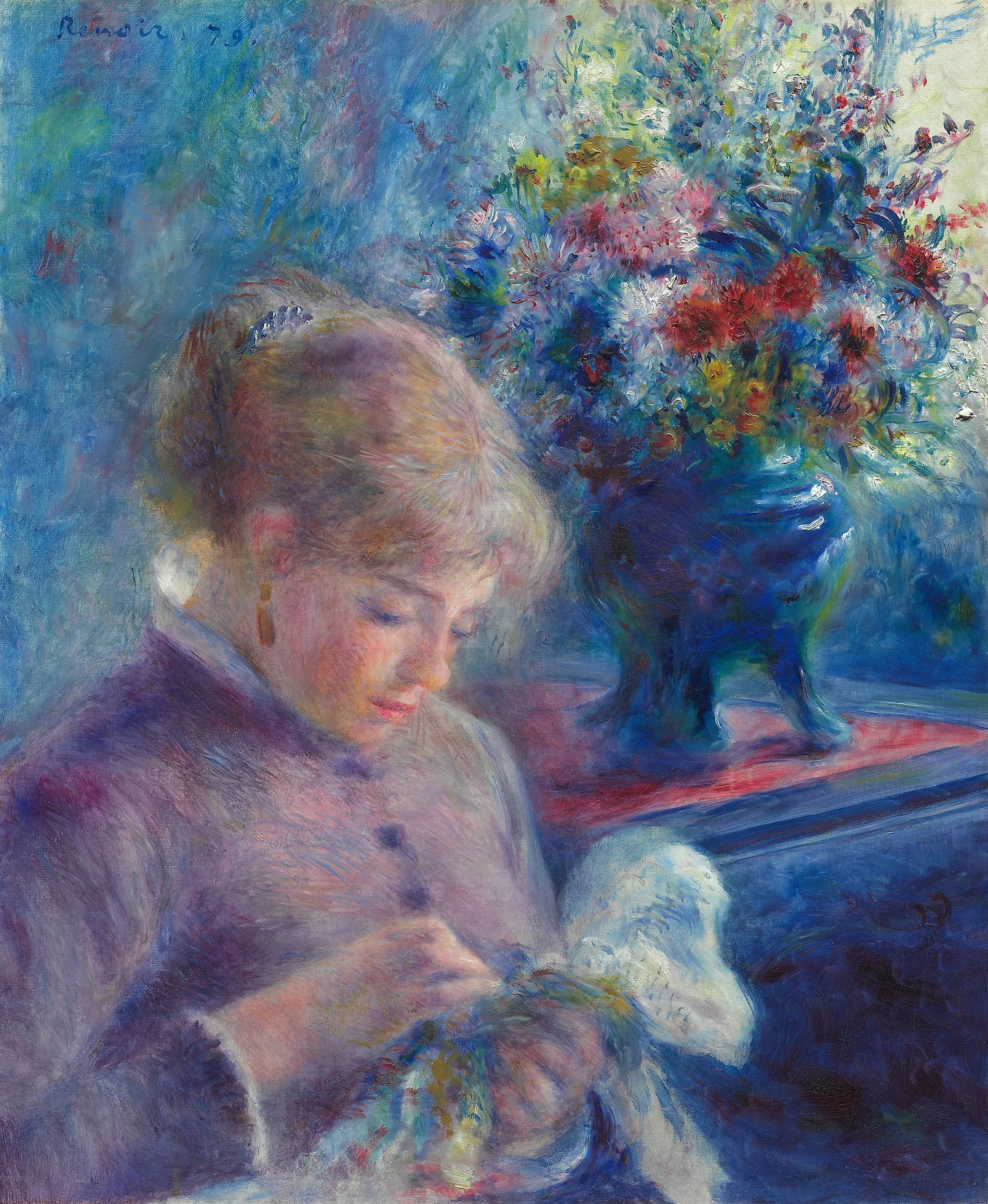 Pierre-Auguste Renoir
Young Woman Sewing
1879Period, style and subject
- Movement
- Impressionism
- Genre
- Portrait
- Medium
- Oil on canvas
- Collection
- The Metropolitan Museum of Art
- Dimensions
- 153.7 × 190.2 cm
- Accession number
- 07.122
Sources
Image provided under CC0. Image licence