Dance at Le Moulin de la Galette
Pierre-Auguste Renoir · 1876
Explore the painting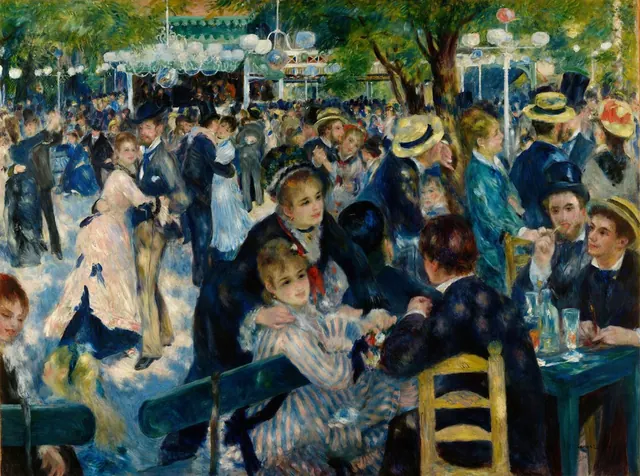
The painting’s story and details
Renoir painted Dance at Le Moulin de la Galette in 1876 and exhibited it with the Impressionists the following year. The Montmartre dance garden was a place of urban leisure. Including friends and models among the crowd, he turned a familiar setting into a large canvas. A scale often reserved for solemn subjects belongs here to a day of dancing, conversation and sitting at tables.
In the central foreground two young women sit near a man whose back faces us. Their gazes differ, and the poses do not align for a group portrait. We seem to stand beside an occupied table. Yet informality does not mean the painter merely copied a chance view. Faces and turns connect the nearby company with the many people behind it.
A couple dances at left. Bluish shadows and sunlit patches cross the pale dress, resembling those on the ground. Light passing through foliage connects clothing to surrounding space. The couple’s movement emerges from bodily inclinations and alternating bright areas. Dance is conveyed through relationships within the image without precisely tracing every figure’s edge.
Glasses and bottles stand on the table at right. Their brief highlights repeat the flicker on faces and clothing. Objects ground the scene in daily life: people can order a drink, linger and converse. This is an organised public venue where leisure depends on tables, service and commerce. The painter’s attention nevertheless remains with visitors and their enjoyment.
Round lamps beneath the foliage recur across the width. They show a garden equipped for entertainment after dark as well. Their pale forms mingle with daylight highlights. Nature and urban equipment are not set apart. Trees shade the dancers, while lighting and furniture turn the green space into a setting for collective leisure.
In the distance straw hats and pale faces become small patches. Individual movements remain legible, but no single person commands the whole scene. Attention can pass from conversation to dancing and back. Blurred outlines, disputed by contemporary critics, help convey numerous simultaneous impressions. The picture invites the mobile gaze of someone within a crowd.
The painter and collector Gustave Caillebotte owned the canvas; his bequest brought it into the French national collection. A scene of leisure became a defining image of Paris. Yet it is a selective image of the city. Working hours, the cost of leisure and the labour sustaining the occasion are scarcely represented. We can value the opportunity to gather while also noticing conditions left outside this sunlit day.
Featured in tours
Early Impressionism. Paris 1860–1879
The Salon, the first independent exhibition, railway stations, studios and leisure on the Seine.
More paintings to compare
 Pierre-Auguste Renoir
Two Sisters (On the Terrace)
1881 Pierre-Auguste Renoir
Acrobats at the Cirque Fernando (Francisca and Angelina Wartenberg)
1879 Pierre-Auguste Renoir
By the Seashore
1883 Pierre-Auguste Renoir
Madame Charpentier and Her Children
1878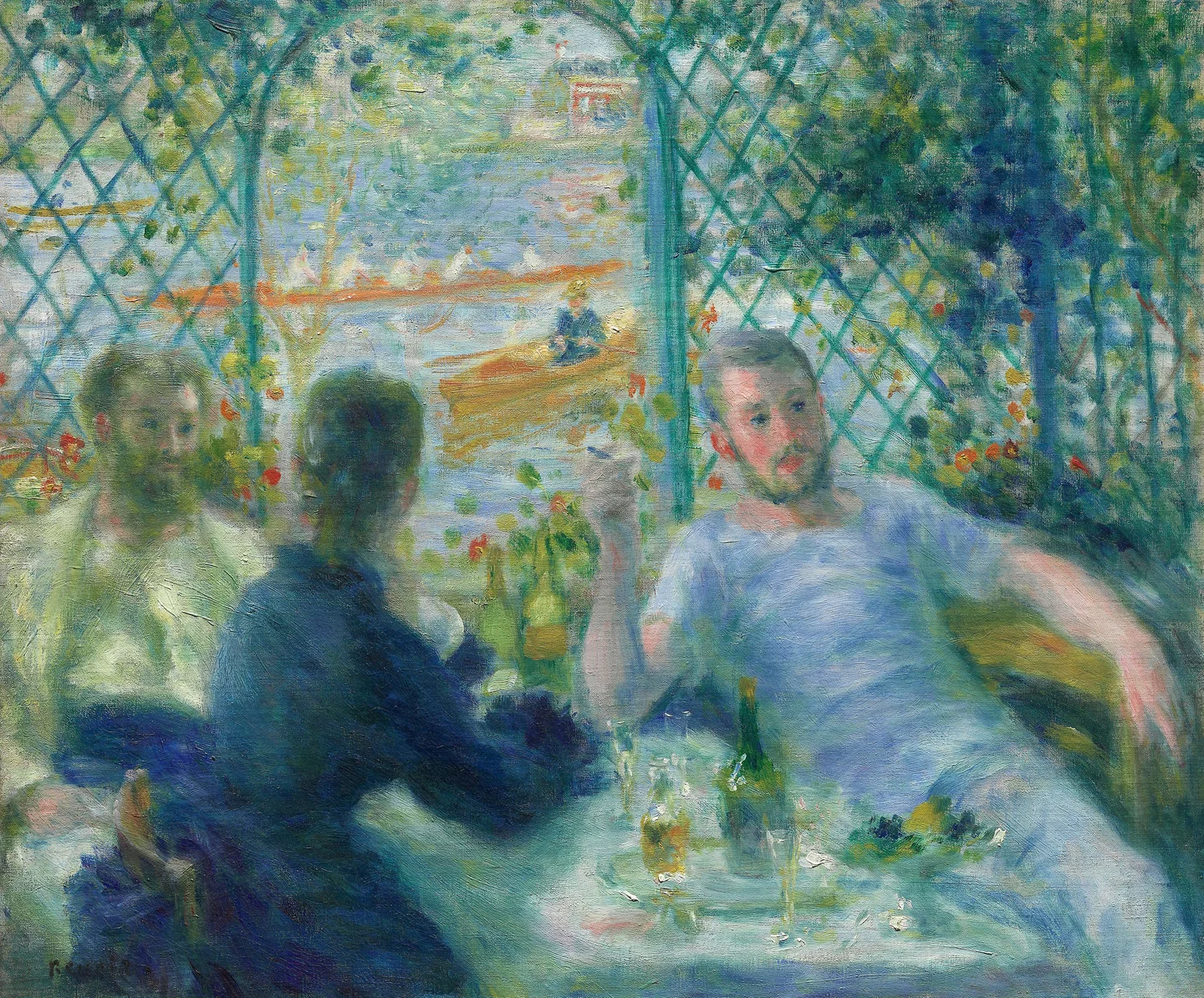 Pierre-Auguste Renoir
Lunch at the Restaurant Fournaise (The Rowers' Lunch)
1875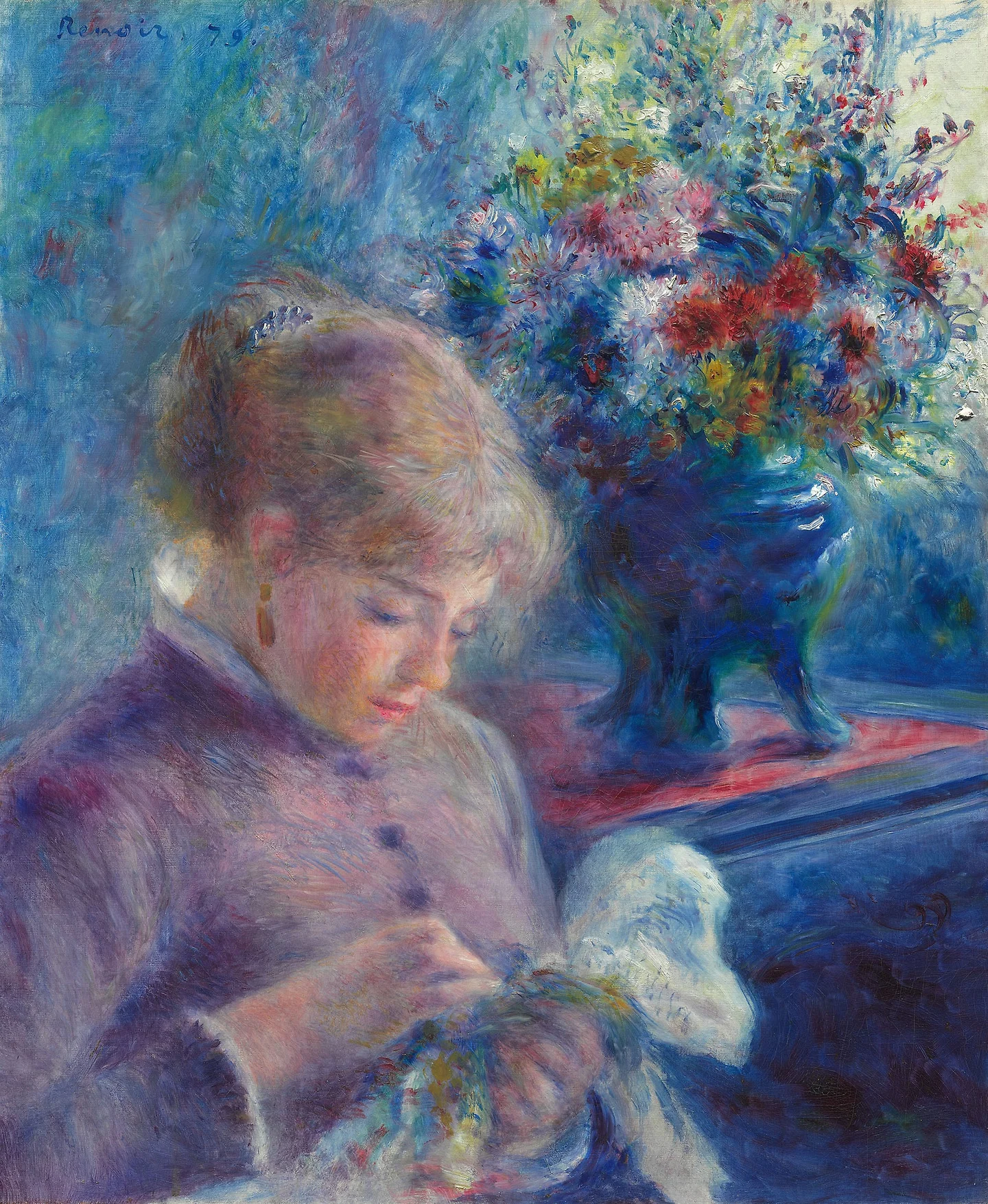 Pierre-Auguste Renoir
Young Woman Sewing
1879Period, style and subject
- Movement
- Impressionism
- Genre
- Everyday life
- Medium
- Oil on canvas
- Collection
- Musée d'Orsay, Paris
- Dimensions
- 131.5 × 176.5 cm
- Accession number
- RF 2739
Sources
Reproduction of a public-domain artwork. Image licence