The Marquesa de Pontejos
Francisco Goya · c. 1786
Explore the painting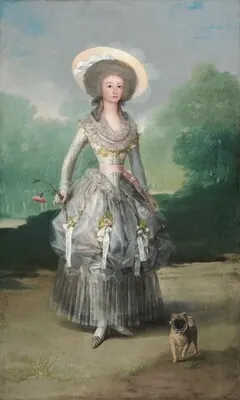
The painting’s story and details
María Ana de Pontejos y Sandoval stands in a park in an elaborate dress, holding a carnation beside a small pug. Goya probably painted her around 1786 in connection with her first marriage. Her husband, Francisco de Moñino y Redondo, was the brother of Count Floridablanca, the Spanish king’s chief minister. The marriage brought her into the most influential court circles. She inherited the title used in the painting’s name later, in 1807.
Her small face is surrounded by an elaborate hairstyle and the brim of a straw hat. She looks directly towards us and stands almost motionless. The National Gallery’s catalogue compares her bearing to Velázquez’s royal portraits. Goya studied that earlier master; the figure’s restraint preserves formal dignity among light fabrics and flowers.
Folds, ribbons and transparent layers make up the dress. It follows French fashions associated with Marie Antoinette and an elegant version of pastoral life. The straw hat evokes rural simplicity, although the whole outfit demands considerable wealth. Foreign fashions could be considered unpatriotic in Spain. The museum catalogue notes that aristocratic women wore such clothes on private estates. The park thus has a social function in the portrait, allowing a freedom of dress that could provoke objections elsewhere.
A carnation rests in her hand, while roses decorate the bodice and skirt. The catalogue suggests that the flowers may relate to the proposed wedding occasion. The marriage supports this interpretation, although the specific commission is undocumented. A living stem beside carefully attached ornaments combines a walk outdoors with ceremonial dress.
The pug stands at her feet with one front paw lifted. Its face turns towards us, and bells decorate its collar. The small animal interrupts the figure’s solemn stillness. It also changes our sense of scale: beside it, the woman’s height and the dress’s enormous volume become especially apparent on this two-metre canvas.
Broad patches describe the trees, while the pale clothing receives detailed attention. The extremely narrow waist has encouraged a satirical reading of Goya’s portrait. The museum catalogue challenges that certainty. Rigid corsets and equally narrow waists appear in other Spanish portraits of the period. Goya may have accurately represented conventions of aristocratic dress that now look strange to us. Our discomfort with the figure does not establish that he intended to mock his sitter.
French dress accompanies a bearing reminiscent of Velázquez’s Spanish royal portraits. The museum catalogue reads this combination in relation to Floridablanca’s circle, which tried to reconcile European innovations with Spanish traditions. The family’s political support soon weakened. After the minister’s dismissal in 1792, María Ana and her husband were briefly exiled to Murcia. The portrait preserves her position at a moment when it still appeared secure.
More paintings to compare
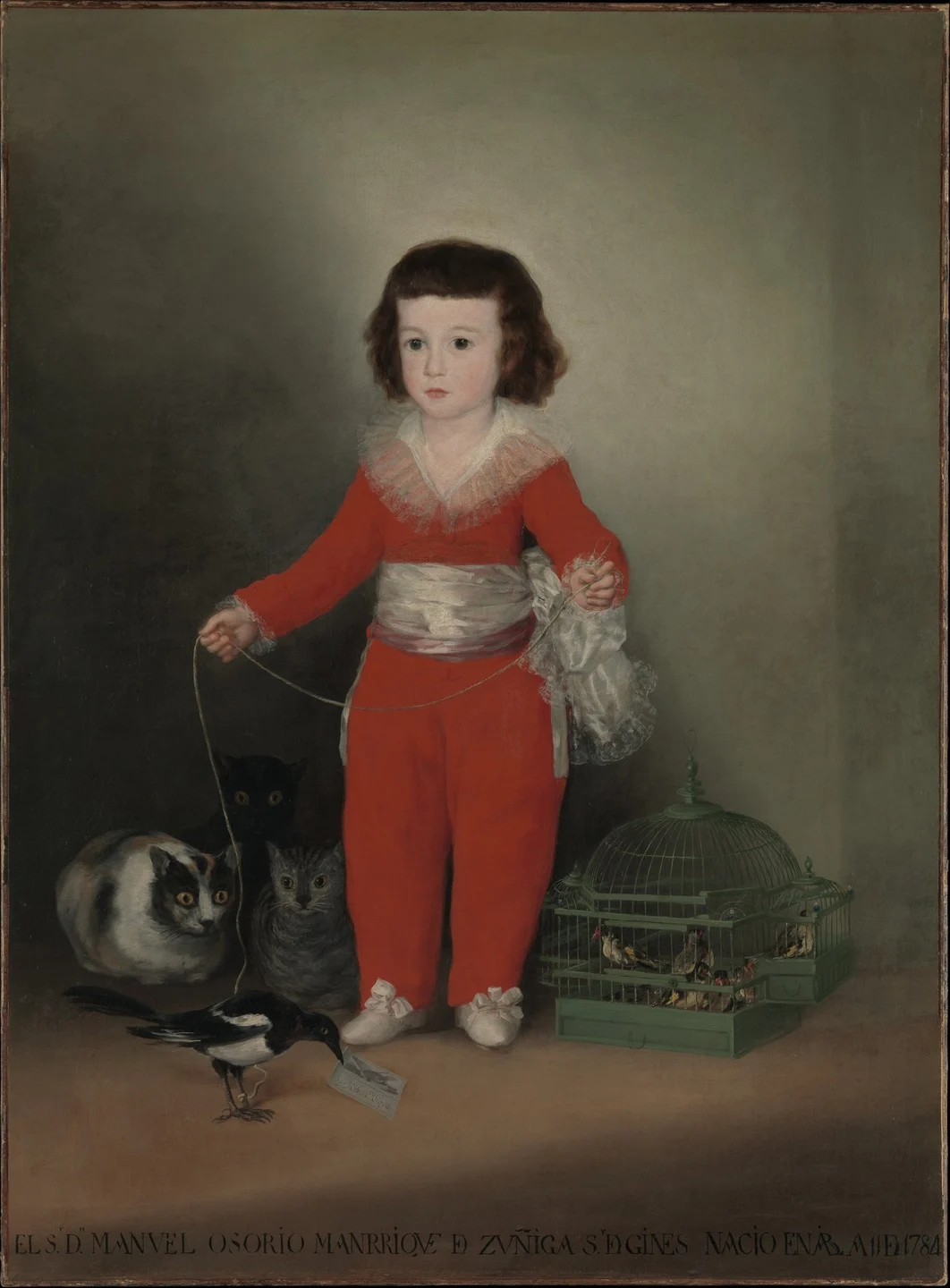 Francisco Goya
Manuel Osorio Manrique de Zuñiga (1784–1792)
1787–88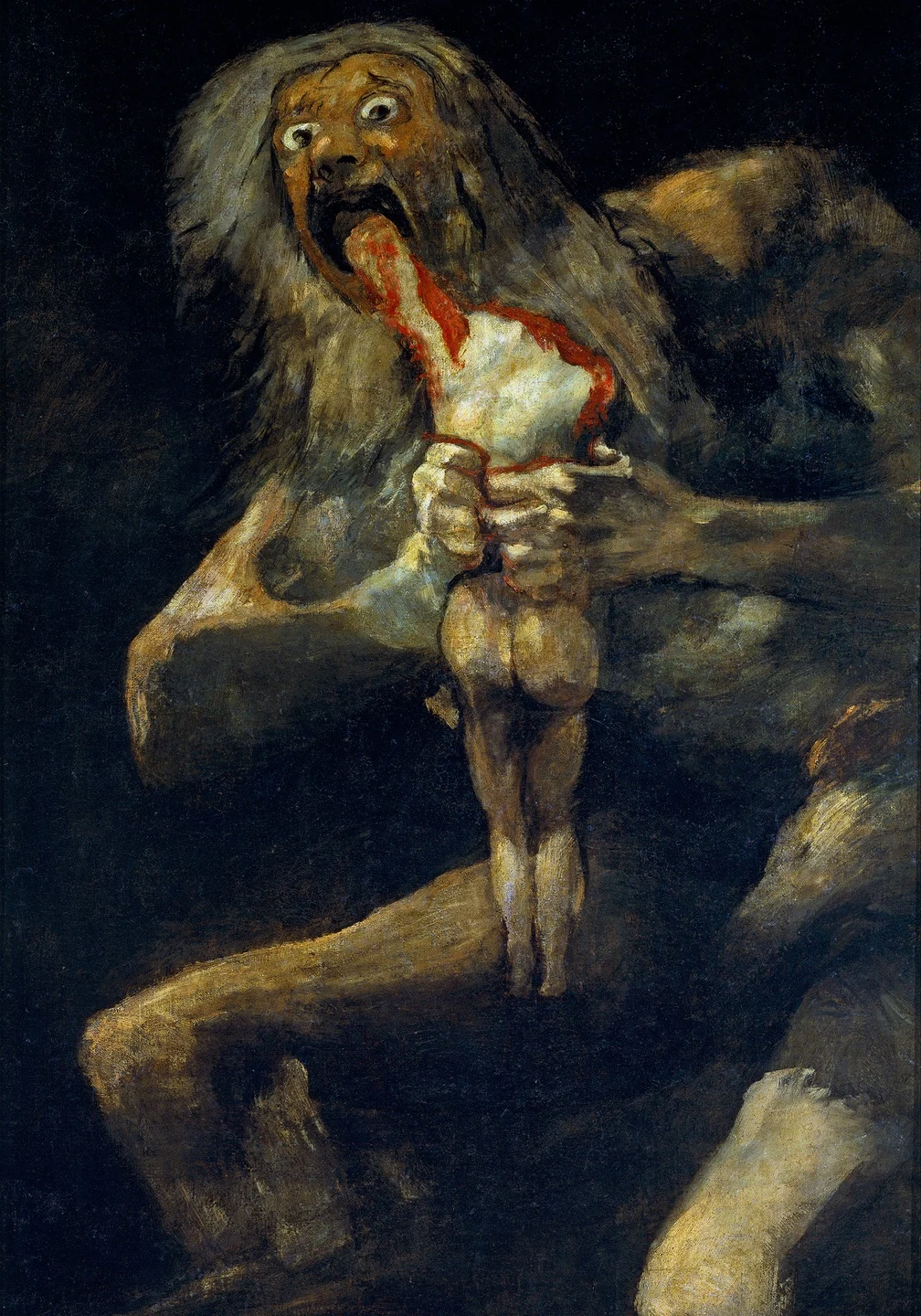 Francisco Goya
Saturn
1820–1823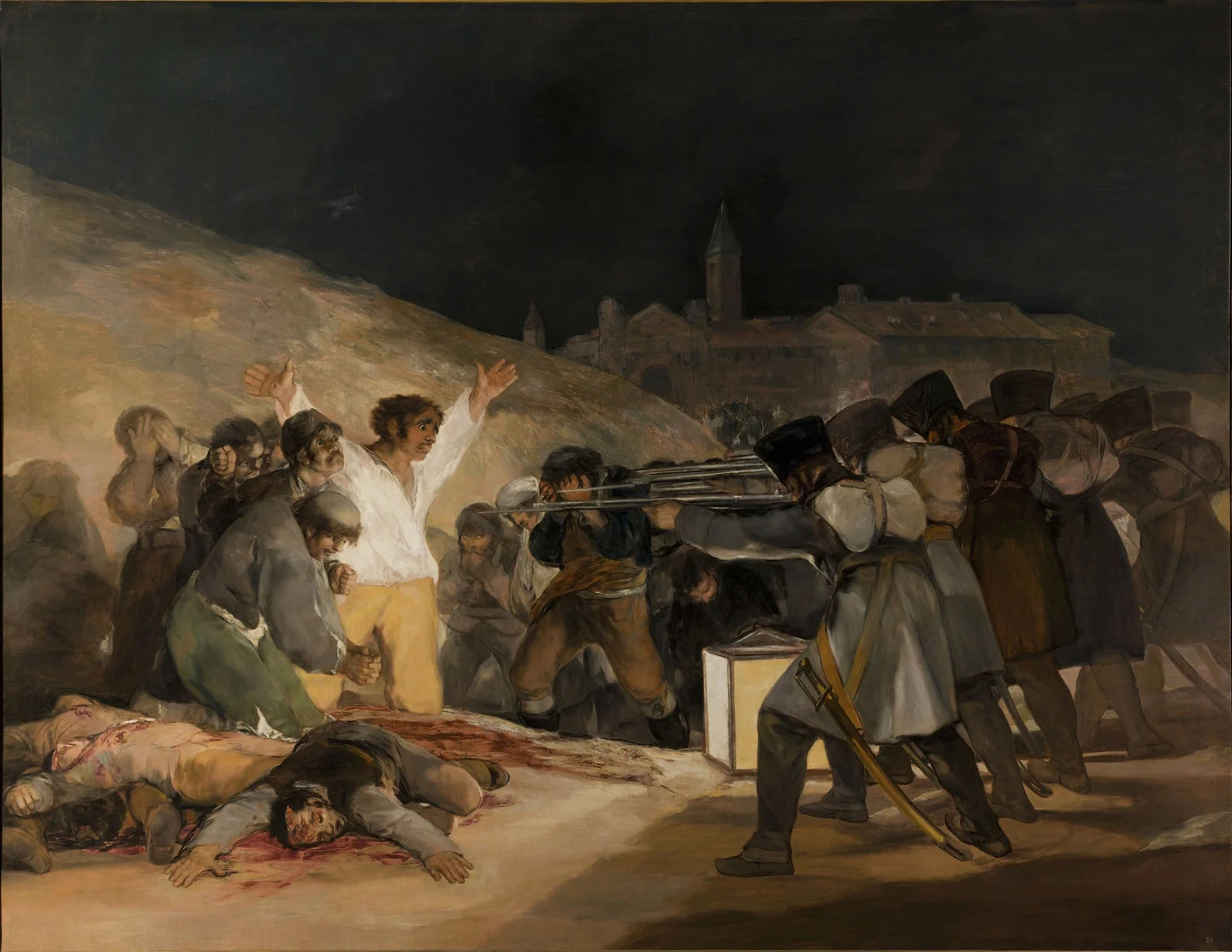 Francisco Goya
The Third of May 1808 in Madrid, or The Executions
1814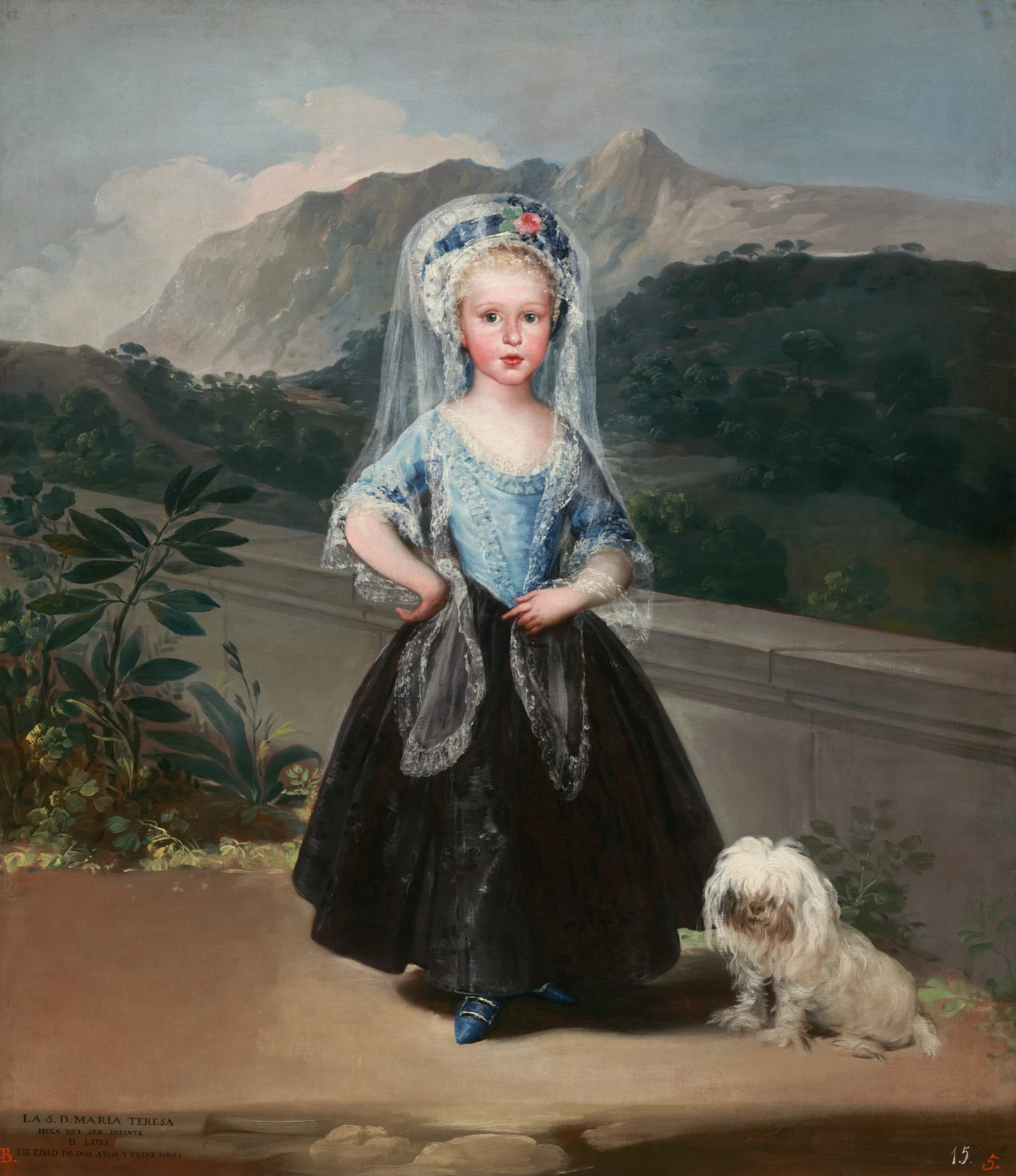 Francisco Goya
María Teresa de Borbón y Vallabriga, later Condesa de Chinchón
1783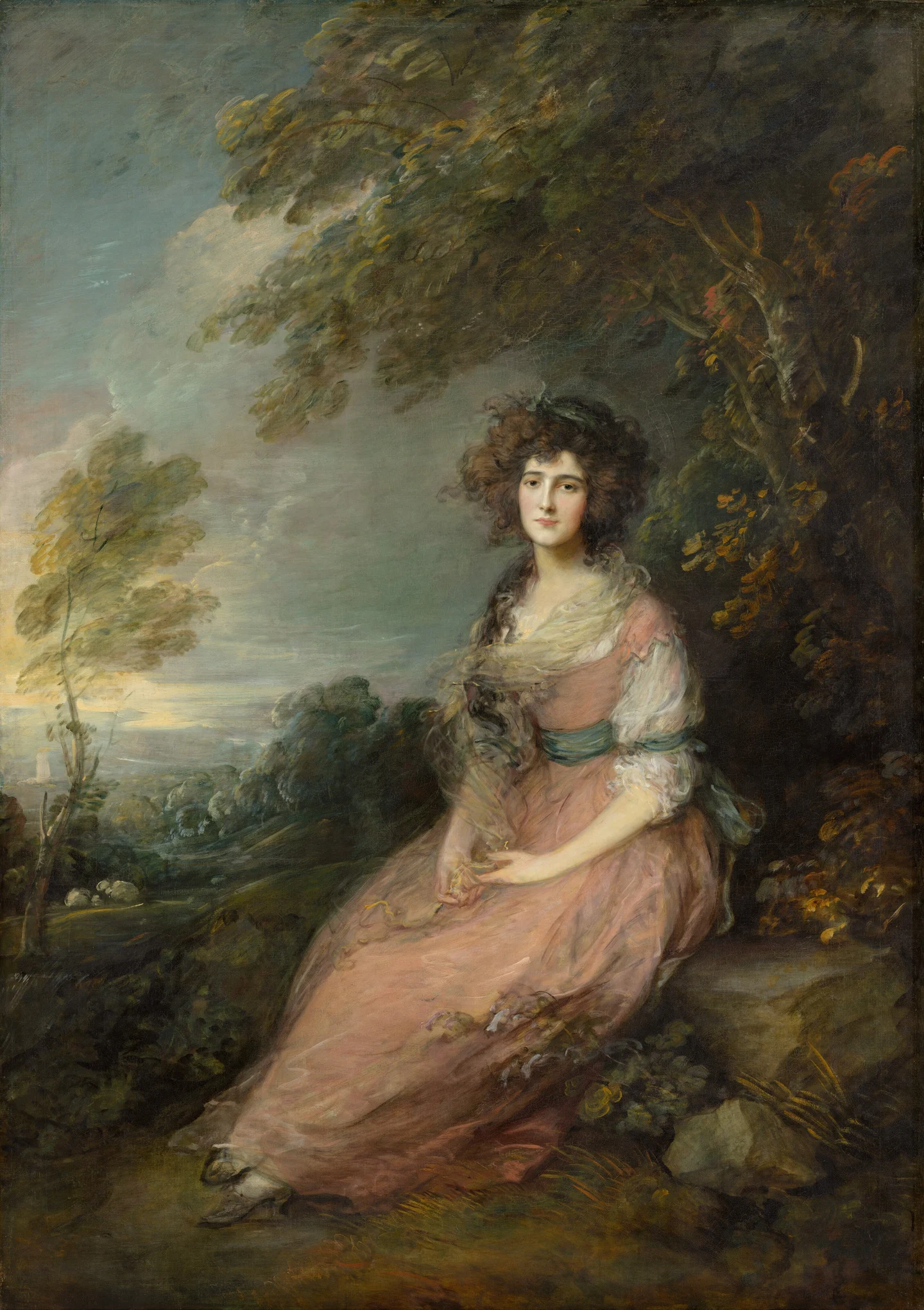 Thomas Gainsborough
Mrs. Richard Brinsley Sheridan
1785-1787Period, style and subject
- Movement
- Rococo
- Genre
- Portrait
- Medium
- oil on canvas
- Collection
- National Gallery of Art, Washington
- Dimensions
- Overall, 210.3 × 127 cm
- Accession number
- 1937.1.85
Sources
Reproduction of a public-domain artwork. Image licence