Café Singer
Hilaire Germain Edgar Degas · 1879
Explore the painting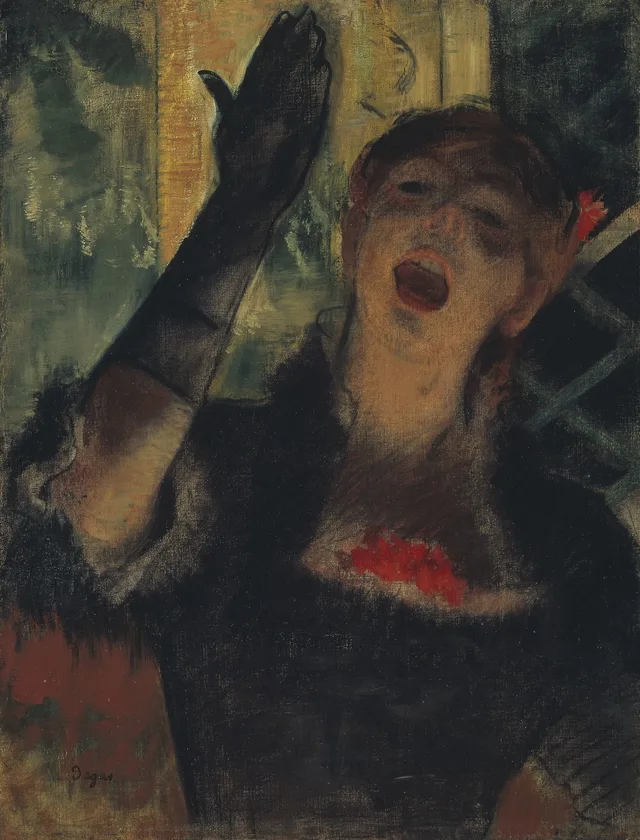
In Café Singer of 1879, Degas brings the performer so close that almost the whole stage remains outside the frame. Café-concerts were central to Parisian entertainment and a recurrent subject in his art. Audiences heard songs in settings different from the formal opera house. He was interested in a brief moment of professional performance, when mouth opens, hand rises and the body is occupied with producing sound.
Her head tilts back and her mouth opens wide. The arrested movement might seem awkward by formal portrait standards. Here the face is working. Degas selects a position conveying the effort of singing without audible sound. He does not smooth the expression into conventional attractiveness. We must accept a person’s appearance during an action usually perceived through more than one sense.
A black glove rises almost to the top edge. Against the light background the hand becomes a clear silhouette readable at a distance. The gesture may have reinforced the song’s meaning, but its words are unknown. There is no basis for assigning a particular command or appeal. Its visible role is sufficient: it strengthens the performance and connects the face with the upper composition.
Red flowers at the neckline stand out among black and greenish tones. A related accent appears in the hair. These small areas connect costume and head, preventing the dark figure from becoming an undifferentiated shape. The dress is designed for stage visibility. Degas shows a performance assembled from voice, gesture, ornament and lighting.
A pale diagonal appears behind the head at the right edge. The remaining space is loosely indicated, with no detailed account of the room. Tight framing suggests proximity while hiding the audience. We cannot inspect its response to the singer. Information about the performance concentrates on her body, turning a familiar entertainment subject into a study of a performer’s movement.
Dark and golden verticals on the left repeat the hand’s direction. Thin paint allows the canvas texture to show in places. Degas distinguishes face, glove and background without polishing everything equally. Small illuminated areas become particularly visible among muted colours. Their distribution helps us read the figure under evening artificial light.
Audiences came to a café-concert for pleasure; for the singer, performance was a profession. Degas provides neither her biography nor her terms of payment. He reveals another aspect of work: a brief bodily effort usually absorbed into the overall experience of a song. Painting lets us linger over that instant. What passes quickly in performance becomes available for sustained attention.
More works by Hilaire Germain Edgar Degas
 Edgar Degas
The Dancing Class
 Hilaire Germain Edgar Degas
The Millinery Shop
 Hilaire Germain Edgar Degas
A Woman Seated beside a Vase of Flowers (Madame Paul Valpinçon?)
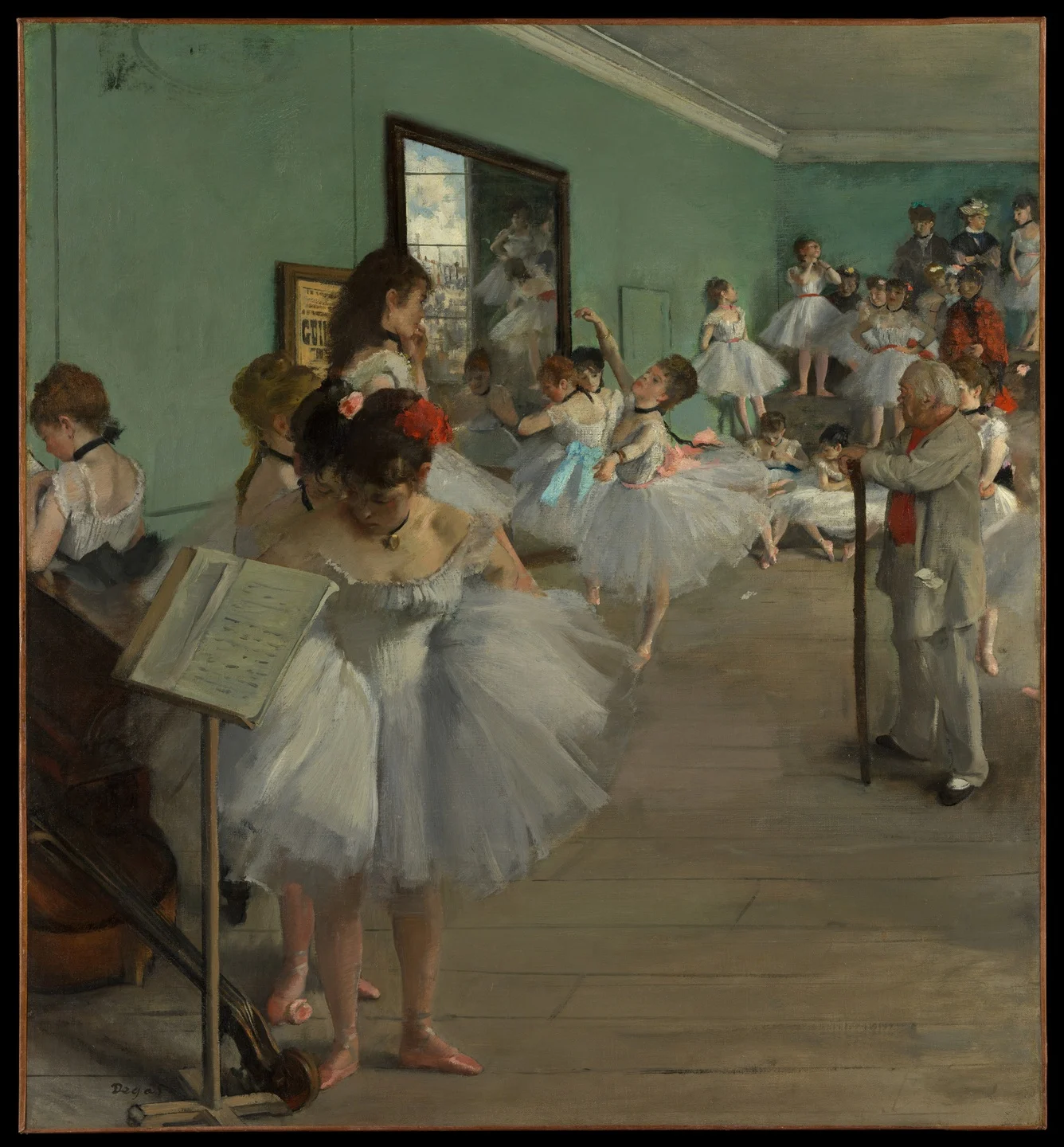 Hilaire Germain Edgar Degas
The Dance Class
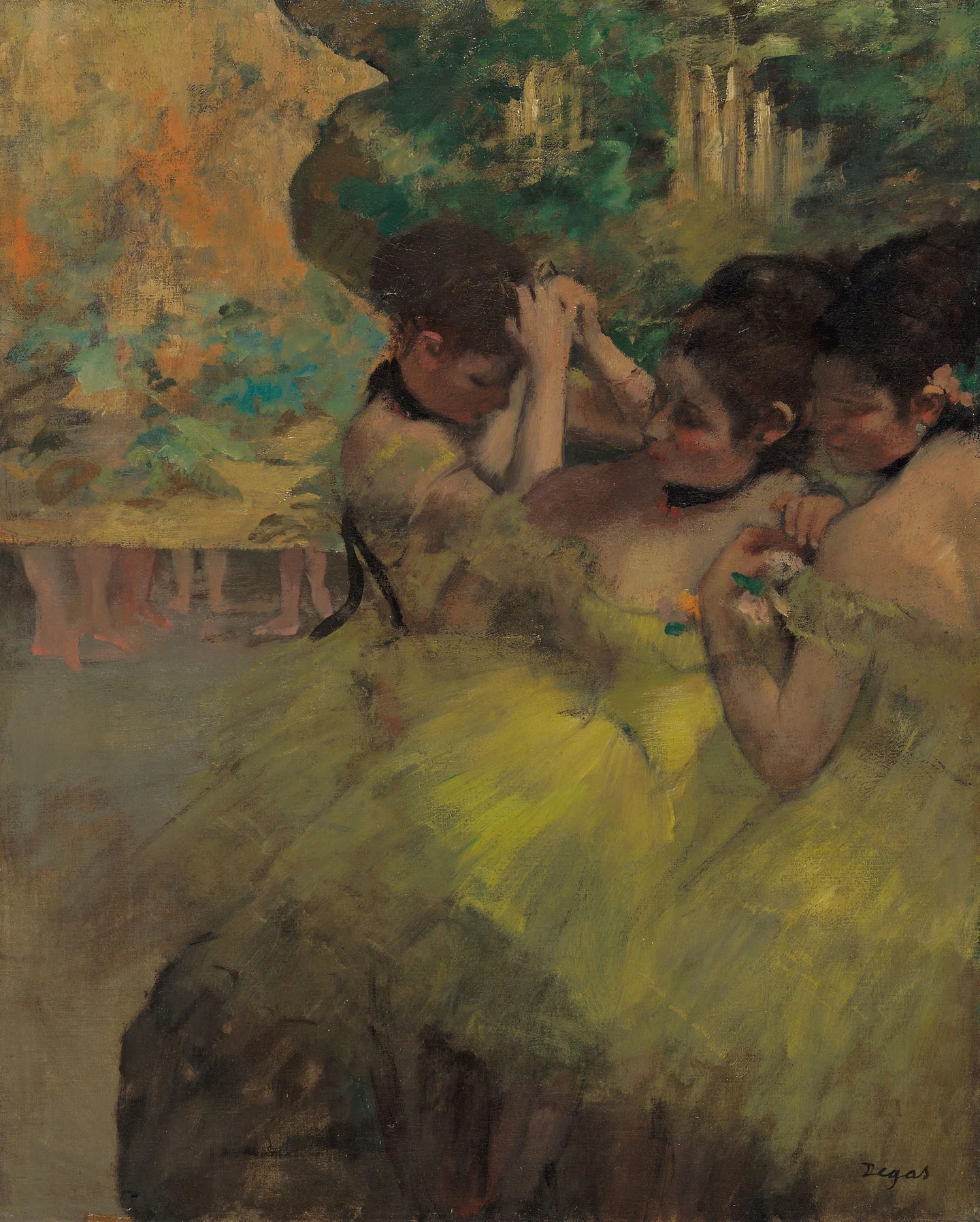 Hilaire Germain Edgar Degas
Yellow Dancers (In the Wings)
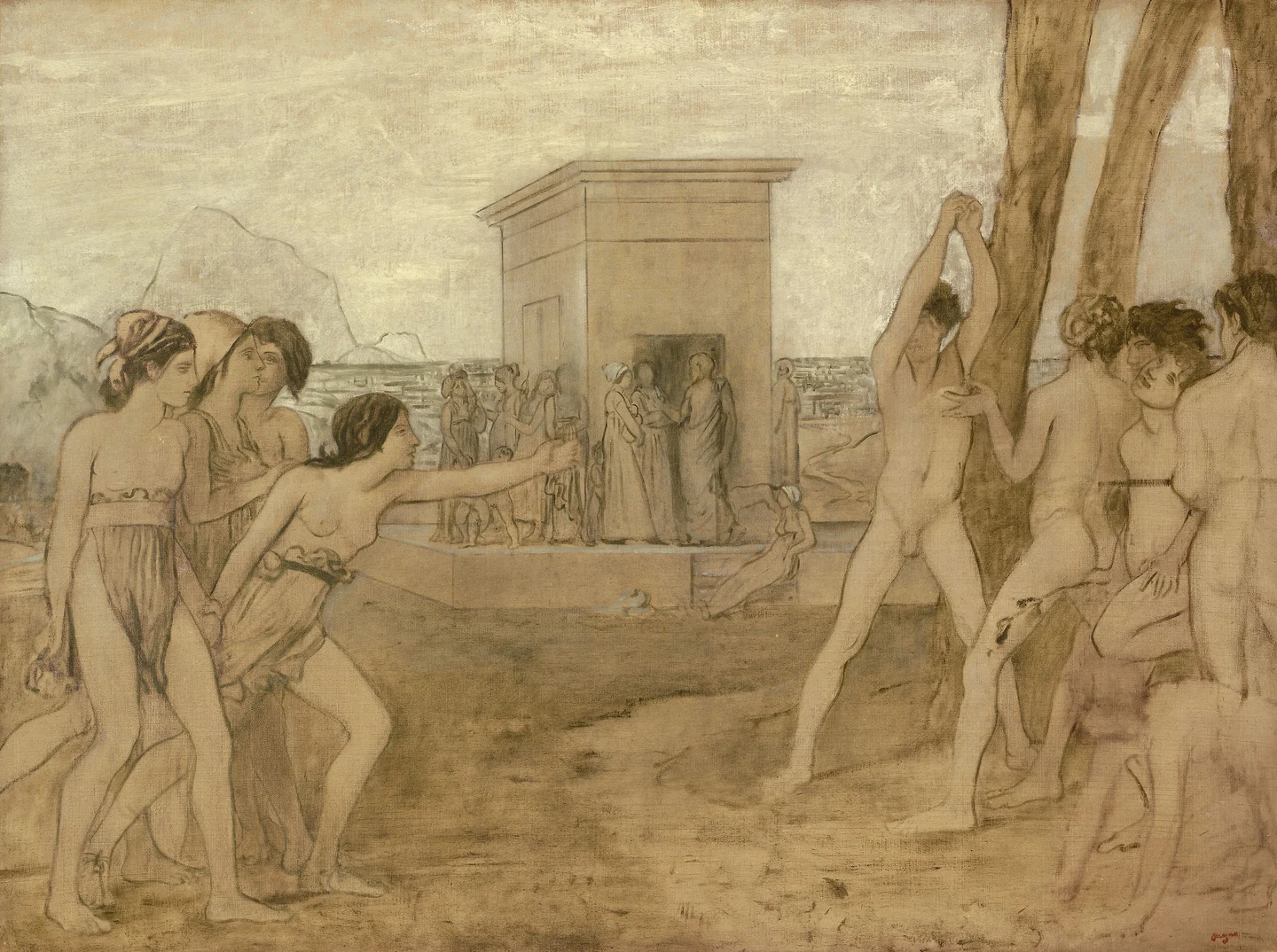 Hilaire Germain Edgar Degas
Young Spartan Girls Challenging Boys
- Medium
- Oil on canvas
- Collection
- Art Institute of Chicago
- Accession number
- 1955.738
Sources
Wikimedia Commons reproduction. Public domain. Image licence