The Dance Class
Hilaire Germain Edgar Degas · 1874
Explore the painting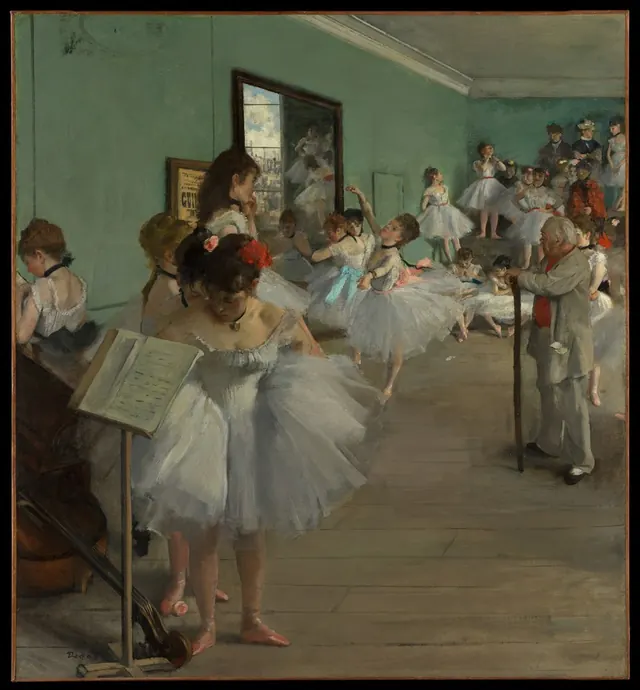
The painting’s story and details
A ballerina takes her examination in the middle of the room while others wait with their mothers. Degas painted the scene in 1874 for the opera singer Jean-Baptiste Faure. He invented a rehearsal room based on the old Paris Opéra, recently destroyed by fire..
Jules Perrot stands on the right, leaning on a long stick as he watches the dancer. Despite the surrounding crowd, an open stretch of floor connects teacher and pupil. Ballet’s apparent ease depends on precise coordination of arms, torso and legs. Perrot assesses that training, while the waiting girls reveal the time the profession devotes to preparation.
The nearest girl lowers her head. Her hands are hidden behind her back, her feet rest loosely, and her white skirt fills much of the foreground. Other dancers adjust their clothes or bring their hands to their faces. Degas sets trained ballet positions alongside ordinary bodily movements. Matching costumes make the differences between people at rest particularly apparent.
An open score rests on the music stand on the left, with a violin at the foot of the music stand. Dance depends on musicians as well as performers. Long floorboards lead past these objects into the room. A broad stretch of floor remains open on the right, making the crowded group beside the wall seem unexpectedly distant within this modest interior.
A poster for Rossini’s Guillaume Tell hangs beside the mirror, referring to Faure, the singer who commissioned the painting. His profession enters the image through an object on the wall. In 1876 he lent the canvas to the Impressionist exhibition. A private commission helped Degas bring his approach to ballet before a wider public.
The dancer in the pink sash holds an attitude, a position with one leg raised and bent. Her torso turns and one arm rises. Its coordination stands out among the many relaxed figures. Degas leaves enough space around her to show the whole body and its balance, allowing the viewer to assess the exercise alongside the teacher.
Nineteenth-century ballet celebrated seemingly weightless heroines and enchanted transformations. Degas often chose rehearsals, where the spectacle was still being prepared. Here several figures reveal the transition from resting to holding a demanding position. The wonder of movement onstage emerges from everyday work usually hidden from a theatre audience.
Featured in tours
Early Impressionism. Paris 1860–1879
The Salon, the first independent exhibition, railway stations, studios and leisure on the Seine.
More paintings to compare
 Edgar Degas
The Dancing Class
About 1870 Hilaire Germain Edgar Degas
The Millinery Shop
1879-86 Hilaire Germain Edgar Degas
A Woman Seated beside a Vase of Flowers (Madame Paul Valpinçon?)
1865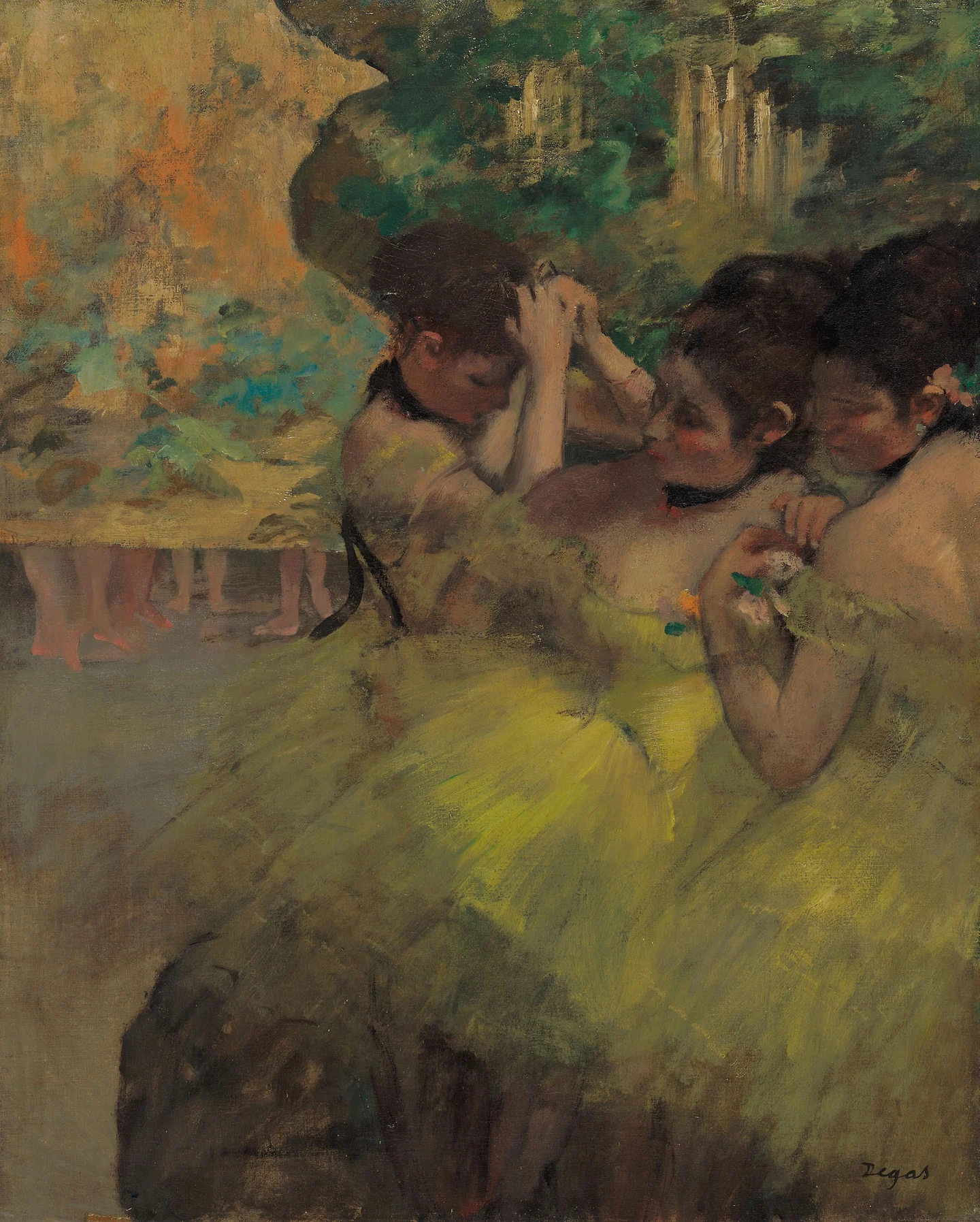 Hilaire Germain Edgar Degas
Yellow Dancers (In the Wings)
1874–76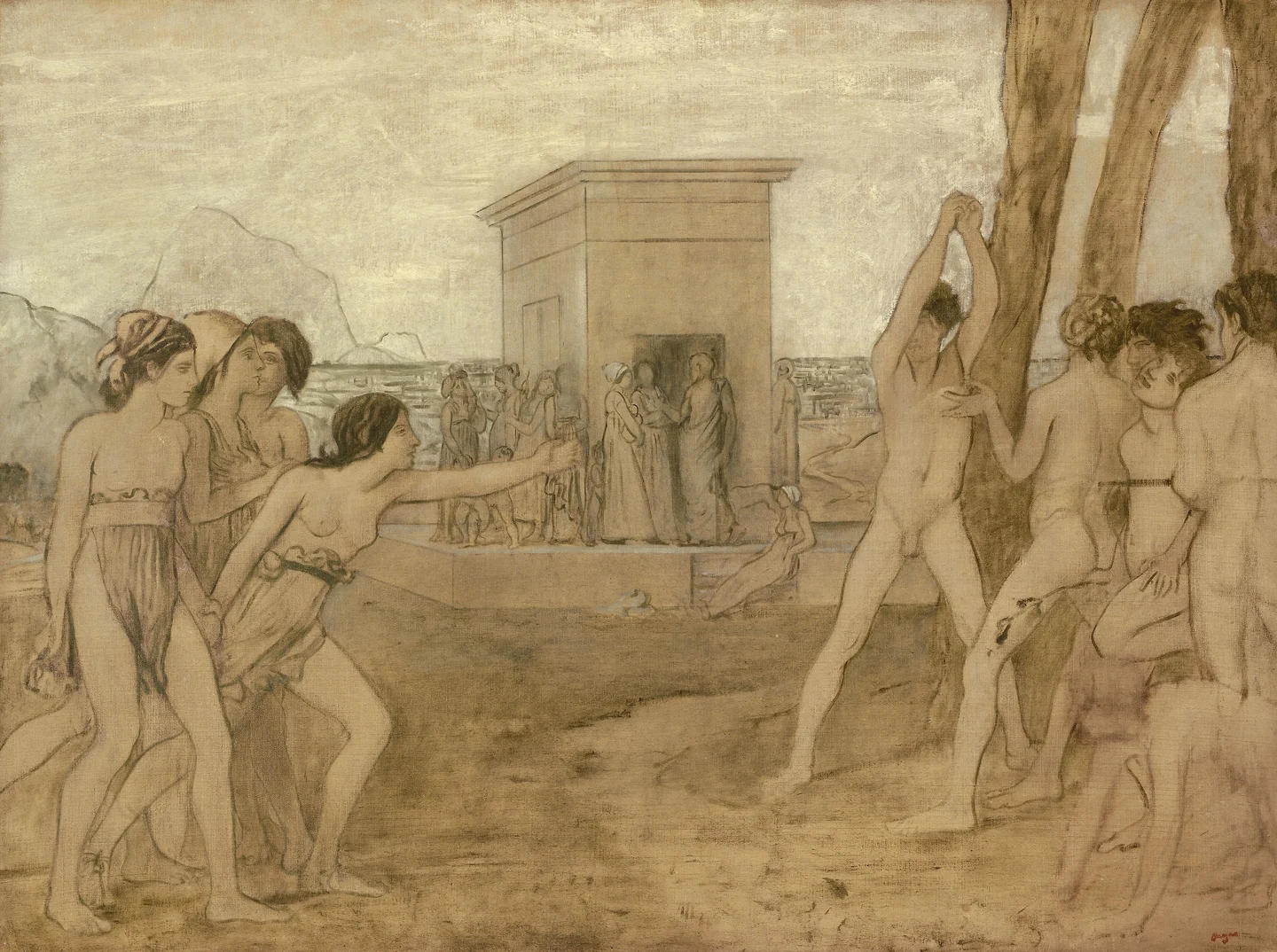 Hilaire Germain Edgar Degas
Young Spartan Girls Challenging Boys
c. 1860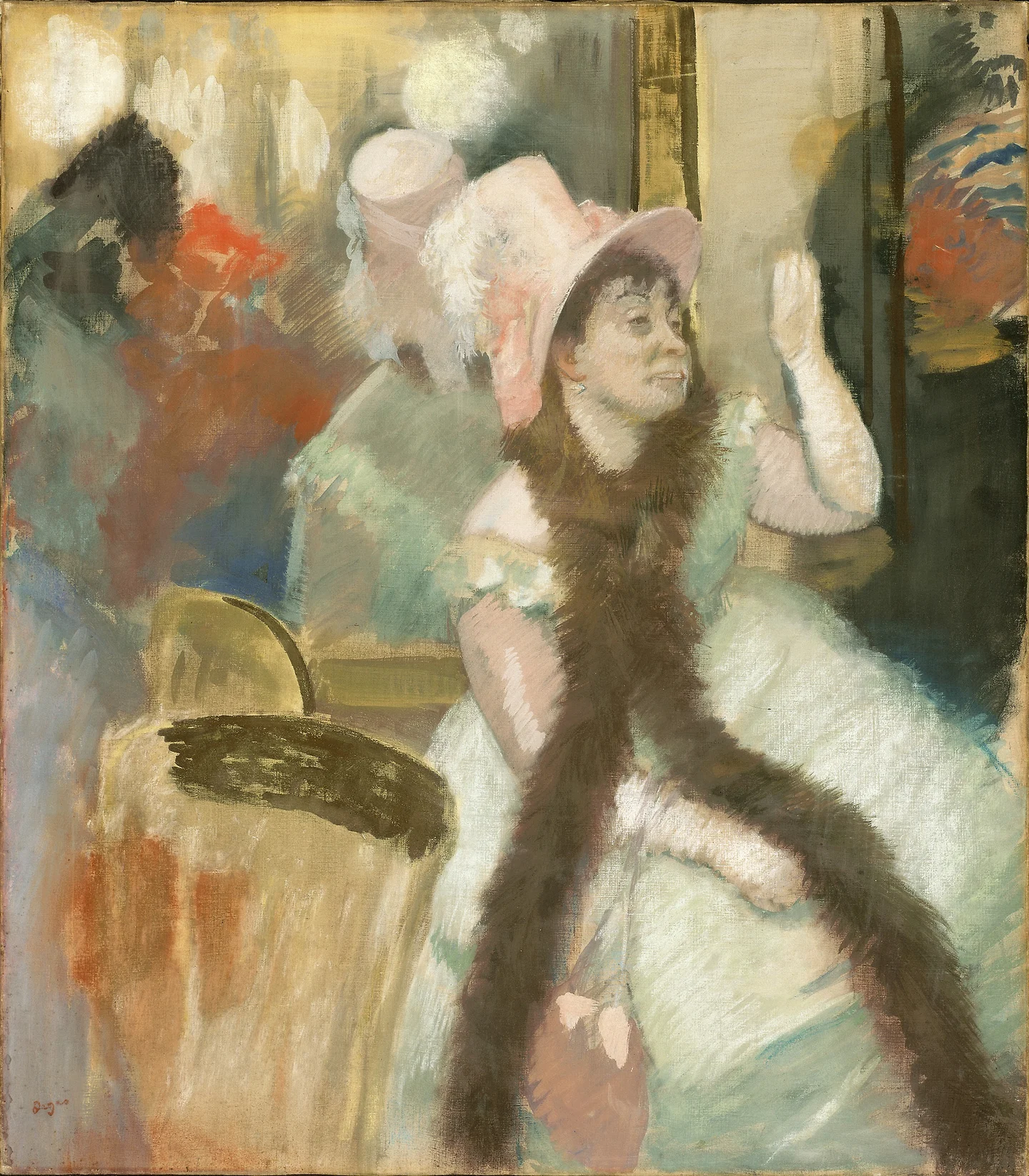 Hilaire Germain Edgar Degas
Portrait after a Costume Ball (Portrait of Madame Dietz-Monnin)
1879Period, style and subject
- Movement
- Realism
- Genre
- Everyday life
- Medium
- Oil on canvas
- Collection
- The Metropolitan Museum of Art
- Dimensions
- 83.5 × 77.2 cm
- Accession number
- 1987.47.1
Sources
Image provided under CC0. Image licence