Young Spartan Girls Challenging Boys
Hilaire Germain Edgar Degas · c. 1860
Explore the painting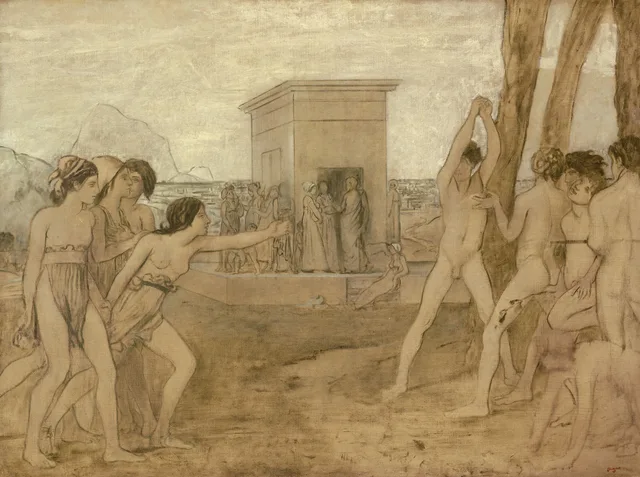
Around 1860 the young Degas planned a historical painting of Spartan girls competing with boys. The previous year he had returned from an extended stay in Italy, studying art and drawing from life. His subject came from the biography of the legendary lawgiver Lycurgus. He left this version unfinished and began another, now in London’s National Gallery. This is a distinct stage of his investigation, rather than a completed painting that has lost its colour.
A girl on the left extends her arm towards the boys and leans forward. The gesture connects the groups across an open space. It suggests the challenge named in the title, though the painter supplies no words. An open mouth and bodily direction make the interaction intelligible without a caption. Degas approaches history through the movement of people preparing to compete.
Other girls stand closer together, looking in the same direction. Their varied turns show bodies from the front, in profile and at an angle. Such a subject allowed an aspiring history painter to demonstrate command of the figure. Yet the awkward transitional movements that would later matter in Degas’s ballet scenes are already evident. The figures need not all strike finished, impressive poses at once.
A boy on the right lifts his arms above his head. Adjacent bodies lean differently, making the group active even in unfinished drawing. An ancient subject permitted the study of the nude within an academic painting. Spartan exercises involving girls alongside boys were also unfamiliar to a nineteenth-century French audience. Historical distance made it possible to depict a social arrangement different from contemporary practice.
Several heads and shoulders overlap at the right edge. Contours repeat and remain exploratory in places. Degas is still deciding how to assemble the group and where to leave gaps. The unfinished state exposes decisions that a smoothly completed painting would conceal. A future narrative begins with the position of a head, the spacing of figures and the direction of a gaze.
Adults gather in the distance beside a severe rectangular building. Their smaller scale separates observers from the young participants in front. Architecture organises the space and gives the scene a public character. Competition belongs to education and the organisation of the city-state. Adolescent energy is placed within an order maintained by adults.
Degas would become famous for modern life, but this early work remained part of his artistic experience. Studies of bodies, groups and observers continued in theatres and rehearsals. The connection can be traced without imagining an abrupt break with training. Devices learned through history painting helped him examine a present in which movement also depended on rules, instruction and the gaze of others.
More works by Hilaire Germain Edgar Degas
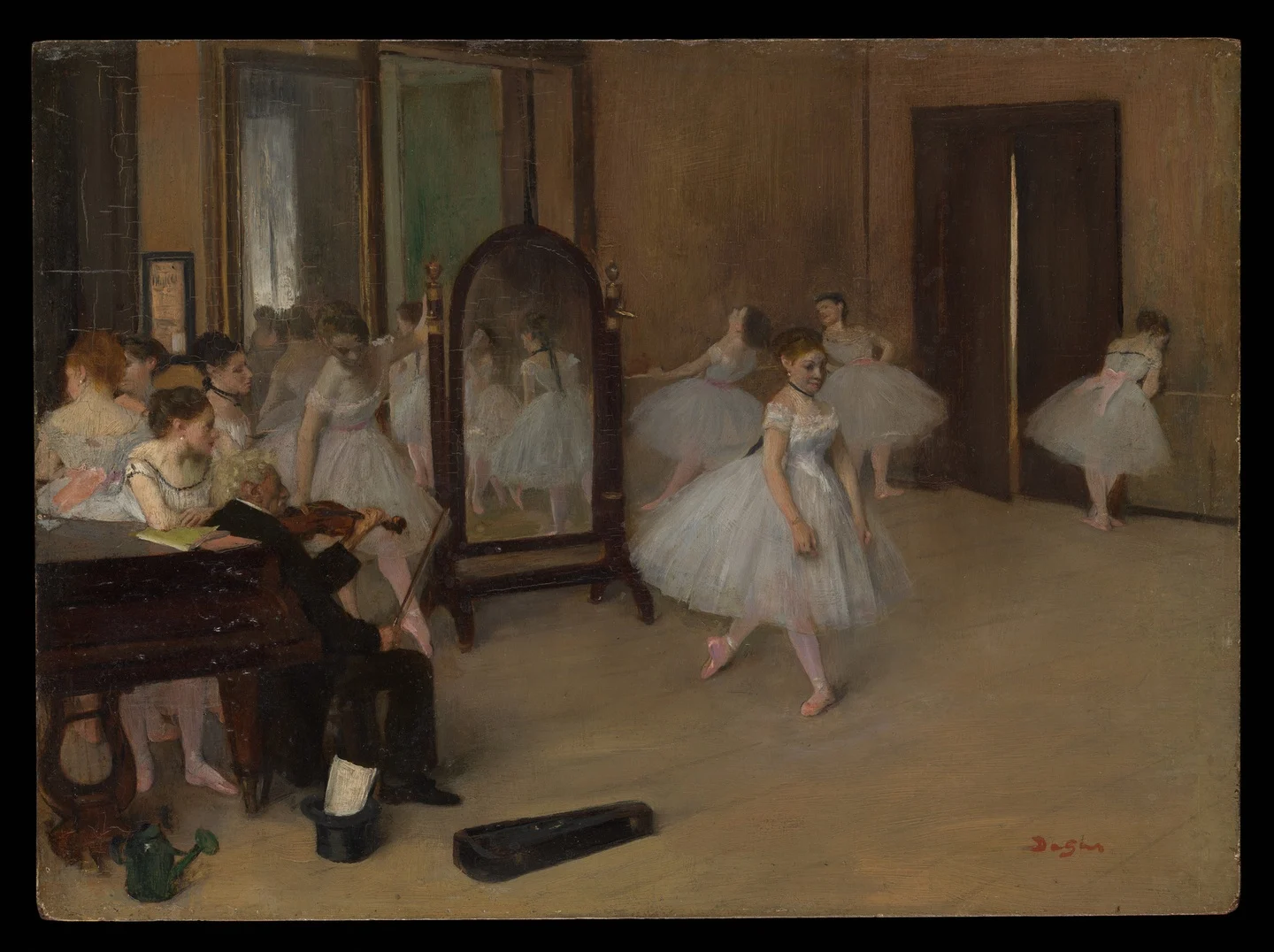 Edgar Degas
The Dancing Class
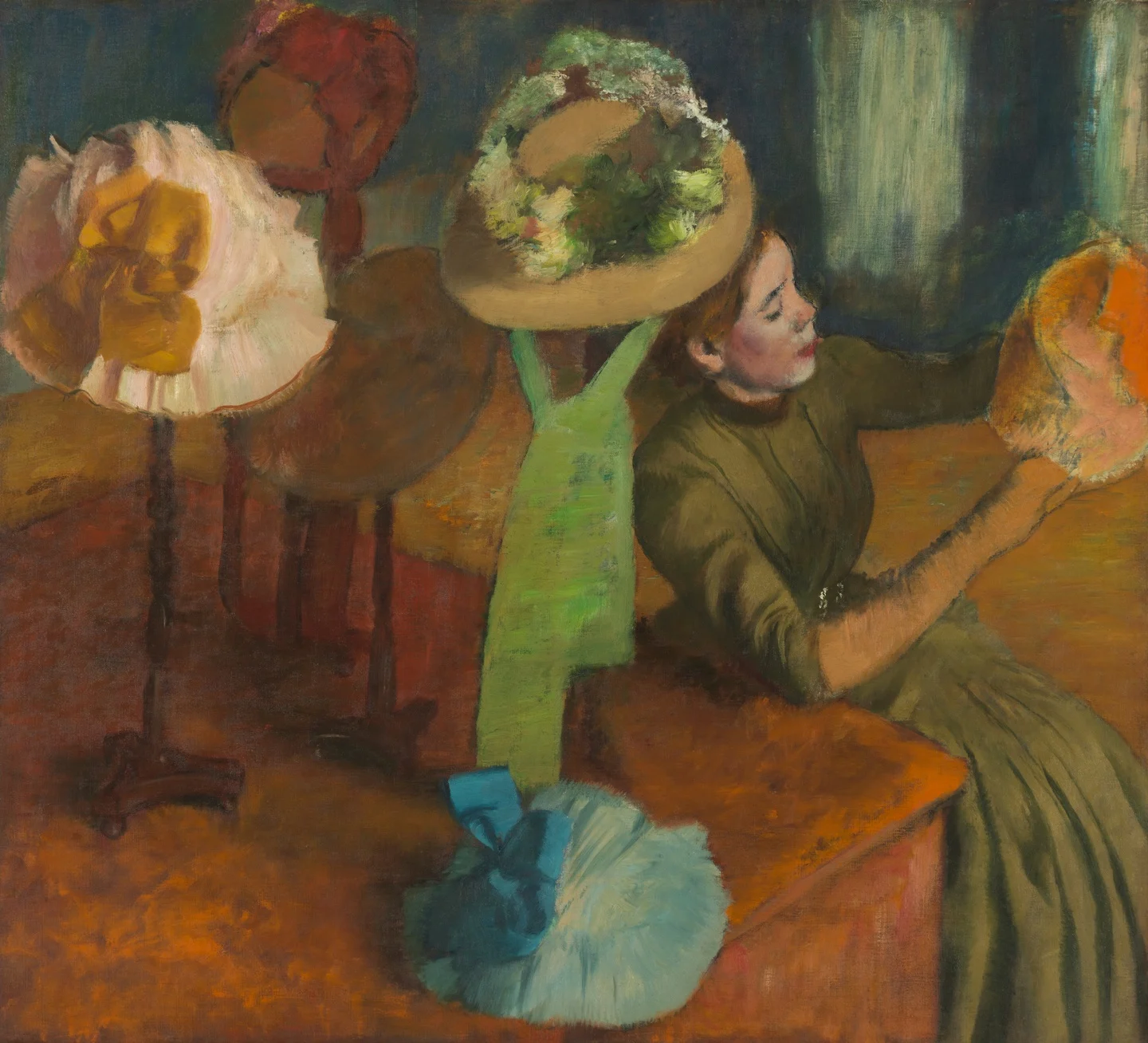 Hilaire Germain Edgar Degas
The Millinery Shop
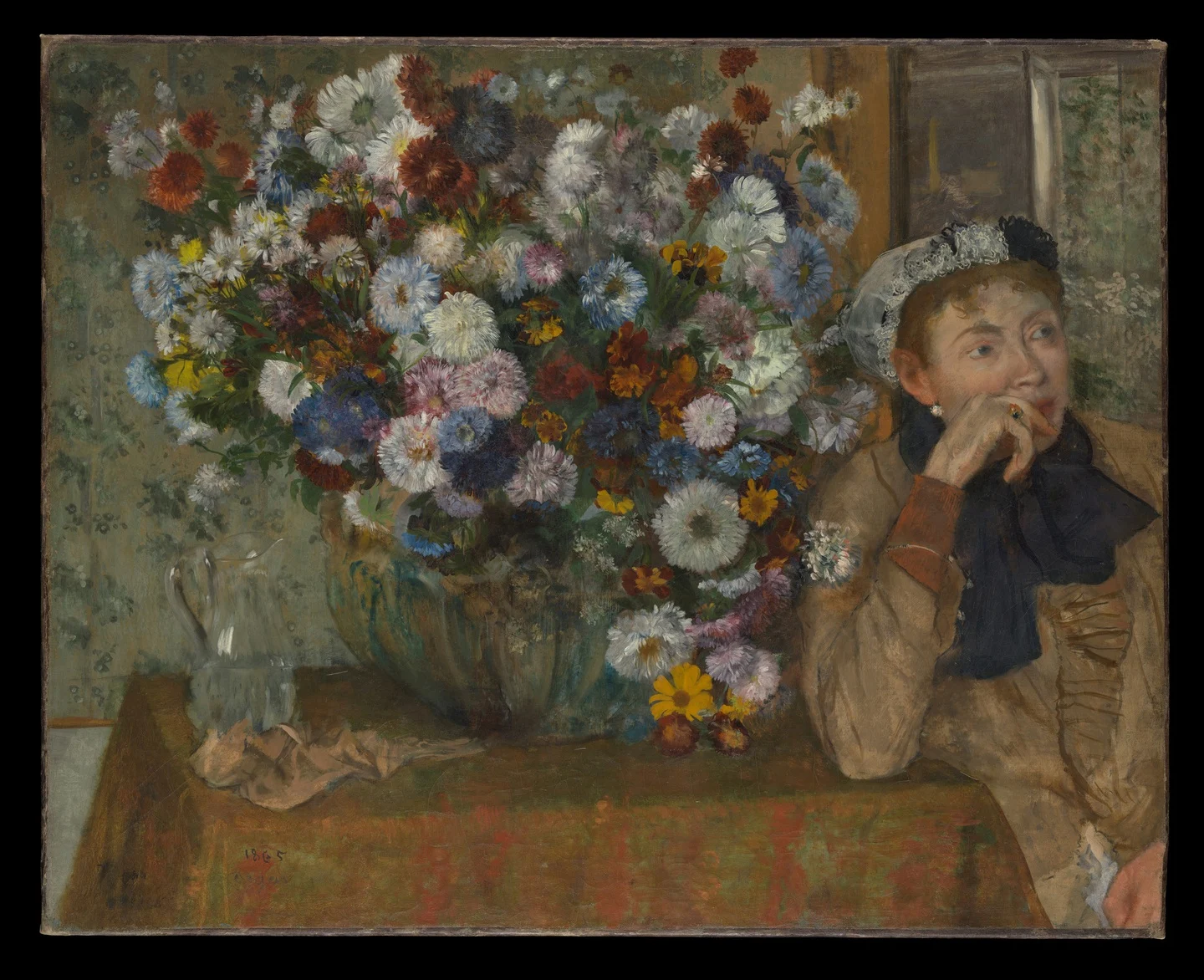 Hilaire Germain Edgar Degas
A Woman Seated beside a Vase of Flowers (Madame Paul Valpinçon?)
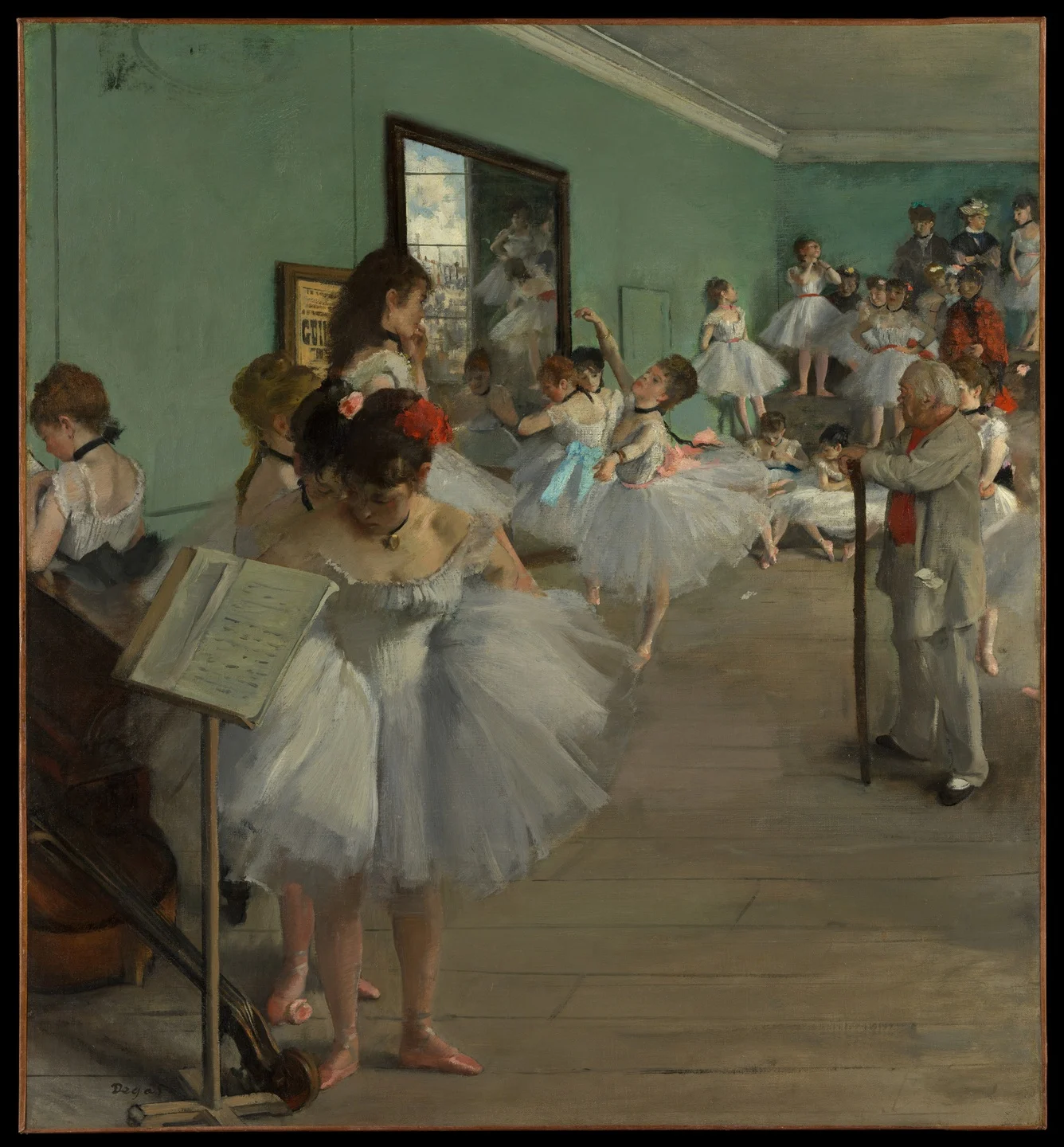 Hilaire Germain Edgar Degas
The Dance Class
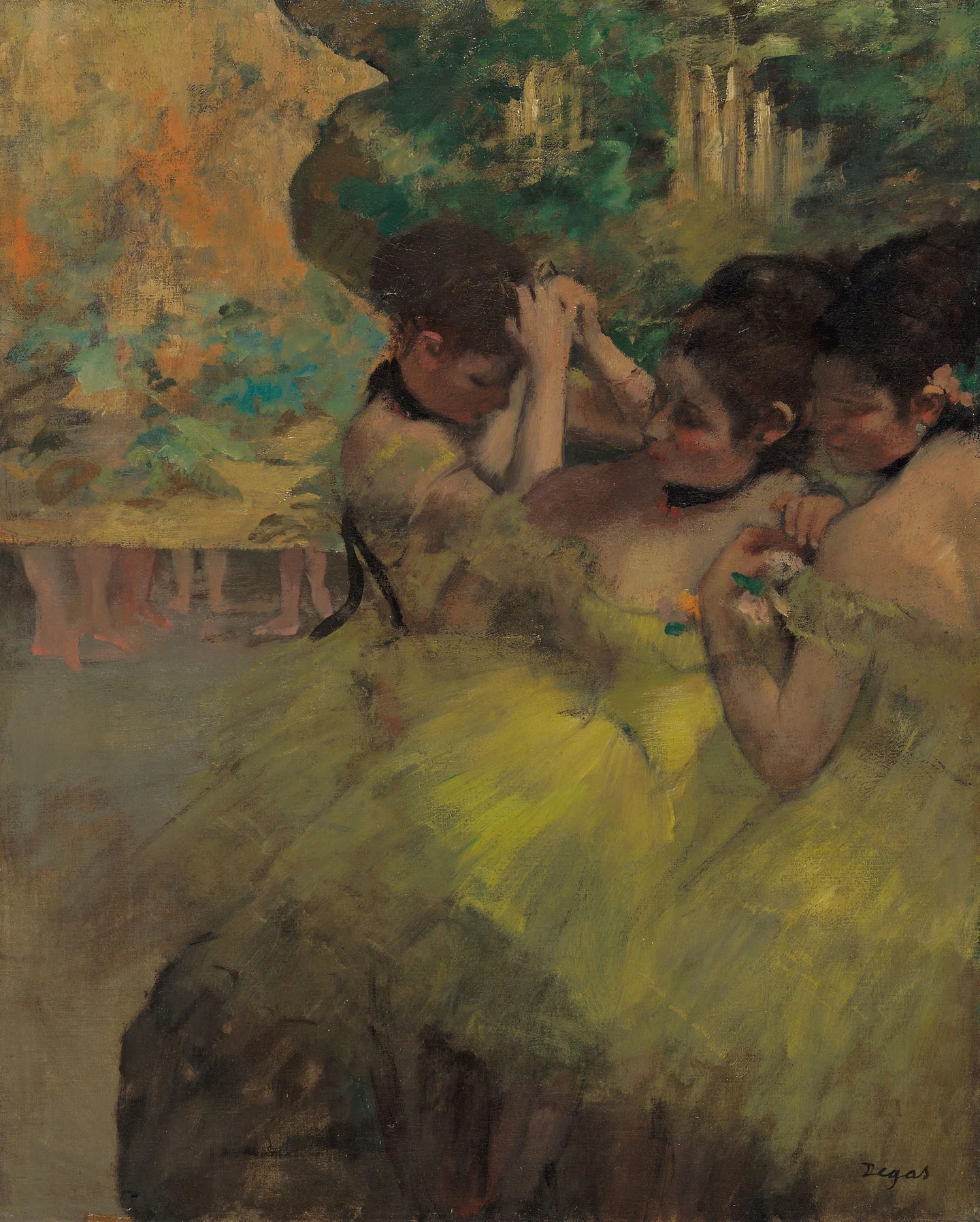 Hilaire Germain Edgar Degas
Yellow Dancers (In the Wings)
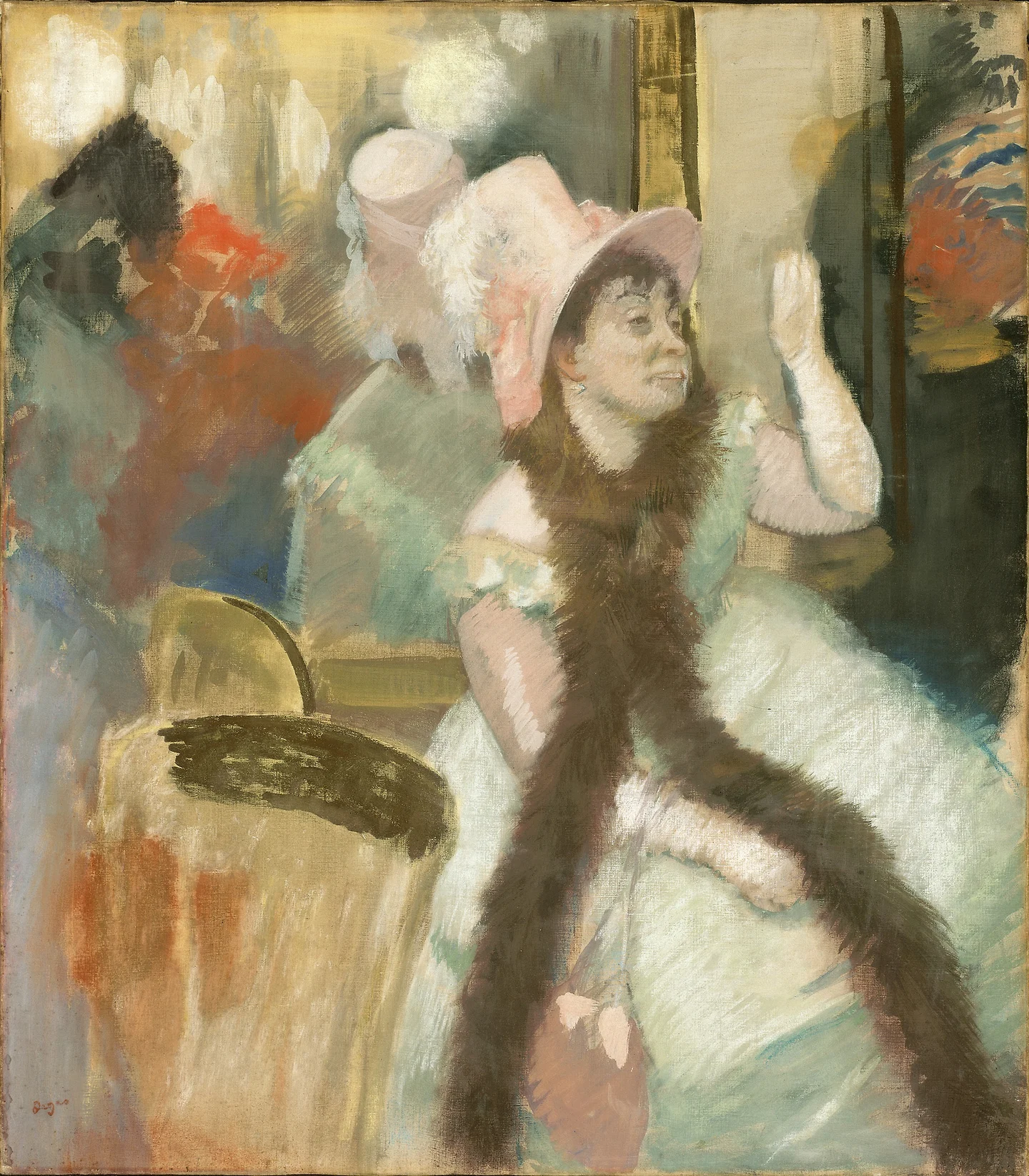 Hilaire Germain Edgar Degas
Portrait after a Costume Ball (Portrait of Madame Dietz-Monnin)
- Medium
- Oil on canvas
- Collection
- Art Institute of Chicago
- Accession number
- 1961.334
Sources
Wikimedia Commons reproduction. Public domain. Image licence