The Dancing Class
Edgar Degas · About 1870
Explore the painting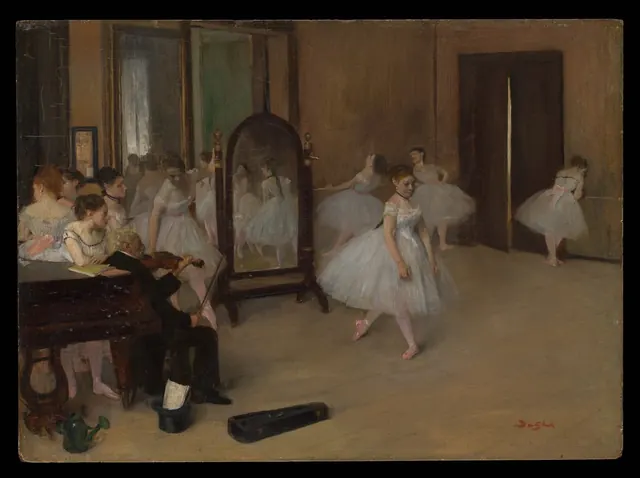
The painting’s story and details
Around 1870, Degas painted his first Dancing Class. He did not yet have regular access backstage at the Paris Opéra, so dancers posed in his studio. Separate sittings became a convincing rehearsal scene. Seemingly casual movements and haphazardly placed objects could result from lengthy preparation, with drawings brought together in a new composition.
The dancer on the open floor extends one leg forward. Her arms are lowered, her head turns slightly, and her toe touches the floor. The pose makes an individual movement visible before the speed of a dance obscures it. Degas began with academic training in drawing and copied earlier masters. Ballet supplied contemporary material for a longstanding concern: how the figure balances and changes in motion.
A tall oval mirror stands near the middle of the room. White skirts, pink stockings and dancers’ legs appear in it, separated from the figures themselves by the frame. The mirror complicates this crowded area, adding bodies seen from another direction. In ballet practice it is also a working tool, allowing dancers to check the position of their torso and legs.
A violinist sits on the left. His instrument lies beside a white skirt, while his dark clothing merges with the piano. The dancer’s movement depends on musical accompaniment, although she occupies the picture’s visual centre. Several other figures crowd nearby. Degas devotes considerable space to this working environment. A rehearsal involves several people’s activities, and the open floor only accommodates individual exercises.
An open violin case lies on the floor. Nearby are a top hat containing papers and a green watering can; sheets rest on the piano. The dark case crosses the pale floor, while the watering can and hat cluster around the piano’s legs. They establish a setting where musical instruments share space with everyday belongings. The room retains the appearance of being temporarily occupied by people and their work.
At the far wall, dancers hold a support and practise leg positions. Several stages of training coexist. One figure occupies the open space while others prepare or exercise to the side. The distant dancers’ faces receive very little detail. Individual likeness gives way to repeated movement, the foundation of professional training that an audience watching a finished performance seldom notices.
A broad empty area of floor remains on the right. It gives the small room depth and separates the central dancer from the group crowded around the piano. Such uneven compositions would become characteristic of Degas. Figures often stand near an edge, a body may be cropped by the frame, and empty space can occupy a surprisingly large area. Apparent chance relies on precisely judged distances and silhouettes.
The picture is painted in oil on a wooden panel just 27 centimetres wide. The panel is only 19.7 centimetres high. Degas would go on to make many works about dancers and help organise the Impressionist exhibitions. His interest in contemporary life continued to depend on drawing and sustained studio work. This early Class already shows how much preparation can lie behind an image of a brief everyday incident.
Featured in tours
Early Impressionism. Paris 1860–1879
The Salon, the first independent exhibition, railway stations, studios and leisure on the Seine.
More paintings to compare
 Hilaire Germain Edgar Degas
The Millinery Shop
1879-86 Hilaire Germain Edgar Degas
A Woman Seated beside a Vase of Flowers (Madame Paul Valpinçon?)
1865 Hilaire Germain Edgar Degas
The Dance Class
1874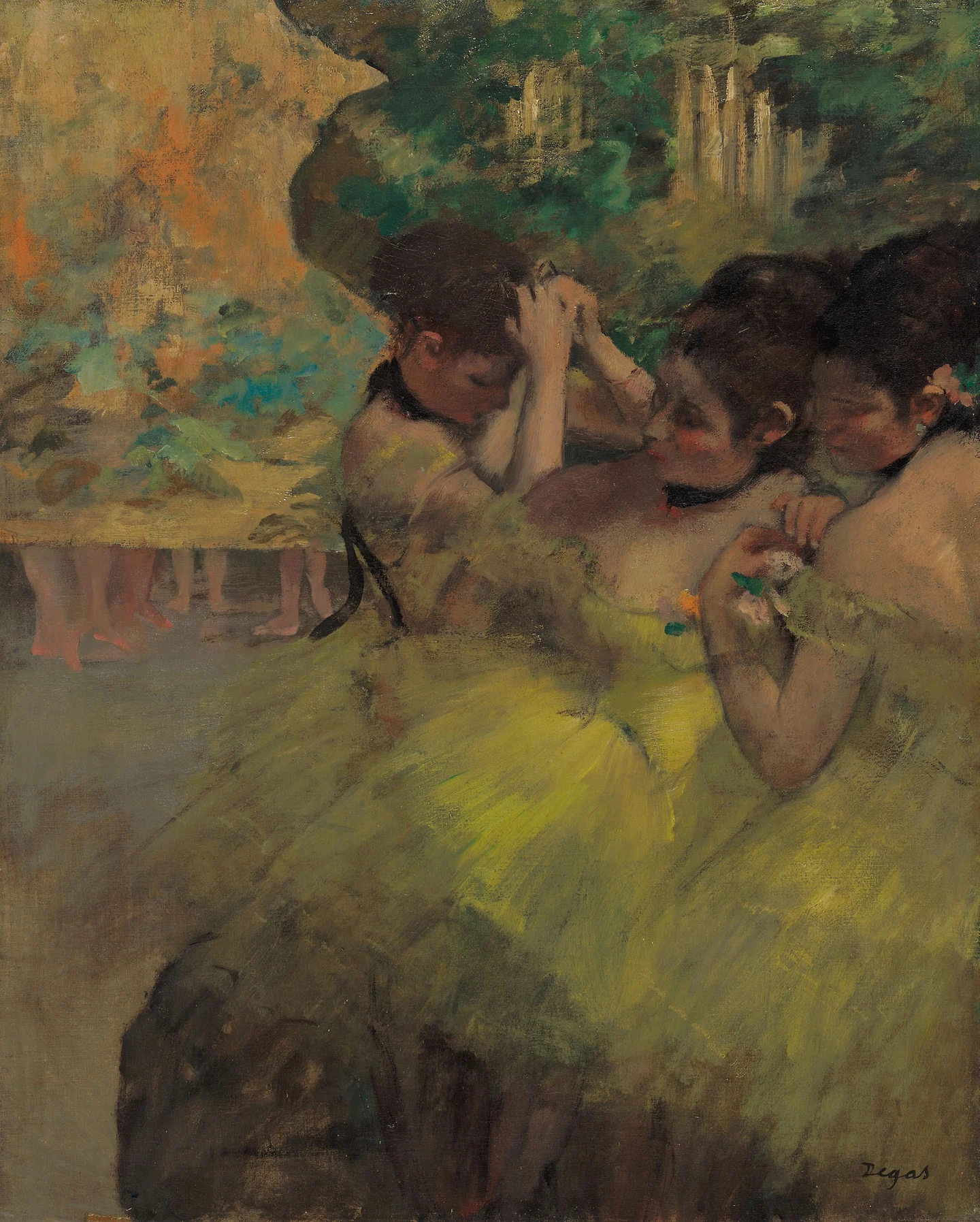 Hilaire Germain Edgar Degas
Yellow Dancers (In the Wings)
1874–76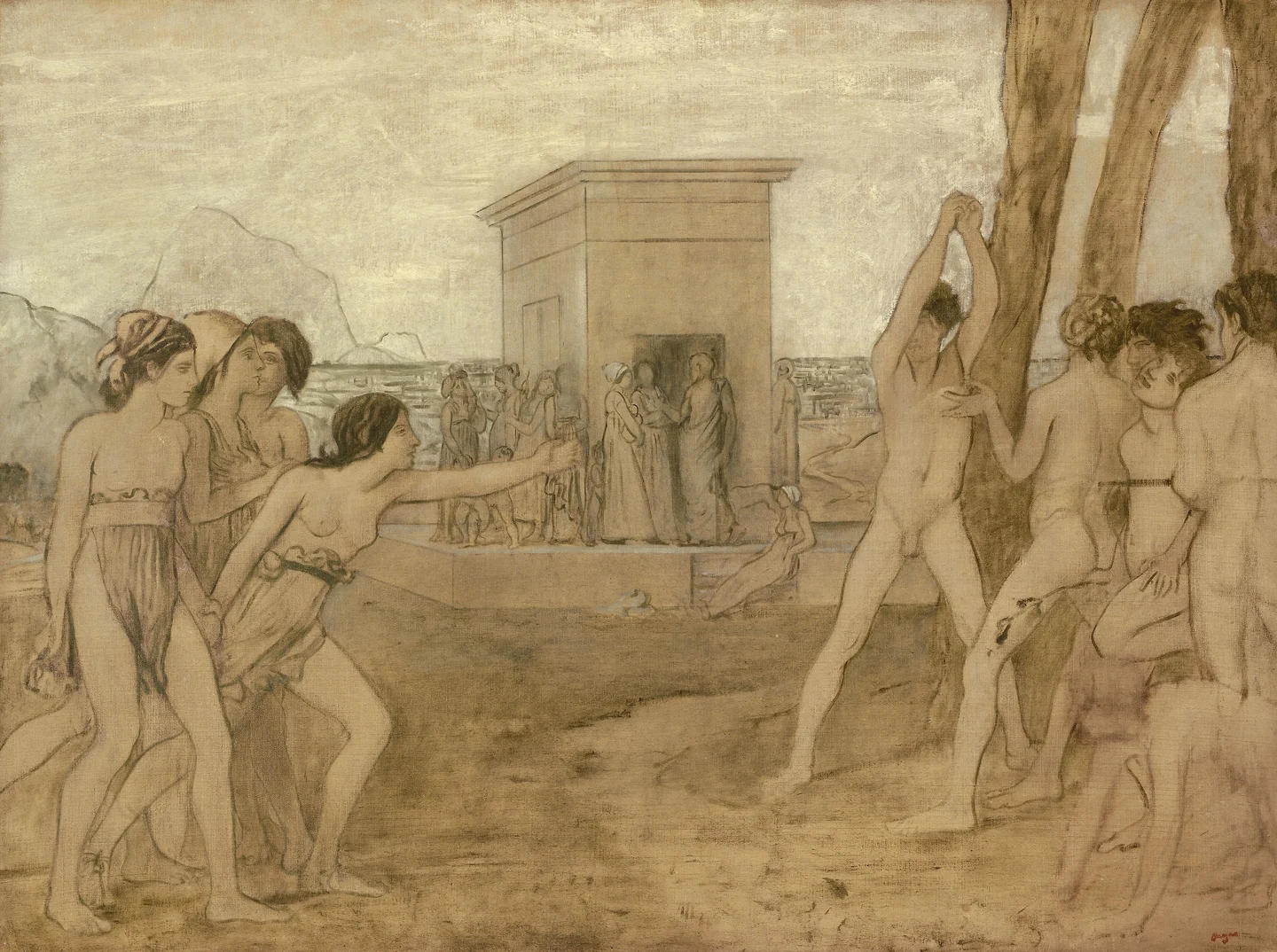 Hilaire Germain Edgar Degas
Young Spartan Girls Challenging Boys
c. 1860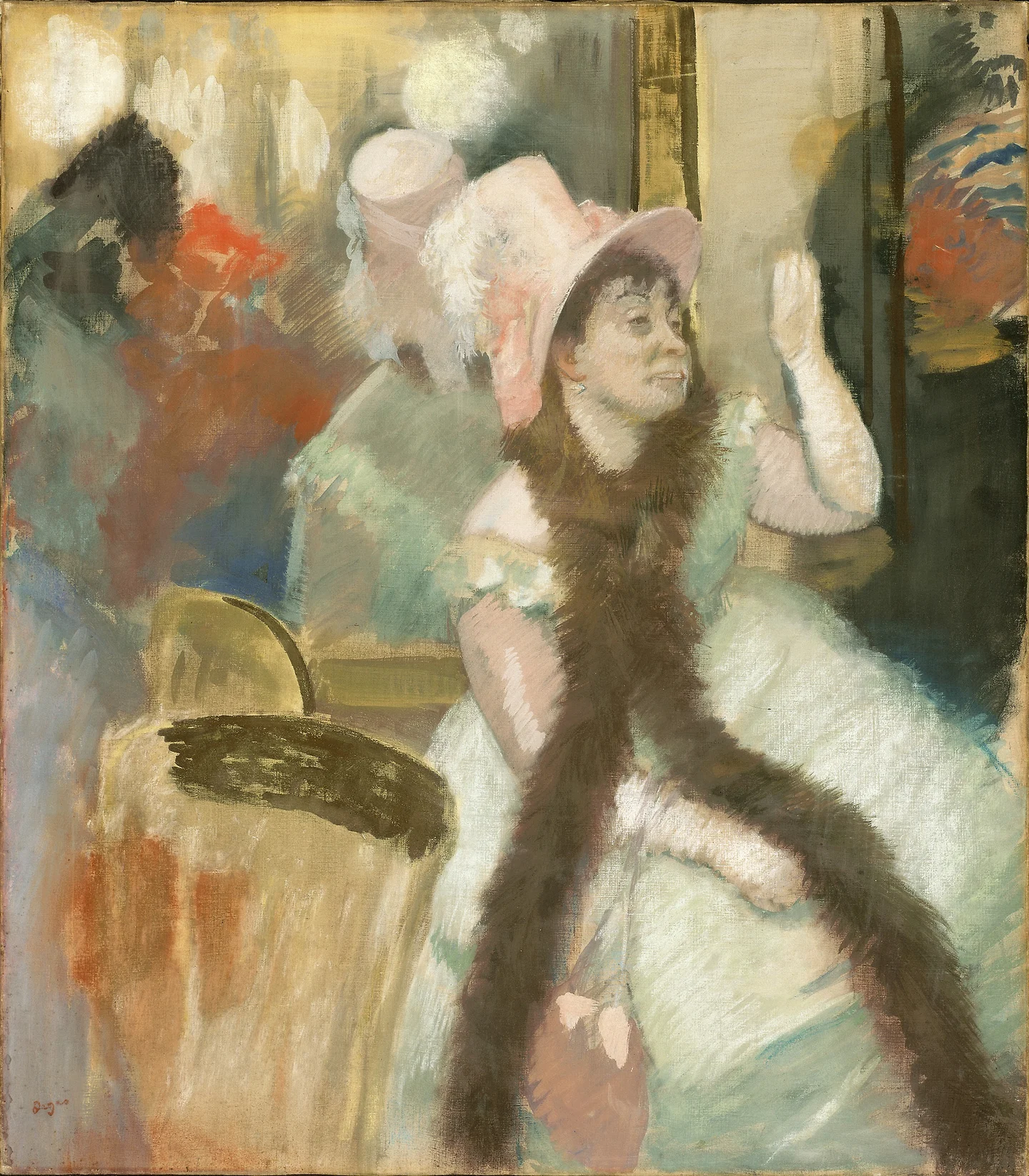 Hilaire Germain Edgar Degas
Portrait after a Costume Ball (Portrait of Madame Dietz-Monnin)
1879Period, style and subject
- Movement
- Impressionism
- Genre
- Everyday life
- Medium
- Oil on wood
- Collection
- Metropolitan Museum of Art, New York
- Accession number
- 29.100.184
Sources
CC0 1.0. Resized previews and tiles prepared for display; no retouching or upscaling. Image licence