Alexander II on His Deathbed
Konstantin Makovsky · 1881
Explore the painting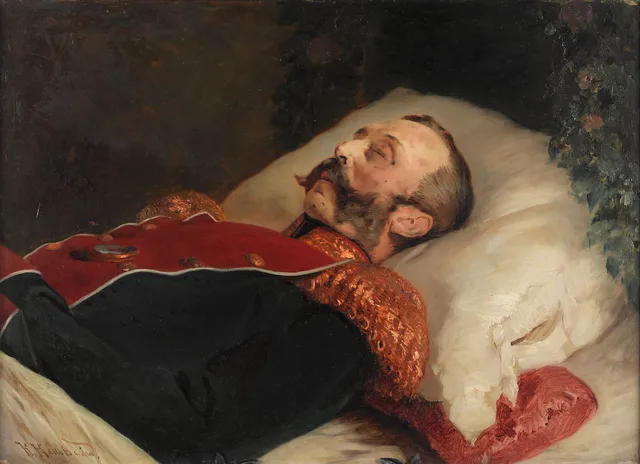
Konstantin Makovsky painted this posthumous portrait of Alexander II on 1 March 1881, Old Style, shortly after the emperor was killed by a bomb. He had known and painted the monarch alive. Now he recorded the dead face. The work joins immediate witness, personal response and the official preservation of a ruler’s image.
The reclining face is seen from the side and slightly below. Closed eyes and a still mouth transform the familiar imperial portrait. Moustache and side-whiskers remain recognisable, but the returning gaze is gone. Personal recognition survives within an image whose immediate subject is death.
A white pillow surrounds the head and shoulder, making skin tones especially visible. Folds register the body’s weight and establish its actual position. The simple material arrangement brings close a person more commonly represented among signs of sovereign status.
Red details stand against the black uniform. Clothing continues to identify a public role after death. By retaining military dress, Makovsky keeps a bodily event within state history. The person and the emperor remain inseparable through costume and the chosen portrait form.
Gold embroidery catches light on the shoulder. Its material brilliance contrasts with the face’s stillness. Familiar signs of elevated position survive in circumstances they can no longer alter. The uniform makes the distinction palpable: public distinctions remain in objects after the person’s life has ended.
The dark background provides little information about the room, concentrating attention on head, pillow and uniform. According to the museum, Makovsky worked from life in the first hours after the death and found the sitting distressing. The limited setting suits an urgent record made before later funeral ceremonies.
Alexander II is chiefly remembered for reforms including the emancipation of the serfs in 1861. This posthumous portrait helped shape that memory through dignity and proximity rather than a depiction of the attack itself. Official purpose does not erase the painter’s personal response, but it helps determine the image preserved for future viewers.
More works by Konstantin Makovsky
- Medium
- Oil on canvas
- Collection
- State Tretyakov Gallery
- Dimensions
- 61 × 85.5 cm
- Accession number
- Инв.15135
Sources
Public-domain artwork. Digital reproduction from the State Tretyakov Gallery. Image licence