Breakfast of an Aristocrat
Pavel Fedotov · 1849–1850
Explore the painting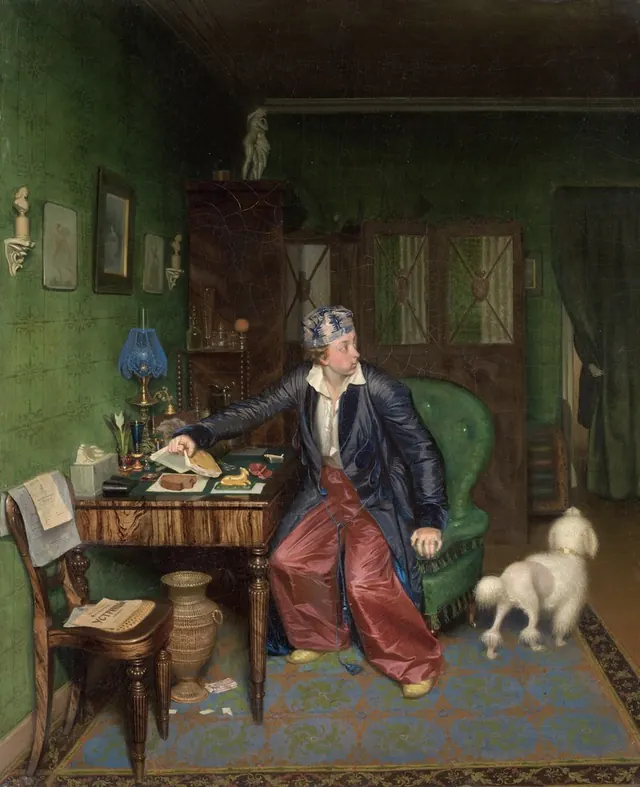
The painting’s story and details
A young man covers bread with a book on hearing a visitor. Pavel Fedotov painted the scene in 1849–50, as Russian genre painting increasingly addressed social behaviour. “Aristocrat” is an ironic description here. The room displays taste and prosperity, but breakfast fails to match. Alternative titles, False Shame and An Untimely Guest, identify the incident more directly. The act of concealment turns an ordinary piece of bread into something compromising.
His fingers hold the book above the table, but the bread remains visible. Fedotov gives us time to understand the manoeuvre. A polished desk, writing implements and small ornaments surround the plain food. The book changes its purpose before our eyes. An object that might suggest its owner’s education is being used as a screen.
At the right edge a gloved hand pulls back a curtain. The visitor remains hidden. The host turns his head towards him while still reaching towards the table. He tries to greet his guest and finish an awkward movement at the same time. Fedotov chooses a moment whose outcome remains open.
The white poodle stands near the entrance, looking in the same direction as its owner. Its pale coat stands out in the dark room, with clipped areas emphasizing the body’s curves. Even the dog is fashionably groomed. A short chain links its muzzle, the curtain and the man’s face.
An advertisement for oysters is legible on the chair seat, displayed openly as part of the furnishings. The Tretyakov Gallery suggests a possible connection with a satirical piece by Goncharov about fashionable men economizing on food to maintain appearances. The connection remains tentative, but it explains why contemporary readers would recognize this situation. Theatre, advertising and the cost of a social reputation enter the small room.
The blue dressing gown shines along its folds, and pink trousers spread broadly over the knees. The indoor outfit uses Eastern motifs fashionable in mid-century St Petersburg. It would suit an elegant pose; sudden movement now pulls it out of shape. Fedotov paints the fabric carefully, preserving its appeal within the satire. We may admire the possessions before noticing their role in the owner’s behaviour.
The carpet covers almost the entire floor. Flowers recur across its blue field, bordered by a darker patterned strip. Table and chair legs leave only small openings. There is little empty space around the seated man. The density of possessions makes his movement particularly conspicuous. An arm trying to hide a small piece of bread crosses a whole display of domestic acquisitions.
The painting invites laughter at the dandy while leaving a question for the viewer. Why should a plain breakfast count as an exposure? If we too measure social standing through possessions, his manoeuvre becomes understandable. Fedotov’s satire reveals a shared habit through a small domestic incident. A room, bread and an unexpected visit show how much effort can go into maintaining an impression of oneself.
Featured in tours
Russian life. Estate, city and village
How nineteenth-century painters depicted work, wealth, education and changes in everyday life.
More paintings to compare


Period, style and subject
- Movement
- Realism
- Genre
- Everyday life
- Medium
- Oil on canvas
- Collection
- State Tretyakov Gallery
- Accession number
- 5208
Sources
Museum material for noncommercial use