In a Boat
Konstantin Korovin · 1888
Explore the painting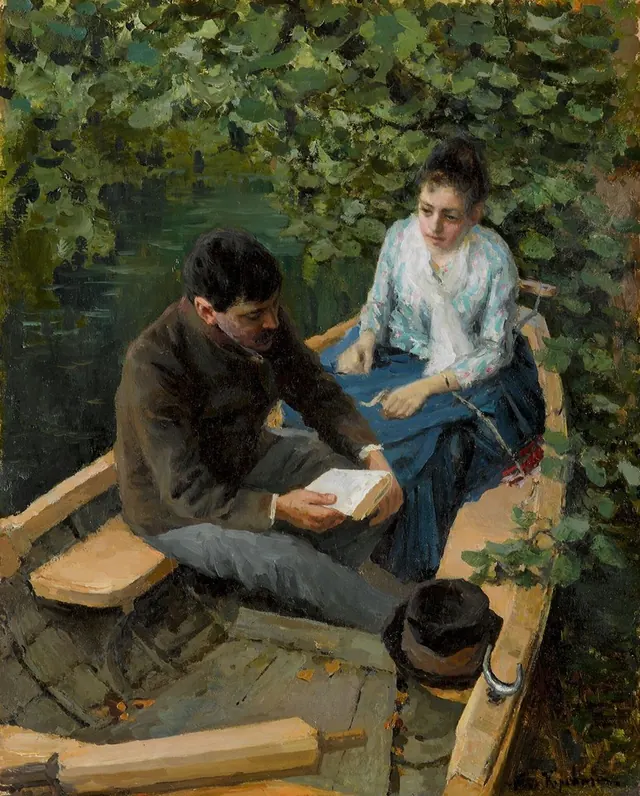
The painting’s story and details
In 1888 Konstantin Korovin painted two people in a boat amid thick foliage. The work belongs to summers spent at Zhukovka, the country house of his teacher Vasily Polenov. Domestic life, artists’ conversations and painting took place alongside one another. For the young Korovin this offered opportunities to study from life and develop compositions with several figures. A quiet reading scene resulted from preparation, despite looking like a passing glimpse during a walk.
The open book rests on the man’s knees. His hands hold the pages and his head inclines. The woman sits opposite, but the text is unavailable to us. Pale paper concentrates attention in the lower part of the group. From it the eye rises to the faces and returns along an arm. The book sits between the figures and gives their attention a direction.
Pink flowers appear on the woman’s bluish blouse beside a pale scarf. Cool shadows enter the folds, while face and hands are warmer. Korovin follows the effects neighbouring colours have on one another. Pale clothing stands out against the foliage while also receiving its hues. Painting outdoors poses this problem: maintaining distinctions between cloth, skin and plants within shared illumination.
Leaves hang overhead and cross in front of the boat’s side. Broad patches alternate with dark openings, with individual outlines clearer near the figures. Greenery almost closes off the distance. Korovin finds many shades of one colour without making a flat wall. Light touches bring some leaves forward while dark intervals push others back. A small stretch of bank acquires enough depth to surround the boat.
We look down into the boat, seeing its floor, bench and the sitters’ knees. The right side runs diagonally behind the woman, partly concealed by leaves. A dark hat rests on it beside a metal rowlock. These objects establish scale and the body’s position within a confined boat. The elevated viewpoint brings an ordinary outing so close that almost no open landscape remains.
To the man’s left, the water is dark green. Short light strokes cross vertical reflections, suggesting a surface capable of movement even though the farther bank is hidden. Water, hair and clothing are close in tone. Korovin distinguishes them through brush direction and small shifts of colour. The materials remain recognizable without a hard outline around every object.
A few yellow leaves lie on the floor among broad strips of planking, with a bench visible beneath the man. This close passage makes the scale of the brushwork easy to examine: the brush leaves a long trace for a board and a small touch for a leaf. The figures are more detailed. Different degrees of finish guide attention from the boat’s construction towards its occupants, keeping object and painted mark visible together.
Polenov urged Korovin to plan compositions and gather more studies from life; he also posed for his pupil. This matters to the history of Russian Impressionism. Free handling developed through shared work, advice and revision. In a Boat carefully arranges viewpoint, figures and surrounding foliage. Those decisions produce its apparent ease.
Featured in tours
Love, marriage and encounters
Gods, lovers, spouses and people whose relationships remain unknown.
Russian life. Estate, city and village
How nineteenth-century painters depicted work, wealth, education and changes in everyday life.
More paintings to compare
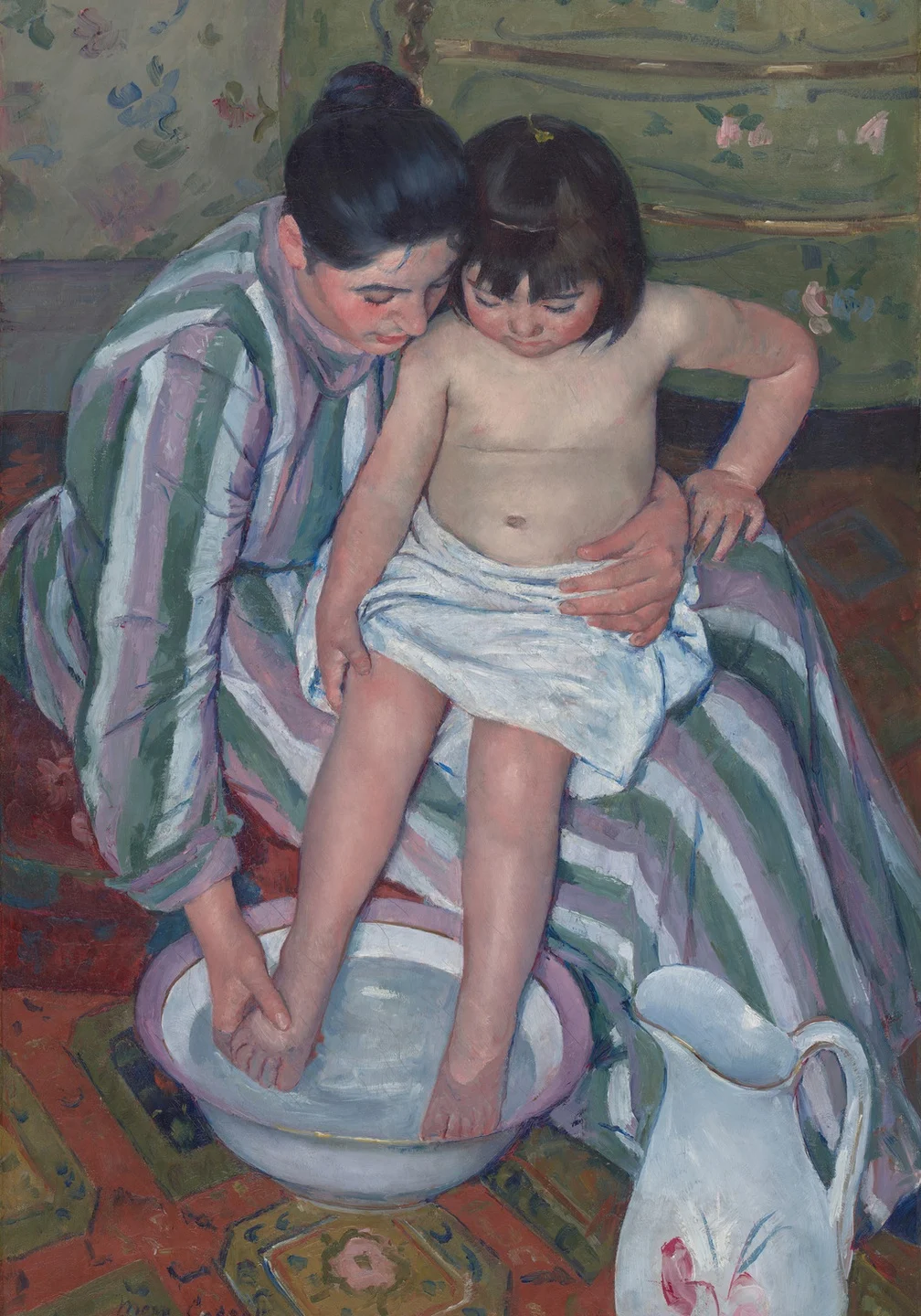 Mary Cassatt
The Child's Bath
1893 Berthe Morisot
Summer’s Day
About 1879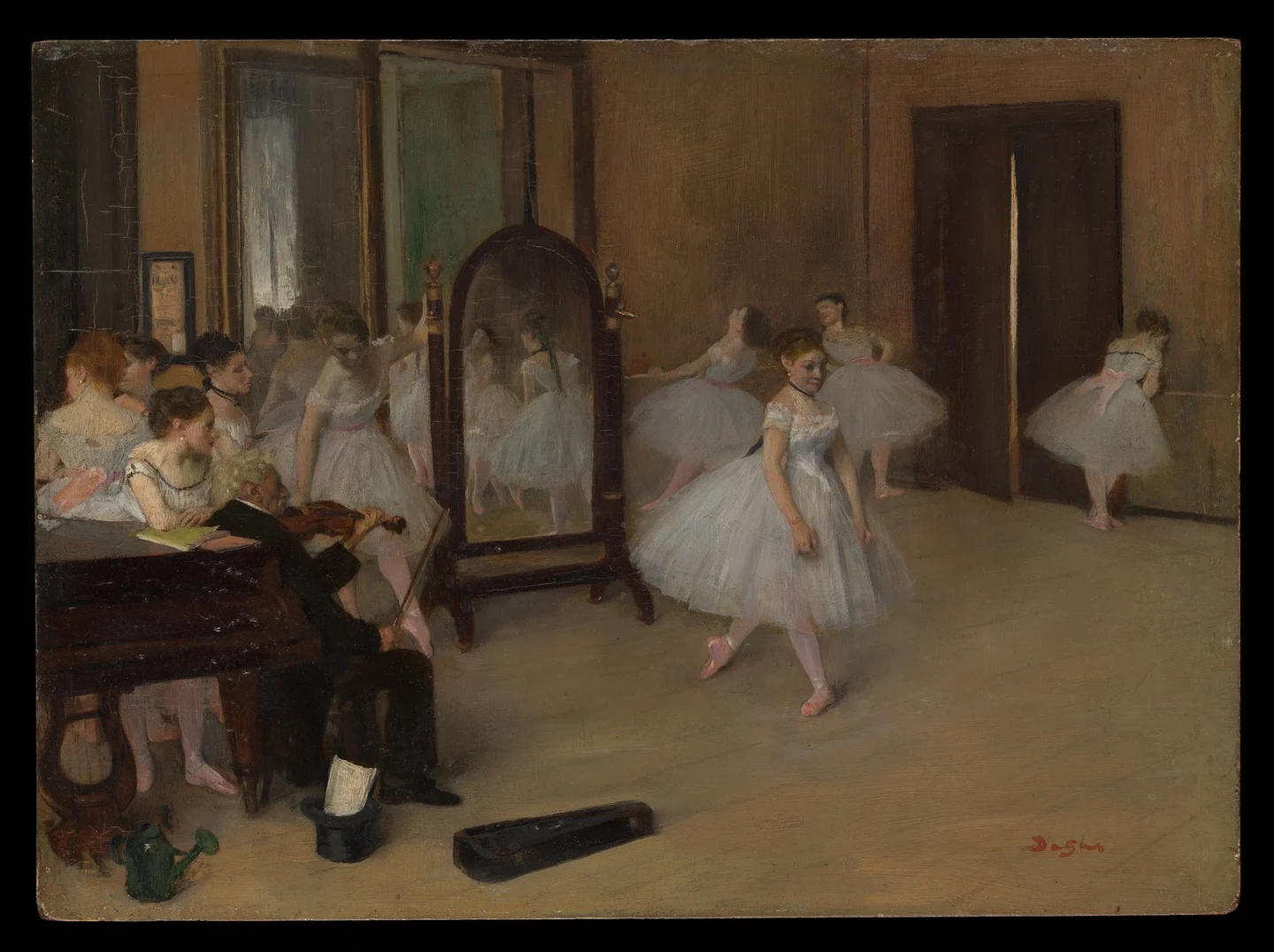 Edgar Degas
The Dancing Class
About 1870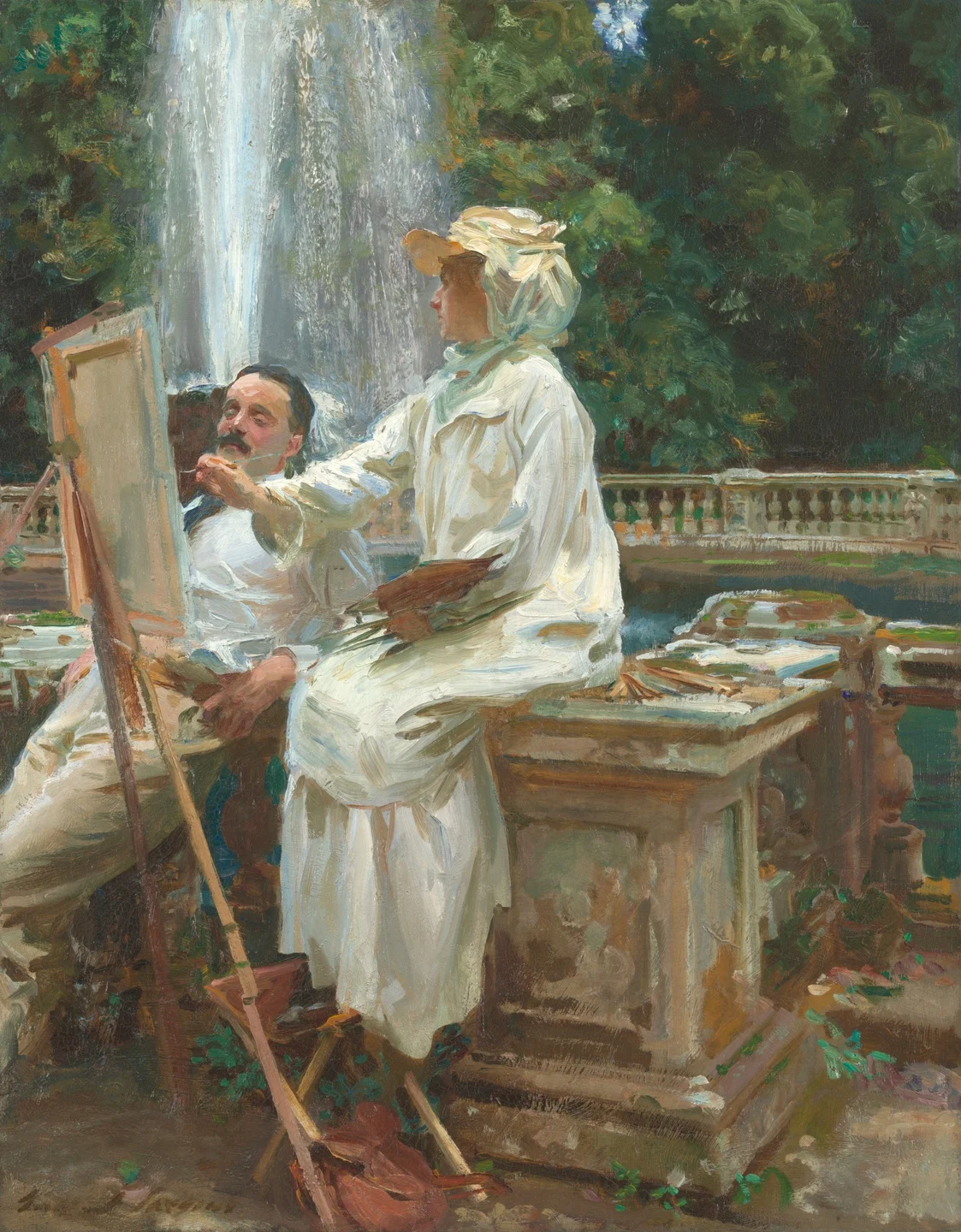 John Singer Sargent
The Fountain, Villa Torlonia, Frascati, Italy
1907 Pierre-Auguste Renoir
Two Sisters (On the Terrace)
1881 Pierre-Auguste Renoir
Acrobats at the Cirque Fernando (Francisca and Angelina Wartenberg)
1879Period, style and subject
- Movement
- Impressionism
- Genre
- Everyday life
- Medium
- Oil on canvas
- Collection
- State Tretyakov Gallery
- Accession number
- 1501
Sources
Tretyakov Gallery reproduction. Noncommercial use with collection credit and source link. Image licence