Northeaster
Winslow Homer · 1895; reworked by 1901
Explore the painting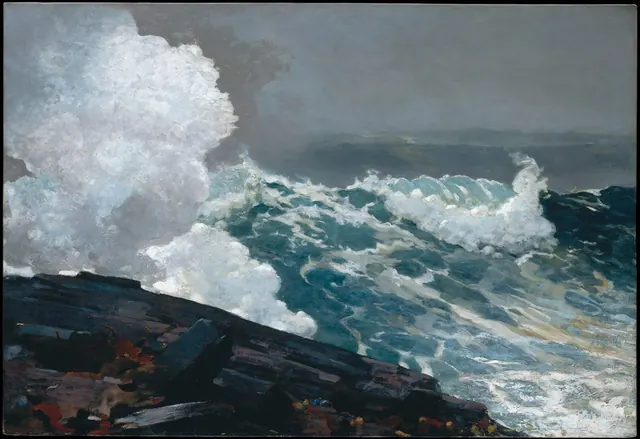
The painting’s story and details
A wave breaks against the rocks at Prouts Neck, Maine, where Homer lived and worked from 1883. He painted this coast in different weather, choosing a winter storm for Northeaster. Water fills almost the entire space before us, leaving a narrow stretch of rock below.
When the painting was first exhibited in 1895, two crouching figures occupied the rocks on the left. Homer later painted them out. Rocks now remain in their place, removing the comparison between the wave’s height and a human body. The change affected both the subject and its scale.
A great white burst of spray rises on the left. Cool blue and grey areas fill it, while small irregularities break its edge. Homer amplified this mass of spray when reworking the painting. It became taller and more prominent, dominating the scene.
On the right, another wave curls into a white crest. Dark blue-green water shows beneath the foam. Here the wave retains its shape before impact; beside it, spray records a collision with rock. Several stages of water’s movement coexist on the canvas.
Long, nearly straight brushstrokes cross the rocks. In the water, strokes curve and intersect. Colour alone does not distinguish the solid shore from the moving sea. The direction of the paint helps separate rock from water.
At the lower right, foam spreads in pale bands across dark water. The distant sea is handled more quietly and almost merges with the grey sky. Small details concentrate near us.
Earlier, Homer often depicted fishers, rescuers and people waiting for boats to return. By the 1890s the sea itself increasingly occupied the centre of his work. The revised painting appeared in New York in 1901, when a critic particularly praised its shore and sea without a human presence.
Featured in tours
American landscape. Land and its inhabitants
Nature, territorial expansion, the Civil War and urban life in American painting.
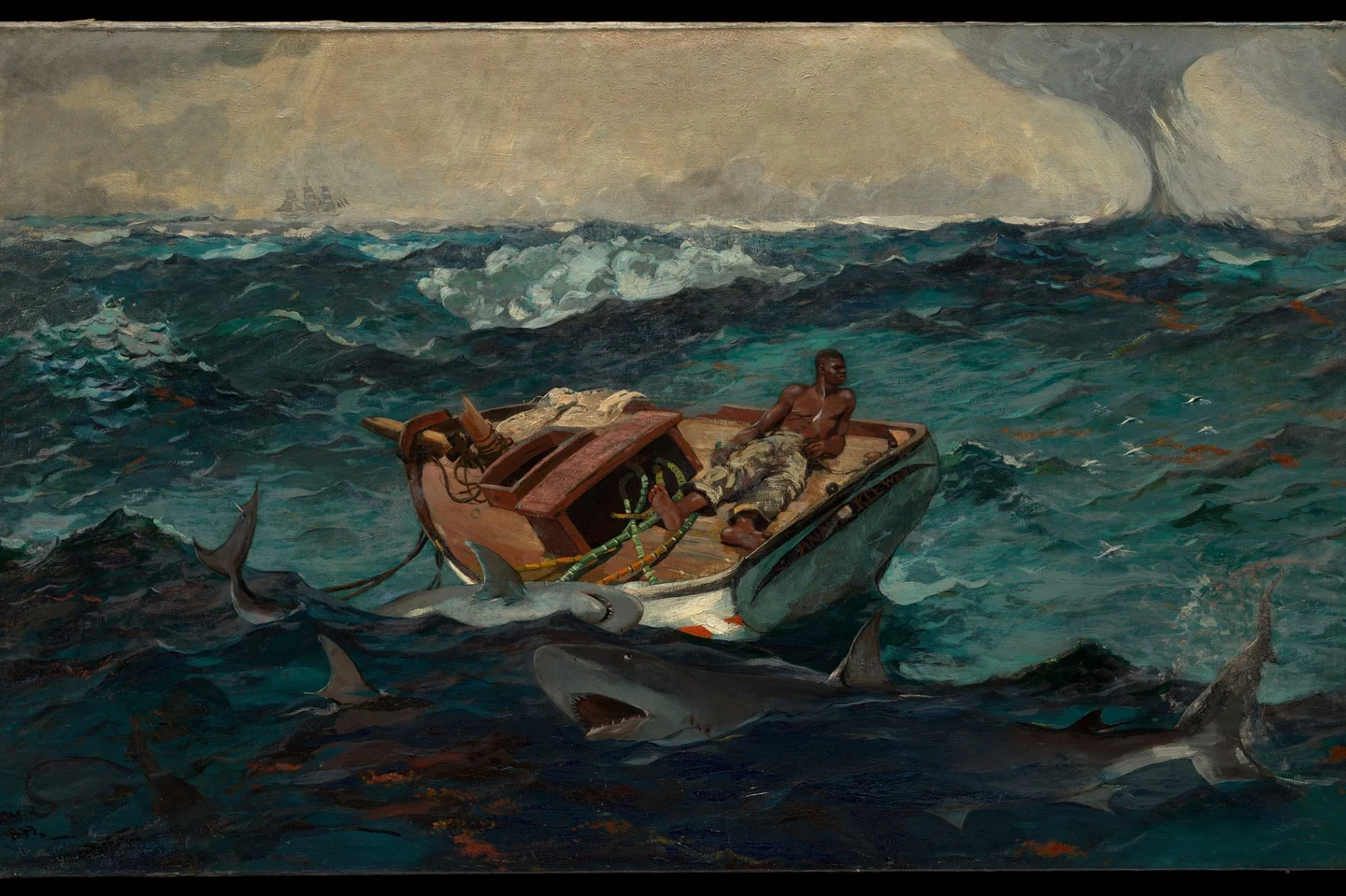
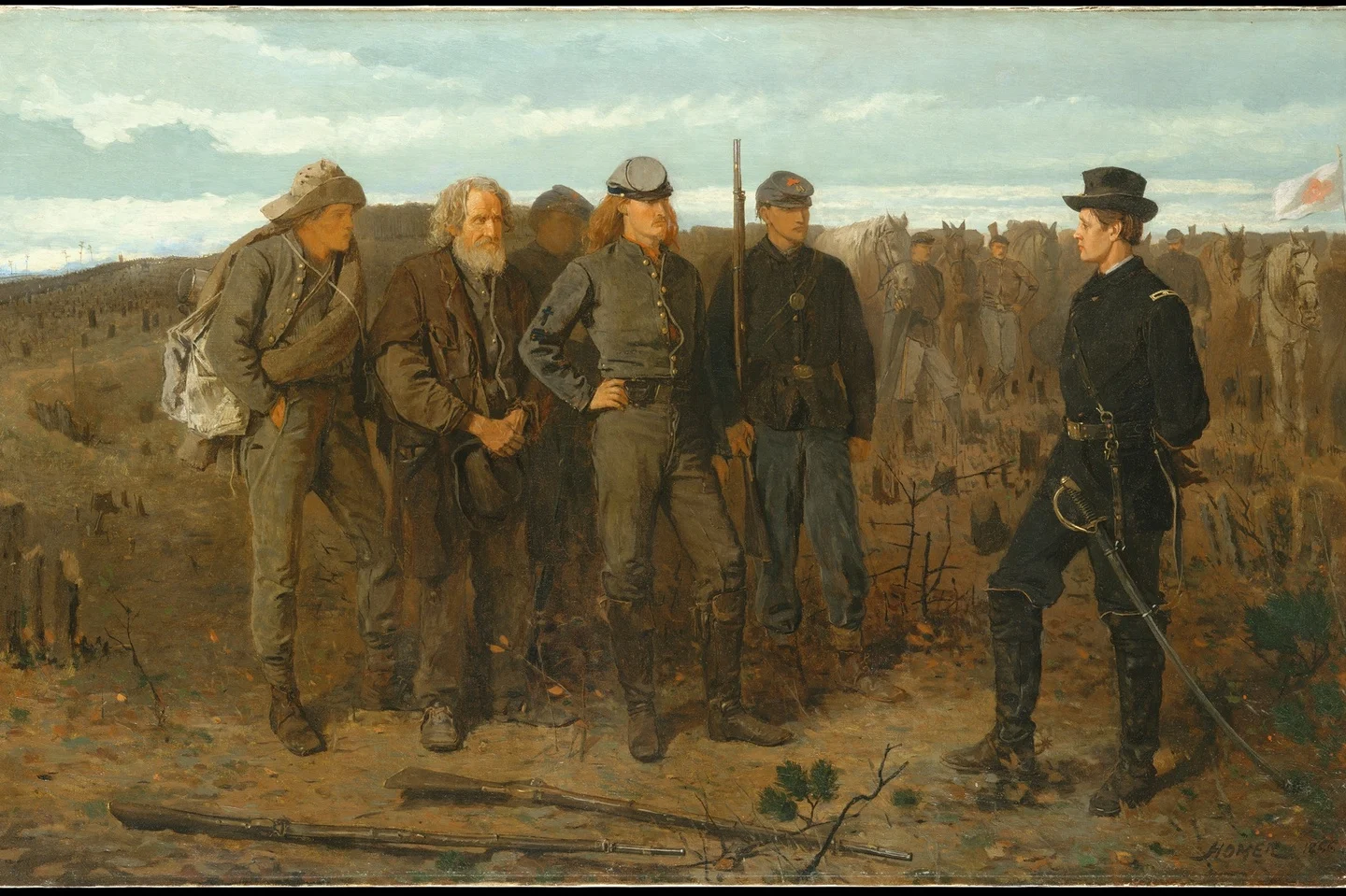
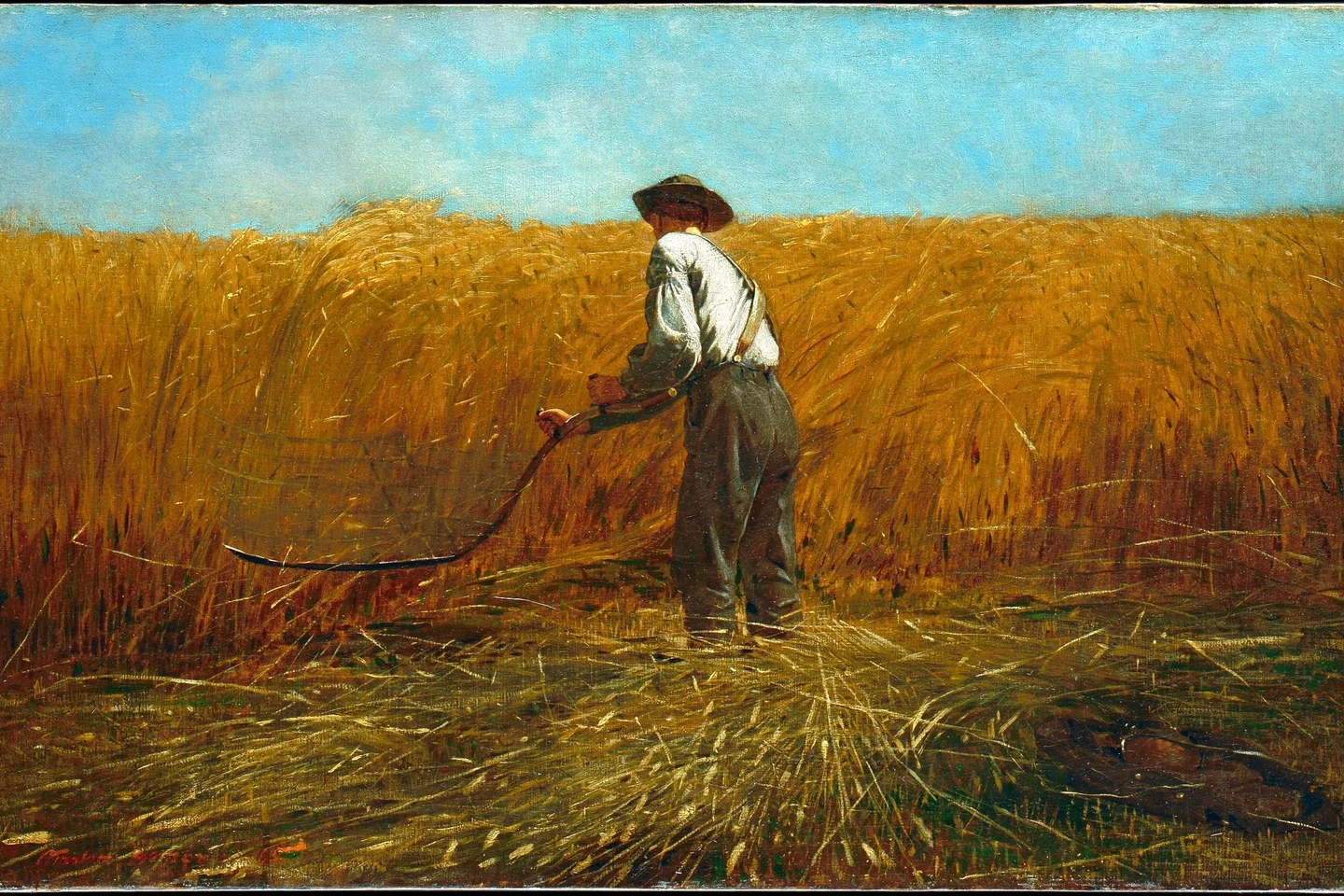
More paintings to compare
Period, style and subject
- Movement
- Realism
- Genre
- Marine painting
- Medium
- Oil on canvas
- Collection
- The Metropolitan Museum of Art
- Dimensions
- 87.6 × 127 cm
- Accession number
- 10.64.5
Sources
Image provided under CC0. Image licence