The Last Moments of John Brown
Thomas Hovenden · 1882–84
Explore the painting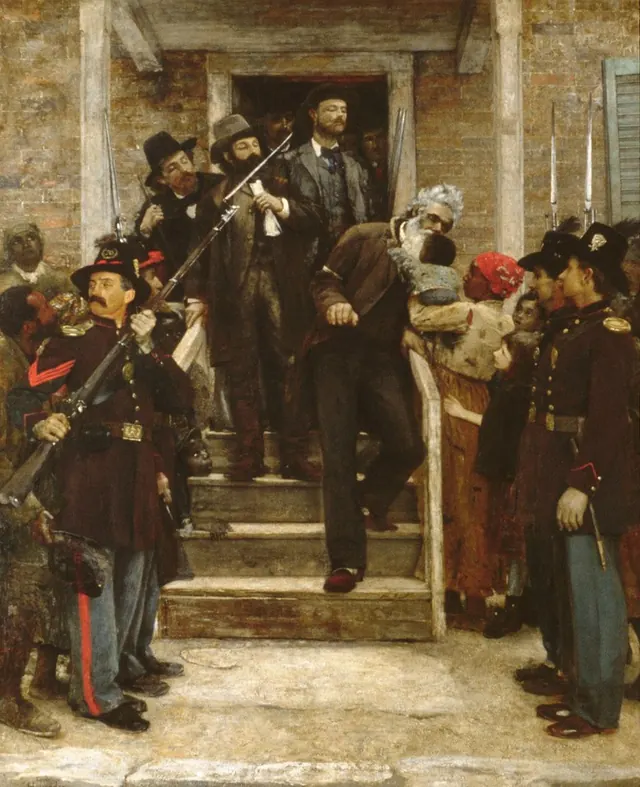
The painting’s story and details
John Brown is led from prison to his execution on 2 December 1859. Weeks earlier he had led the raid on the federal arsenal at Harpers Ferry, intending to arm enslaved people. The raid failed. Hovenden painted this scene in 1882–1884, after slavery’s abolition, while Brown’s methods remained disputed.
Brown bends towards a child held by a Black woman. The kiss comes from a newspaper account that became a legend. Hovenden chose it as the centre of his picture. A man condemned after an armed raid is represented through tenderness towards a child.
Brown’s grey head stands out against the prison wall. His body bends forward, but his arms are bound and a rope appears around his neck. He can touch the child with his face without embracing it. Restricted movement makes the brief gesture conspicuous among weapons and guards.
The woman raises the child above the railing. Her red headscarf is one of the brightest areas beside Brown. Almost no distance separates them, while armed men define the passage’s boundaries. The composition chiefly connects the condemned man with those whose freedom he sought.
An attendant holding a document stands behind Brown. Rifles and bayonets run diagonally before the figures and above their heads. The gallows are not shown. The document, bound arms, rope and guards surrounding the exit establish the approaching execution.
The soldier in the left foreground turns away from the kiss. Faces gather more densely on the right, with some directed towards Brown. These different lines of sight maintain the sense of a crowded scene. The white beard and the child’s pale clothing distinguish its one intimate encounter.
Hovenden worked in a building previously used for antislavery meetings. His wife’s family had helped fugitives through the Underground Railroad. The sympathetic painting emerged from that tradition. Choosing the legendary kiss presented Brown as worthy of remembrance and reverence, while keeping the raid’s violence outside the frame.
Featured in tours
History in painting. Events and memory
Who painted war, revolution and state power, and how long after the event.
More paintings to compare
 Nikolai Ge
Peter I Interrogating Tsarevich Alexei at Peterhof
1871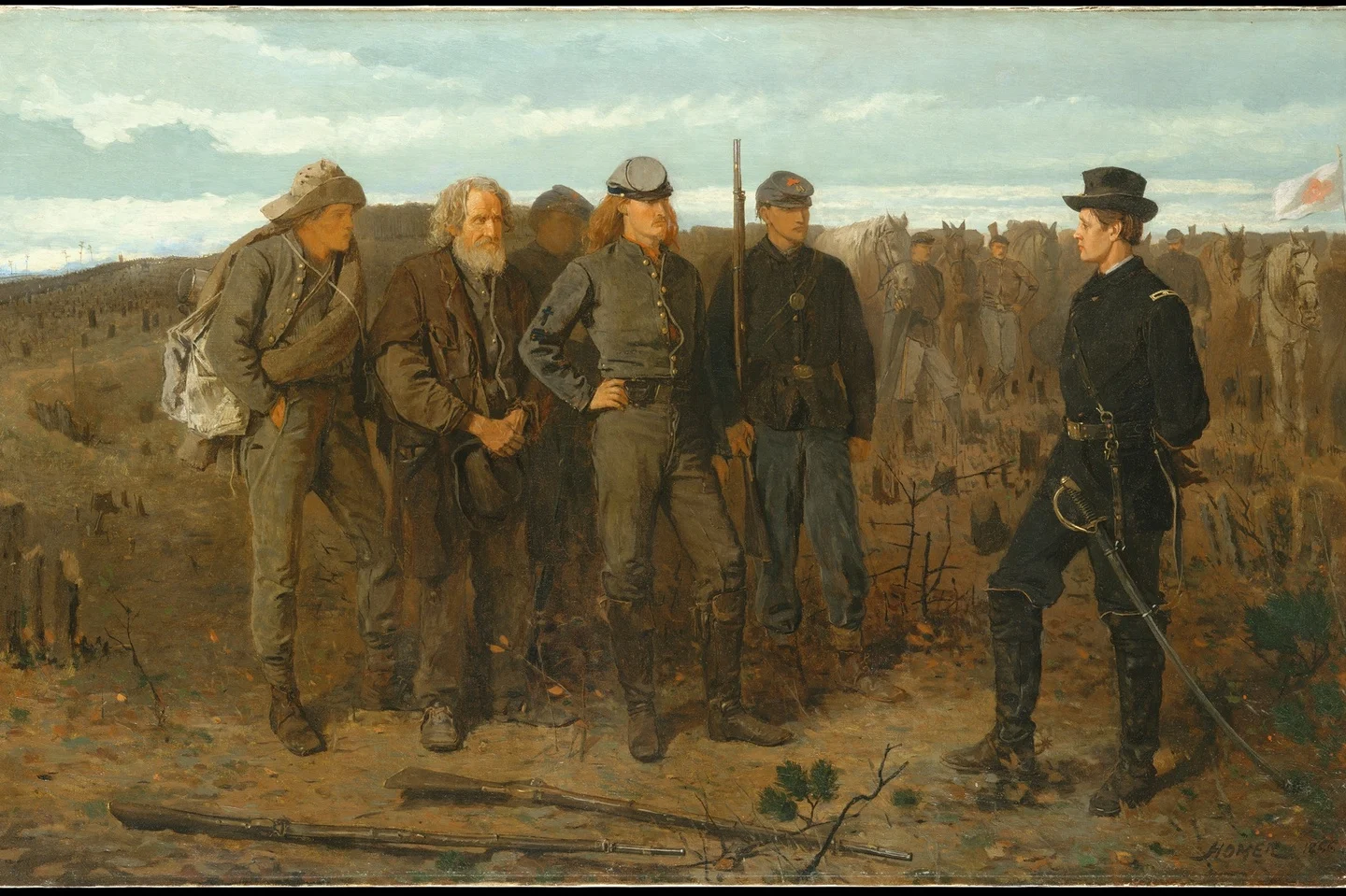 Winslow Homer
Prisoners from the Front
1866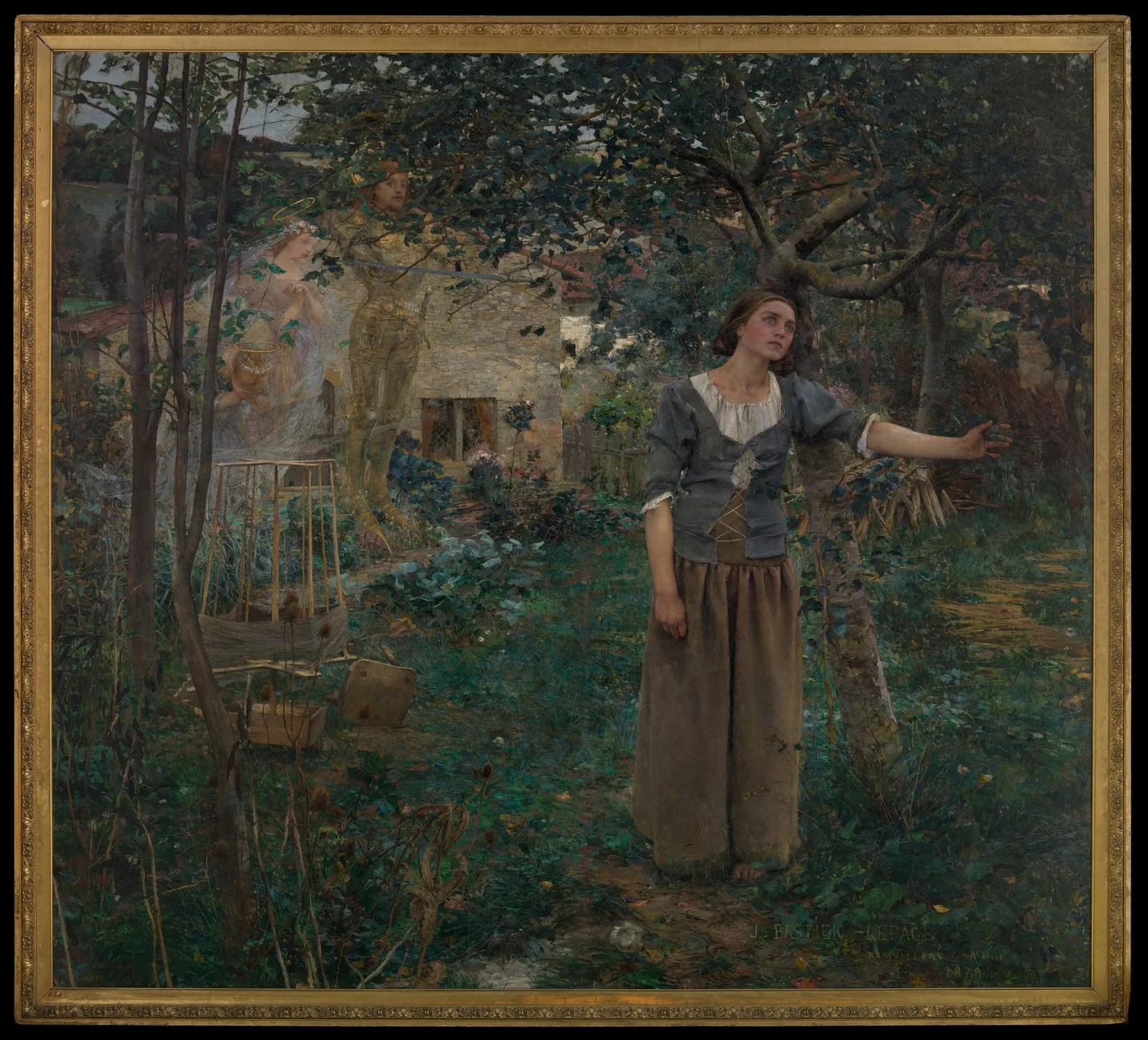 Jules Bastien-Lepage
Joan of Arc
1879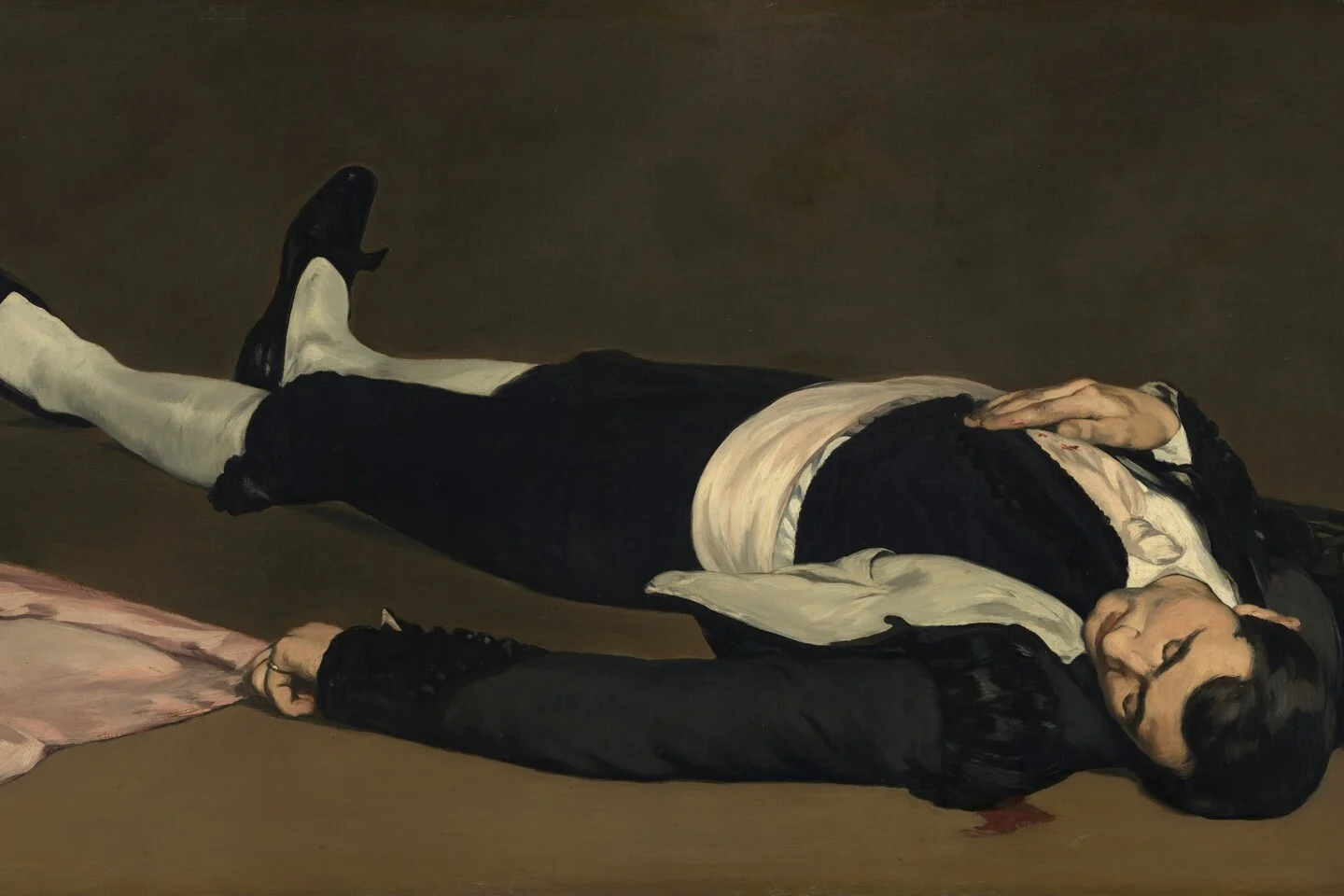 Édouard Manet
The Dead Toreador
probably 1864 Ilya Repin
Reply of the Zaporozhian Cossacks
1880–1891 Ilya Repin
Ivan the Terrible and His Son Ivan on 16 November 1581
1885Period, style and subject
- Movement
- Realism
- Genre
- History painting
- Medium
- Oil on canvas
- Collection
- The Metropolitan Museum of Art
- Dimensions
- 196.5 × 168.3 cm
- Accession number
- 97.5
Sources
Image provided under CC0. Image licence