Joan of Arc
Jules Bastien-Lepage · 1879
Explore the painting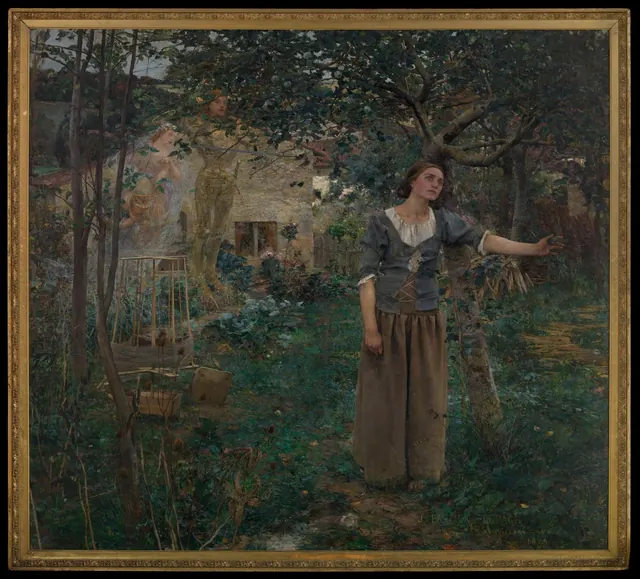
The painting’s story and details
Bastien-Lepage painted Joan of Arc in 1879. Following defeat in the Franco-Prussian War, France had lost part of Lorraine, the region of both Joan and the painter. The story of a girl called to save her country gained renewed political meaning. Her military career has not yet begun here; the scene takes place in a garden.
Joan stands barefoot in a long skirt and laced bodice. One arm hangs down while the other reaches towards a tree. Her eyes look beyond the garden’s ordinary objects. The still face and asymmetrical pose suggest a sudden withdrawal of attention from her surroundings.
Three saints appear among the branches on the left: Michael, Catherine and Margaret. In Joan’s story, their voices call her to oppose the English during the Hundred Years War. Their figures are translucent. The garden shows through them, placing the vision in the same space as wall and trees.
Michael is recognisable by his golden armour and sword. His figure stands behind slender trunks. The metallic gleam looks especially strange beside Joan’s solid grey clothing. Military equipment has entered the scene although the girl herself remains dressed for village life.
Household objects appear at the lower left, including an overturned chair. Grass covers the ground, crossed by narrow paths. Bastien-Lepage fills the garden with details of an ordinary household. Joan’s calling arises within a place previously occupied by daily work and life.
The stone wall, low window and fruit trees draw on surroundings familiar to the painter. He used his family home in Damvillers for the garden. A medieval event thus acquired the appearance of a Lorraine village he could study directly. Local plants, buildings and clothing reduce the historical distance.
At the Salon of 1880, critics praised Joan’s convincing presence but challenged the saints’ appearance in such a meticulously painted garden. One canvas combined naturalistic painting with a religious vision. The dispute concerned how to represent a miracle through an art committed to recognisable, material things.
Featured in tours
History in painting. Events and memory
Who painted war, revolution and state power, and how long after the event.
More paintings to compare
 Nikolai Ge
Peter I Interrogating Tsarevich Alexei at Peterhof
1871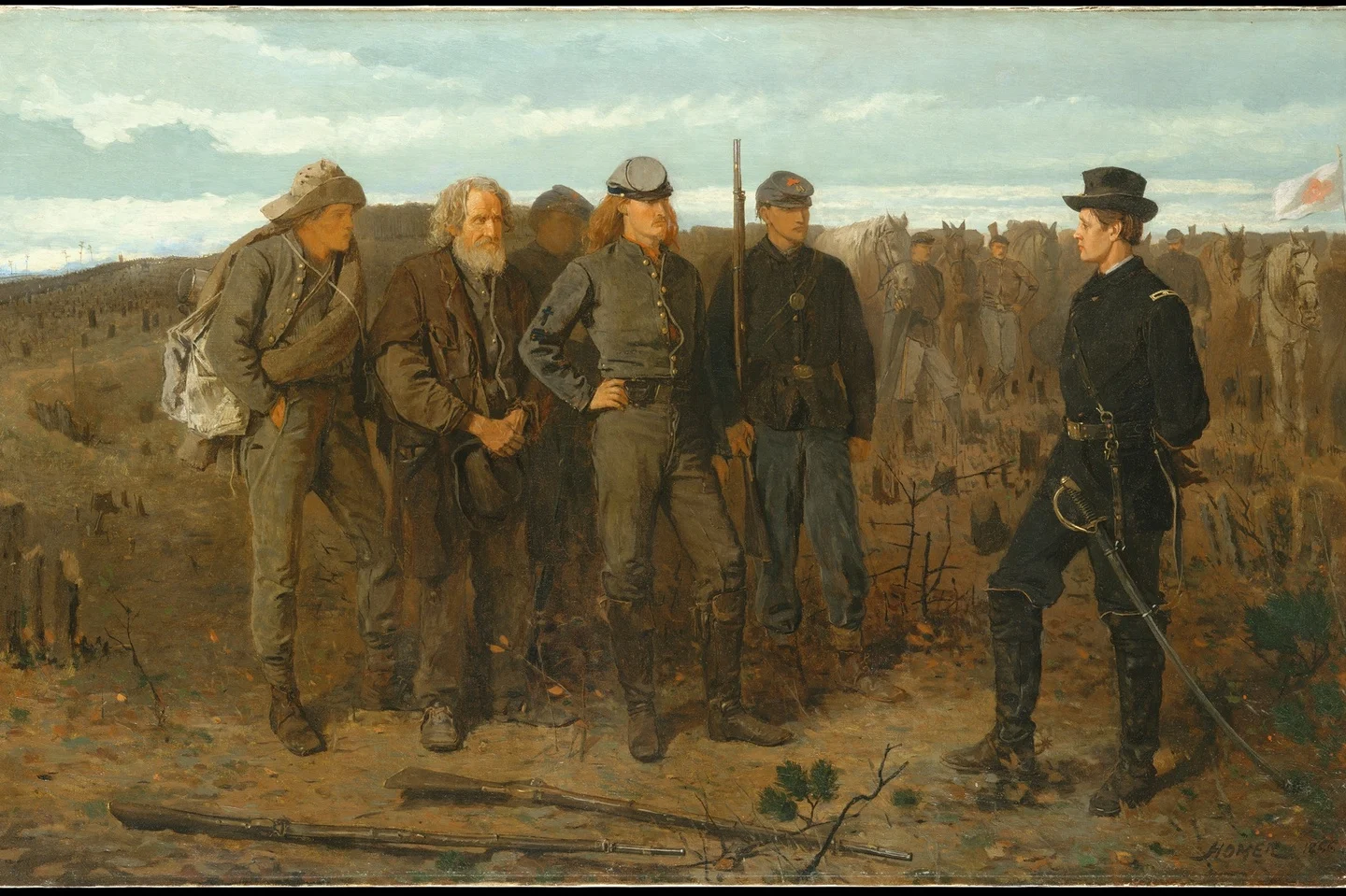 Winslow Homer
Prisoners from the Front
1866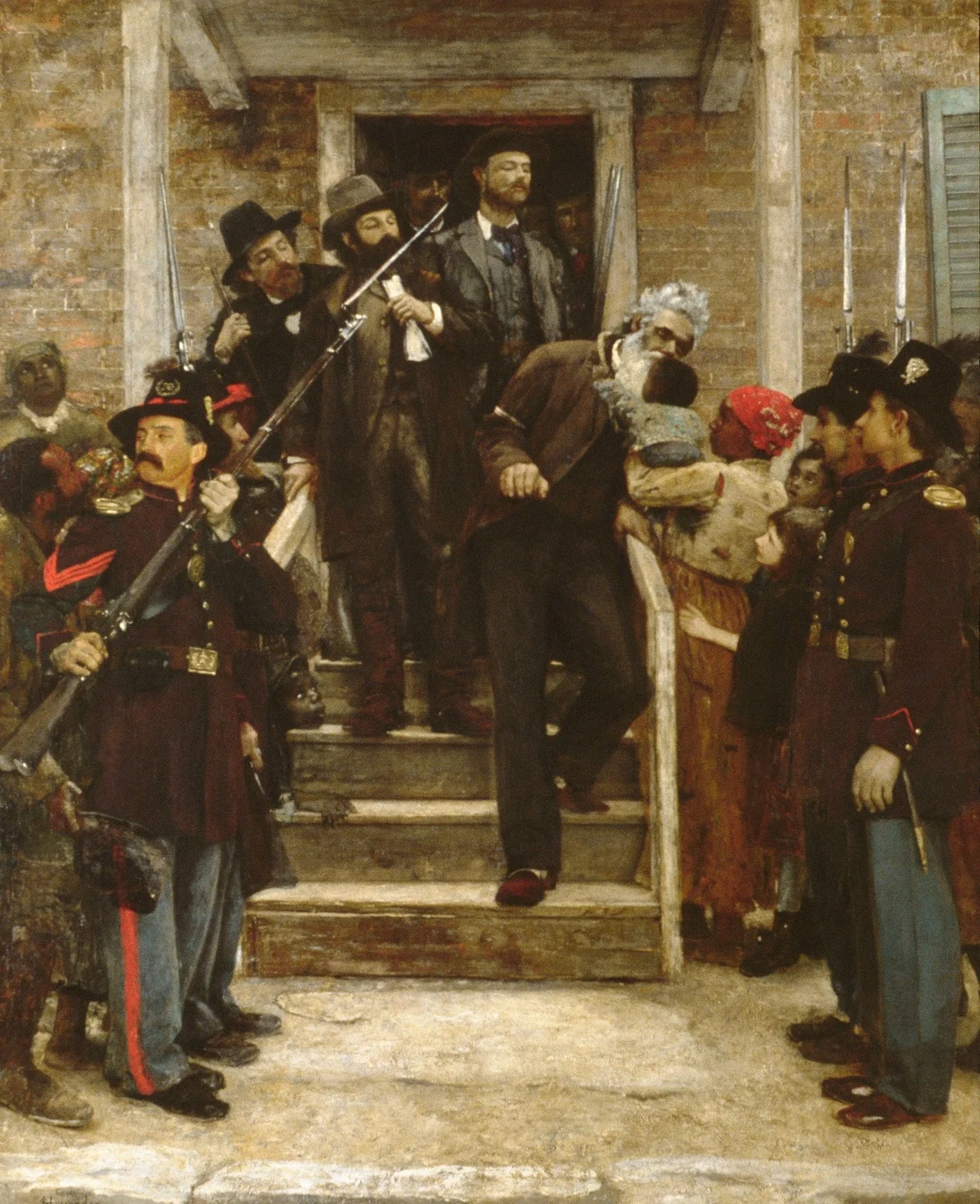 Thomas Hovenden
The Last Moments of John Brown
1882–84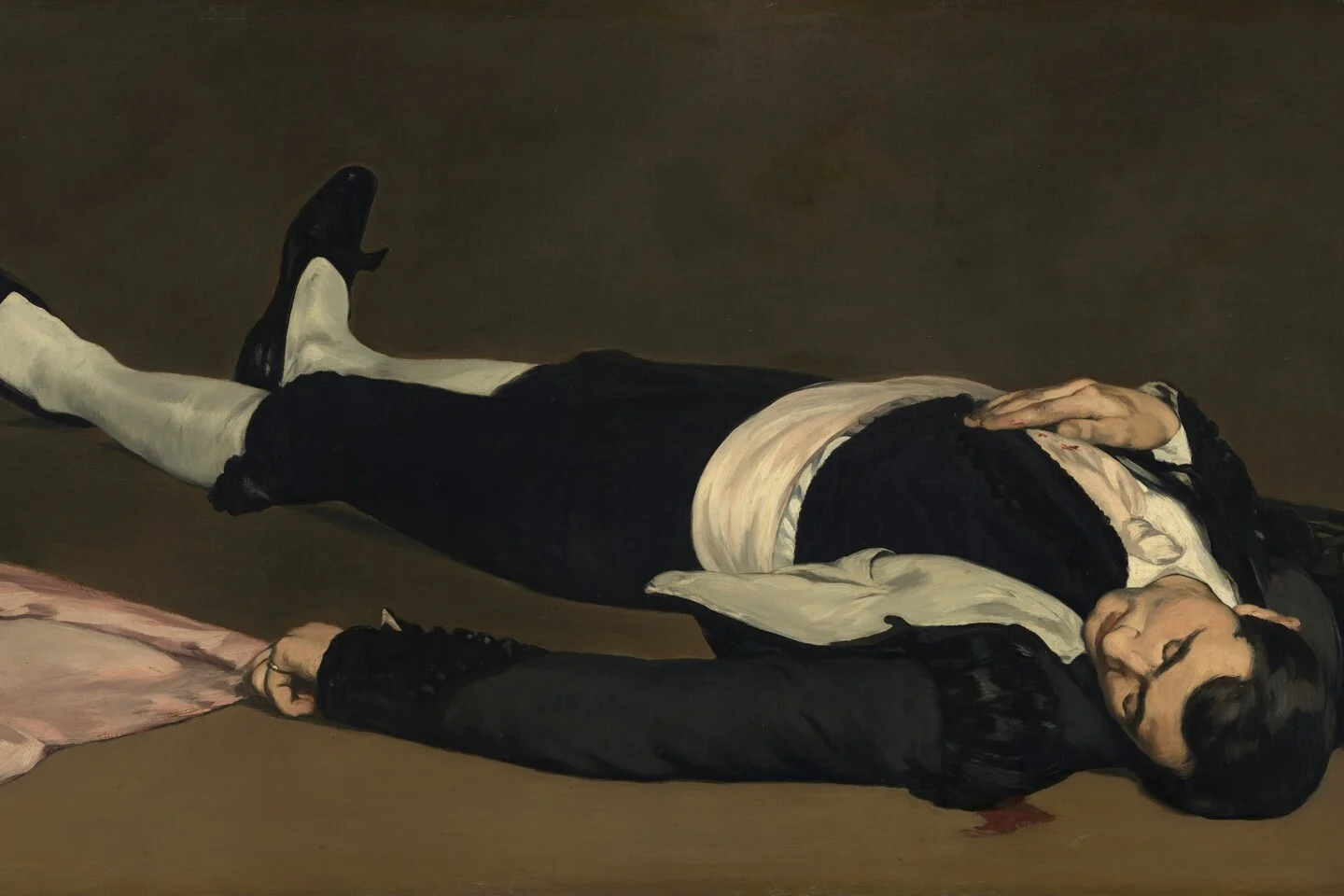 Édouard Manet
The Dead Toreador
probably 1864 Ilya Repin
Reply of the Zaporozhian Cossacks
1880–1891 Ilya Repin
Ivan the Terrible and His Son Ivan on 16 November 1581
1885Period, style and subject
- Movement
- Realism
- Genre
- History painting
- Medium
- Oil on canvas
- Collection
- The Metropolitan Museum of Art
- Dimensions
- 254 × 279.4 cm
- Accession number
- 89.21.1
Sources
Image provided under CC0. Image licence