Antoine Laurent Lavoisier (1743–1794) and Marie Anne Lavoisier (Marie Anne Pierrette Paulze, 1758–1836)
Jacques Louis David · 1788
Explore the painting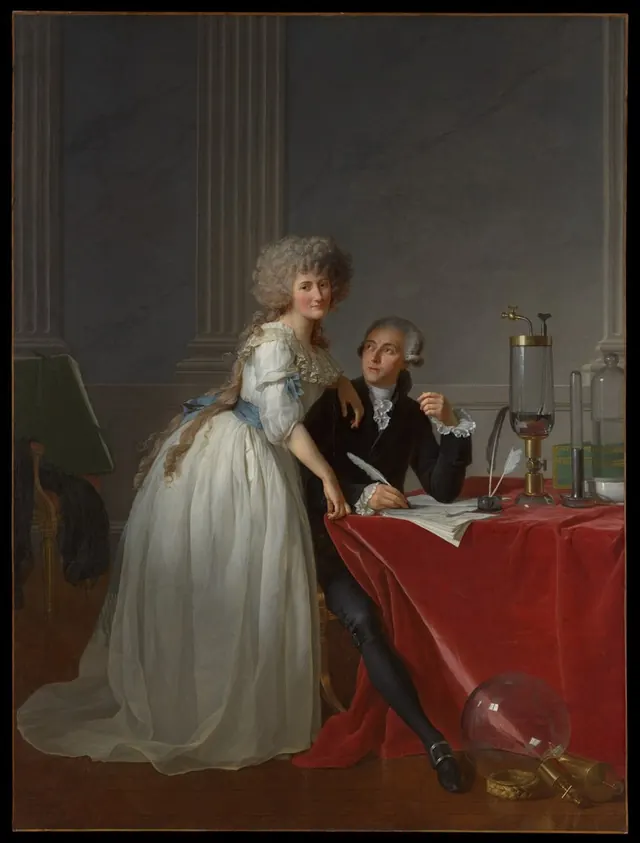
The painting’s story and details
The Lavoisiers pose beside experimental apparatus. David finished their portrait in 1788, a year before the French Revolution. Antoine Laurent worked in chemistry and collected taxes for the Crown. Marie Anne recorded experiments and prepared scientific illustrations. Research and wealth, two aspects of their lives, originally appeared differently on this canvas. In 2021 the museum published findings revealing how extensively David had revised an already painted composition.
Marie Anne stands with an arm over her husband’s shoulder and looks straight at us. He turns his head towards her. Her white dress occupies more space than the seated scientist’s dark suit, making her the most prominent figure in the double portrait. This accords with her laboratory work. In scientific publications, her drawings explained the apparatus so that other investigators could understand and repeat experiments.
A quill remains in Antoine Laurent’s hand above open sheets. Exactly what he is writing is uncertain. The following year his Elements of Chemistry appeared, making precise measurement fundamental to explanations of reactions. Lavoisier accounted for gases that were easily overlooked, and his research helped explain combustion through oxygen. In the portrait, writing sits beside the instruments used to test conclusions.
Red cloth falls broadly from the desk to the floor. Beneath it, researchers discovered an earlier depiction of costly furniture with gilt-bronze decoration. Marie Anne originally wore a large fashionable hat with flowers and ribbons. David concealed these details and added the scientific instruments later. Paint-layer analysis establishes the sequence of changes; their precise motivation remains under study.
The tall vessel on the desk has a metal lid and stopcocks. Equipment of this kind stored oxygen and regulated its release during experiments. David depicts its construction alongside the gleam of glass and metal. The instrument has a prominent place beside the scientist’s face. Science appears through costly, carefully made objects whose availability depended on money and skilled craftspeople.
A glass globe lies on the floor beside metal fittings. Bright windows reflect on its surface, and the red cloth remains visible through it. Lavoisier used similar vessels to weigh gases. An apparently empty object belongs to the measurement of matter invisible to the eye. The painter’s handling of transparency gives a concrete way to appreciate the chemist’s task of making the unseen measurable.
A large portfolio rests against the chair on the left. It recalls Marie Anne’s drawing, which supplied illustrations for chemical publications. Fluted pilasters and a canvas nearly three metres high give the scene ceremony. Instruments replaced some earlier displays of luxury, yet the commission remained imposing in scale. Scientific work could itself confer social prestige.
In 1789 the portrait was withheld from the Salon for fear of public anger. Tax farming tied Lavoisier to the Crown’s unpopular revenue system; he was executed in 1794. Scientific achievements and the source of his fortune belong to the same biography. The painting asks us to remember him chiefly through research. Objects discovered beneath the paint raise a question about how a portrait selects the part of a life by which its subject will later be known.
Featured in tours
Love, marriage and encounters
Gods, lovers, spouses and people whose relationships remain unknown.
Portraits. How people presented themselves
Rulers, merchants, artists and private patrons before a viewer.
More paintings to compare
 Jacques Louis David
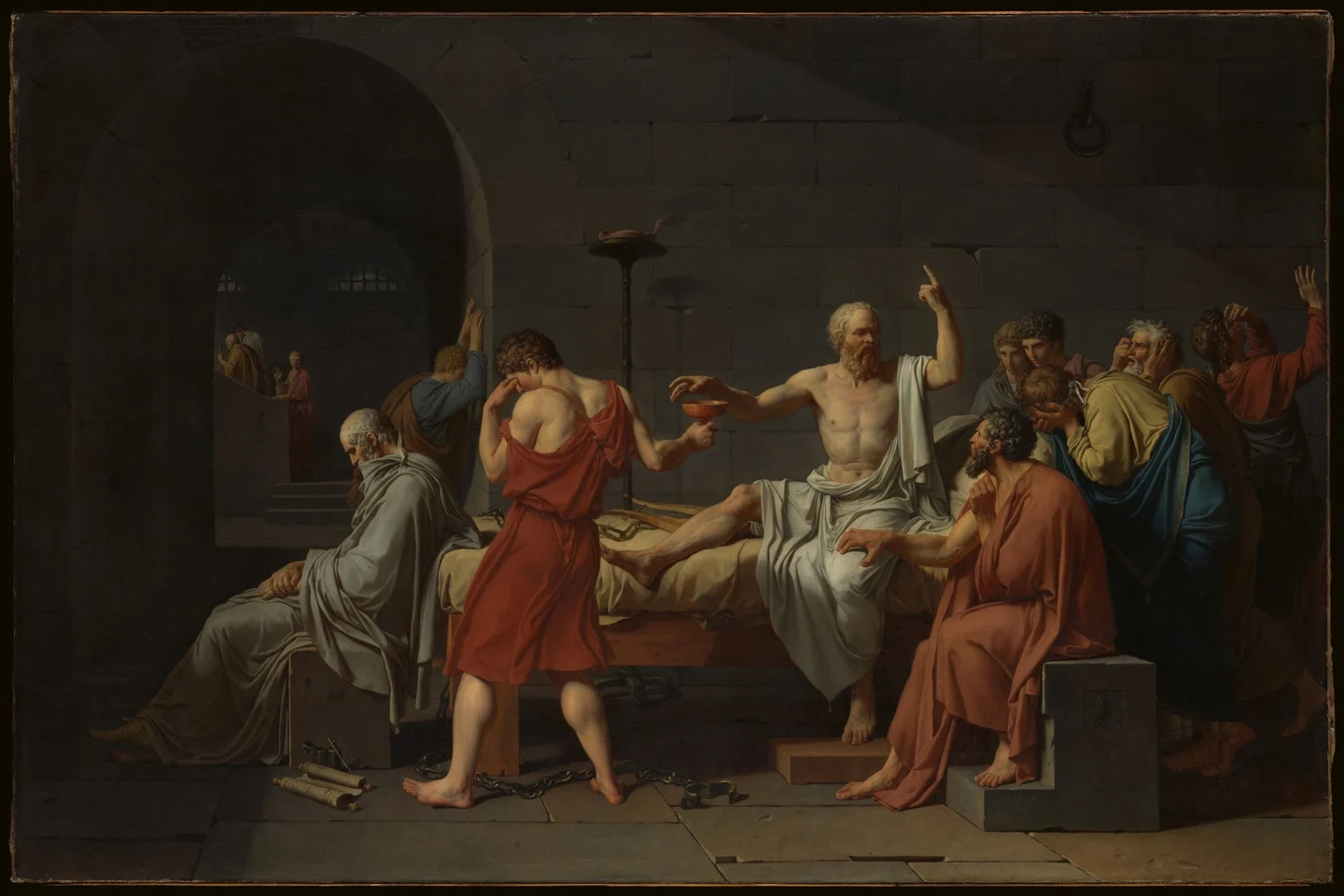
The Death of Socrates
1787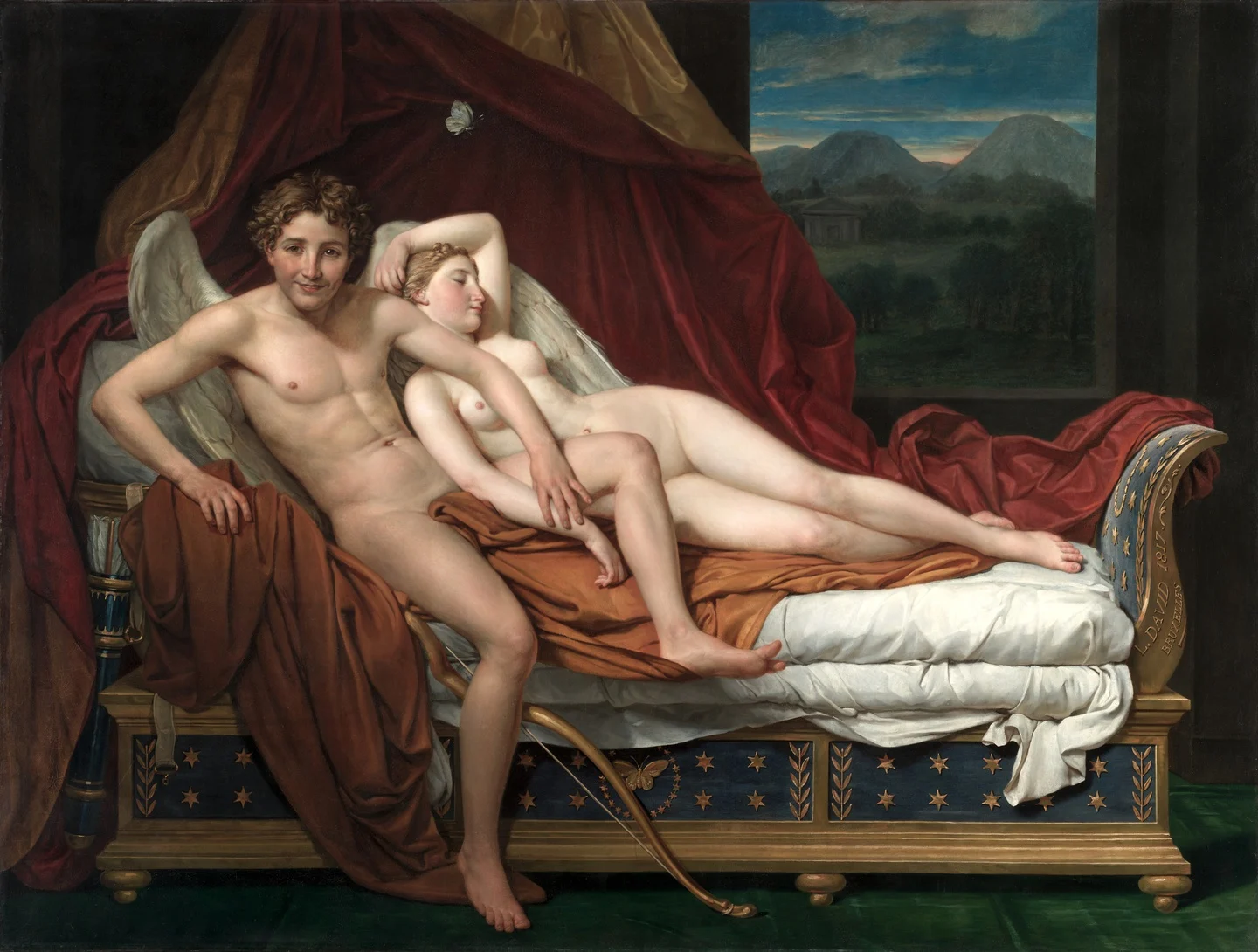 Jacques Louis David
Cupid and Psyche
1817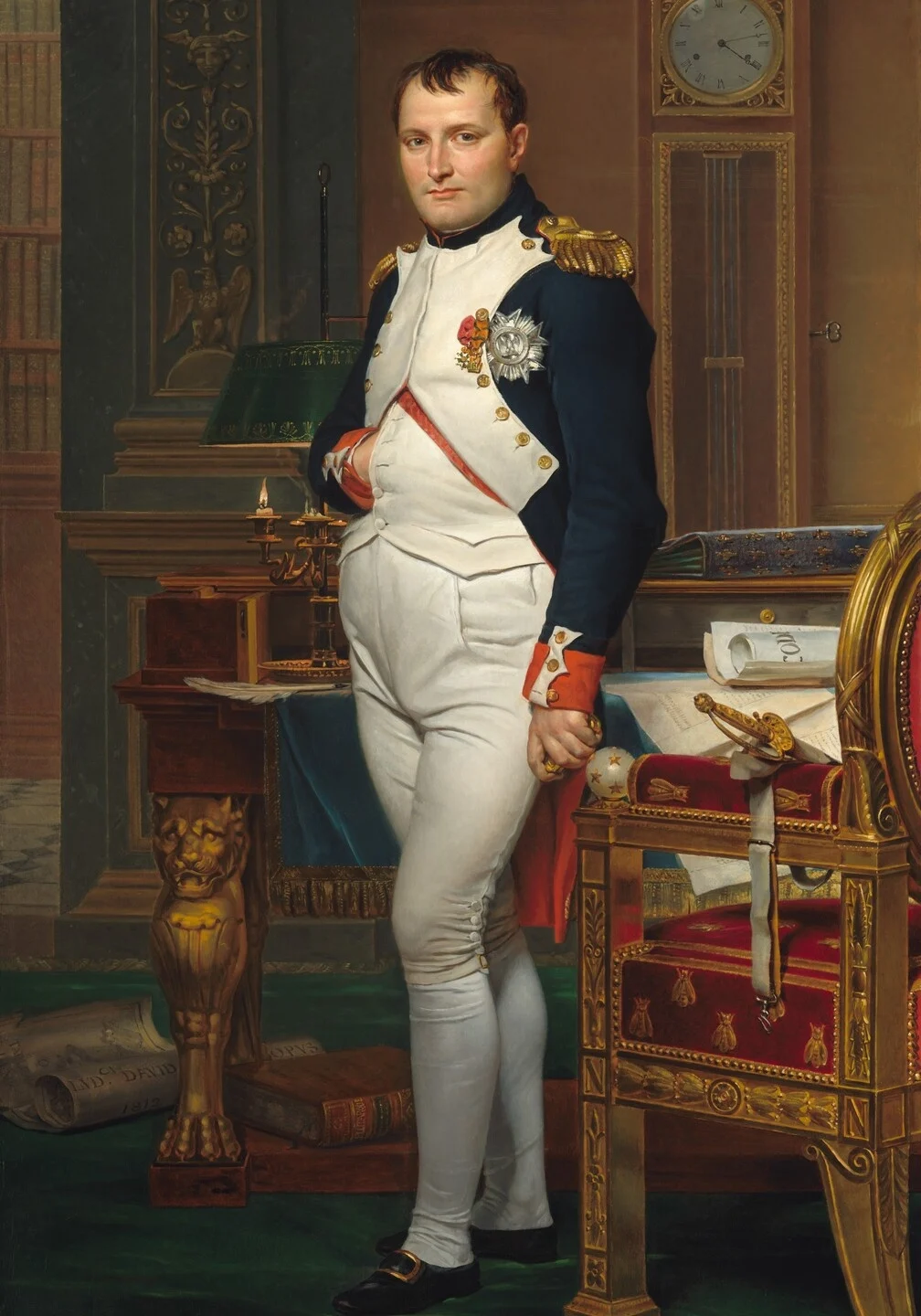 Jacques Louis David
The Emperor Napoleon in His Study at the Tuileries
1812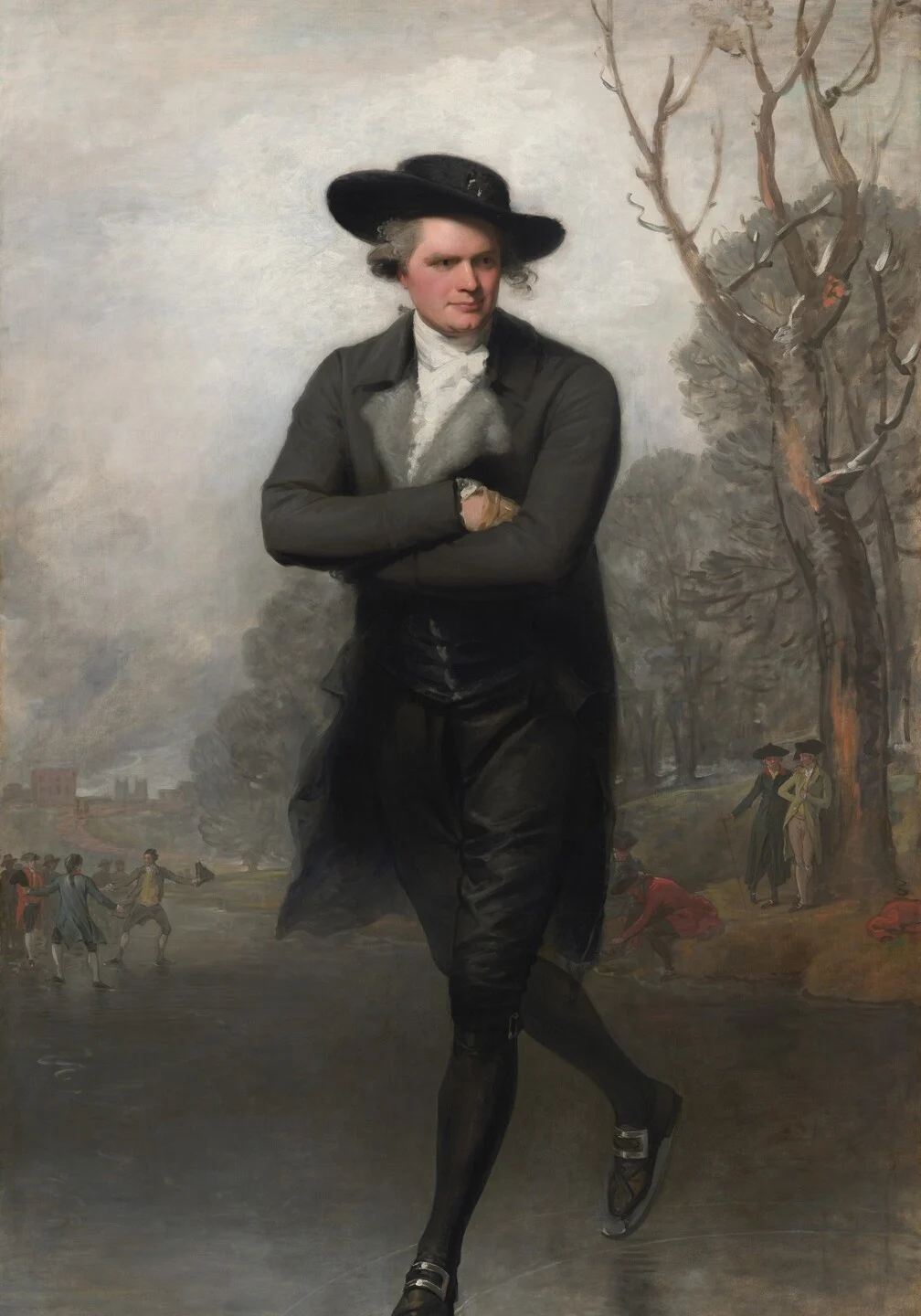 Gilbert Stuart
The Skater (Portrait of William Grant)
1782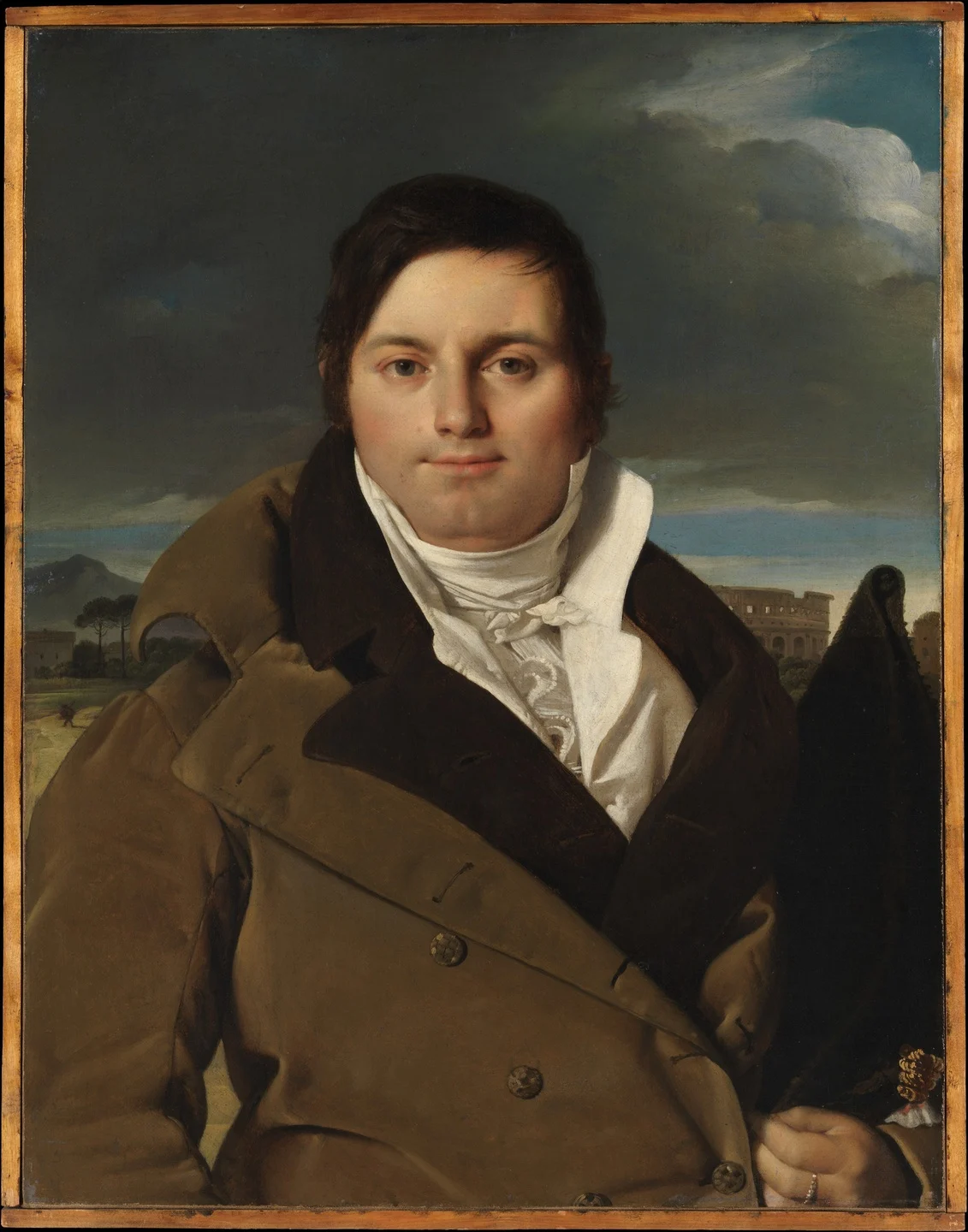 Jean Auguste Dominique Ingres
Joseph-Antoine Moltedo (born 1775)
ca. 1810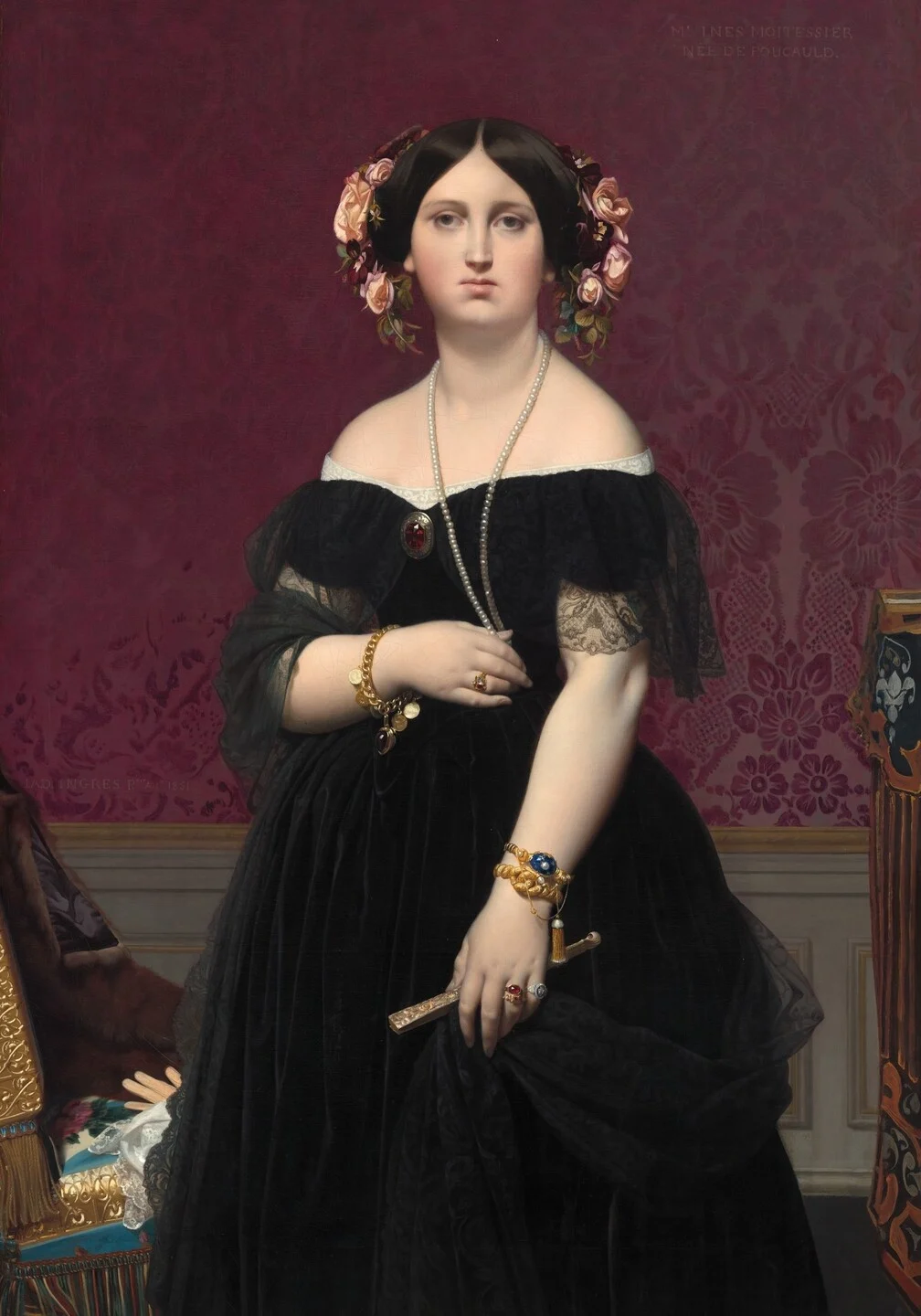 Jean Auguste Dominique Ingres
Madame Moitessier
1851Period, style and subject
- Movement
- Neoclassicism
- Genre
- Portrait
- Medium
- Oil on canvas
- Collection
- The Metropolitan Museum of Art
- Dimensions
- 259.7 × 194.6 cm
- Accession number
- 1977.10
Sources
Image provided under CC0. Image licence