Madame Moitessier
Jean Auguste Dominique Ingres · 1851
Explore the painting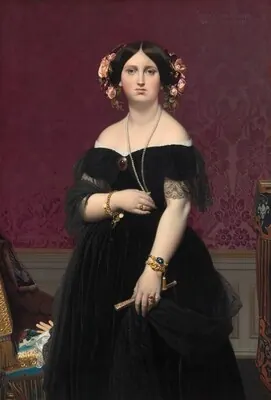
The painting’s story and details
Inès Moitessier was married to a wealthy financier. Asked to paint her in 1844, Ingres initially declined but agreed after meeting her. The commission stretched over years. He completed this standing portrait in 1851; the other, showing her seated in a flowered dress, followed in 1856 and now hangs in London. Here the thirty-year-old sitter receives the ceremonial treatment familiar from portraits of rulers.
Roses surround the face almost symmetrically. Smooth hair has a centre parting, and the shoulders form a broad, pale arc. The writer Théophile Gautier compared Moitessier to Juno, the Roman goddess. Ingres reinforces that imposing presence through large, quiet shapes while retaining the full cheeks, small chin and heavy eyelids of an individual woman.
A long strand of pearls descends over the black dress beside the red stone of a brooch. A thin white border separates the bare neck and shoulders from the dark bodice. Against this background even a small ornament is conspicuous. The costume’s richness depends on different surfaces: glittering stone, softly luminous pearls and light-absorbing velvet.
Her right hand holds the pearls. A gold bracelet with pendants hangs at the wrist, and rings decorate her fingers. Ingres pursued accuracy by working from life, down to individual accessories. The expensive objects are recorded as carefully as the face. They establish the family’s social standing before we learn her husband’s occupation.
Her lowered hand holds a closed fan. A blue stone in a gold bracelet draws attention to the wrist, and the long pale contour of her forearm leads back towards the shoulder. The gesture is restrained, the fingers almost still. The fan and black shawl belong to her formal attire; gathered in her hand, they leave the dress’s silhouette fully visible.
On the red wall at the right appear the sitter’s name and her maiden name, de Foucauld. On the left Ingres added his own name and the date, using a Latin inscription. The two names serve different purposes within the same interior. The upper inscription preserves family identity; the lower asserts the authorship of a celebrated painter whose reputation itself enhanced the commission’s prestige.
In 1855 the portrait appeared at the Paris Universal Exhibition. A family image reached a broad public, and private wealth became part of a presentation of French art. Ingres joined contemporary fashion to the dignity of classical imagery. That combination gives the portrait its social force: the sitter acquires a place within the culture of grandeur the painter knew from museum collections.
More paintings to compare
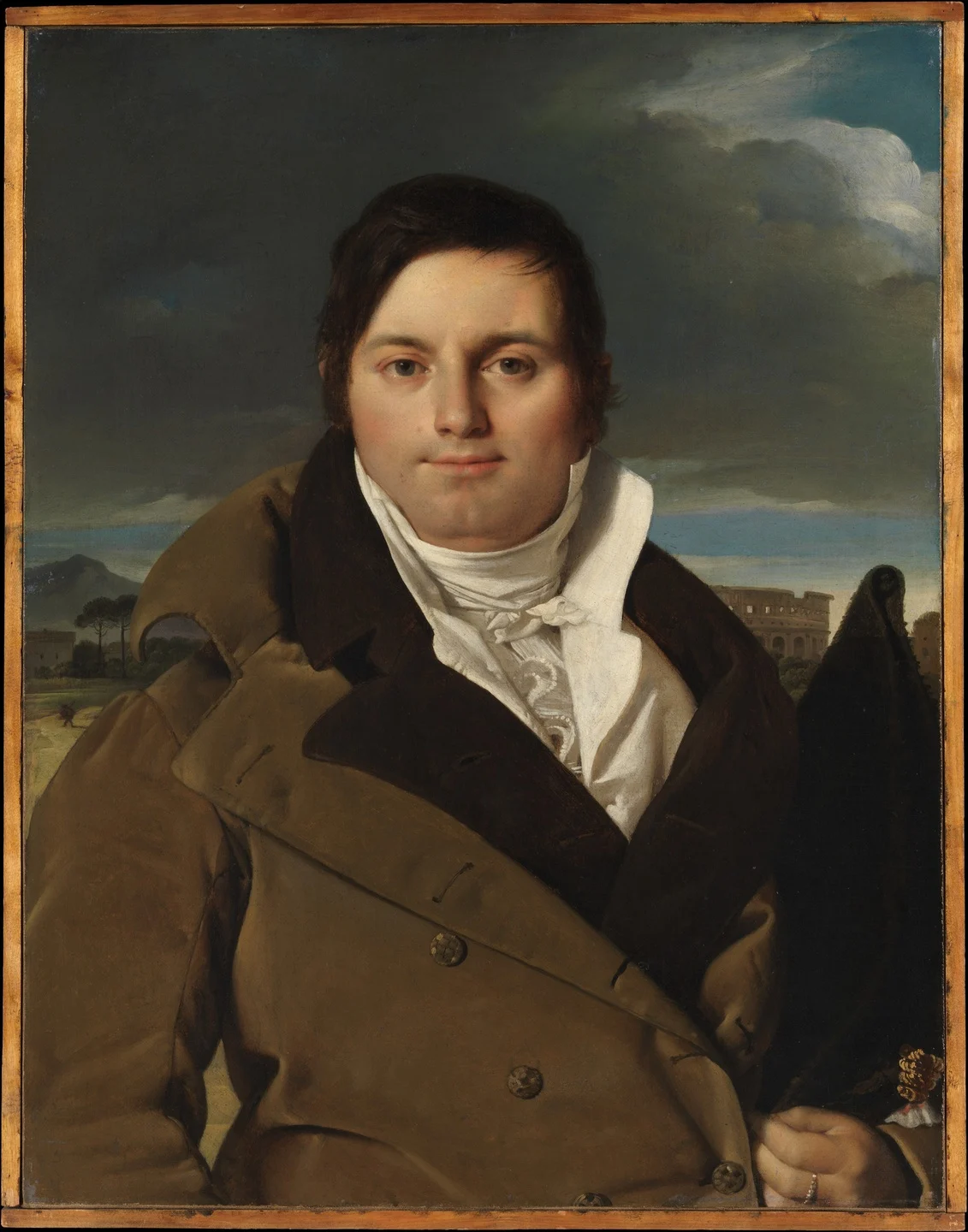 Jean Auguste Dominique Ingres
Joseph-Antoine Moltedo (born 1775)
ca. 1810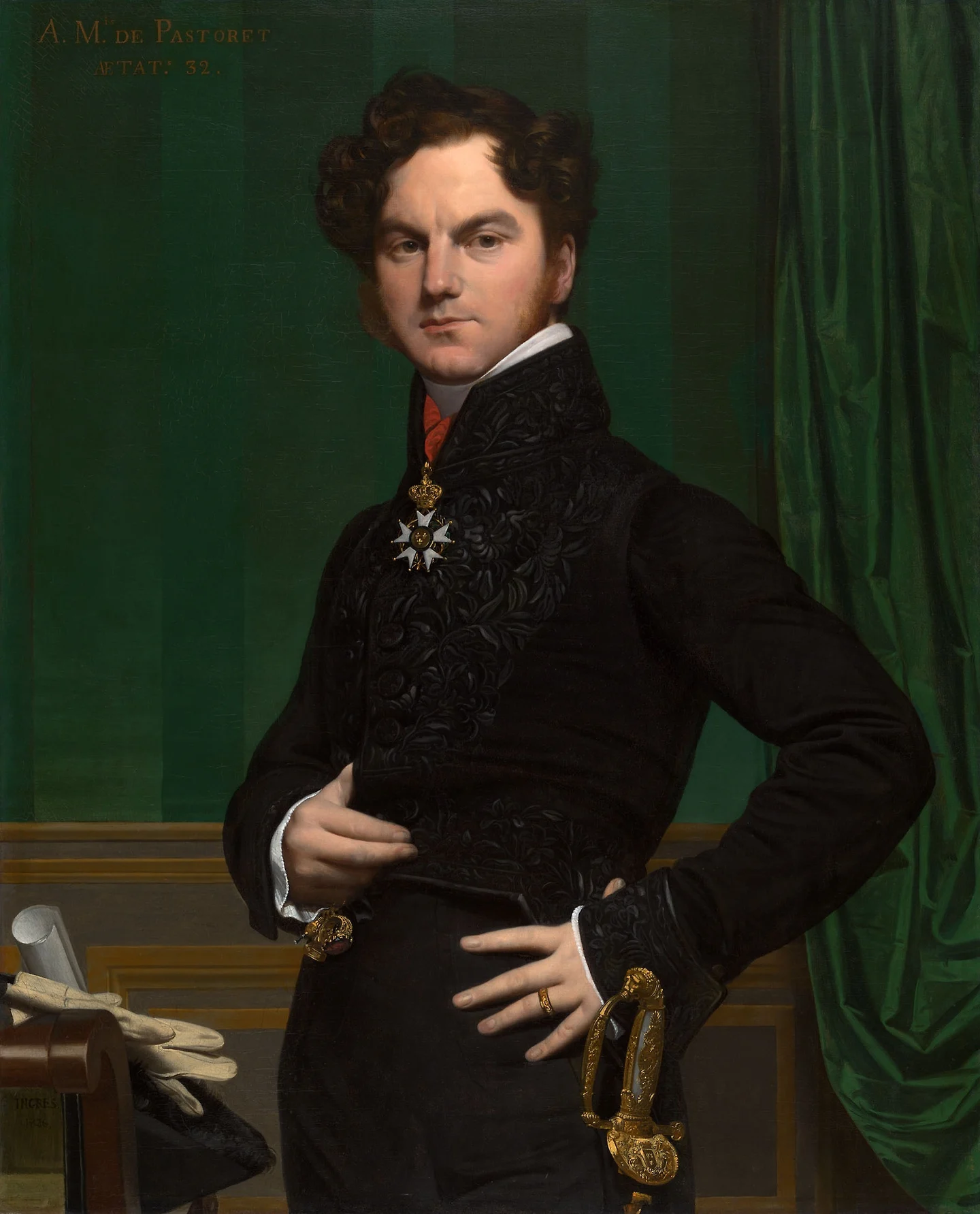 Jean Auguste Dominique Ingres
Amédée-David, the Comte de Pastoret
1823–26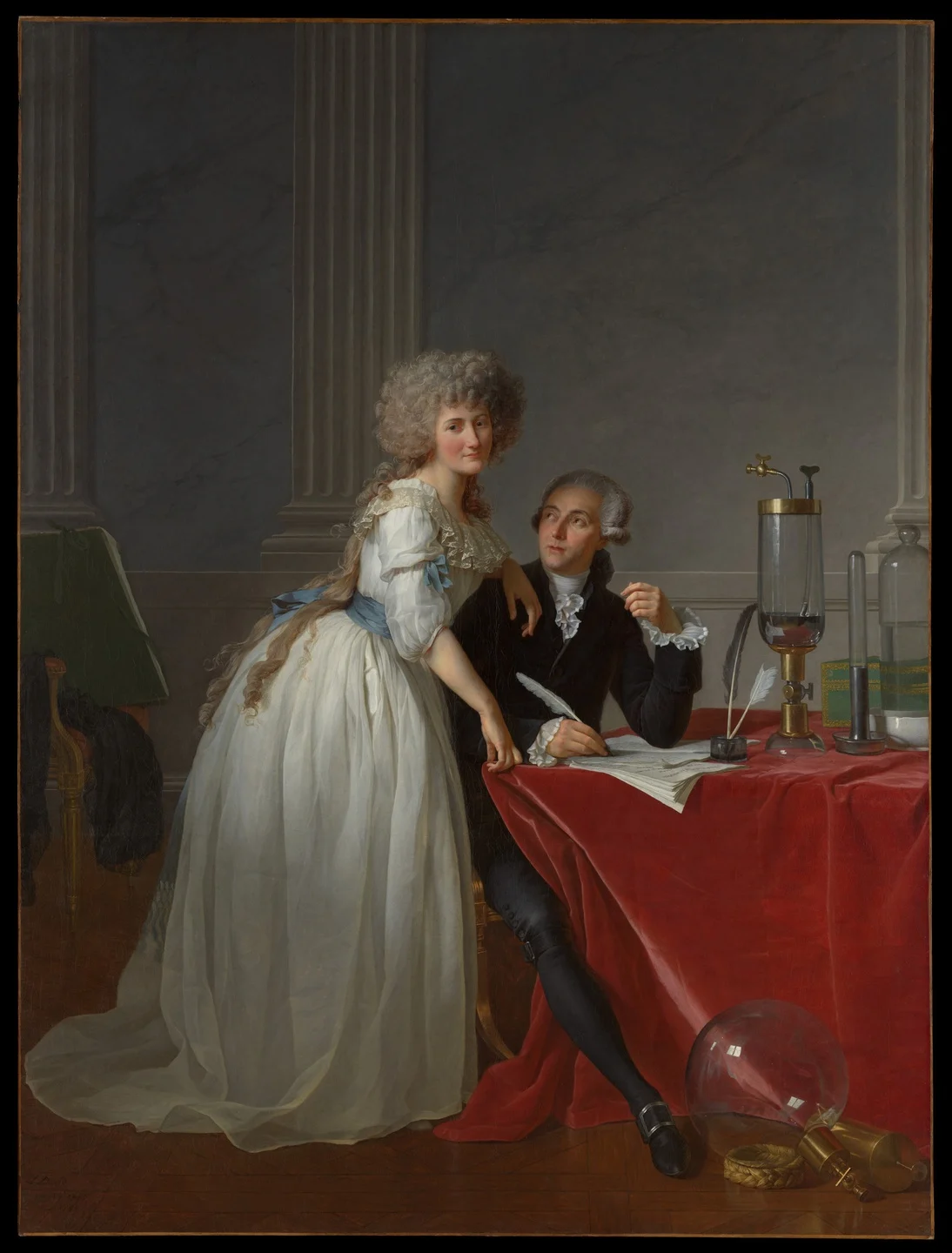 Jacques Louis David
Antoine Laurent Lavoisier (1743–1794) and Marie Anne Lavoisier (Marie Anne Pierrette Paulze, 1758–1836)
1788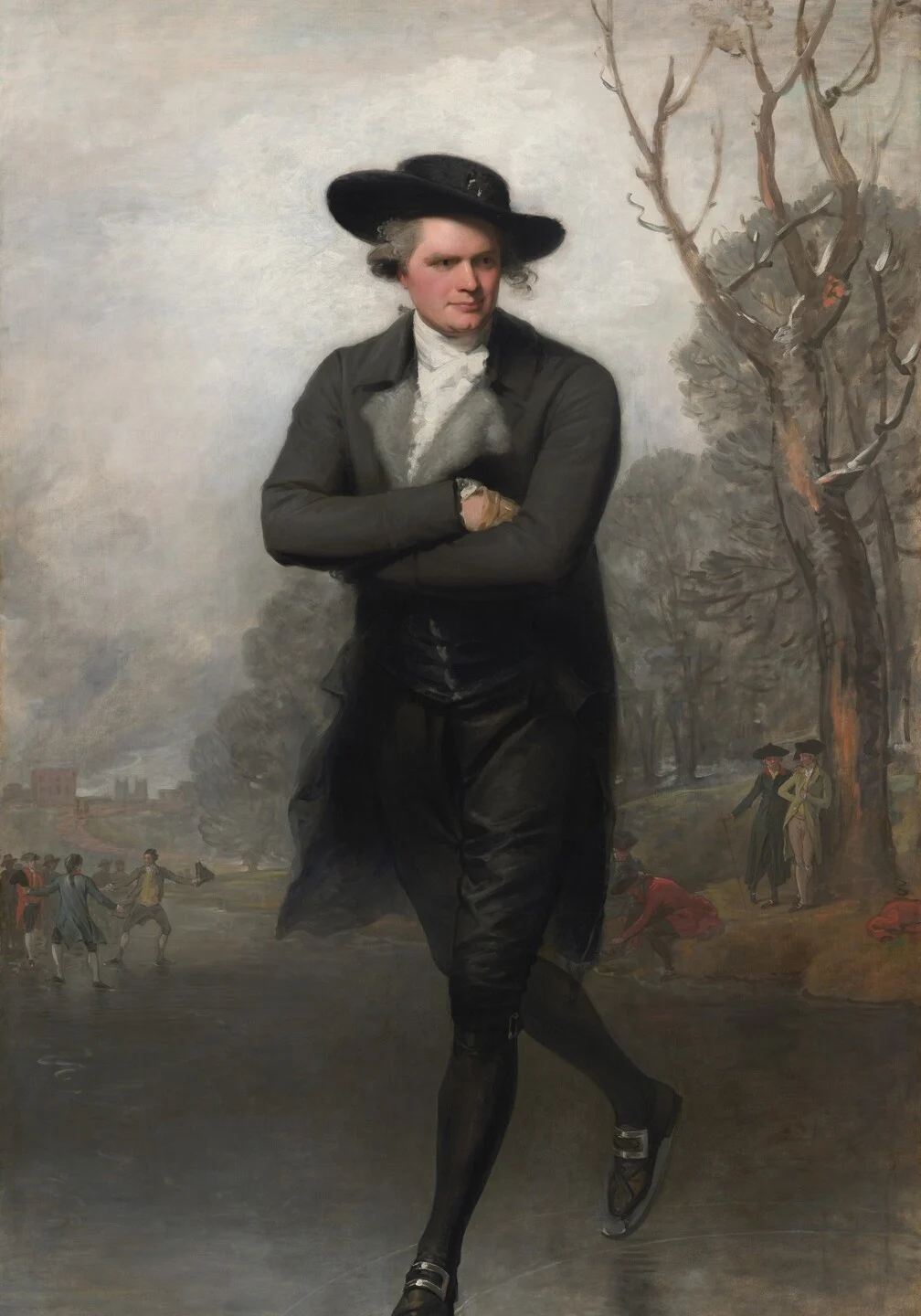 Gilbert Stuart
The Skater (Portrait of William Grant)
1782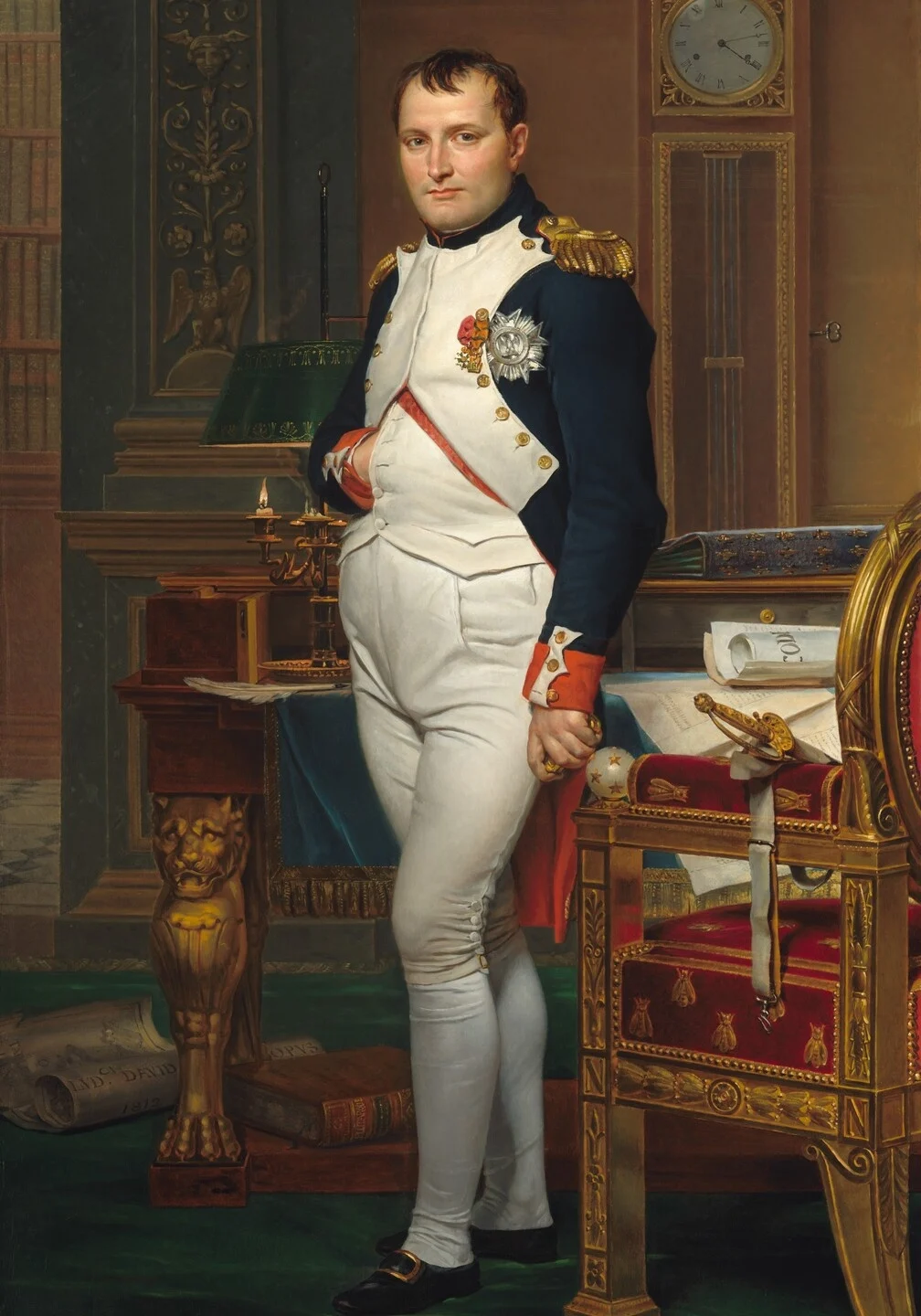 Jacques Louis David
The Emperor Napoleon in His Study at the Tuileries
1812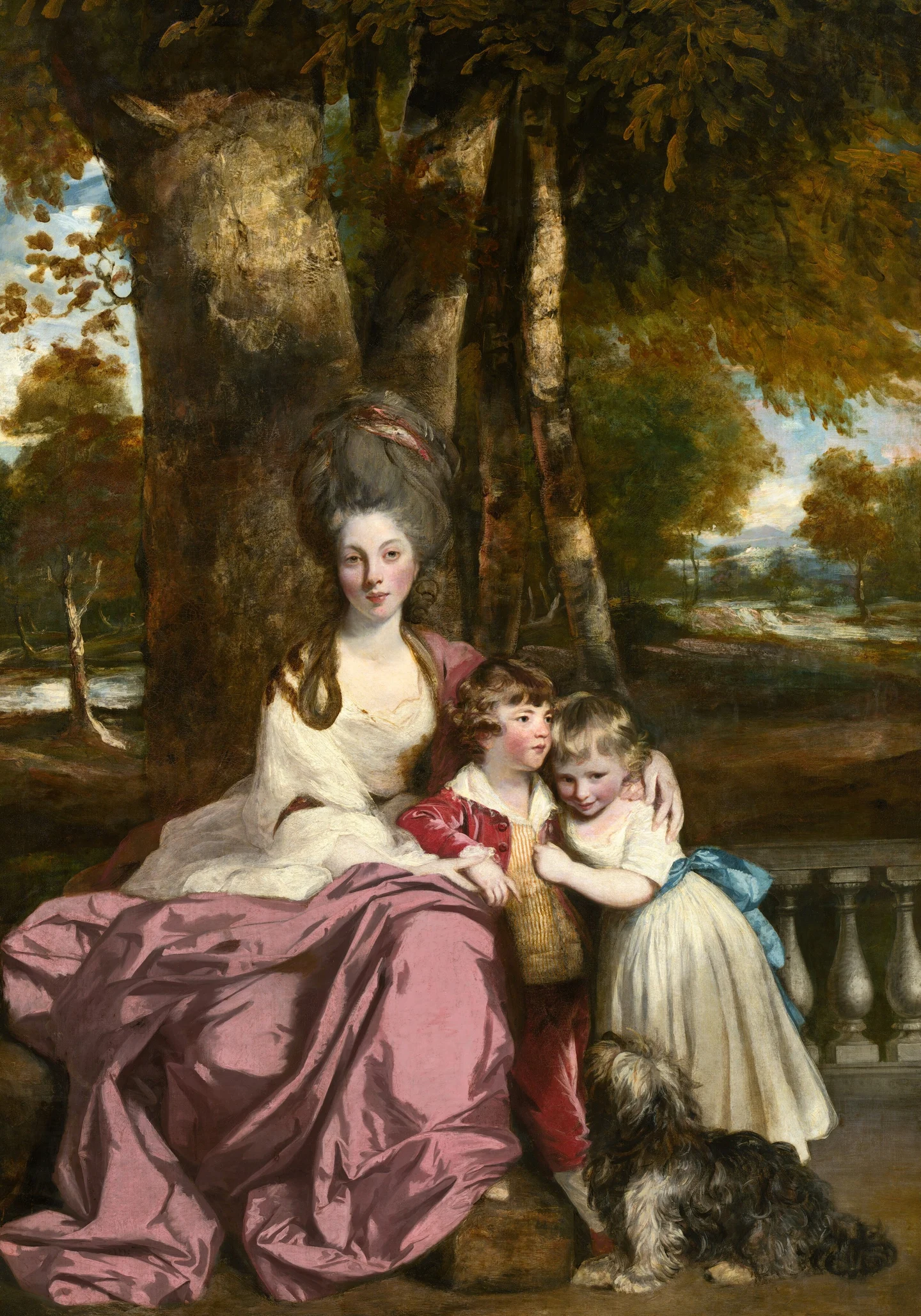 Joshua Reynolds
Lady Elizabeth Delmé and Her Children
1777-1779Period, style and subject
- Movement
- Neoclassicism
- Genre
- Portrait
- Medium
- oil on canvas
- Collection
- National Gallery of Art, Washington
- Dimensions
- Overall, 147 × 100 cm
- Accession number
- 1946.7.18
Sources
Reproduction of a public-domain artwork. Image licence