The Abduction of Rebecca
Eugène Delacroix · 1846
Explore the painting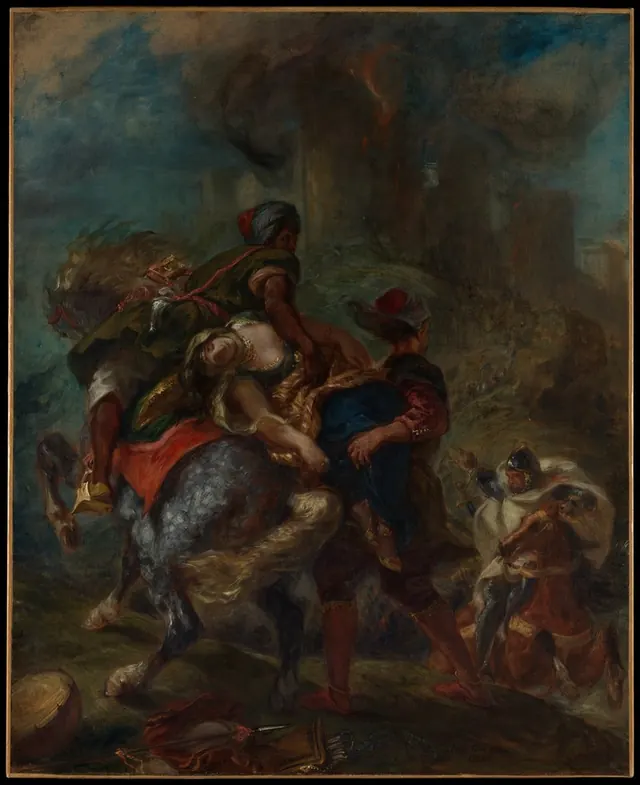
The painting’s story and details
The castle burns as Rebecca is carried away against her will. Delacroix took the subject from Walter Scott’s Ivanhoe. The Jewish heroine has become a prisoner of knights in medieval England; during the fire, Brian de Bois-Guilbert exploits the confusion to abduct her. In 1846 the painter transformed an episode from a popular novel into a compressed group of bodies, animals and weapons, where every movement increases the danger.
Rebecca lies across the horse, her head thrown back and one arm hanging down. Pale skin and golden fabric distinguish her from the dark figures around her. In the novel, she nurses the wounded Ivanhoe and firmly resists Bois-Guilbert. Delacroix chooses a moment when others control her body. The book reveals her actions and determination, although the painting shows her helpless.
The standing man on the right supports her lower body. His legs are planted wide apart, his torso turns and his arm strains. He is one of two enslaved Muslim warriors carrying out a Christian knight’s order. Power crosses the usual division between familiar and foreign. A man of high military and religious standing directs the abduction, while people dependent on him perform the immediate act.
The turbaned rider bends towards Rebecca from above. His arm passes close to her waist, and several bodies form a dense knot over the saddle. Red, green and golden fabrics help separate the interlocking figures. Delacroix was a master of Romantic history painting, using colour and unstable poses to convey an event’s intensity. Here the figures emerge gradually, like actions taking place within a crowd.
The grey horse’s hindquarters occupy much of the lower centre. Its tail curves, its legs point at different angles and its head reaches far to the left. The animal is already caught in movement while the men are still positioning their captive. Its large body brings the action close to the viewer. Tiny figures near the castle recede abruptly, intensifying the foreground’s congestion.
Bois-Guilbert appears lower down on the right, riding another horse. His helmet and pale cloak distinguish him from the men executing his order. He occupies less space than those lifting Rebecca, yet his demand determines the action. In Scott’s novel, chivalric rank offers no guarantee of moral superiority. Rebecca’s story exposes violence concealed behind the language of honour, faith and devoted love.
Smoke obscures the castle walls, with red flames emerging through it. In the novel, Ulrica starts the fire to avenge violence inflicted by the castle’s owners on her family and herself. The flames therefore belong to another human story within the larger battle. Delacroix connects the smoke with the blurred edges of the figures, making both stone architecture and human bodies seem unstable.
Scott, Byron and Shakespeare supplied French Romantic artists with numerous subjects involving passion and abuses of power. Delacroix had painted Rebecca beside the wounded Ivanhoe in 1823. Decades later he returned to the same heroine at the moment of her abduction. A literary character allowed him to explore different forms of courage and helplessness through gesture, colour and the arrangement of space.
Featured in tours
History in painting. Events and memory
Who painted war, revolution and state power, and how long after the event.
More paintings to compare
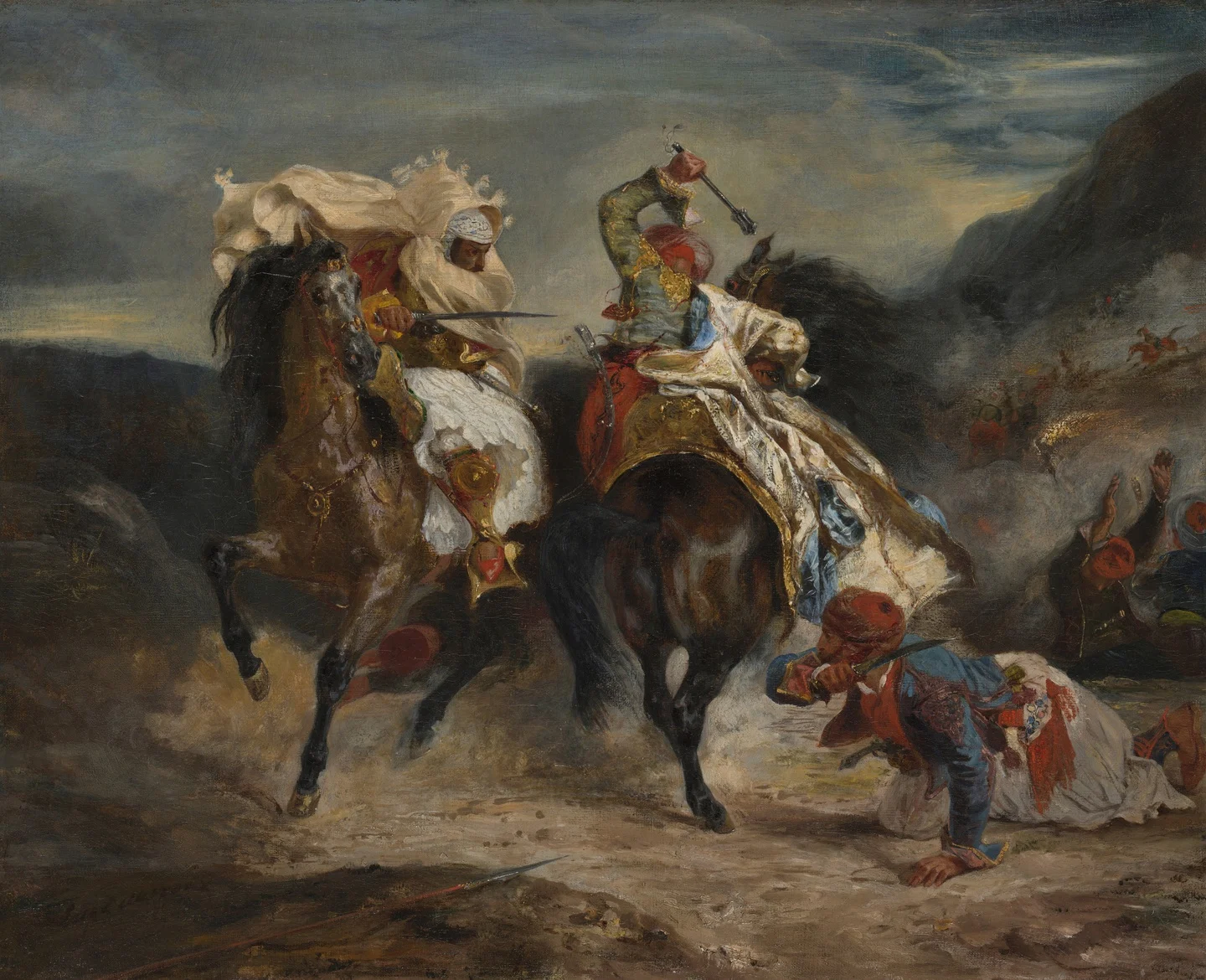 Eugène Delacroix
The Combat of the Giaour and Hassan
1826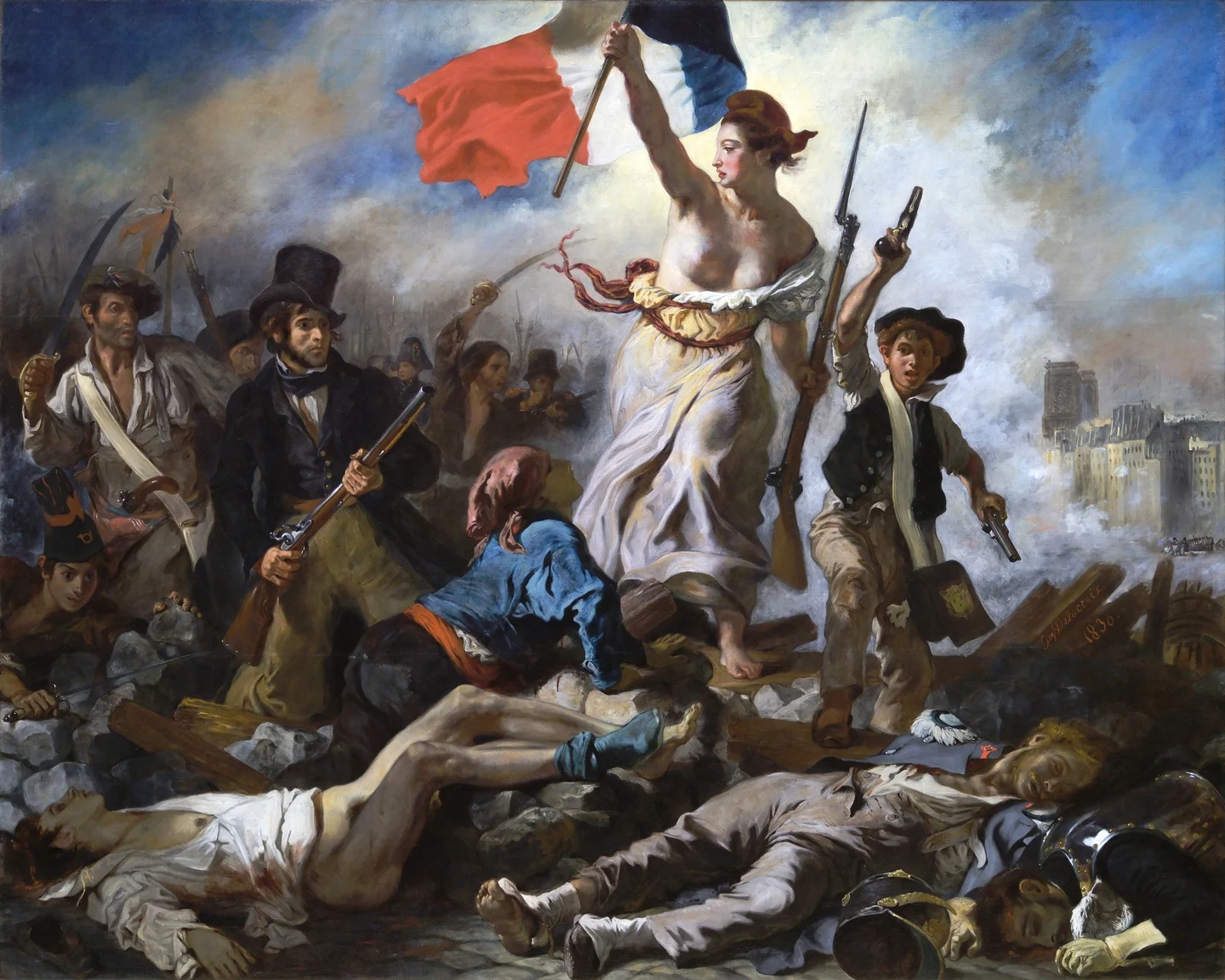 Eugène Delacroix
Liberty Leading the People
1830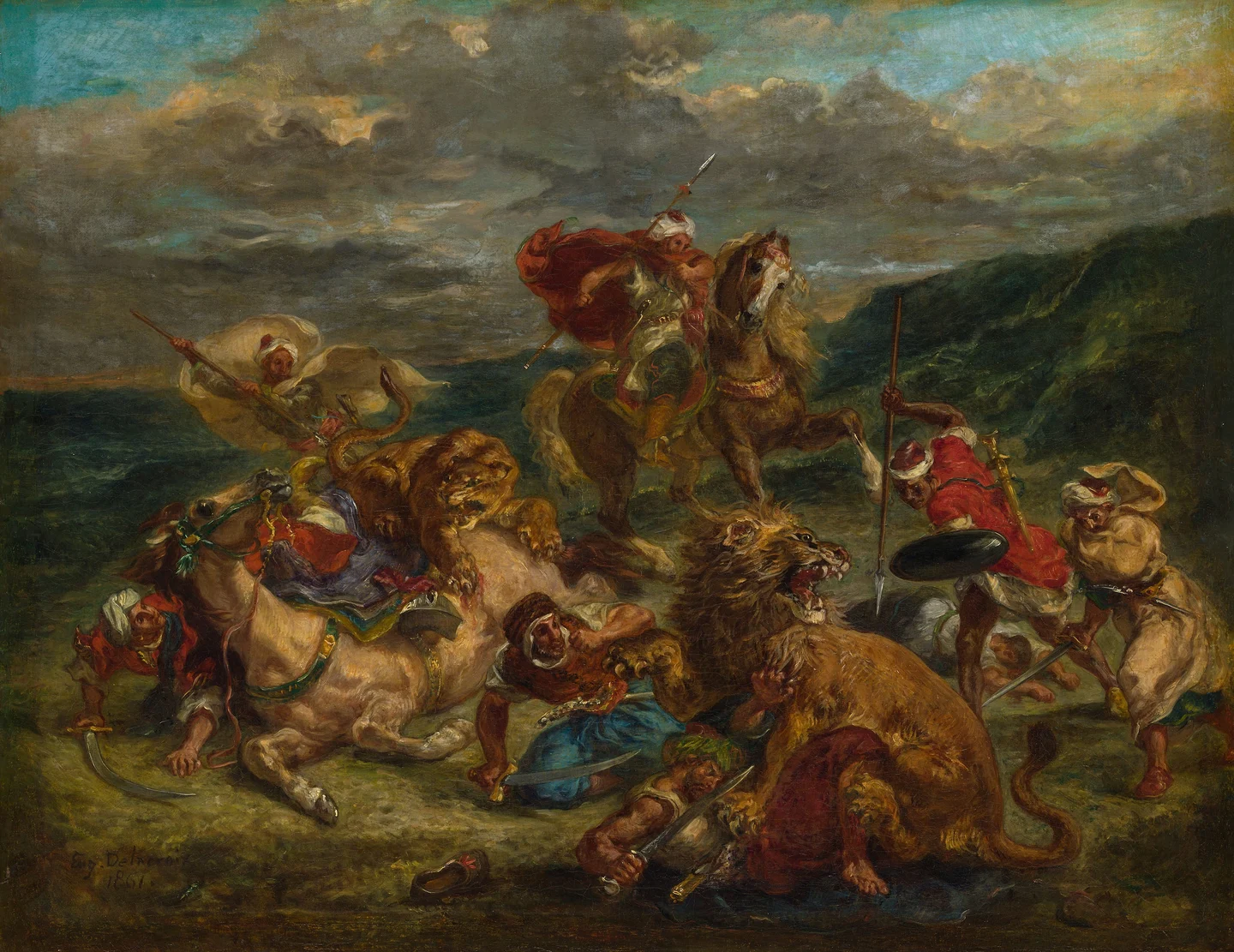 Eugène Delacroix
Lion Hunt
1860–61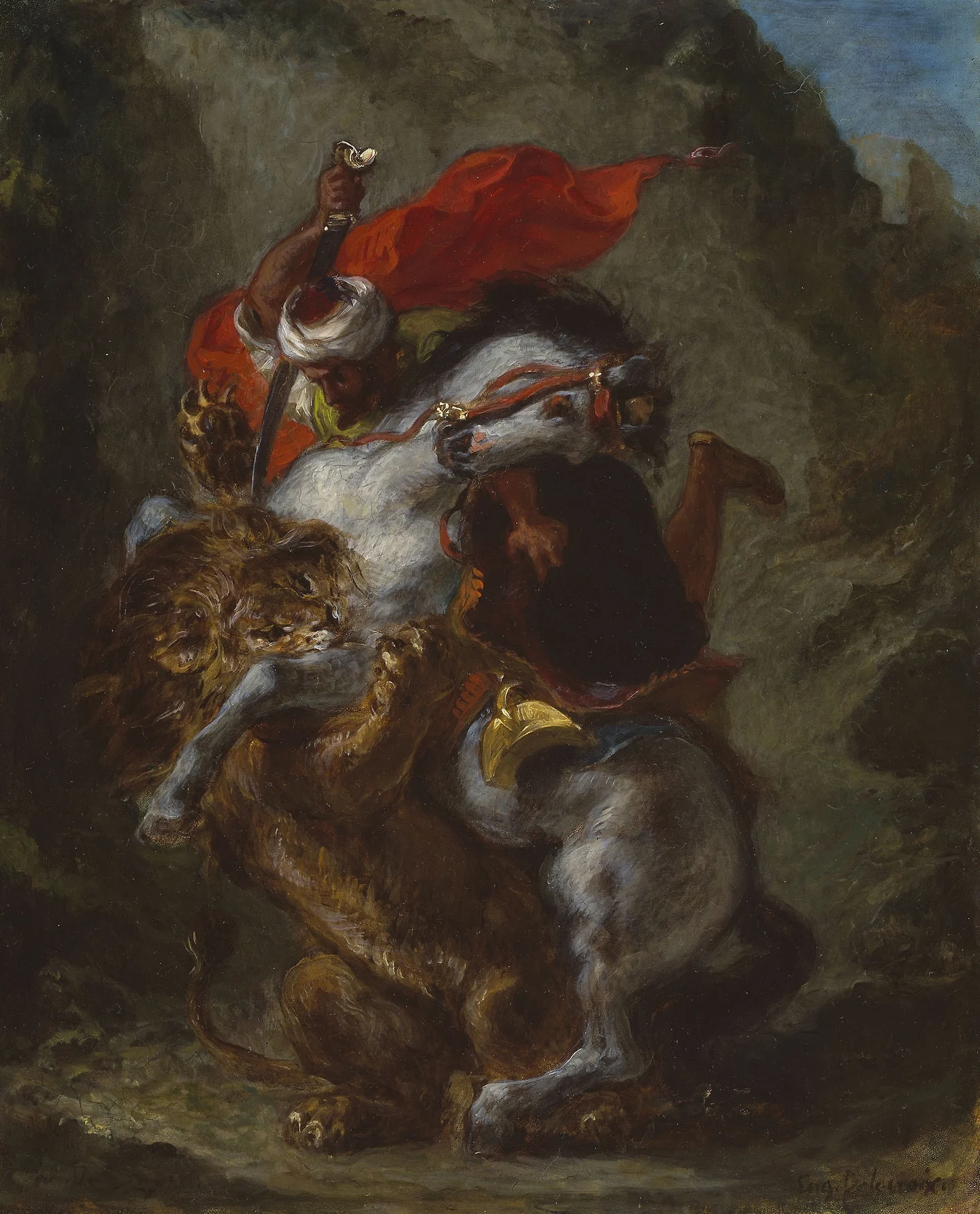 Eugène Delacroix
Arab Horseman Attacked by a Lion
1849–50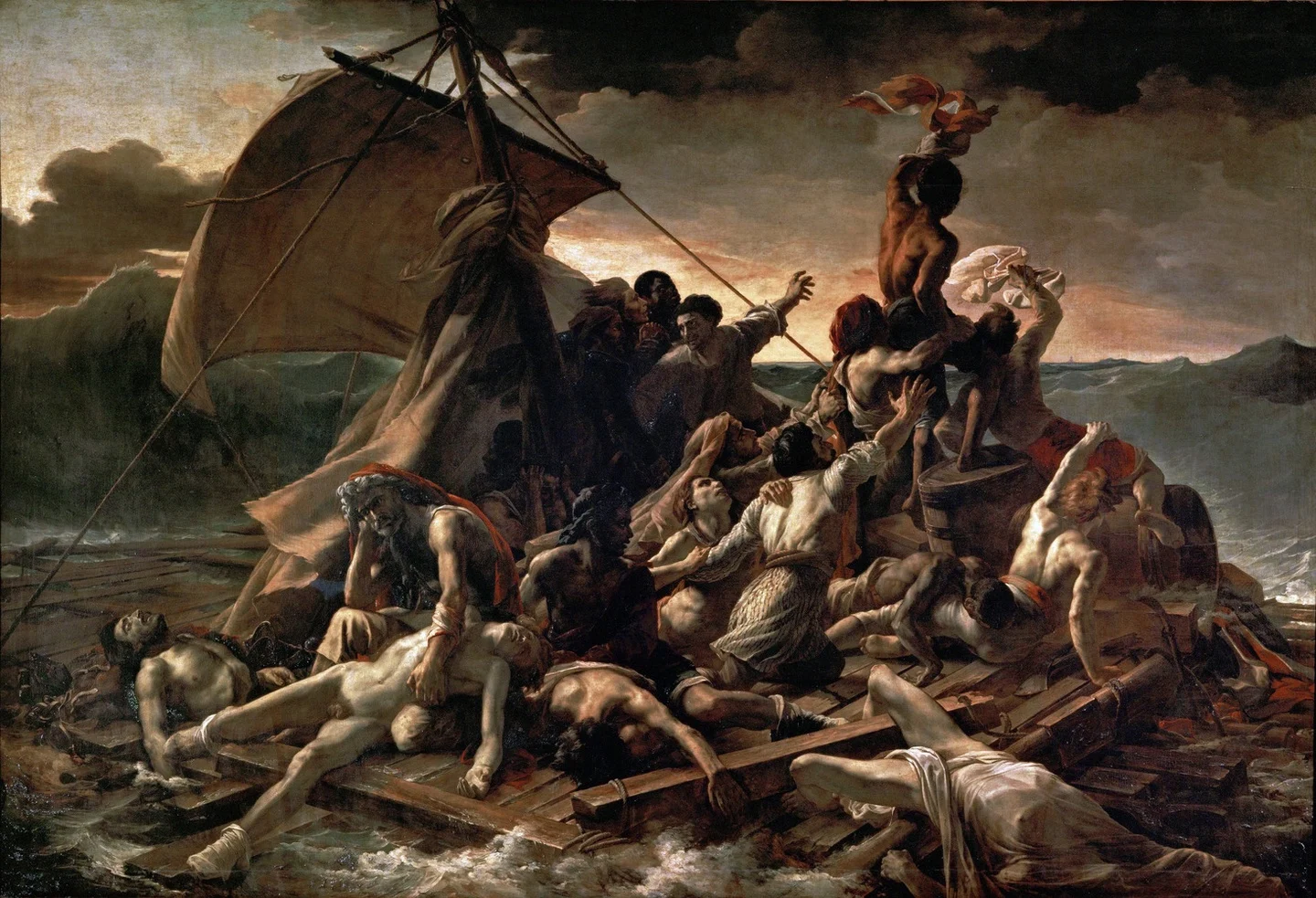 Théodore Géricault
The Raft of the Medusa
1818–1819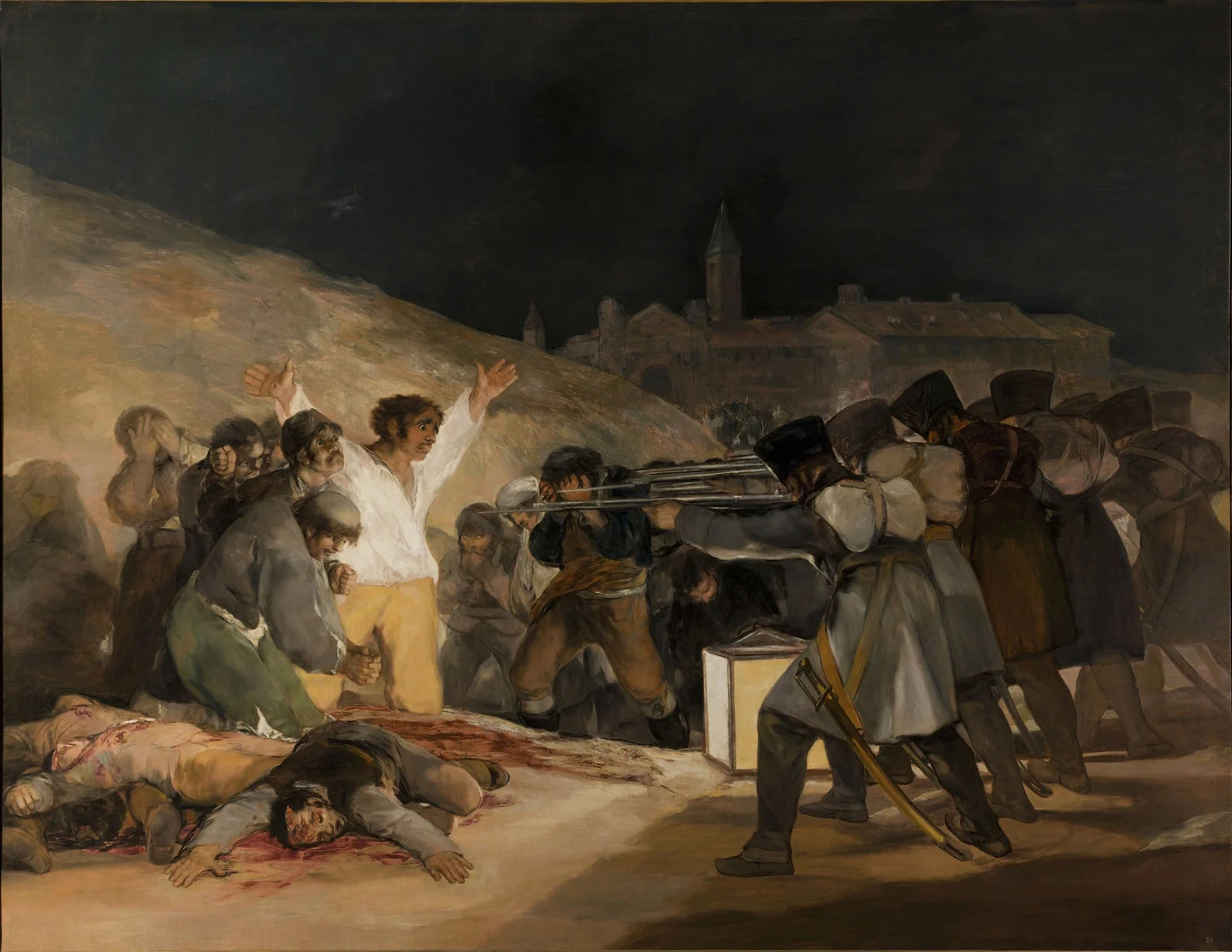 Francisco Goya
The Third of May 1808 in Madrid, or The Executions
1814Period, style and subject
- Movement
- Romanticism
- Genre
- History painting
- Medium
- Oil on canvas
- Collection
- The Metropolitan Museum of Art
- Dimensions
- 100.3 × 81.9 cm
- Accession number
- 03.30
Sources
Image provided under CC0. Image licence