The Raft of the Medusa
Théodore Géricault · 1818–1819
Explore the painting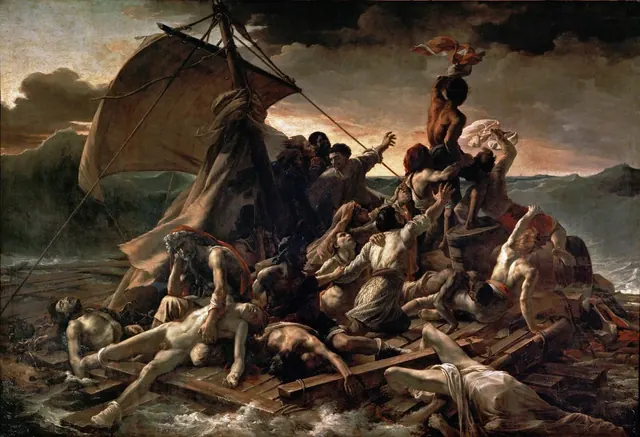
The painting’s story and details
In 1816, the Medusa ran aground while carrying a new governor to French Senegal. Around 150 people were left on a hastily assembled raft after the wreck. Rescuers found fifteen survivors thirteen days later. Their account caused a political scandal in France. Géricault made this recent catastrophe the subject of a canvas almost five by seven metres, intended for public exhibition.
A man waves a cloth at the summit of the group. Raised arms and inclined backs lead towards him. He becomes the highest point of the collective effort, but the vessel on the horizon is still far away. Géricault chose a moment when rescue is only a possibility. Even knowing the outcome, we can see how difficult it is for the people on the raft to make themselves noticed.
People rise one behind another, support their neighbours and reach towards the sea. Géricault spoke with survivors Savigny and Corréard, but arranged the bodies in his studio using models. Eyewitness accounts became a carefully constructed composition. The movement from reclining bodies to the raised cloth makes the collective attempt to survive legible without erasing differences between individuals.
The sail forms a second large triangle. Its slope and taut ropes intersect the direction in which the people reach. A wave approaches closely from the left, making the structure appear vulnerable. During preparation, Géricault used a model built by a carpenter who survived the disaster. The raft’s physical construction belonged to his investigation alongside testimony and bodily poses.
A grey-haired man sits beside the body of a younger man. One hand supports him while the other is raised to his own head. Movement almost stops in this part of the picture. Their positions are visible, but the image does not securely establish a family relationship. Beside the effort to signal lies a death that the others’ possible rescue cannot reverse.
A body near the bottom almost slips from the planks. Strong foreshortening brings it close to us, and the raft’s edge lies near the frame. Géricault studied bodies and dying patients in hospital while preparing the painting. Yet the large, clearly constructed figures retain a connection to history painting. A scale familiar from images of heroes and rulers is given to the victims of a contemporary disaster.
The rescue brig on the horizon is so small that it is easily missed at first. The urgency of the raised arms now becomes clearer. The enormous canvas directs attention towards an almost invisible object. The difference in scale makes distance central to the event. The people can see a ship, but the viewer cannot yet be certain that the ship will see them.
At the Salon of 1819, viewers recognized a story that raised questions about the captain’s responsibility and the restored monarchy’s decisions. The canvas permits a political reading while concentrating closely on people’s circumstances. Its combination of a recent event, immense scale and severe bodily experience made it important to Romantic painting. It demanded sustained public attention to a catastrophe endured by others. There is an uncomfortable aspect to the painting. We can study human catastrophe as a compelling spectacle. Its scale and carefully constructed bodies intensify sympathy while also giving suffering a pictorial beauty. That tension cannot be removed by a single explanation. It raises a question about how public art turns reports of death into shared memory, and how it holds our attention.
Featured in tours
World classics. Altar, palace, exhibition
Familiar paintings and the people for whom they were made.
History in painting. Events and memory
Who painted war, revolution and state power, and how long after the event.
More paintings to compare
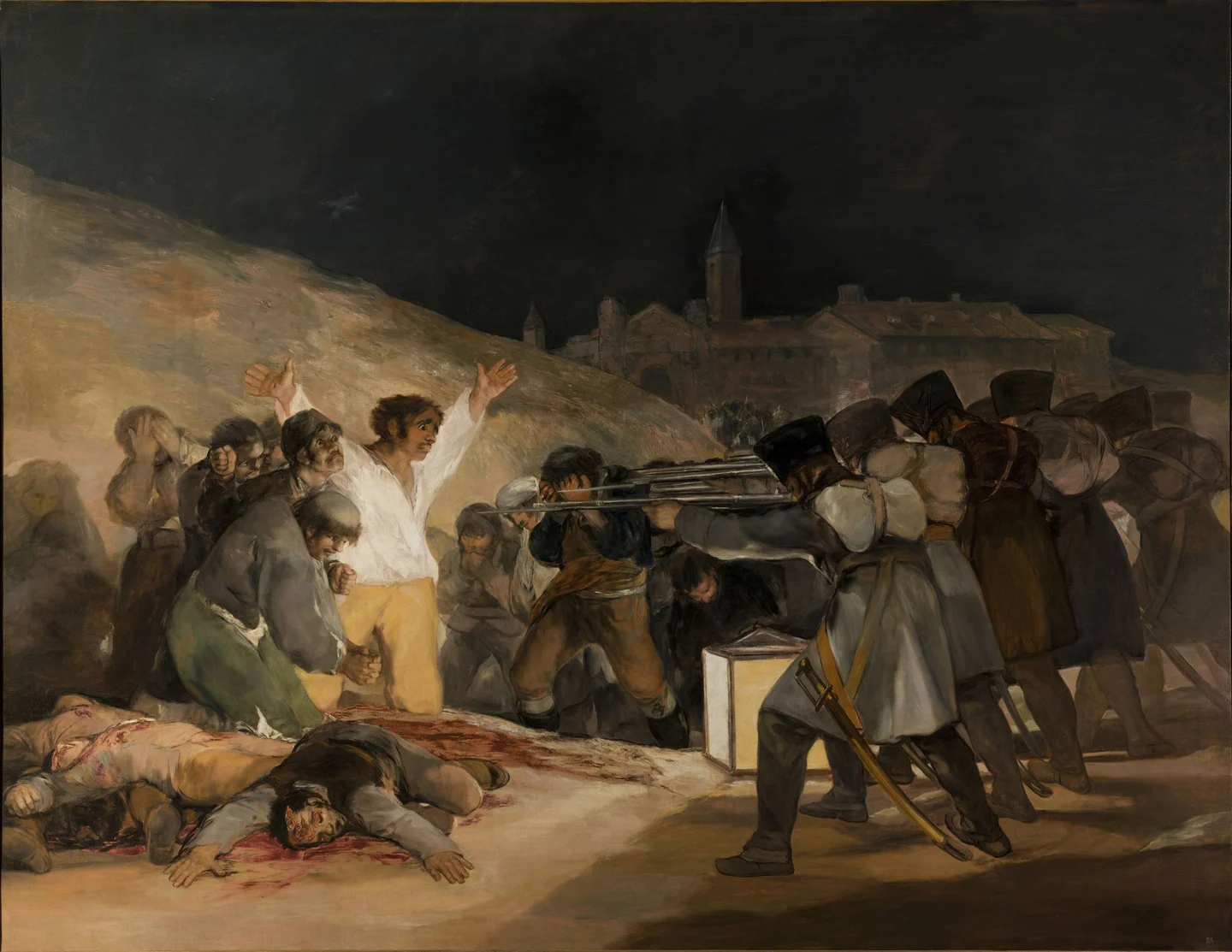 Francisco Goya
The Third of May 1808 in Madrid, or The Executions
1814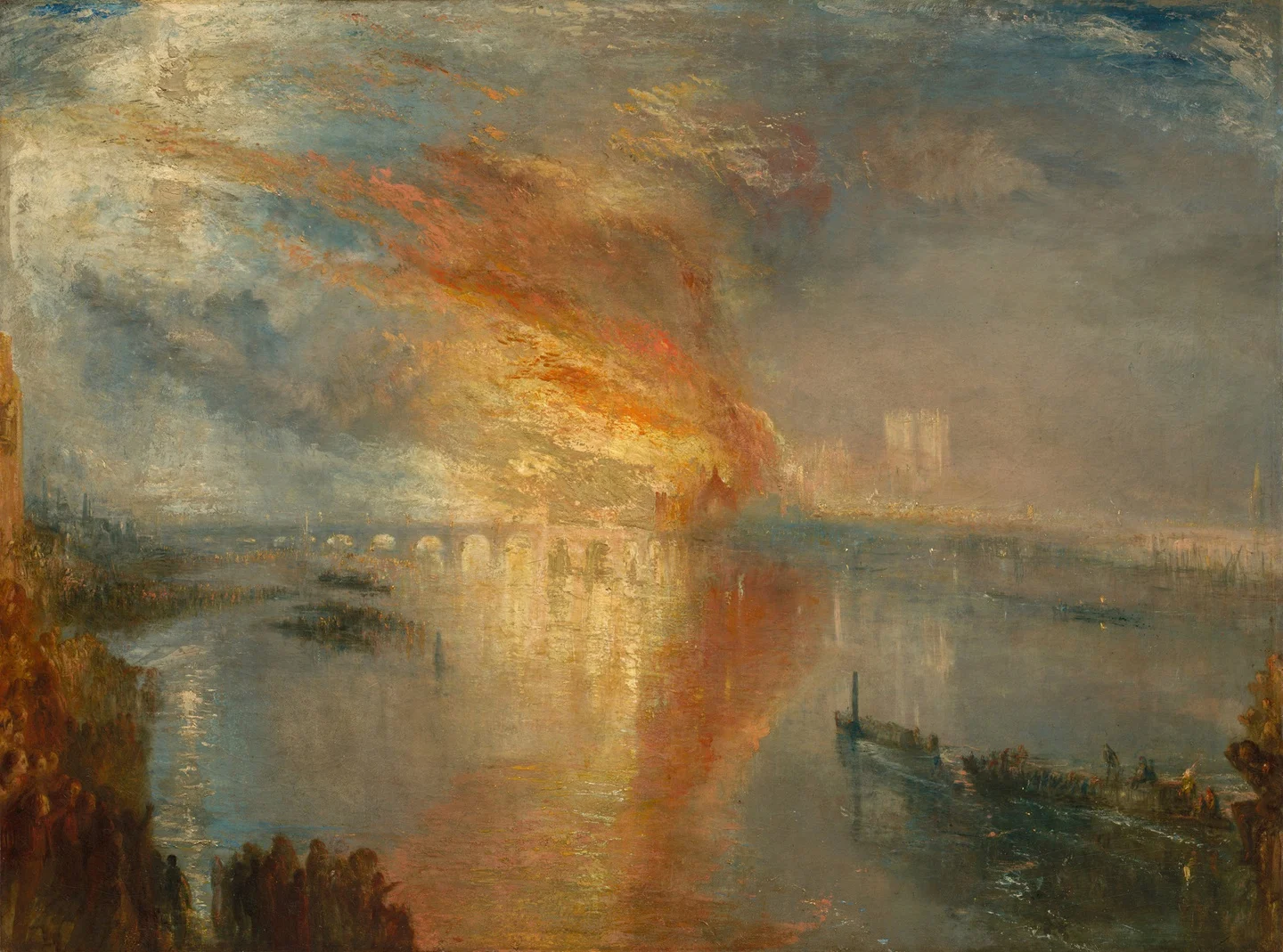 Joseph Mallord William Turner
The Burning of the Houses of Lords and Commons, 16 October 1834
1835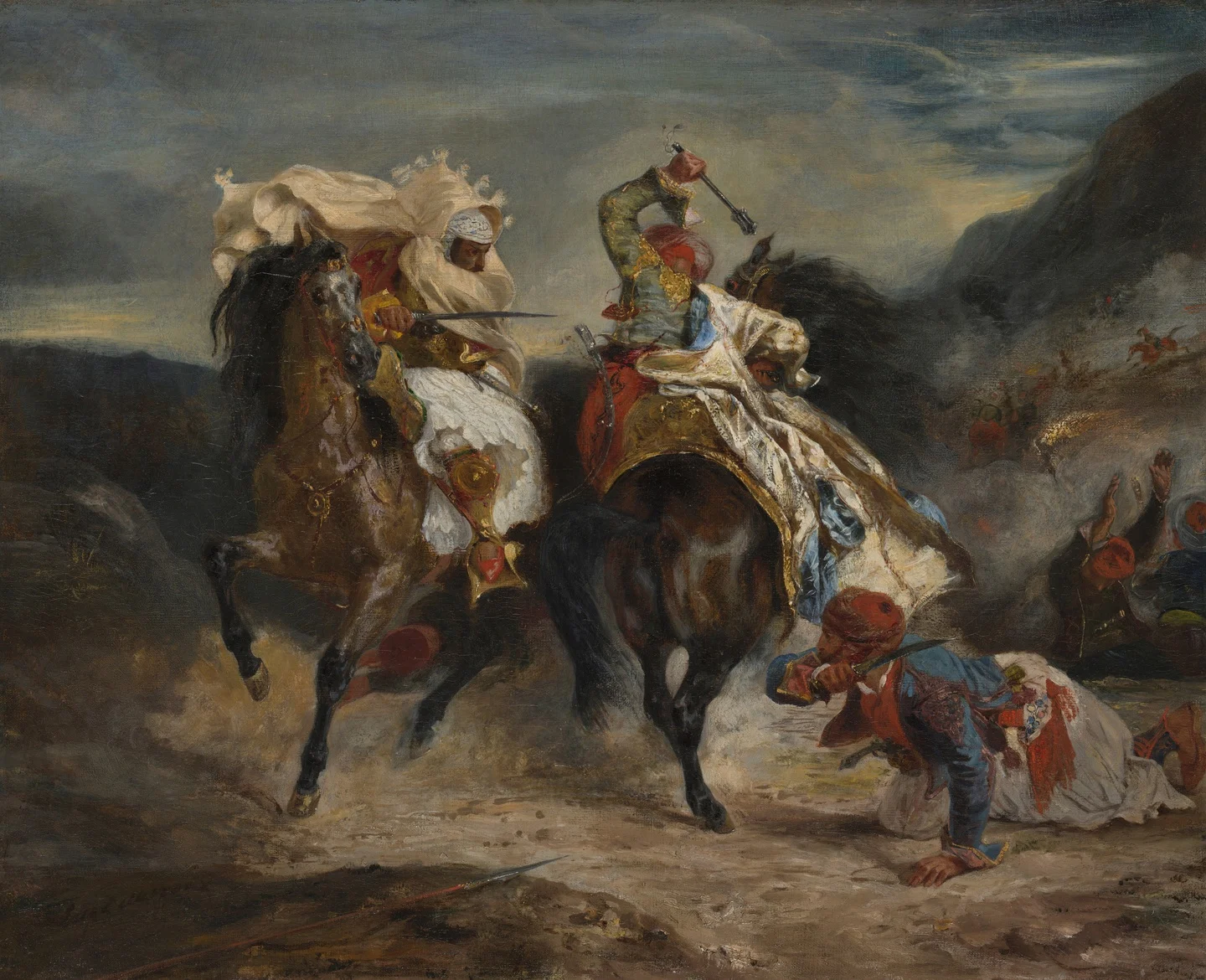 Eugène Delacroix
The Combat of the Giaour and Hassan
1826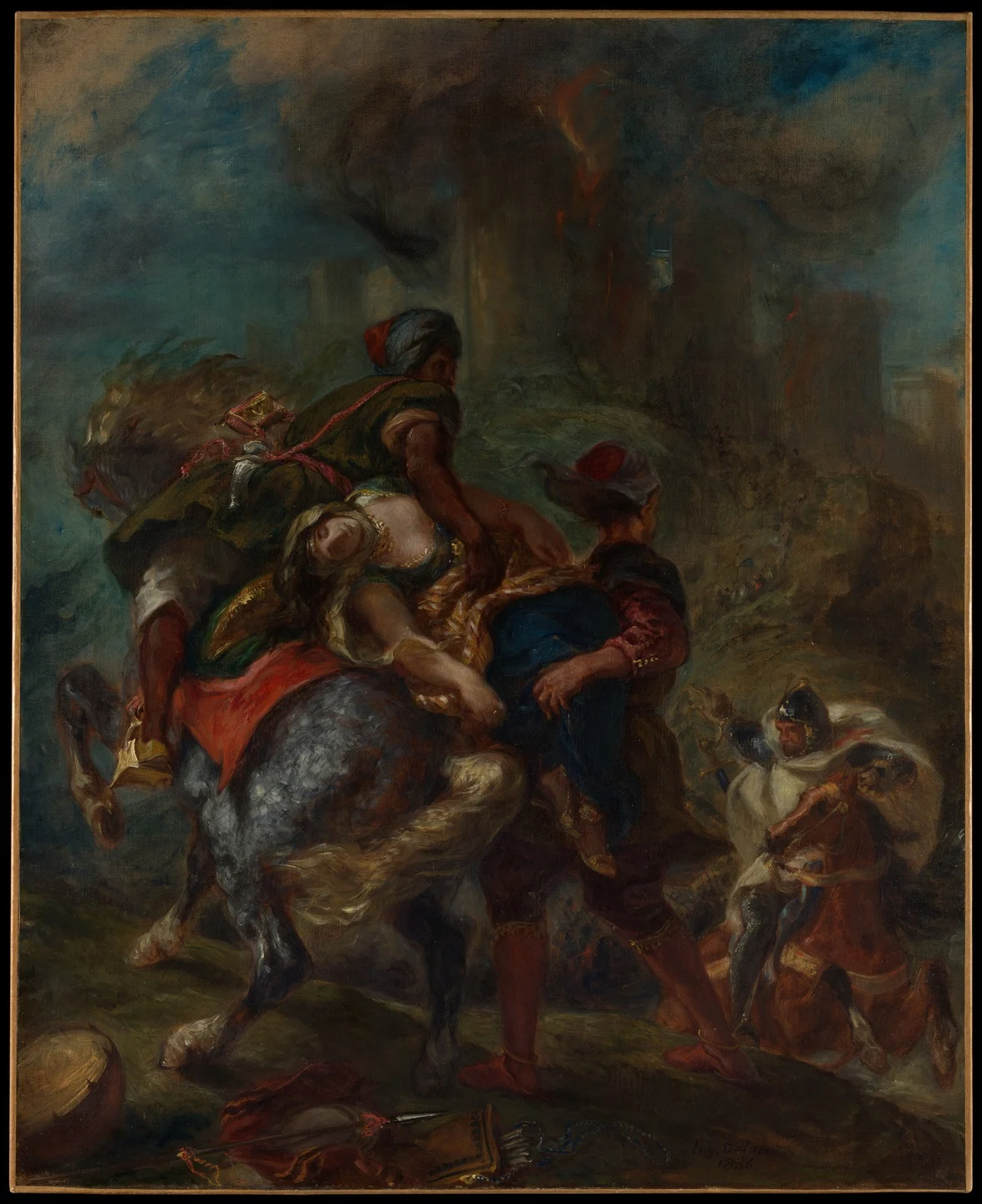 Eugène Delacroix
The Abduction of Rebecca
1846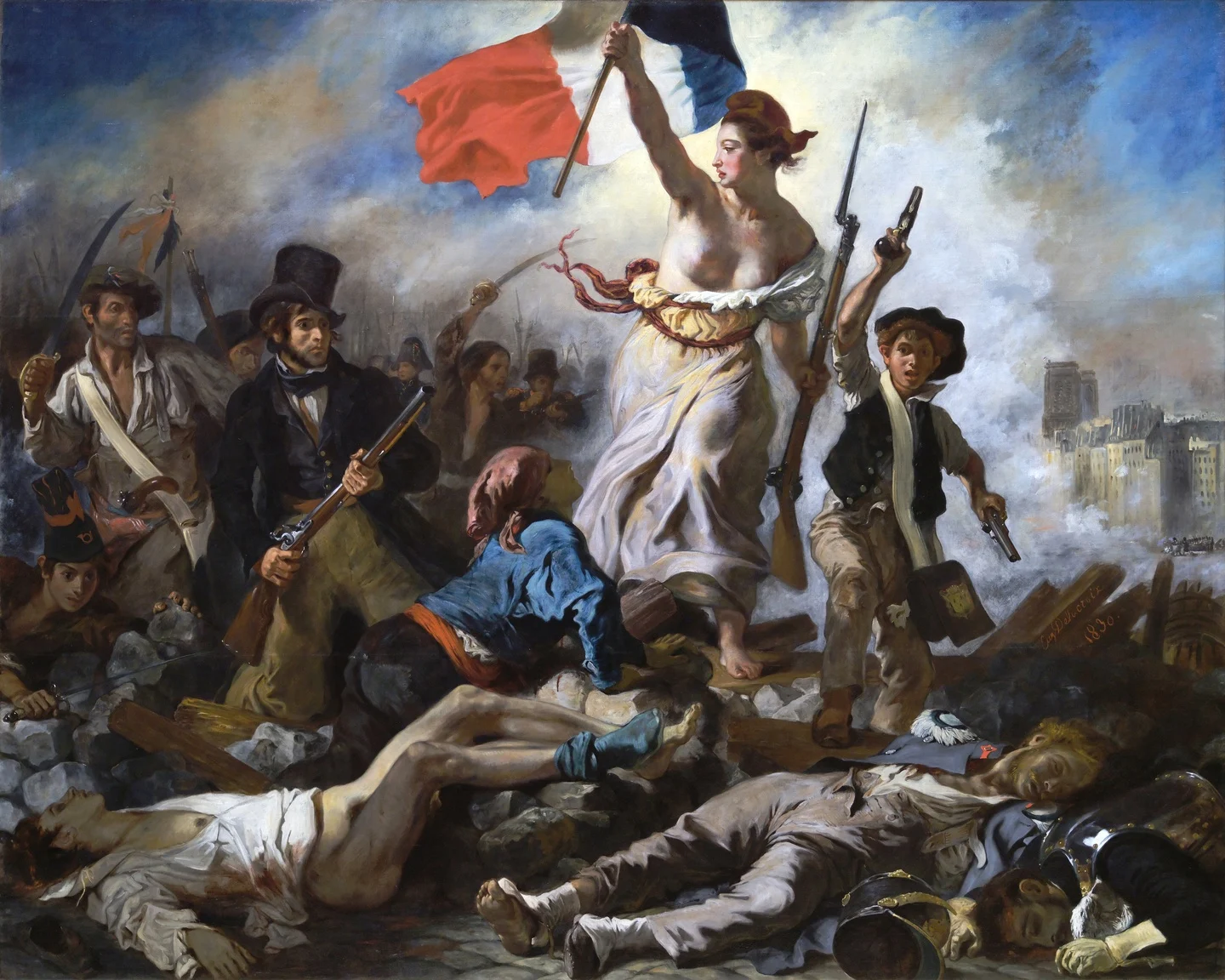 Eugène Delacroix
Liberty Leading the People
1830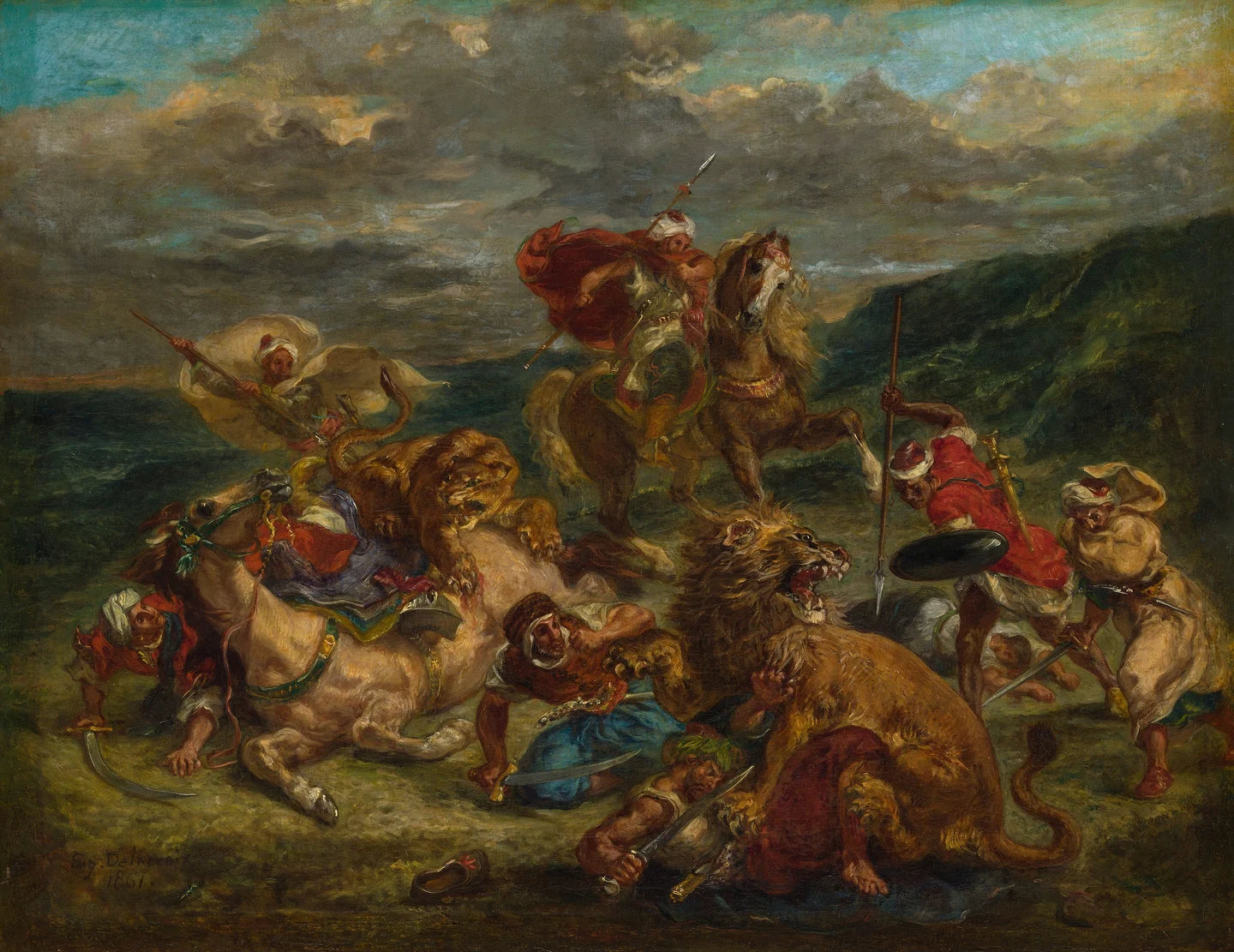 Eugène Delacroix
Lion Hunt
1860–61Period, style and subject
- Movement
- Romanticism
- Genre
- History painting
- Medium
- Oil on canvas
- Collection
- Musée du Louvre, Paris
- Dimensions
- 491 × 716 cm
- Accession number
- INV 4884
Sources
Reproduction of a public-domain artwork. Image licence