Portrait after a Costume Ball (Portrait of Madame Dietz-Monnin)
Hilaire Germain Edgar Degas · 1879
Explore the painting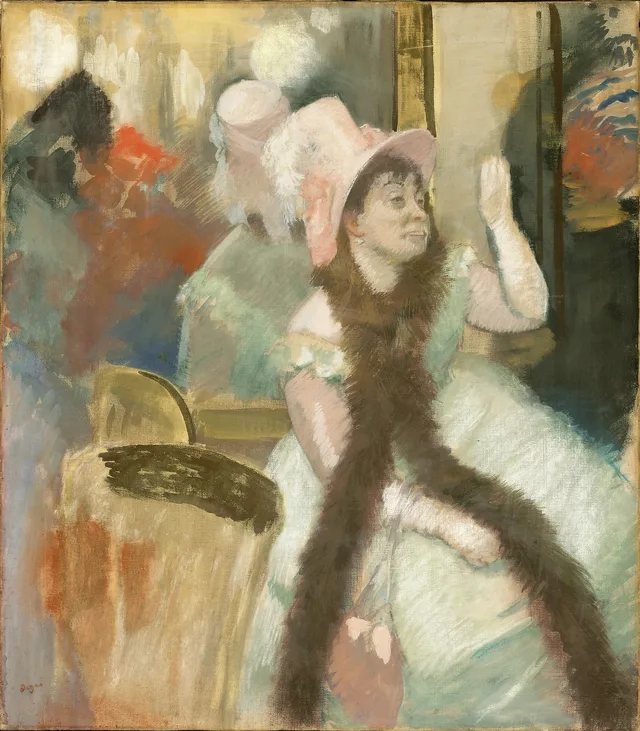
Adèle Dietz-Monnin sits after a costume ball. Degas exhibited the portrait at the 1879 Impressionist exhibition, although parts of its surface look sketchlike. Painter and sitter had a disagreement. Family tradition records her dissatisfaction with the likeness. A surviving letter confirms difficulties during the work, but does not reconstruct the entire dispute. The painting exemplifies how an artist’s interest in an unguarded pose could conflict with a sitter’s expectations.
Her head turns right, lips parted in a slight smile. Degas avoids the symmetrical position of a formal portrait. The face seems caught during a brief exchange of words. Such informality was nevertheless prepared through studies and sittings. The artist selected both the moment and the degree of exposure, giving viewers a carefully constructed impression of accidental observation.
The raised palm addresses someone outside the picture. It can suggest greeting or farewell, although its recipient is absent. The hand links the image with continuing activity around it. The other hand remains in her lap. Their contrast suggests the interval after a celebration when a person has sat down to rest but still participates in social exchange.
A large pink hat and pale ornaments identify clothing for a special occasion. Their festive character does not entirely match the relaxed seated posture. That difference makes the portrait specific. Degas chose the transition from public appearance to private rest. The costume still carries the evening’s display, while the body has relaxed from the posture required for formal self-presentation.
The mirror behind reflects the back of her head and hat. Its frame divides the surface, while blurred red and dark patches suggest surroundings at the edge. The reflection supplies another view of the sitter and complicates the confined room. We receive more visual information than a neutral-background portrait would offer, but must distinguish body, reflection and objects outside the main scene.
Dark fur crosses the pale dress and gathers in her lap. Short strokes suggest its pile, while broad pinkish and greenish areas describe fabric. Degas combined distemper and metallic paint with pastel. Mixed materials enabled varied surfaces within one work. They appear unfinished only by the standard of smooth academic finish, which the painter did not treat as compulsory.
The disagreement raises a practical question. Who decides how a person will remain in a public image, artist or sitter? For Degas, informality could be the principal achievement. For a woman in a prominent social circle, the same pose might seem inappropriate. The painting preserved the artistic decision, while the sitter’s dissatisfaction recalls that portraits arise from relationships between people whose interests do not always coincide.
More works by Hilaire Germain Edgar Degas
 Edgar Degas
The Dancing Class
 Hilaire Germain Edgar Degas
The Millinery Shop
 Hilaire Germain Edgar Degas
A Woman Seated beside a Vase of Flowers (Madame Paul Valpinçon?)
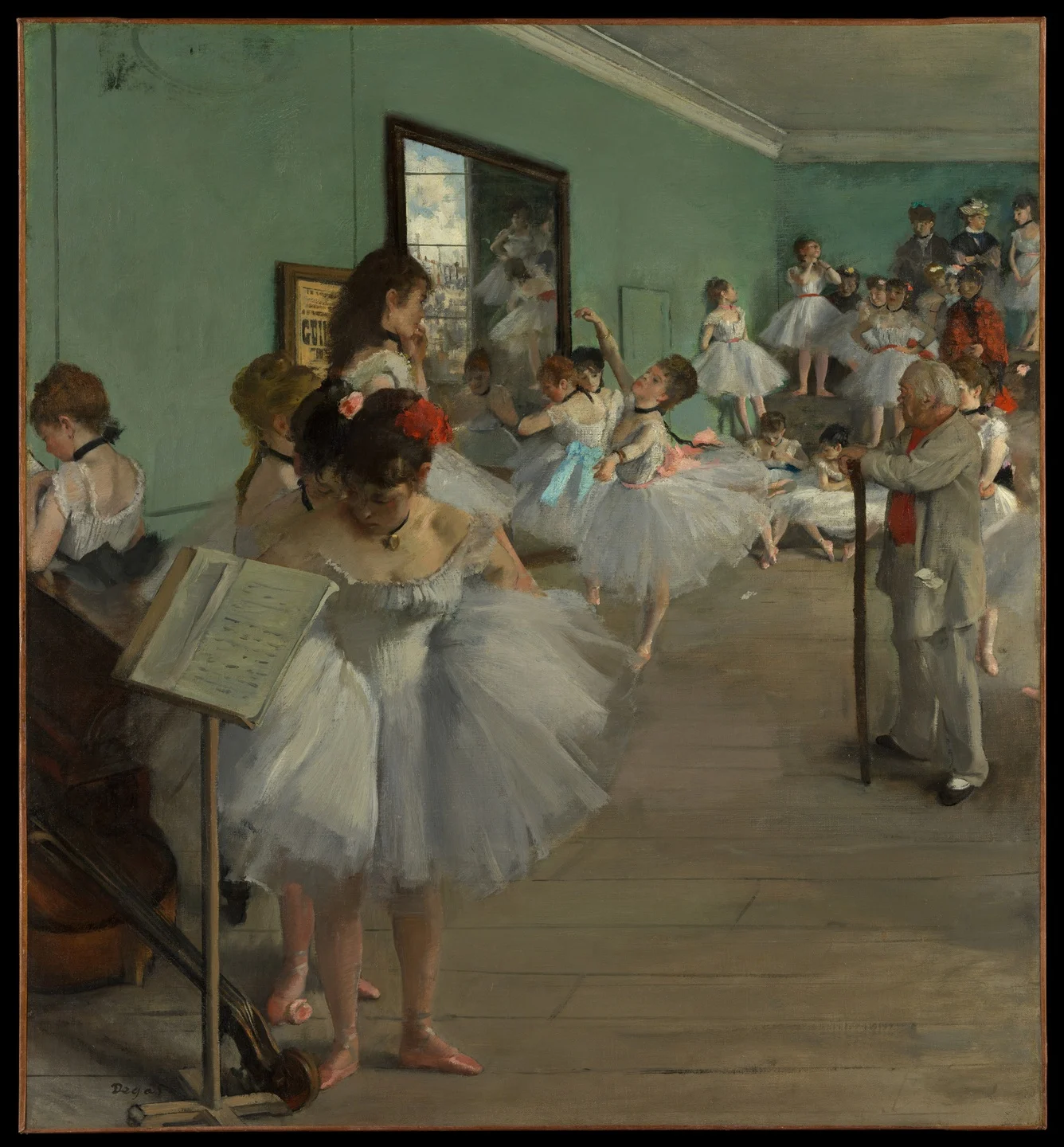 Hilaire Germain Edgar Degas
The Dance Class
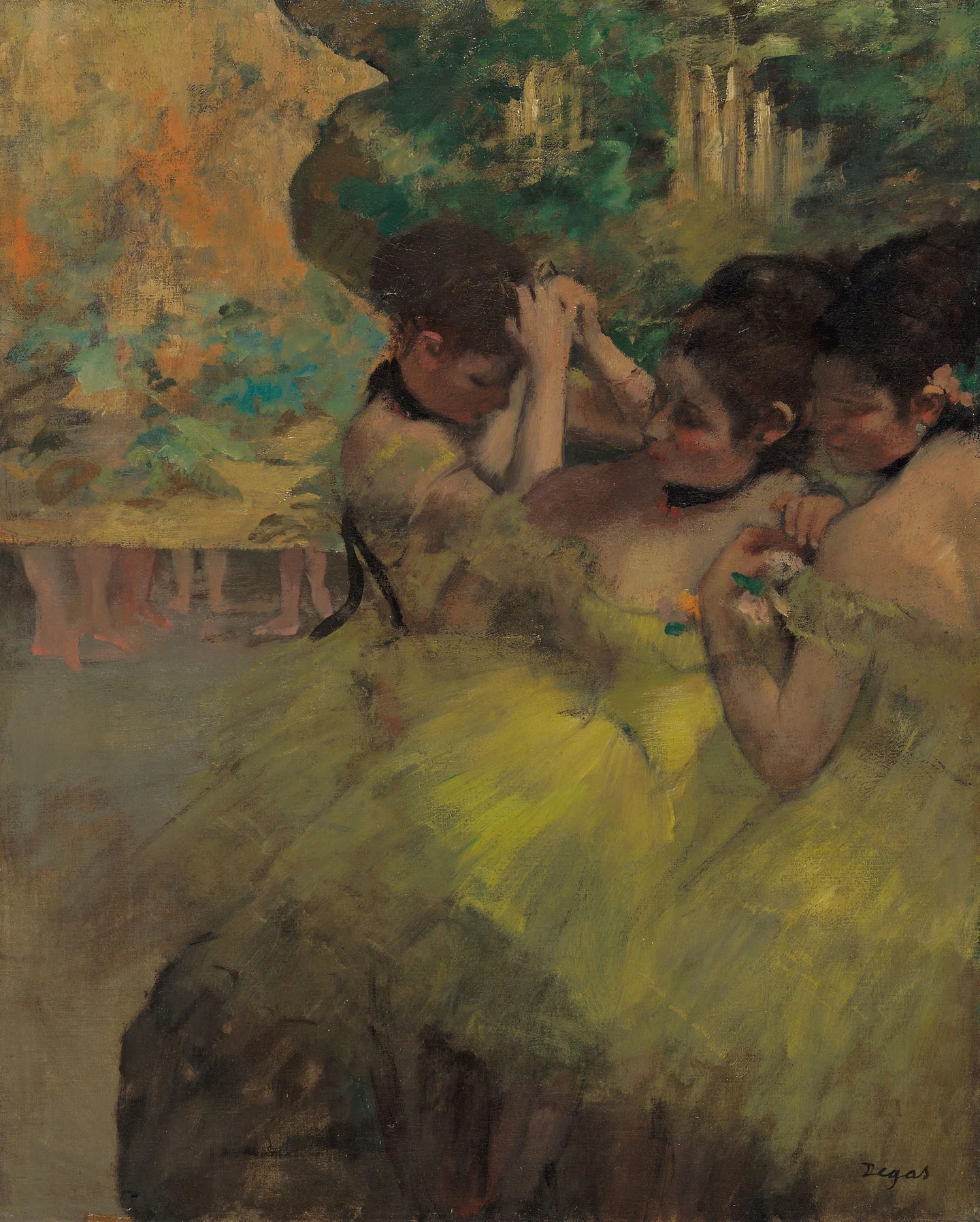 Hilaire Germain Edgar Degas
Yellow Dancers (In the Wings)
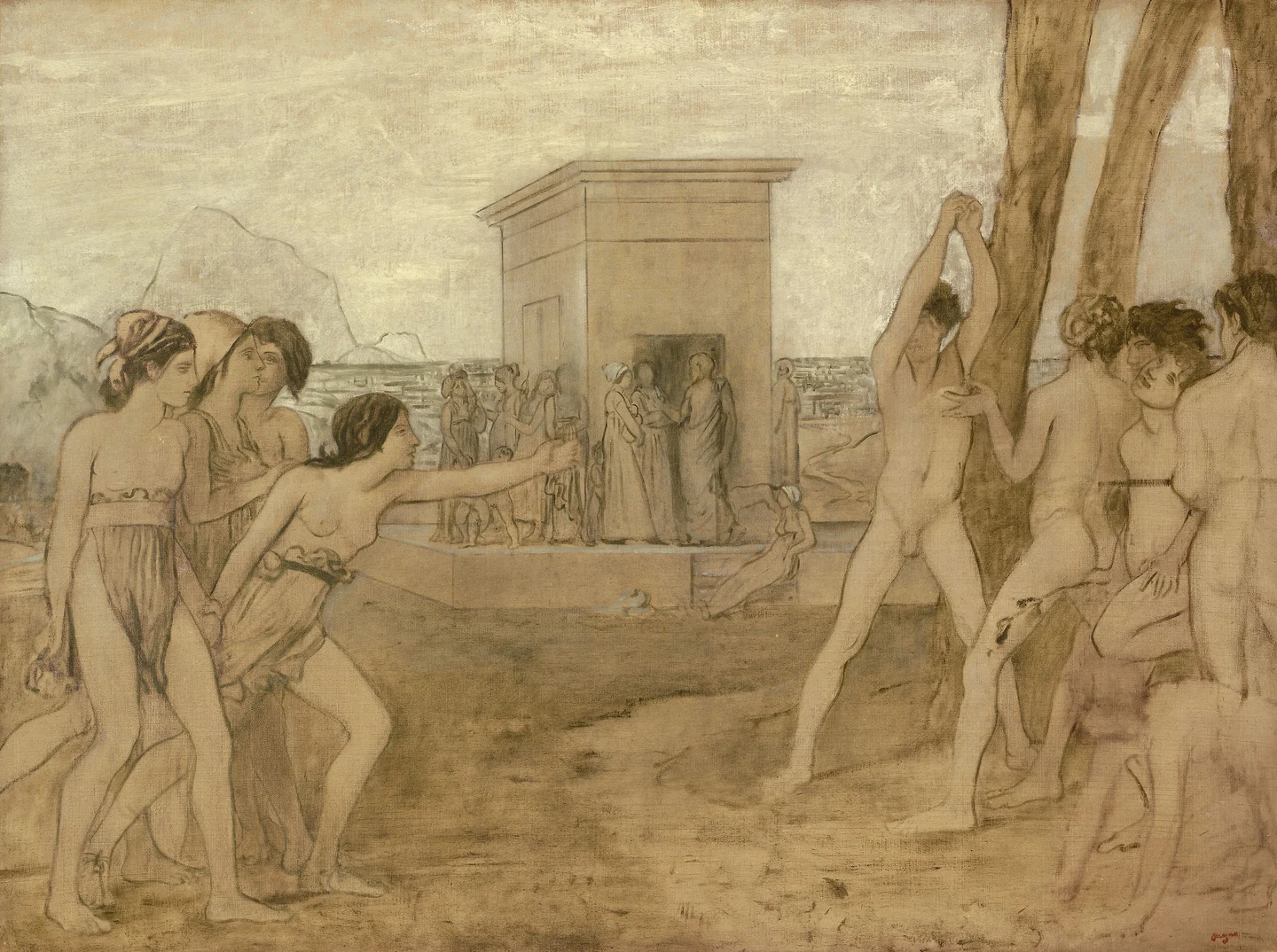 Hilaire Germain Edgar Degas
Young Spartan Girls Challenging Boys
- Medium
- Distemper, metallic paint, and pastel, on canvas
- Collection
- Art Institute of Chicago
- Accession number
- 1954.325
Sources
Wikimedia Commons reproduction. Public domain. Image licence