Mezzetin
Jean Antoine Watteau · ca. 1718–20
Explore the painting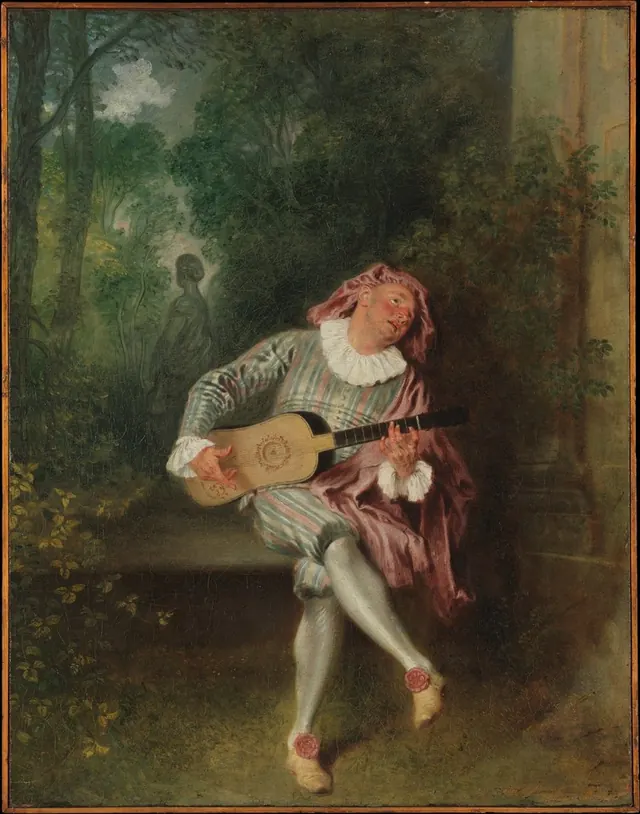
The painting’s story and details
Mezzetin comes from the Italian commedia dell’arte, a theatre of recurring characters and improvised dialogue. Parisian audiences knew him as an intrusive schemer and an amorous suitor. Around 1718–20 Watteau placed this character alone in an overgrown garden. His striped costume preserves his theatrical identity, while the isolated figure makes it possible to examine the singing musician’s pose and gestures.
His head tilts back, his mouth opens and his shoulders incline in the opposite direction. The entire body participates in singing. Watteau explored the expression in a separate head study. Studies from life helped him build painted characters from precise observations. A theatrical role retains the particulars of a living person, including a strained neck, uneven colour in the cheeks and an upward glance.
The fingers of one hand rest on the guitar’s neck; the other touches the strings above its body. Light singles out hands, cuffs and the instrument’s warm wood. This group makes music visible through action. The guitar lies across the figure and connects the separated elbows. Its steady horizontal anchors a pose in which head, shoulders and legs turn in different directions.
A female statue stands deeper in the garden, her back turned towards the musician. The museum connects her orientation with unanswered courtship. The stone figure gives the song a silent recipient. The bright costume and the statue almost absorbed into the greenery differ markedly in their activity. Mezzetin tries to attract attention while the garden remains still around him.
His crossed legs extend forwards. Rosettes on the shoes repeat the pinkish tones of the cape and floppy hat. White ruff, striped breeches and short cloak make up the costume of a recognisable comic character. Watteau retains these features while softening them through subtle colour transitions. The theatrical outfit receives the same painterly attention as the clothes of his fashionable figures.
Plants crowd around the low bench, with branches and dark foliage overhead. The garden creates a sheltered space for music and courtship. Watteau approached these subjects through working with Claude Gillot, a painter of theatrical scenes, and the decorative artist Claude Audran. The stage character and elegant setting connect two strands of his early experience.
The painting belonged to Jean de Jullienne, Watteau’s friend and patron. After the artist’s death, he supported the publication of prints after his drawings and paintings, greatly extending their audience. Watteau’s intimate scenes gained a long life beyond private collections. Mezzetin shows how a comic character could hold attention outside a performance through a single gesture, a song and the anticipation of an answer.
Featured in tours
Love, marriage and encounters
Gods, lovers, spouses and people whose relationships remain unknown.
More paintings to compare
 Jean Antoine Watteau, assisted by Jean-Baptiste Pater
Fête champêtre (Pastoral Gathering)
1718–21 Jean Antoine Watteau
The Italian Comedians
probably 1720 Jean Siméon Chardin
Soap Bubbles
probably 1733/1734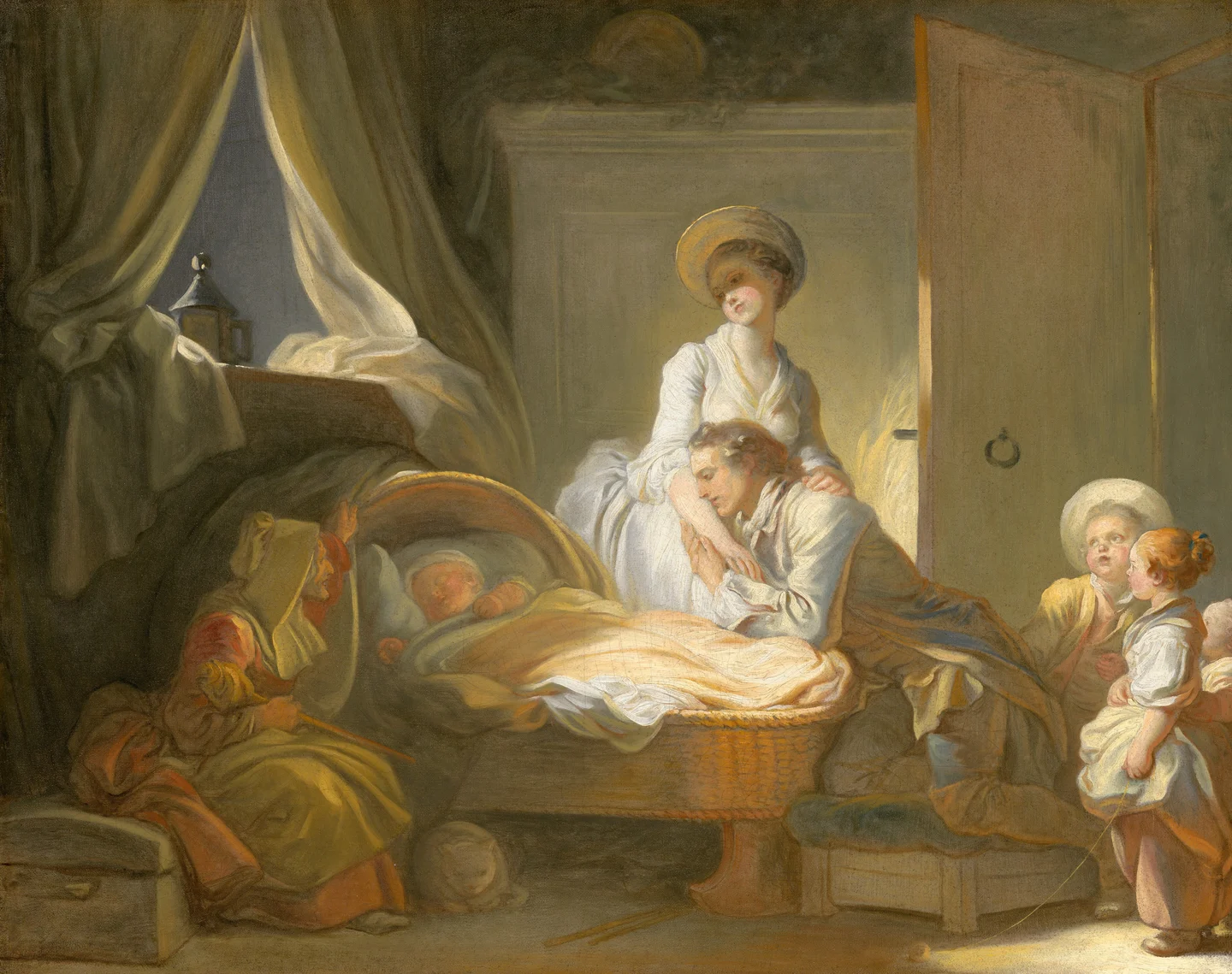 Jean Honoré Fragonard
The Visit to the Nursery
c. 1775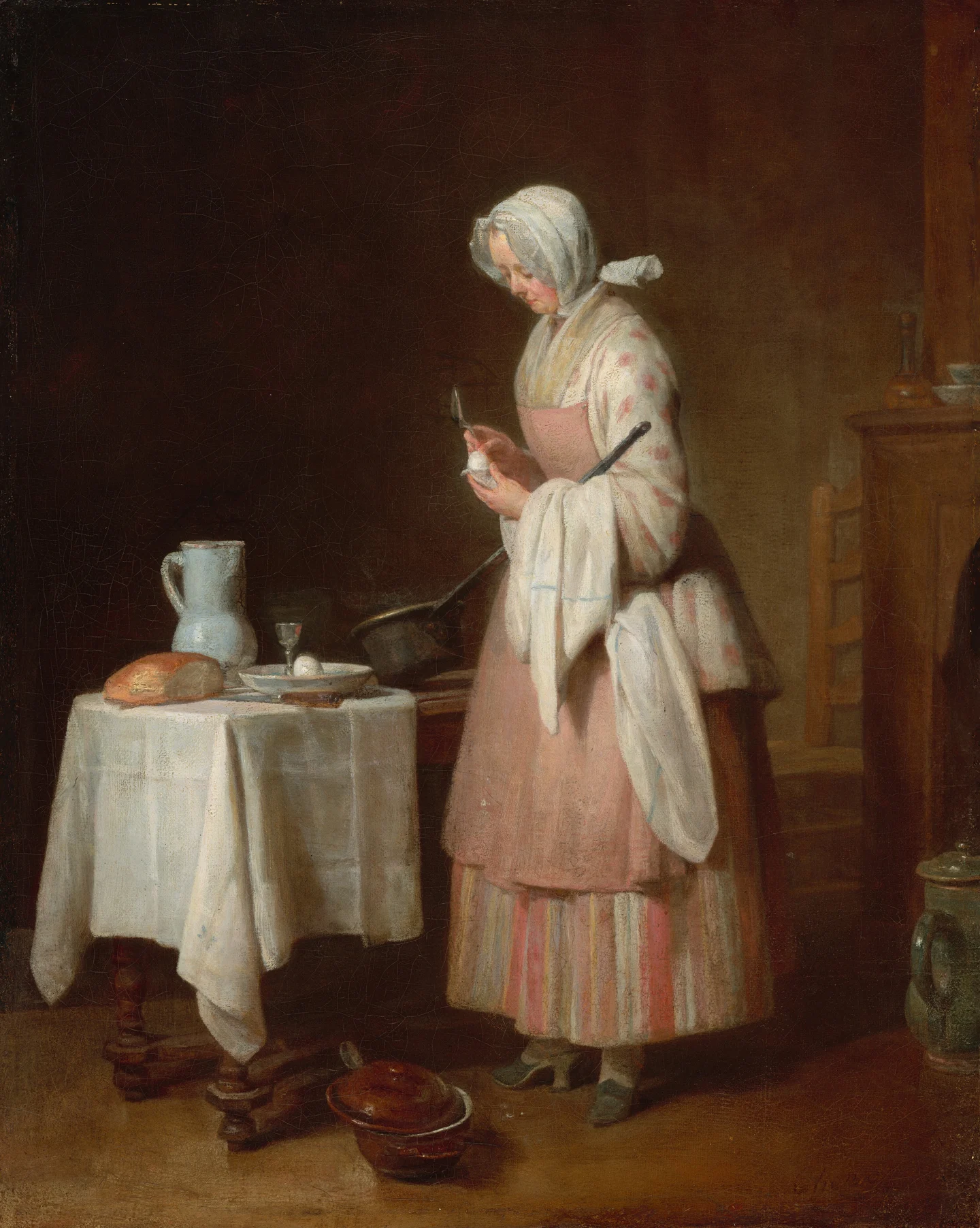 Jean Siméon Chardin
The Attentive Nurse
1747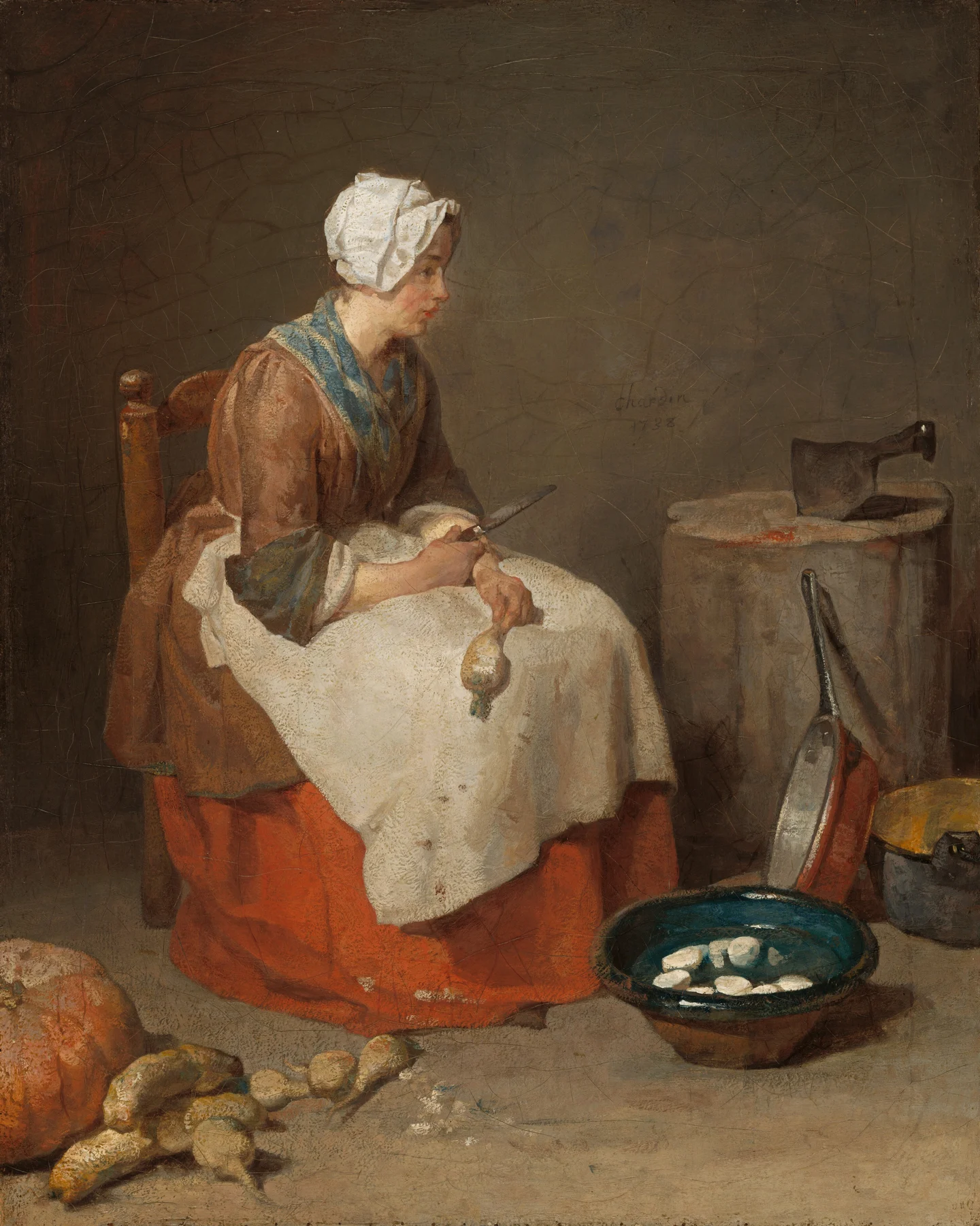 Jean Siméon Chardin
The Kitchen Maid
1738Period, style and subject
- Movement
- Rococo
- Genre
- Everyday life
- Medium
- Oil on canvas
- Collection
- The Metropolitan Museum of Art
- Dimensions
- 55.2 × 43.2 cm
- Accession number
- 34.138
Sources
Image provided under CC0. Image licence