How painting changed in the early twentieth century
Colour, the human figure and early experiments in abstraction.
Open the tour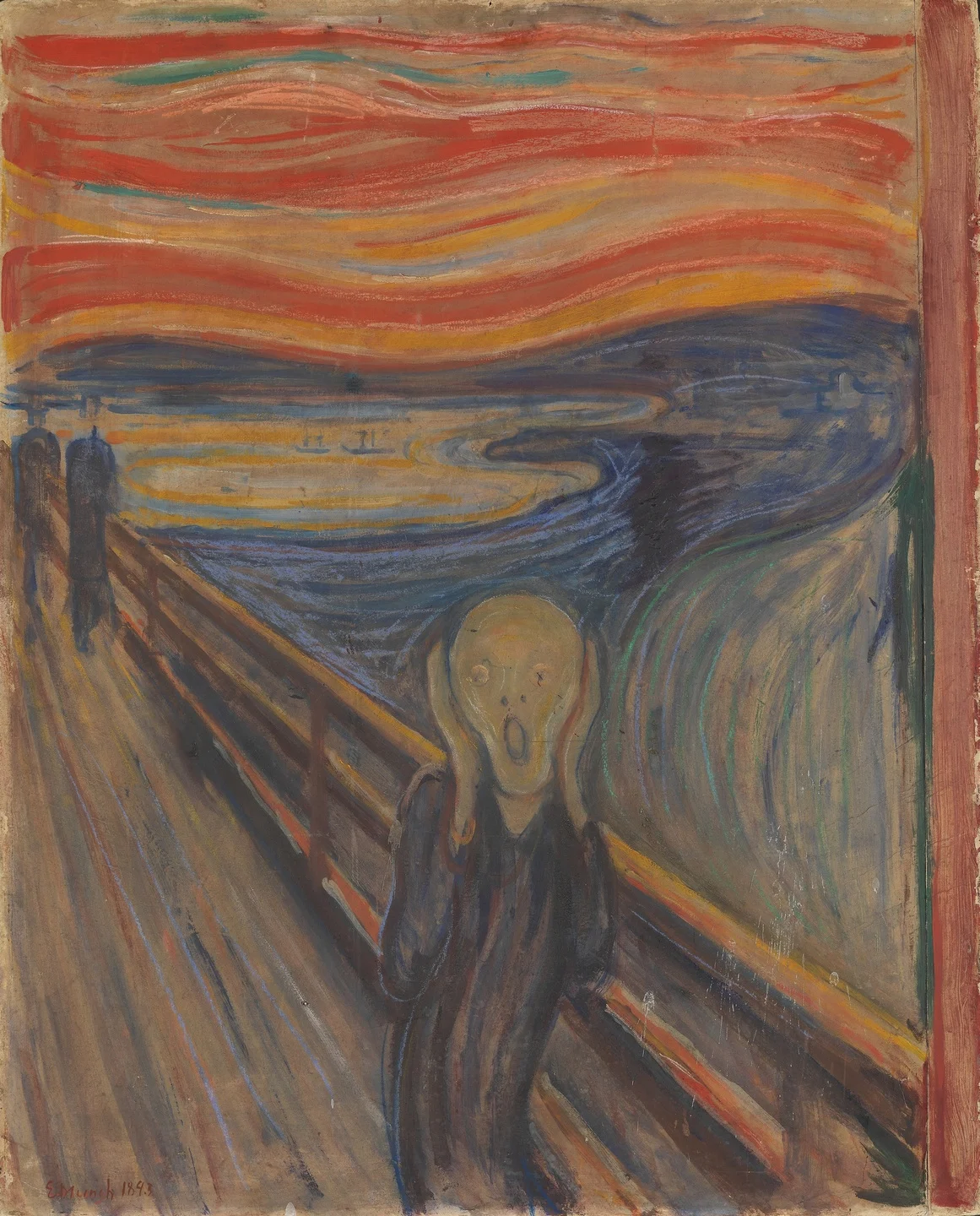 Edvard Munch
The Scream
1893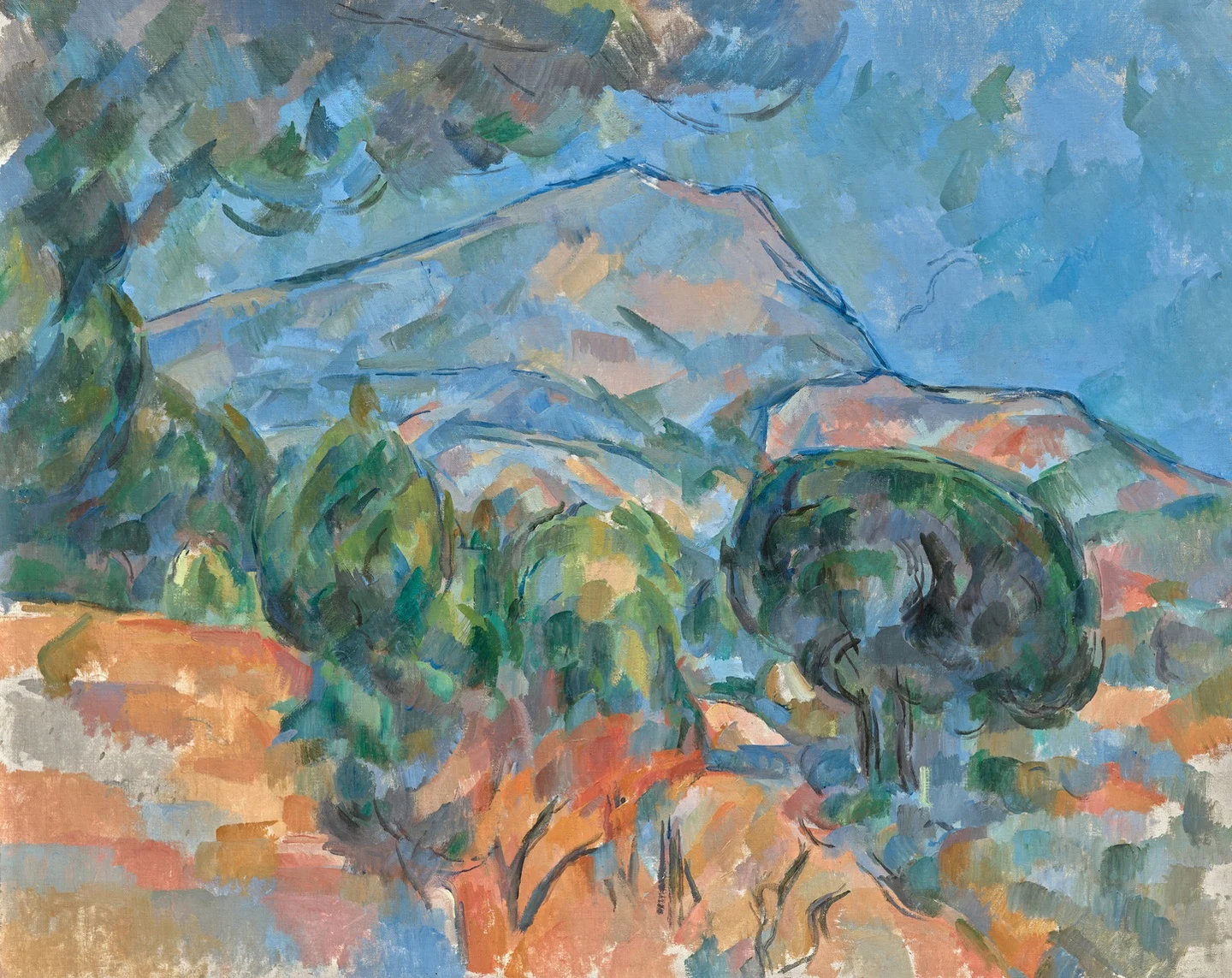 Paul Cezanne
Mount Sainte-Victoire
c. 1904 Paul Gauguin
Where Do We Come From? What Are We? Where Are We Going?
1897–1898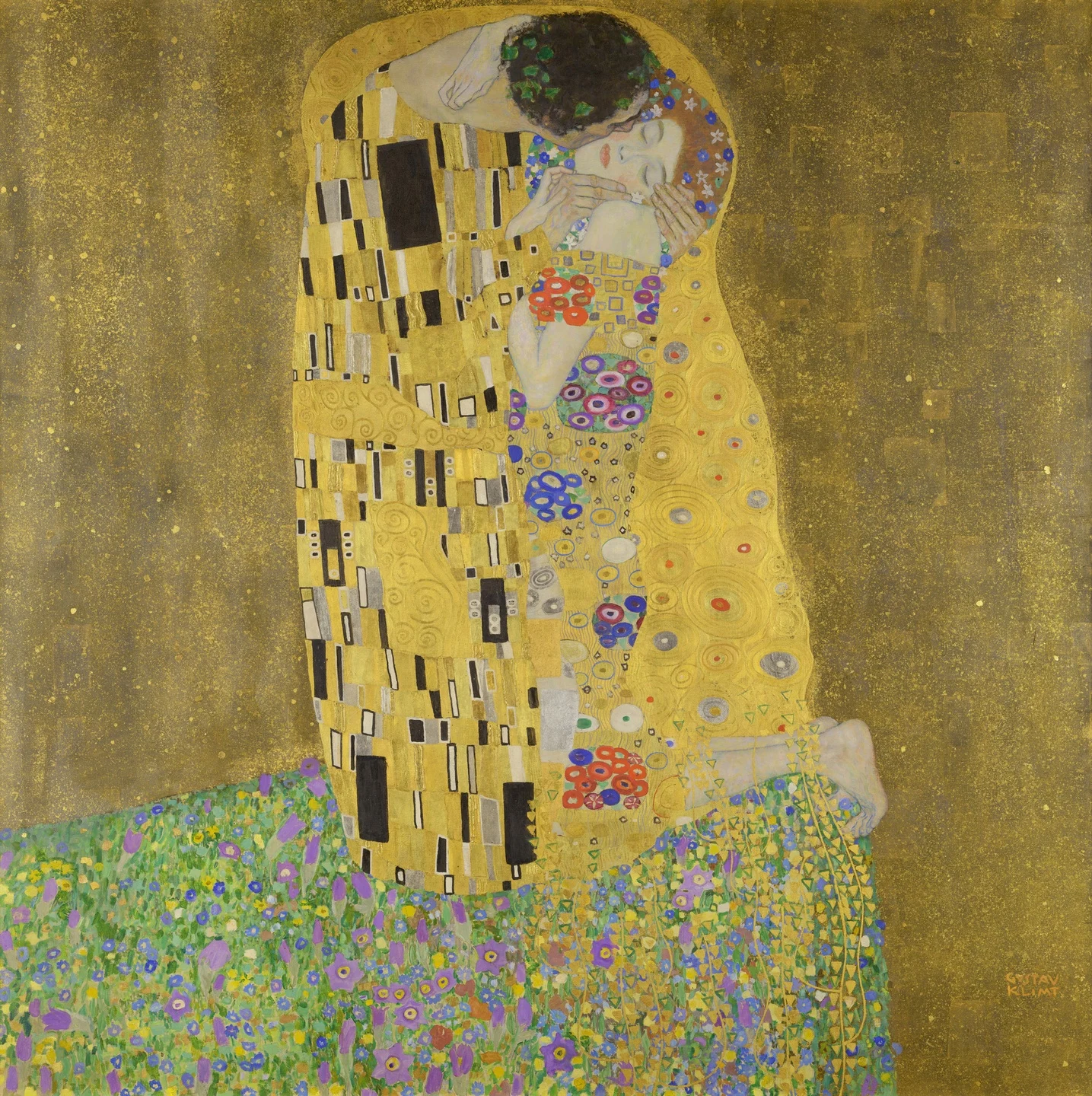 Gustav Klimt
The Kiss (Lovers)
1908 (completed 1909)Colour, the human figure and early experiments in abstraction.
Early twentieth-century painters chose different relationships with the visible world. Matisse reworked a room’s colour, Modigliani elongated a portrait, and Marc broke up a landscape. We begin with earlier experiments by Munch and Cézanne, then compare figurative painting with Kandinsky and Mondrian.
Earlier experiments
Munch, Cézanne and Gauguin offer different departures from immediate visual impressions.
The Scream
Edvard Munch · 1893
Munch connected this image with anxiety experienced during a walk above the Kristiania fjord. The figure developed from a more clearly defined man in his 1892 painting Despair. This is the National Museum's 1893 version, painted in tempera and grease crayon on cardboard. Its distorted forms helped prepare the way from Symbolism toward Expressionism.
Mount Sainte-Victoire
Paul Cezanne · c. 1904
Cézanne painted this view from a road leading east from Aix toward the mountain. Two umbrella pines anchor the foreground, and a branch at the left echoes the distant slope. He returned to Sainte-Victoire throughout his last two decades, changing the construction of space around a familiar subject.
Where Do We Come From? What Are We? Where Are We Going?
Paul Gauguin · 1897–1898
Gauguin made his largest painting in Tahiti during a personal crisis. He had expected an inexpensive, untouched paradise but encountered a modern colonial society and conflicts with French authorities. Figures of different ages develop the questions in the title. The scene assembles the artist's worldview rather than documenting island life transparently.
The figure and decorative surface
Portrait and interior survive, while relationships between coloured areas become more conspicuous than familiar depth.
The Kiss (Lovers)
Gustav Klimt · 1908 (completed 1909)
The embracing couple belongs to Klimt's Golden Period. Flesh and gestures emerge from large ornamental fields. Gold leaf covers the clothing, while fine gold, silver and platinum particles enter the background. The Austrian state acquired the painting during its first presentation in 1908 for the recently founded Moderne Galerie.
Mäda Primavesi (1903–2000)
Gustav Klimt · 1912–13
Nine-year-old Mäda wears a dress designed by Emilie Flöge. Her parents supported Vienna’s progressive artistic circles. She later recalled Klimt testing poses and clothing in numerous sketches. The portrait connects a carefully prepared stance with Viennese design culture.
The Red Studio
Henri Matisse · Fall 1911
Matisse painted his studio at Issy-les-Moulineaux with his own paintings, sculpture and ceramics inside it. The work belonged to a group requested by Sergei Shchukin, who bought The Pink Studio but declined this canvas. Its original scheme of pink floor, blue walls and ochre furniture was later covered in Venetian red.
Still Life with Geranium
Henri Matisse · 1906
Matisse placed his own sculptures among plants and vessels. The pale figures were probably plaster casts, later also issued in bronze. Brilliant colour and thick brushwork connect the painting with Fauvism, whose leading painter critics considered him. Still life let him compare painted surfaces with forms he had modelled himself.
Woman before an Aquarium
Henri Matisse · 1921–23
Matisse encountered Islamic art through exhibitions and journeys to Algeria and Morocco, collecting pottery and textiles. Later, in Nice, these experiences returned in his interiors. The patterned screen behind the woman creates an intricate surface beside the figure and aquarium, competing with the usual illusion of depth.
Portrait of a Woman
Amedeo Modigliani · c. 1917–18
Modigliani grew up in a Sephardic Jewish family in Livorno, studied in Italy, and moved to Paris in 1906. There he portrayed artists, poets, and other acquaintances. This sitter remains unidentified. Elongated forms and restrained color connect her with the portrait language he developed among the Paris avant-garde.
The Pond
Victor Borisov-Musatov · 1902–1903
Borisov-Musatov began The Pool at Zubrilovka in 1902 and finished it the following year. His sister and fiancée posed for him. Their recognisable faces appear within a deliberately arranged scene of figures, clothing and water.
Towards abstraction
A title may still refer to objects, but colour and geometry increasingly determine the image’s structure.
The Bewitched Mill
Franz Marc · 1913
Marc painted this after staying in Merano in South Tyrol. He wondered how the world might appear through an animal’s eyes. Houses, a mill, trees and animals share a space built from coloured forms. The title refers to the accord between human life and nature that he believed he had found there.
Improvisation No. 30 (Cannons)
Vasily Kandinsky · 1913
Kandinsky painted Improvisation No. 30 in Munich in 1913. Individual objects remain recognisable among coloured patches. Lines can cross colour without following its edge, as forms begin to operate independently of depicted objects.
Composition (No. 1) Gray-Red
Piet Mondrian · 1935
After the First World War, Mondrian and artists of De Stijl hoped a shared visual language might support a more harmonious society. He limited painting to verticals, horizontals and a few colours. Relationships between rectangles were intended to work without a recognisable subject. The programme concerned both art and imagined forms of future life.
Lozenge Composition
Piet Mondrian · 1921
In 1921 Mondrian set a square canvas on a corner while keeping its internal lines horizontal and vertical. The rectangular grid meets sloping edges. Yellow, blue, red and neutral areas occupy unequal amounts of space.
The modern world remains a subject
Cities, sport and personal memory continued to offer subjects to artists who retained recognisable settings.
Stag at Sharkey's
George Wesley Bellows · 1909
Public boxing was illegal in New York, so bouts took place in private clubs. An outsider received temporary membership and was called a stag. Bellows knew Sharkey's, near his studio. He painted the scene as a working-class entertainment began attracting a more affluent audience.
Love of Winter
George Wesley Bellows · 1914
In January 1914 Bellows complained to a friend that he lacked snow for his yearly winter painting. A February blizzard in New York supplied it. People of different ages and social backgrounds meet on the ice. The public park offered shared recreation, while broad strokes convey speed and movement.
Church Street El
Charles Sheeler · 1920
Sheeler based the composition on Manhatta, the film he made with photographer Paul Strand. The high viewpoint joins Lower Manhattan's buildings with the Church Street elevated railway. He removes small textures to concentrate on forms and shadows. Experience in film and photography passes directly into painting.
Cabin in the Cotton
Horace Pippin · c. 1931–37
Pippin began making art to rehabilitate an arm injured in the First World War. His cotton-field imagery drew on a visit to South Carolina with his regiment. This painting attracted attention when displayed in a shoe repair shop in 1937, helping the self-taught artist gain recognition from painters, critics and dealers.
New approaches coexisted
New approaches coexisted. Abstraction developed alongside portraiture, still life and urban scenes. Artists chose different problems, while viewers learned to distinguish their methods.
Colour and line gain greater independence in these works. Even when an object remains recognisable, its contours and lighting may follow the painting’s arrangement more than familiar vision.
Artists in the tour
Sources
- Edvard Munch — The Scream
- Paul Cezanne — Mount Sainte-Victoire
- Paul Gauguin — Where Do We Come From? What Are We? Where Are We Going?
- Gustav Klimt — The Kiss (Lovers)
- Gustav Klimt — Mäda Primavesi (1903–2000)
- Henri Matisse — The Red Studio
- Henri Matisse — Still Life with Geranium
- Henri Matisse — Woman before an Aquarium
- Amedeo Modigliani — Portrait of a Woman
- Victor Borisov-Musatov — The Pond
- Franz Marc — The Bewitched Mill
- Vasily Kandinsky — Improvisation No. 30 (Cannons)
- Piet Mondrian — Composition (No. 1) Gray-Red
- Piet Mondrian — Lozenge Composition
- George Wesley Bellows — Stag at Sharkey's
- George Wesley Bellows — Love of Winter
- Charles Sheeler — Church Street El
- Horace Pippin — Cabin in the Cotton