Fish and rocks
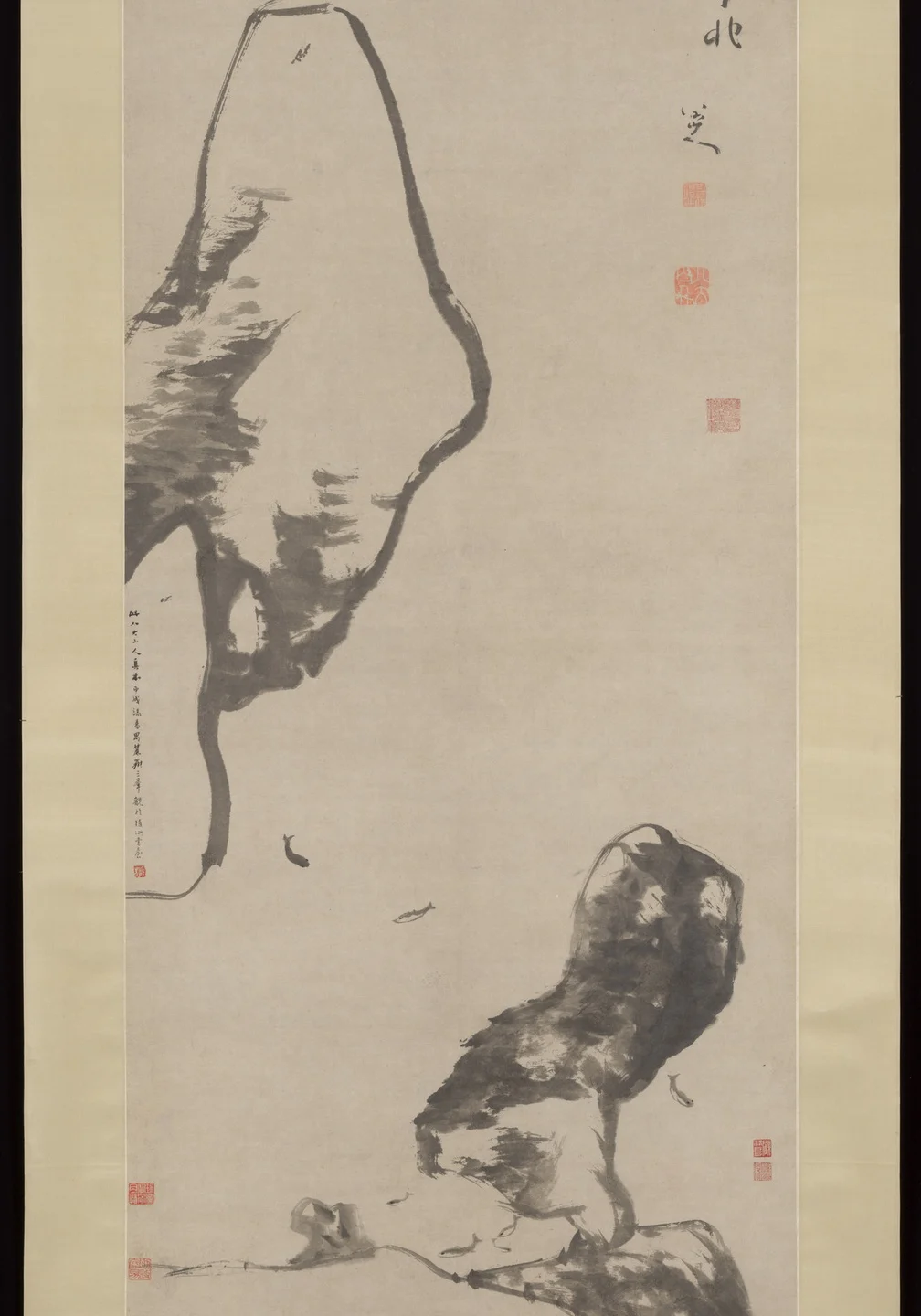
Bada Shanren. Seven small fish make blank paper read as water. A change of viewpoint in one unsettles the group’s arrangement.
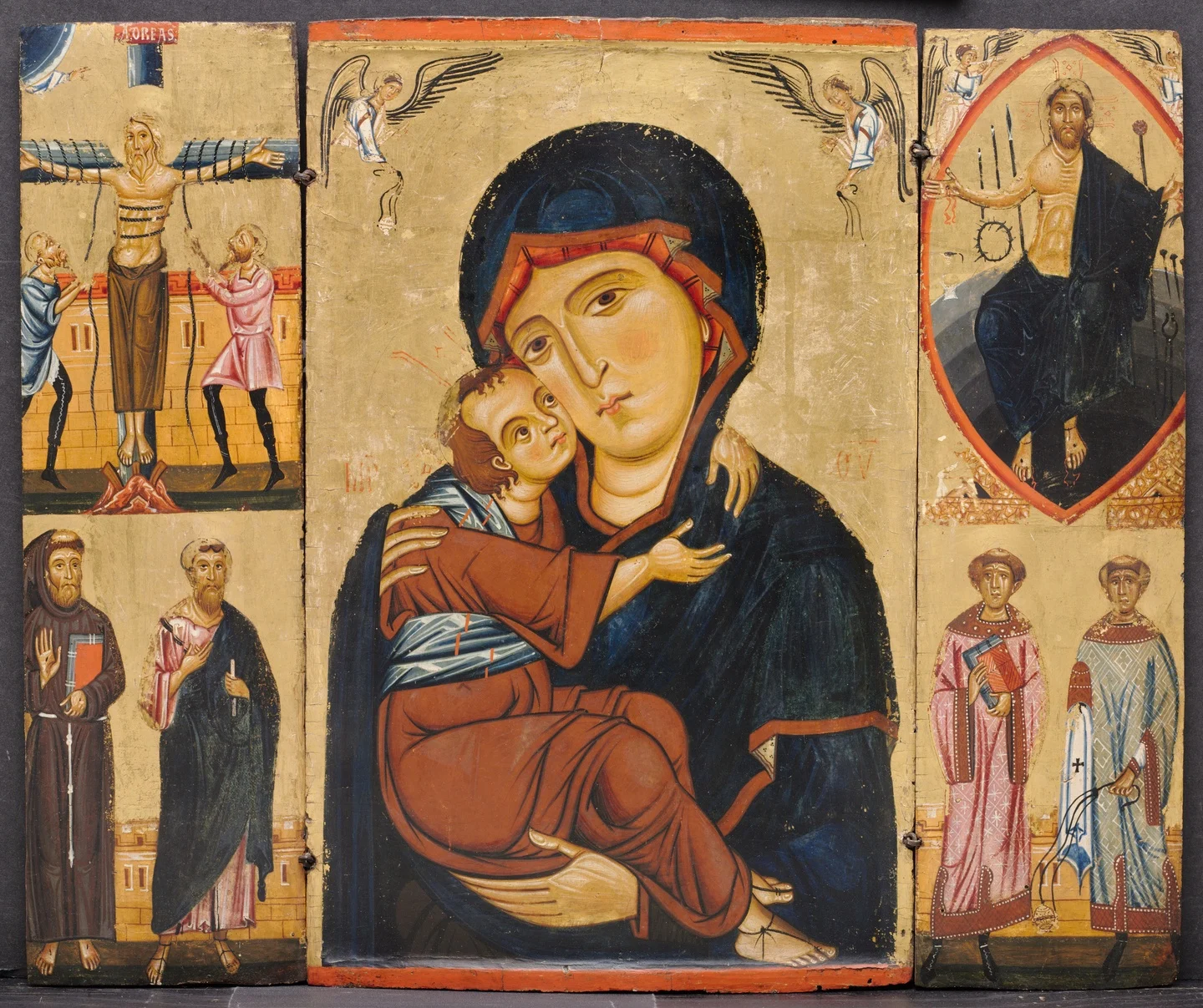
Berlinghiero. Mary presses the Child to her cheek while scenes of suffering and sanctity unfold beside them. Berlinghiero made this small folding image around 1230.
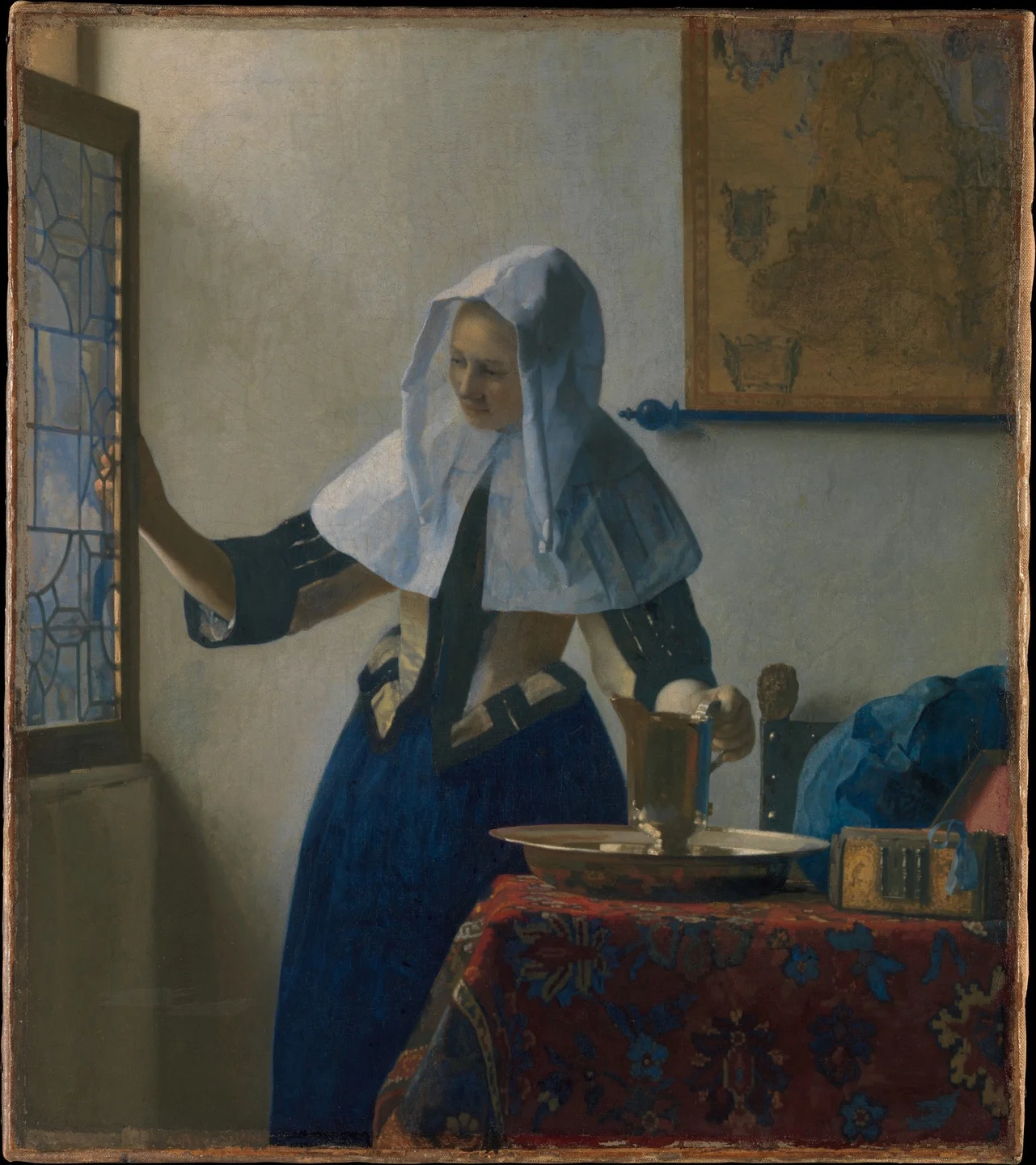
Johannes Vermeer. A woman prepares for her day beside a pitcher and basin. Window light falls across linen coverings protecting her clothes during washing.
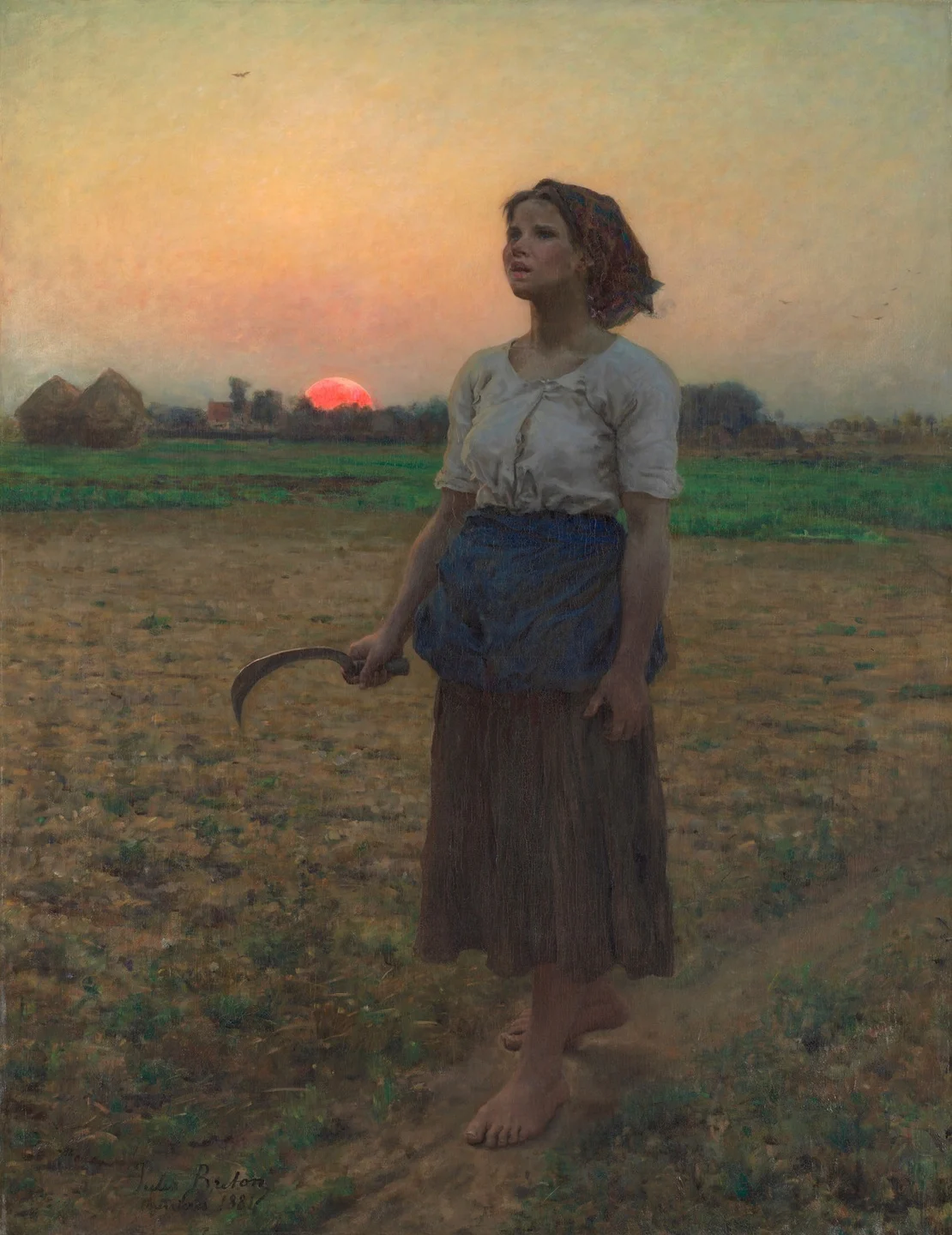
Jules Breton. A young woman has stopped in a field and raised her head. The museum identifies her as listening to a lark. Jules Breton painted the scene in 1884.
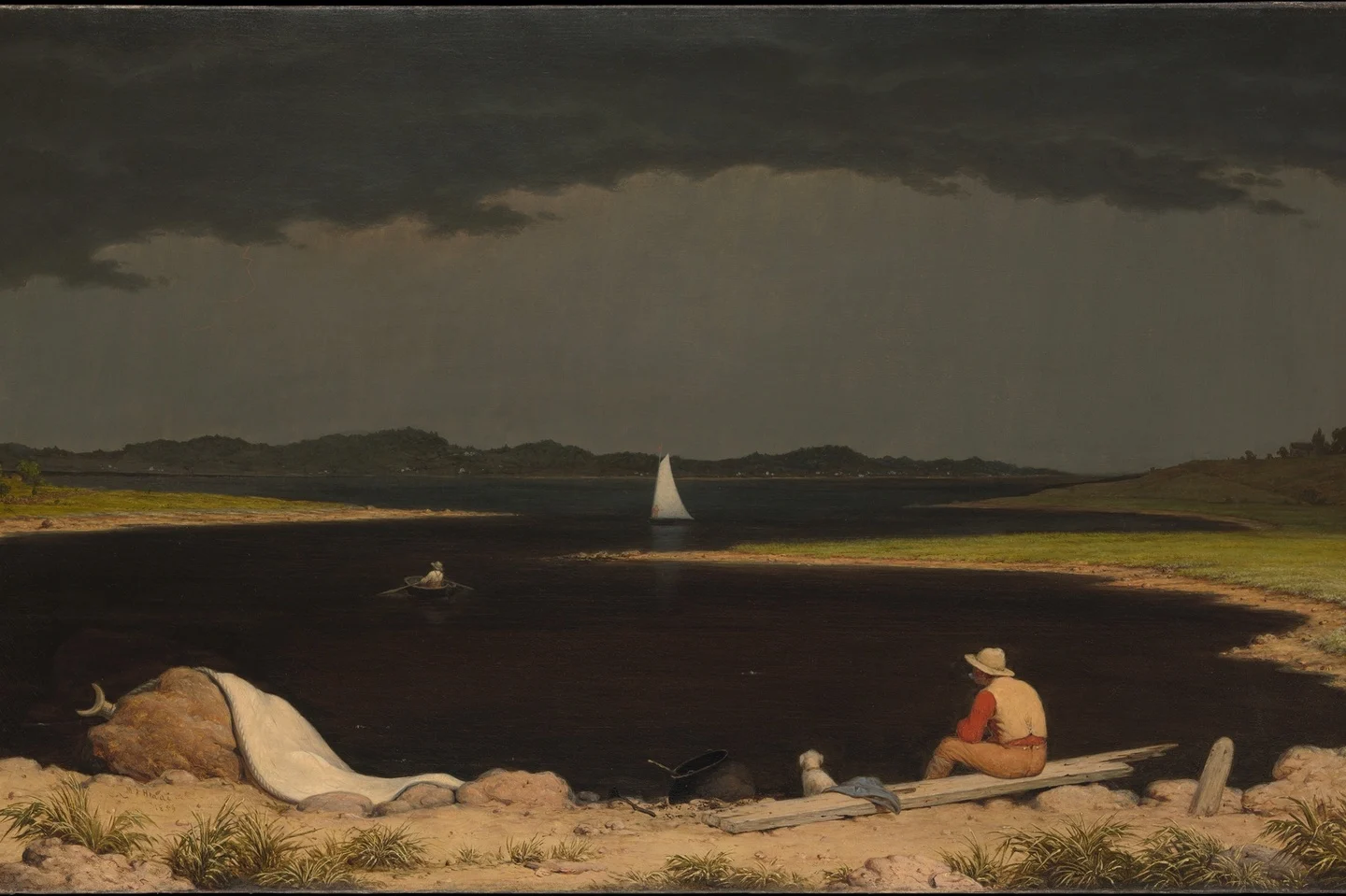
Martin Johnson Heade. Heade based the scene on a storm observed from Prudence Island around 1858. A man and dog face Narragansett Bay.
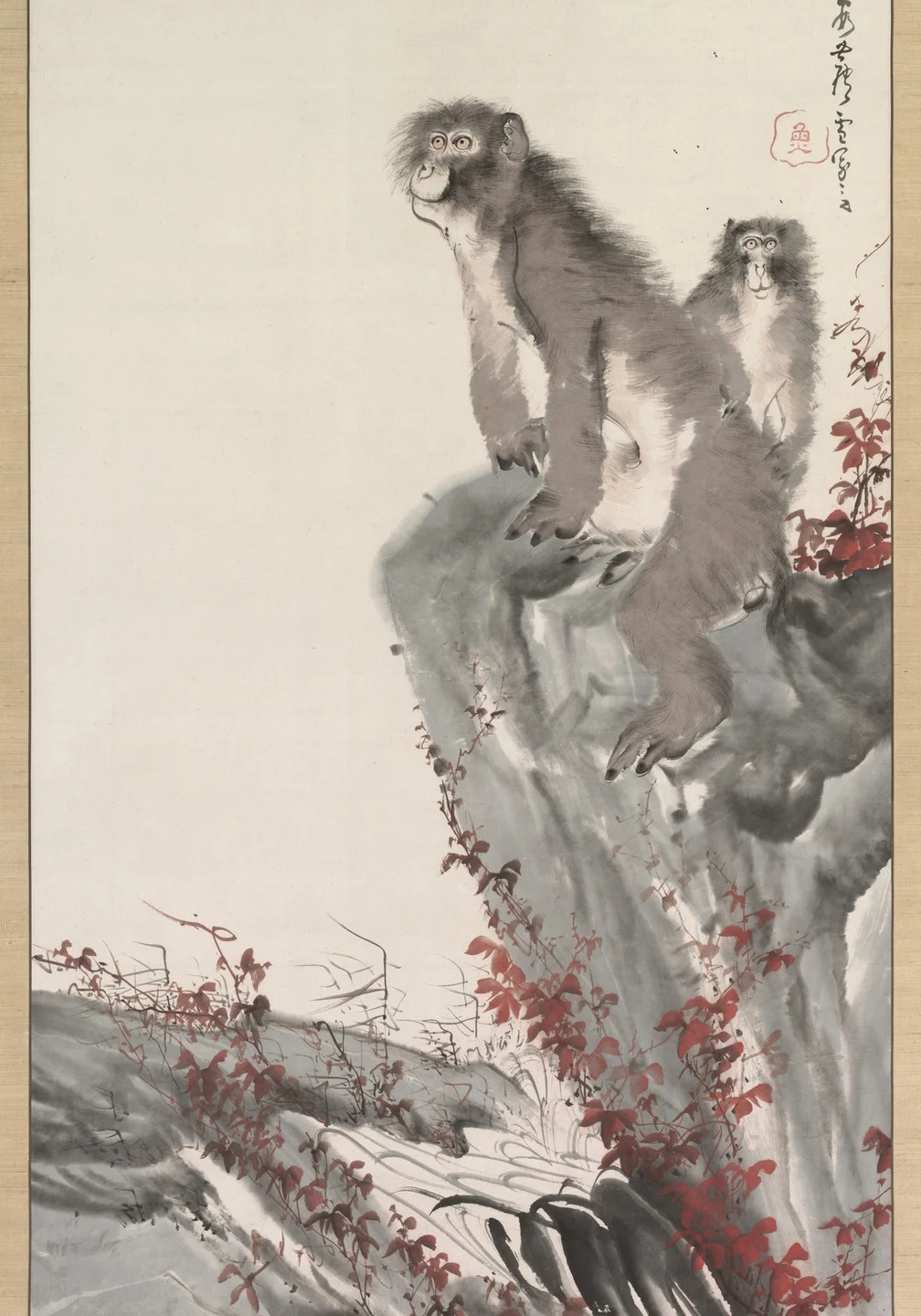
Nagasawa Rosetsu. Two Japanese macaques occupy a rock. Nagasawa Rosetsu painted them around 1796, near the end of his life.
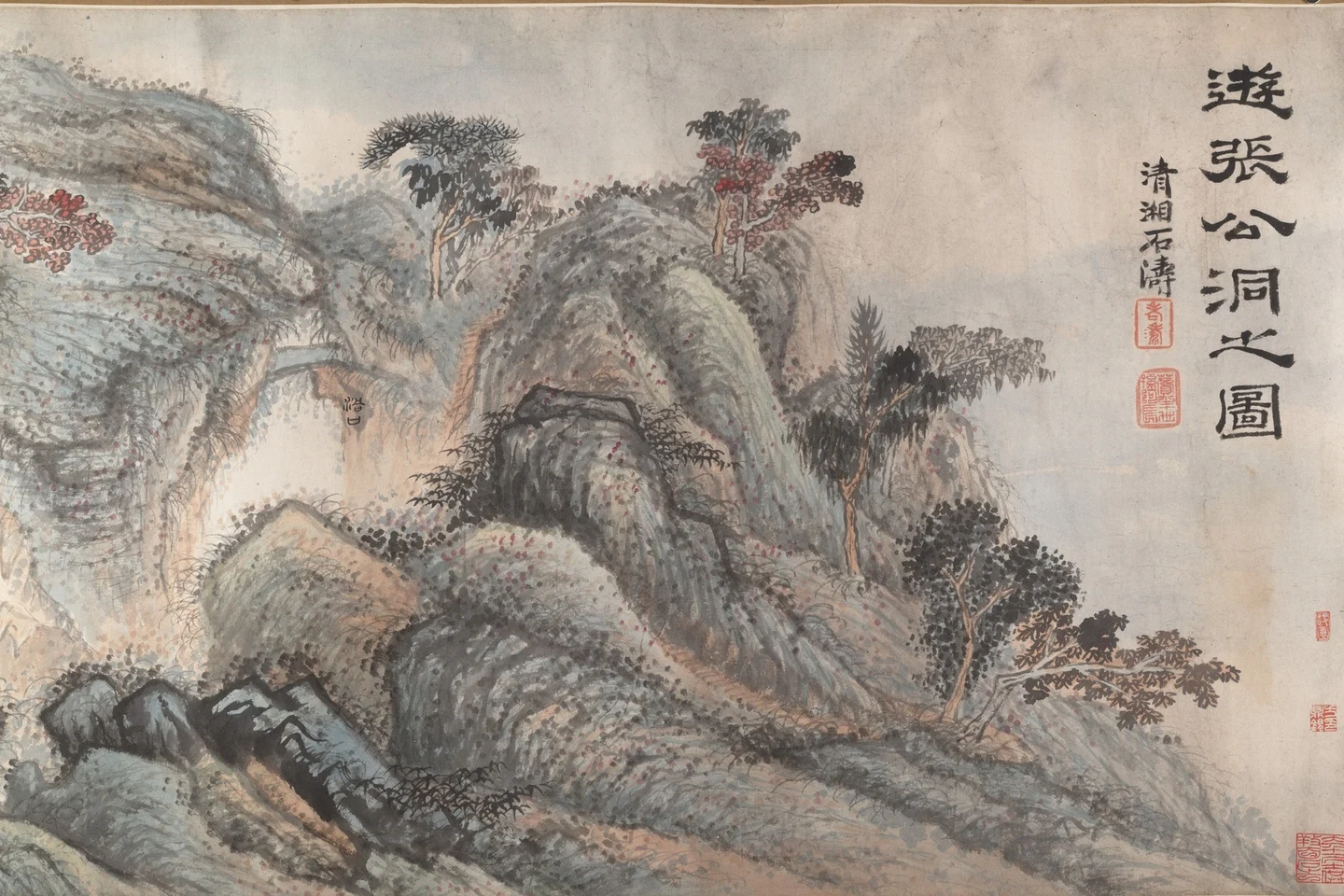
Shitao. Zhanggong’s grotto carried associations with Daoist renewal and creative power. Shitao transformed an earlier Shen Zhou composition through coloured layers and active forms.
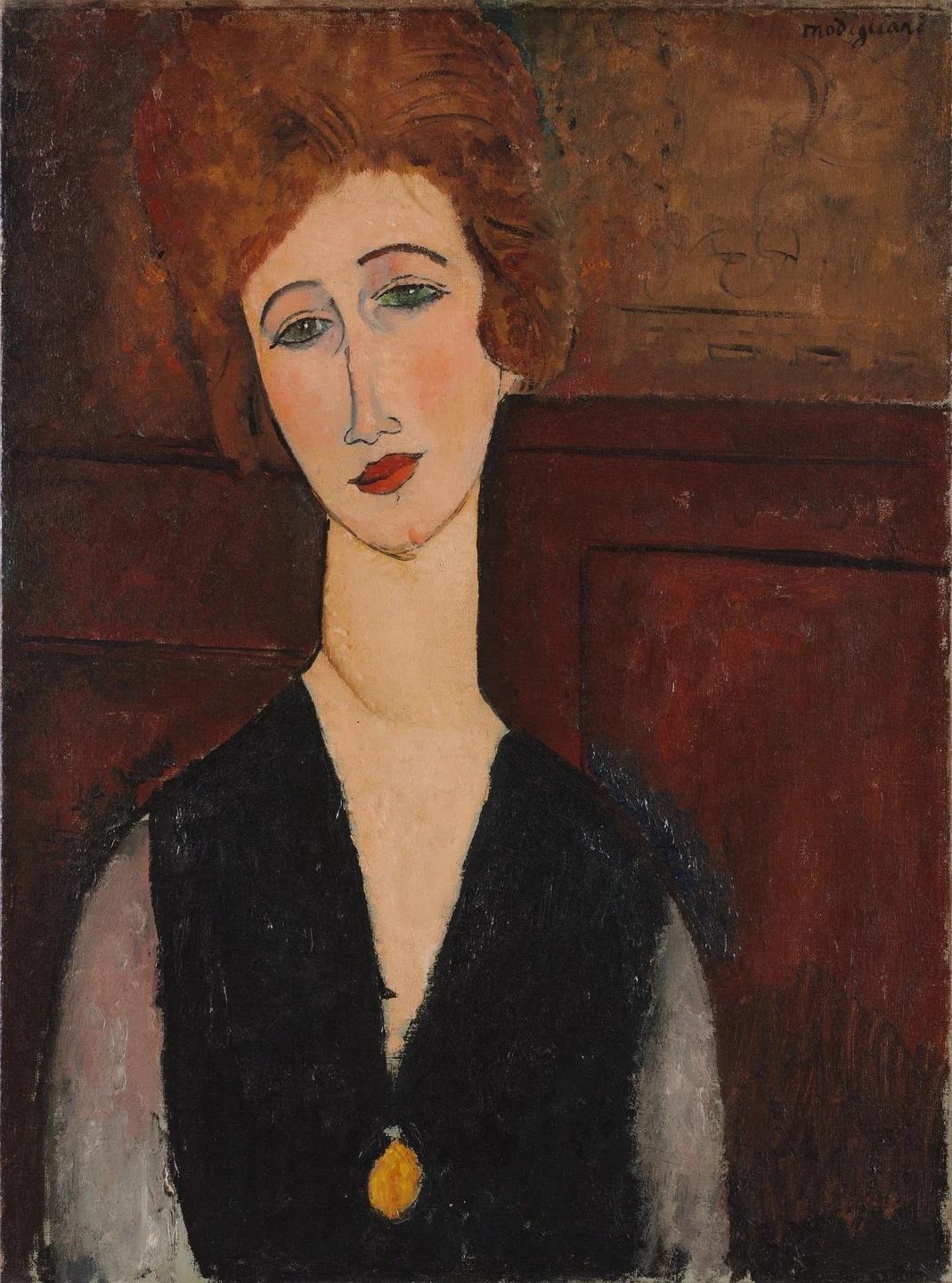
Amedeo Modigliani. The woman in this portrait has not been identified. Amedeo Modigliani painted her around 1917–1918, when his recognizable manner was established.
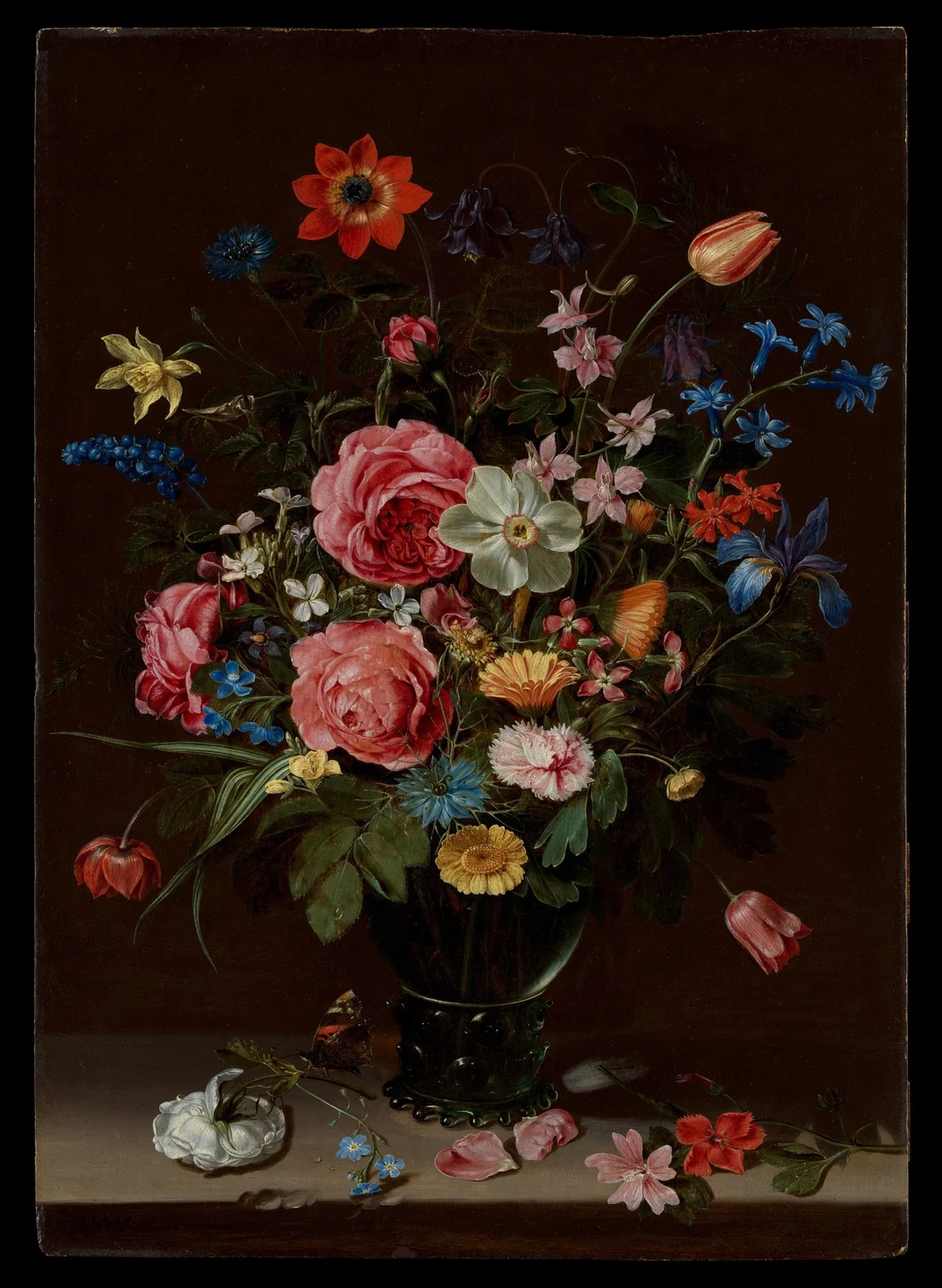
Clara Peeters. Peeters helped establish European still life, a field accessible to women excluded from nude-model training. Precise flowers include fading blooms and insect damage.
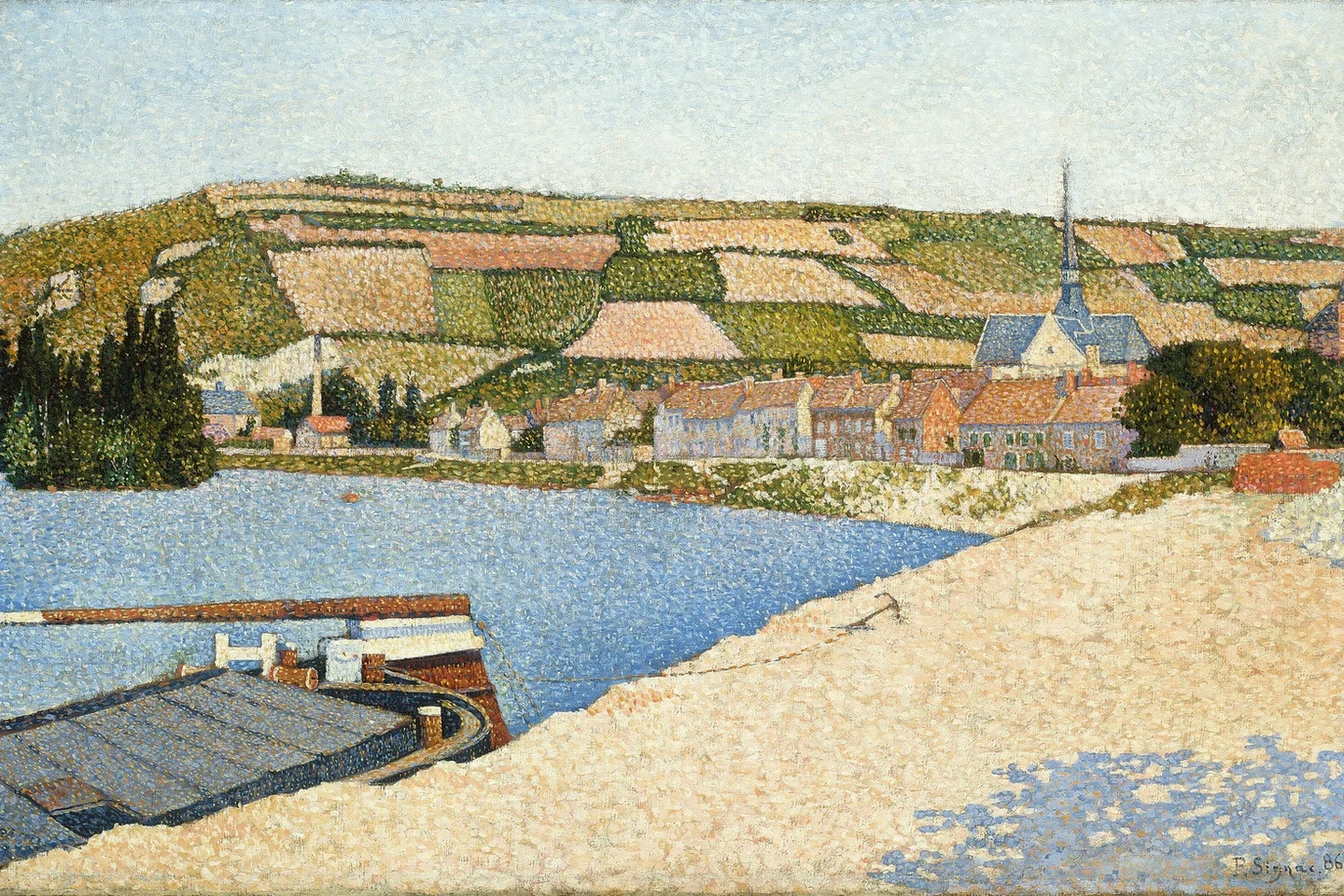
Paul Signac. Paul Signac worked at Les Andelys on the Seine in the summer of 1886.
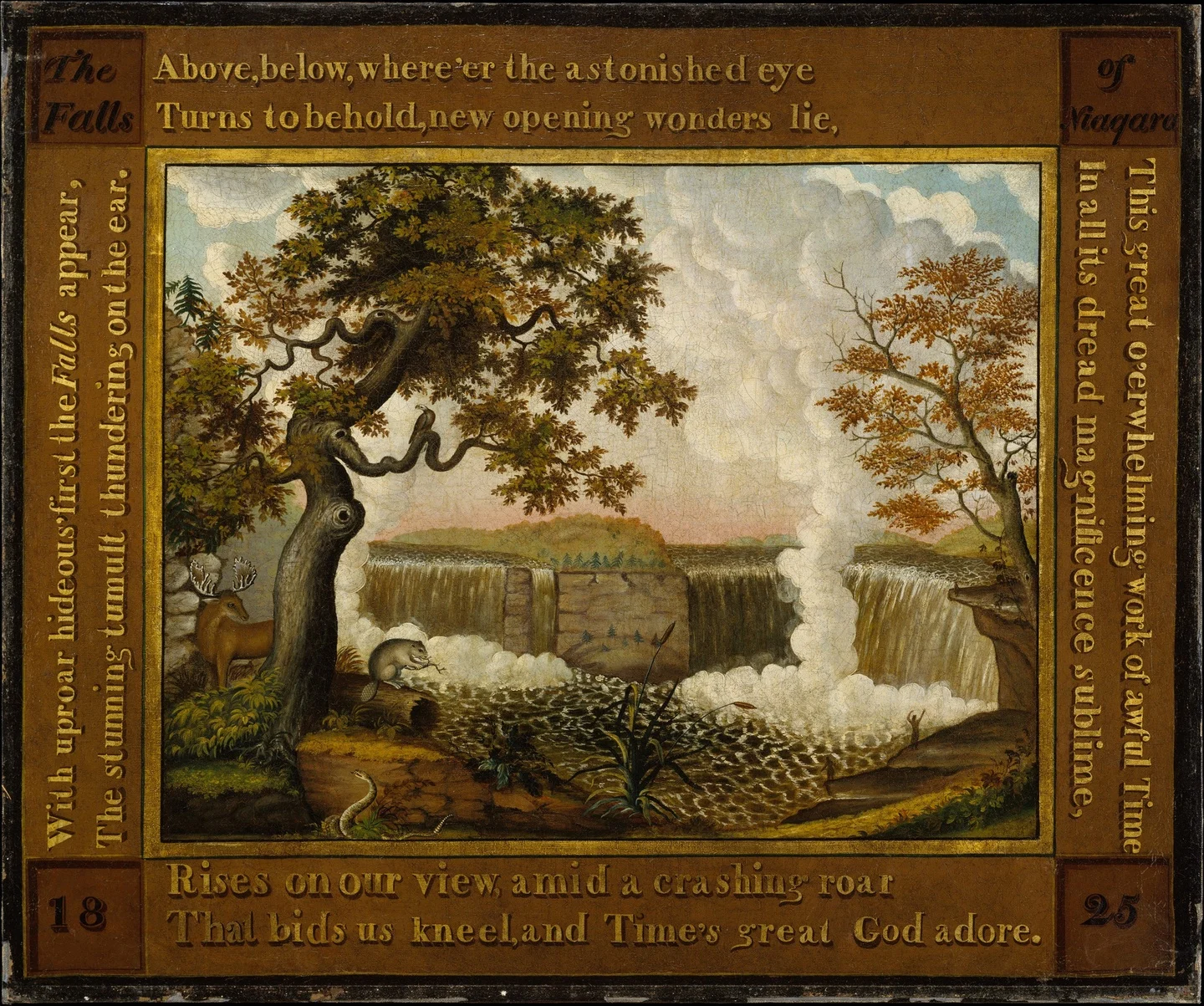
Edward Hicks. Hicks visited Niagara in 1819 but based this arrangement on an engraving published with a map in 1822. Painted verse presents the falls as evidence of divine greatness.
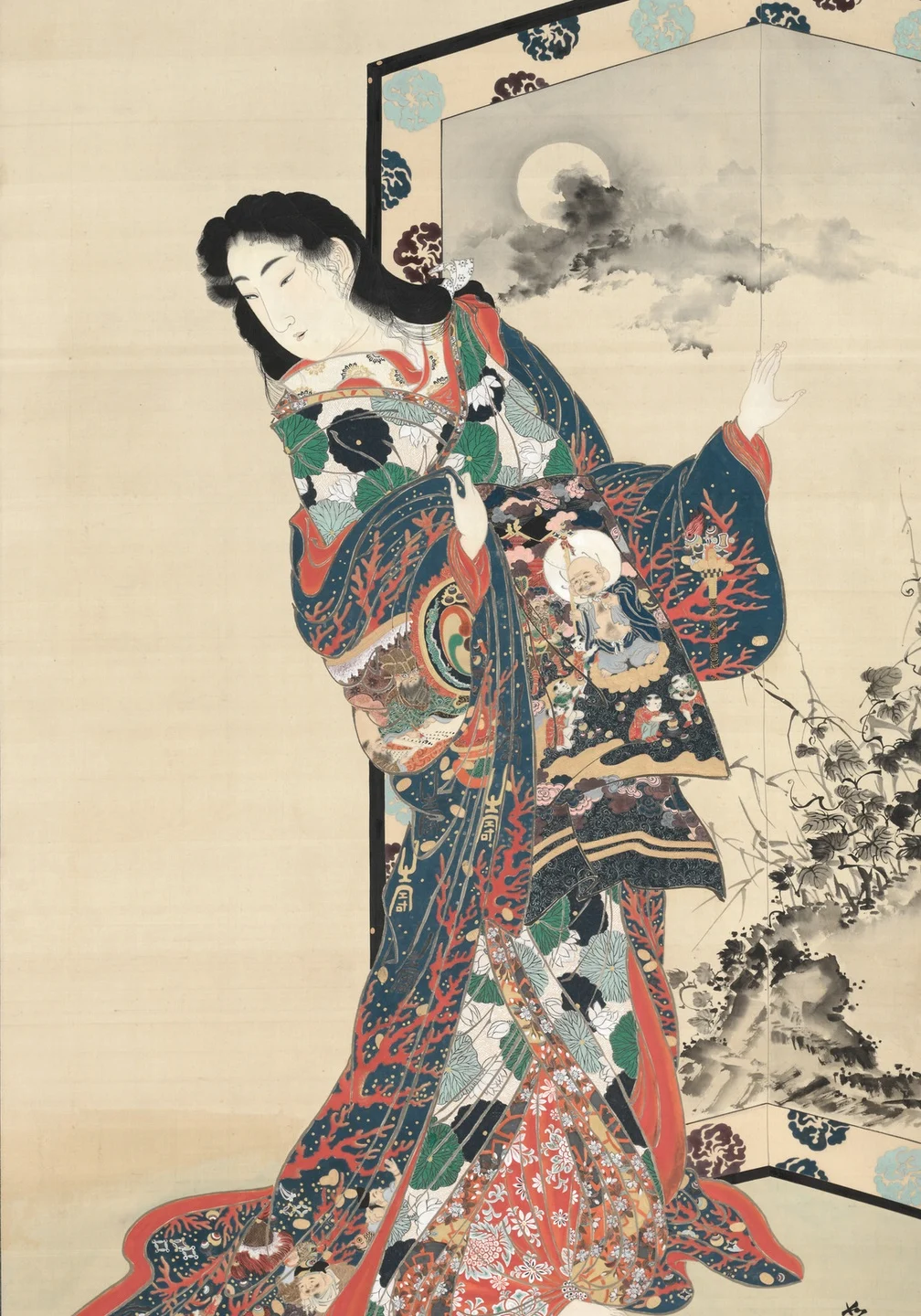
Kawanabe Kyōsai. Judgment of the dead unfolds across a courtesan’s luxurious clothing.
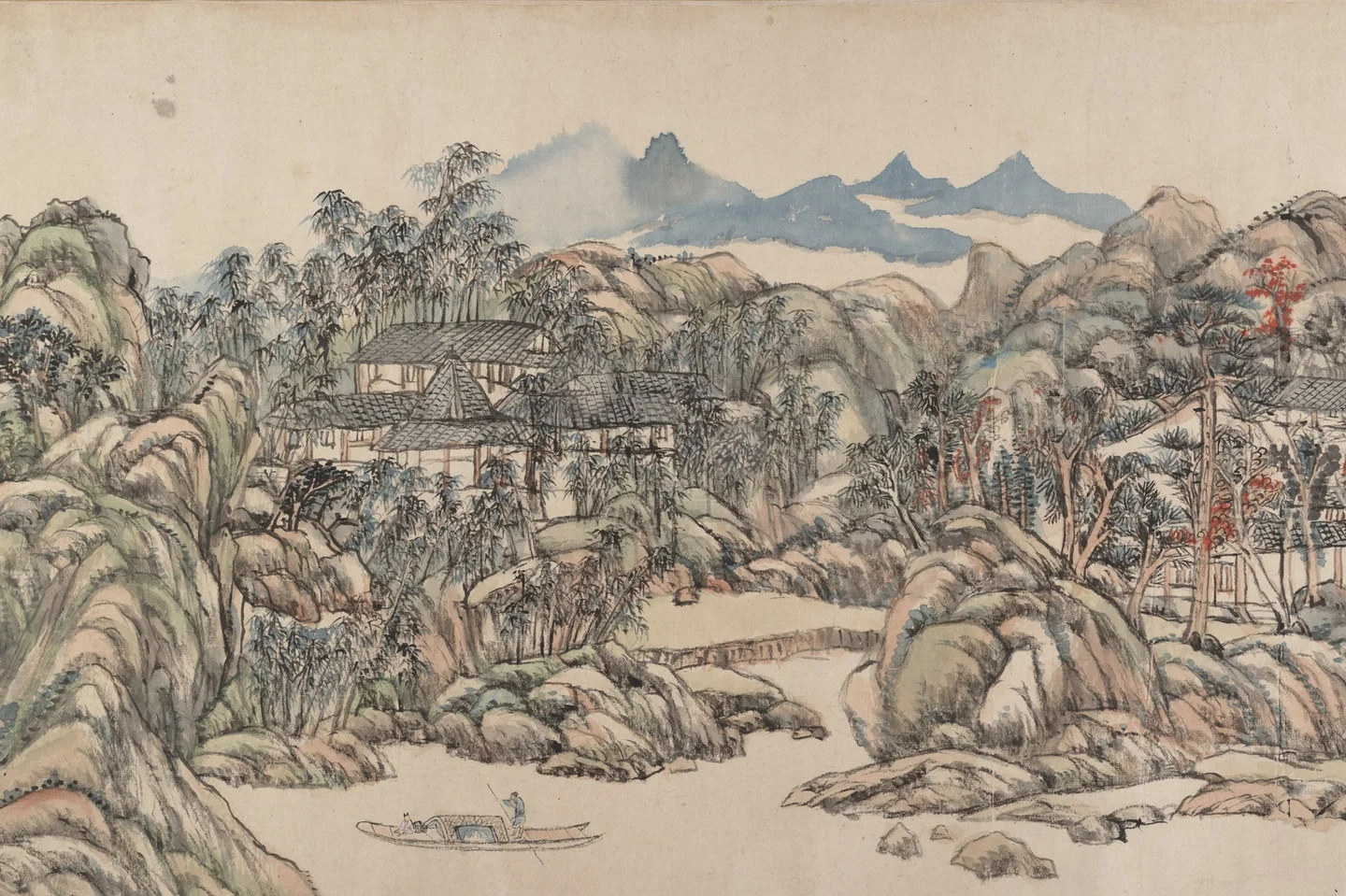
Wang Yuanqi. Wang Yuanqi reconstructed Wang Wei’s celebrated retreat through a rubbing of a 1617 stone engraving and Tang poetry. The view depends on transmitted sources.
Leonardo da Vinci. Ginevra was a Florentine banker's daughter and a poet. The portrait dates around her marriage, but its commissioner is uncertain.
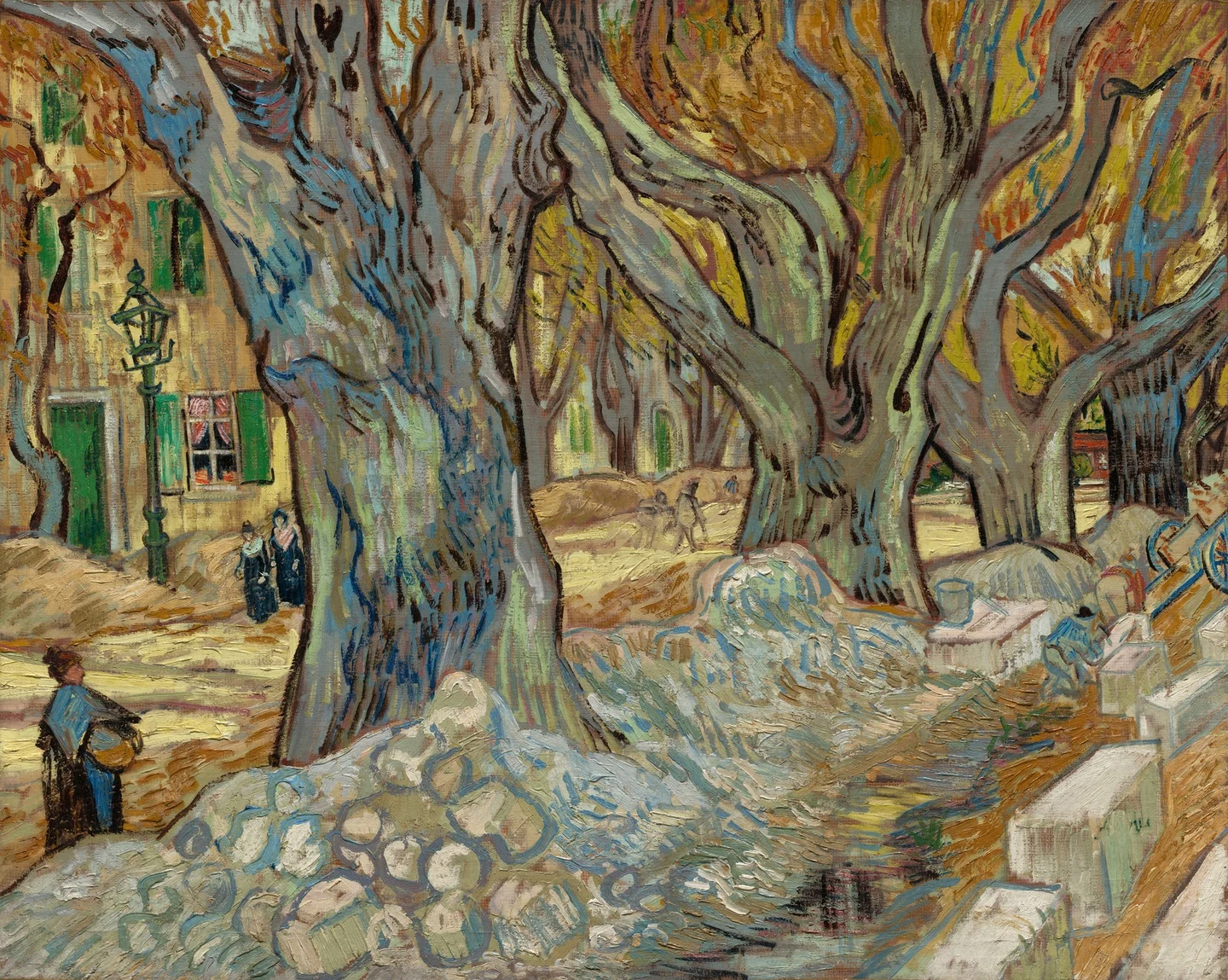
Vincent van Gogh. Road workers labour beneath enormous plane trees in Saint-Rémy.
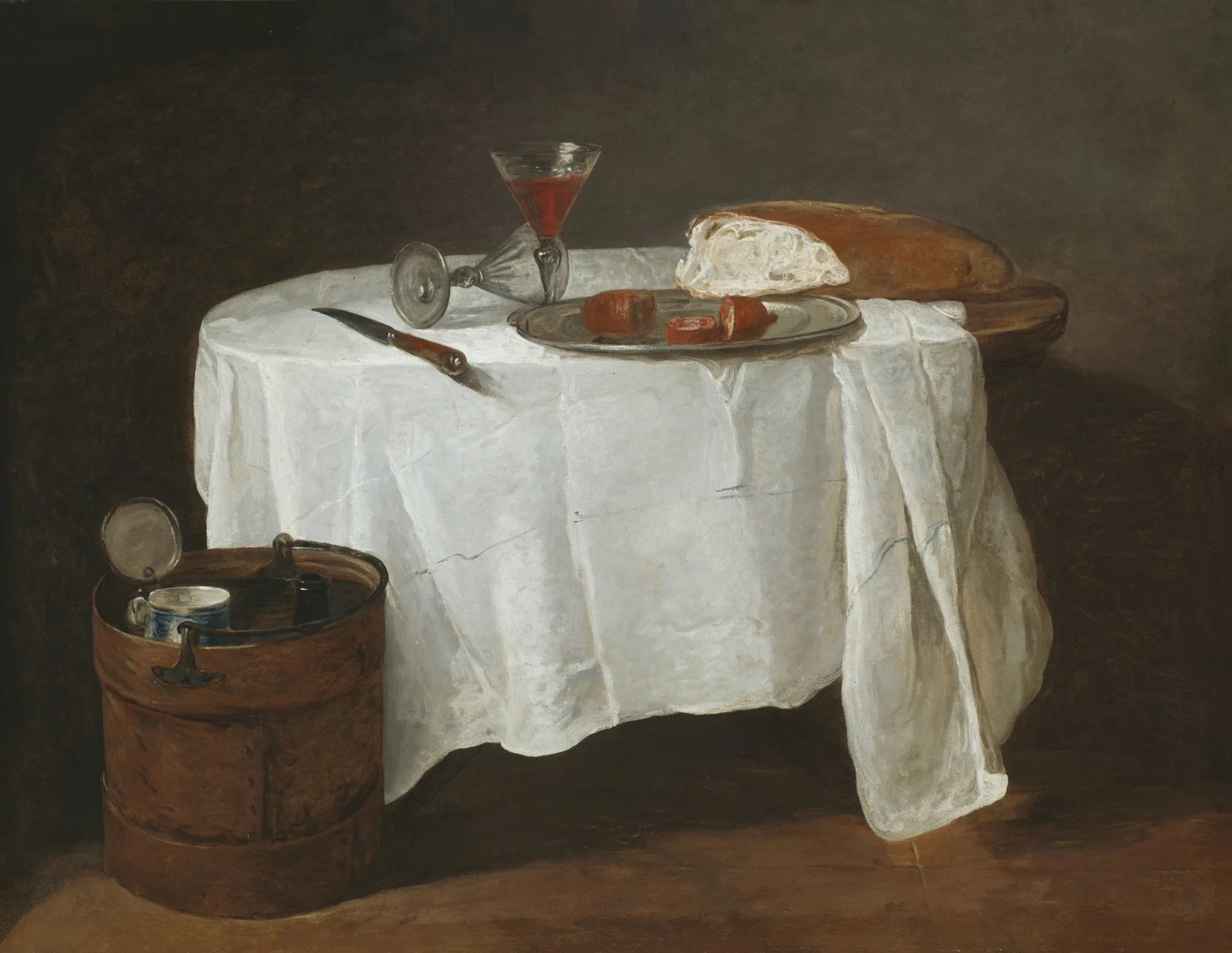
Jean Siméon Chardin. This painted table originally covered a fireplace opening. Chardin painted the still life around 1731–1732 for a fire screen covering an unused hearth.
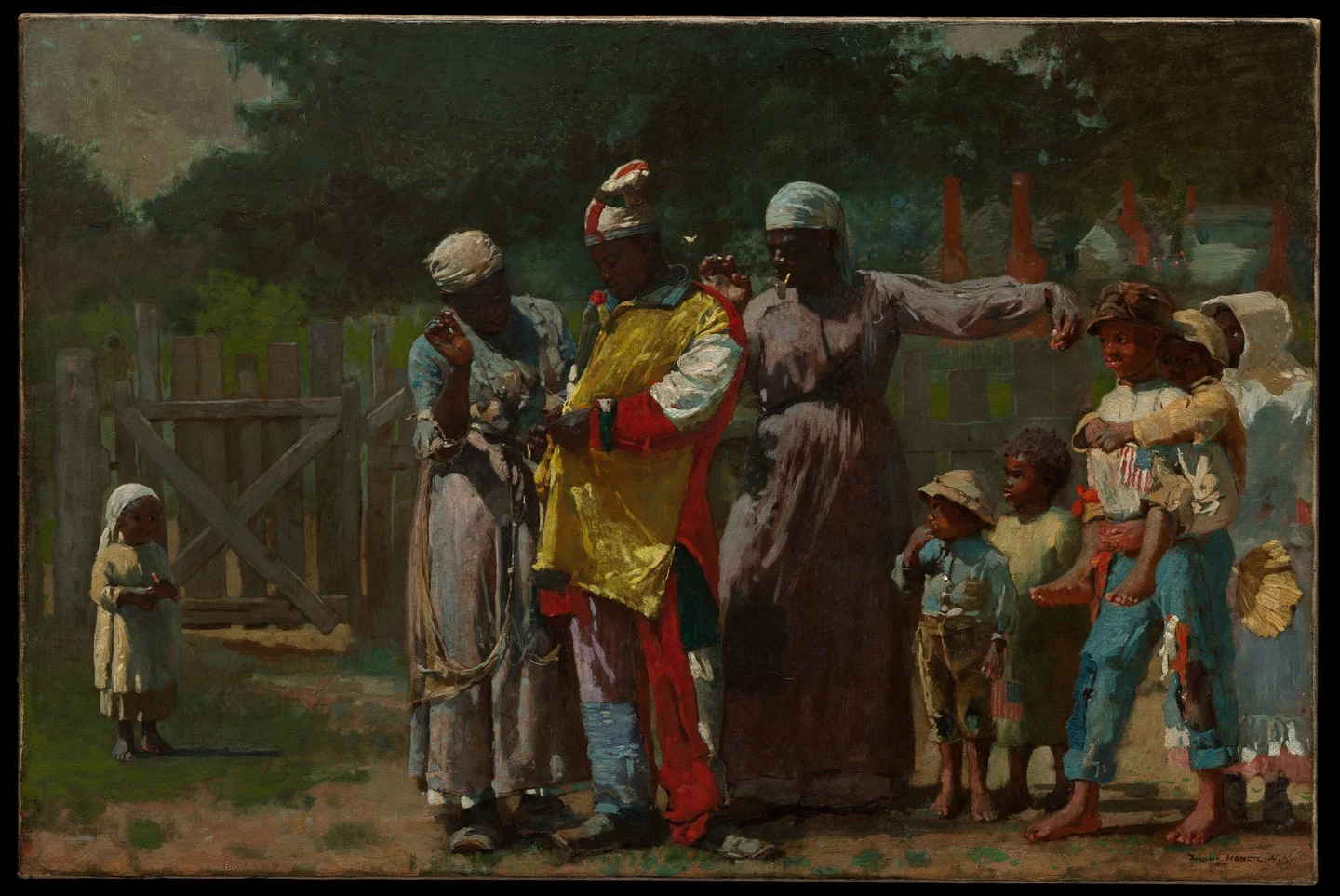
Winslow Homer. Preparing a costume recalls Jonkonnu traditions incorporated into Independence Day celebrations after emancipation.
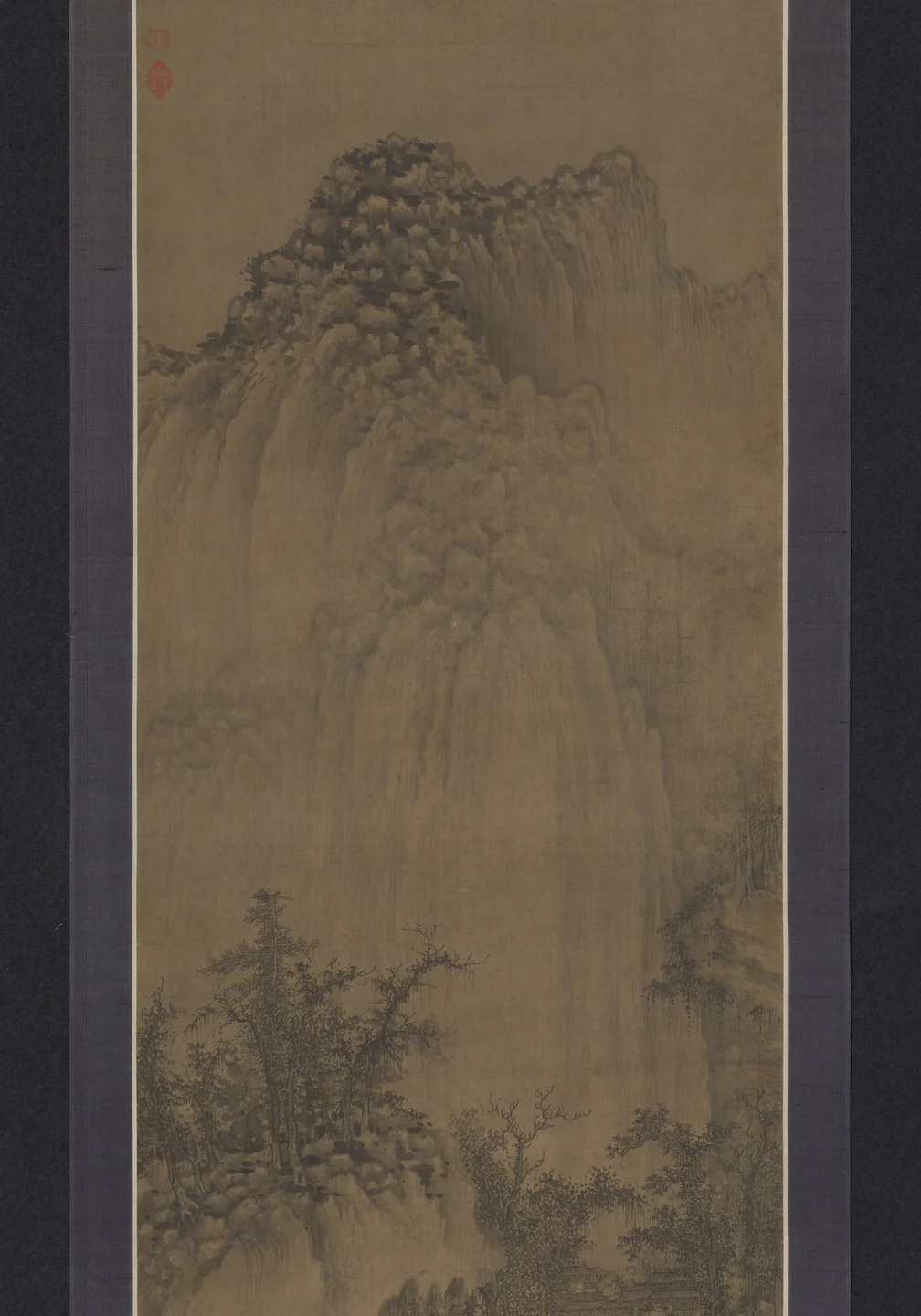
Juran. A small retreat hides among trees at the foot of an immense mountain. This landscape is assigned to Juran, a tenth-century Buddhist monk and painter.
Raphael. Mary sits on the ground in the Madonna of Humility tradition. Jesus accepts a reed cross from John, anticipating the Crucifixion.
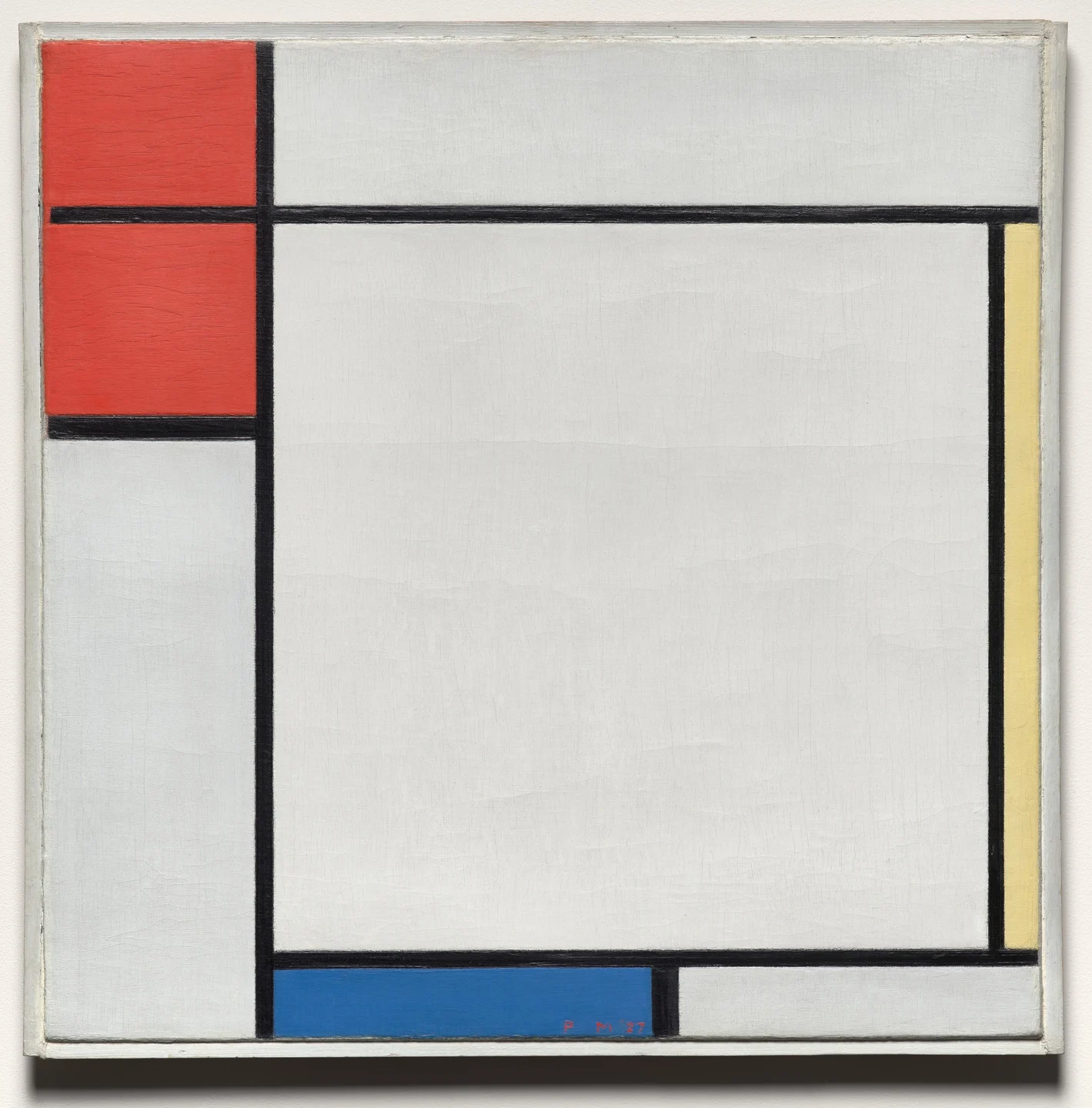
Piet Mondrian. Piet Mondrian painted this composition in Paris in 1927. A few straight lines and three colours were, he believed, capable of creating a shared language of art.
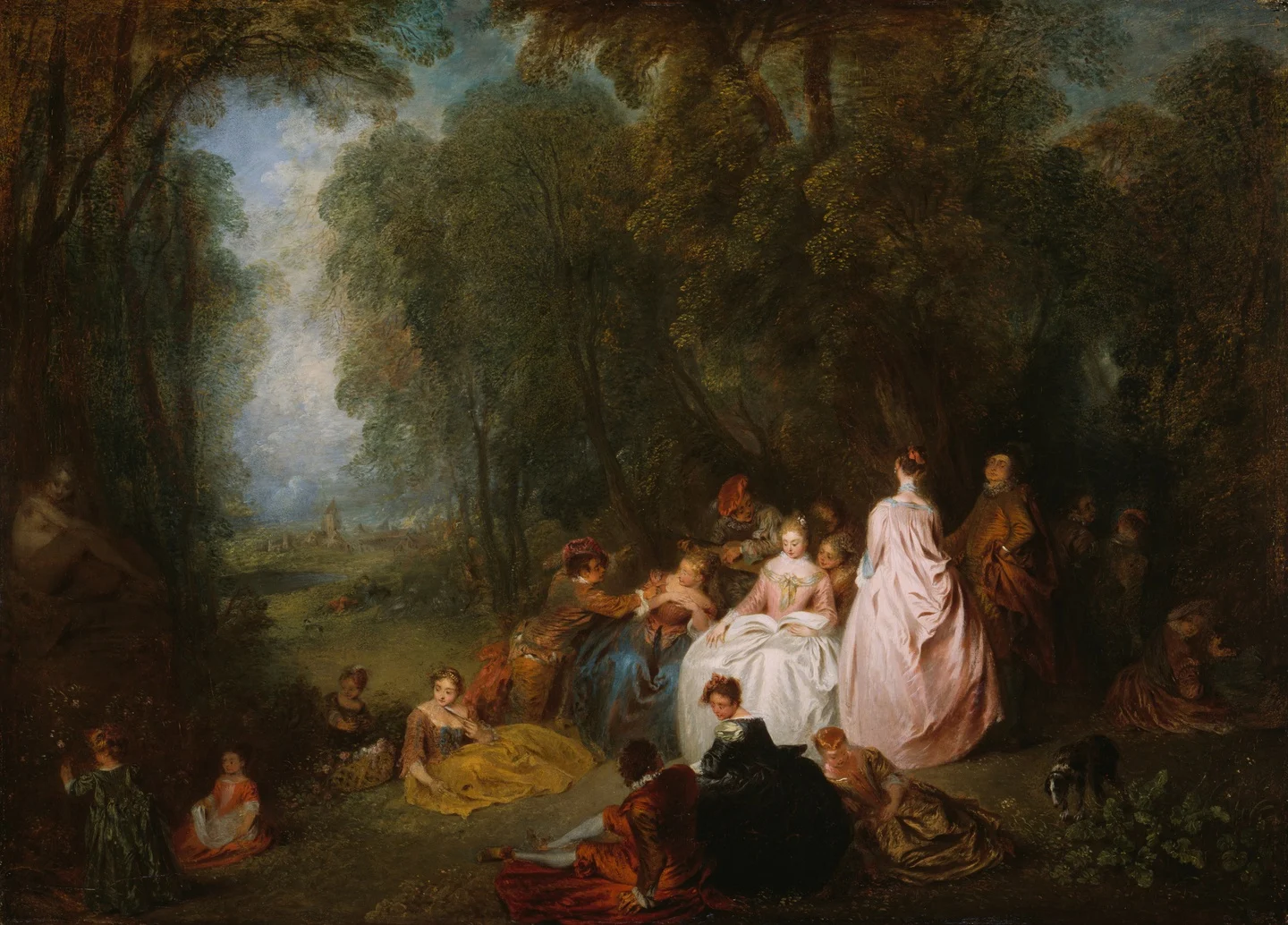
Jean Antoine Watteau, assisted by Jean-Baptiste Pater. Well-dressed people have gathered among trees to stroll and converse.
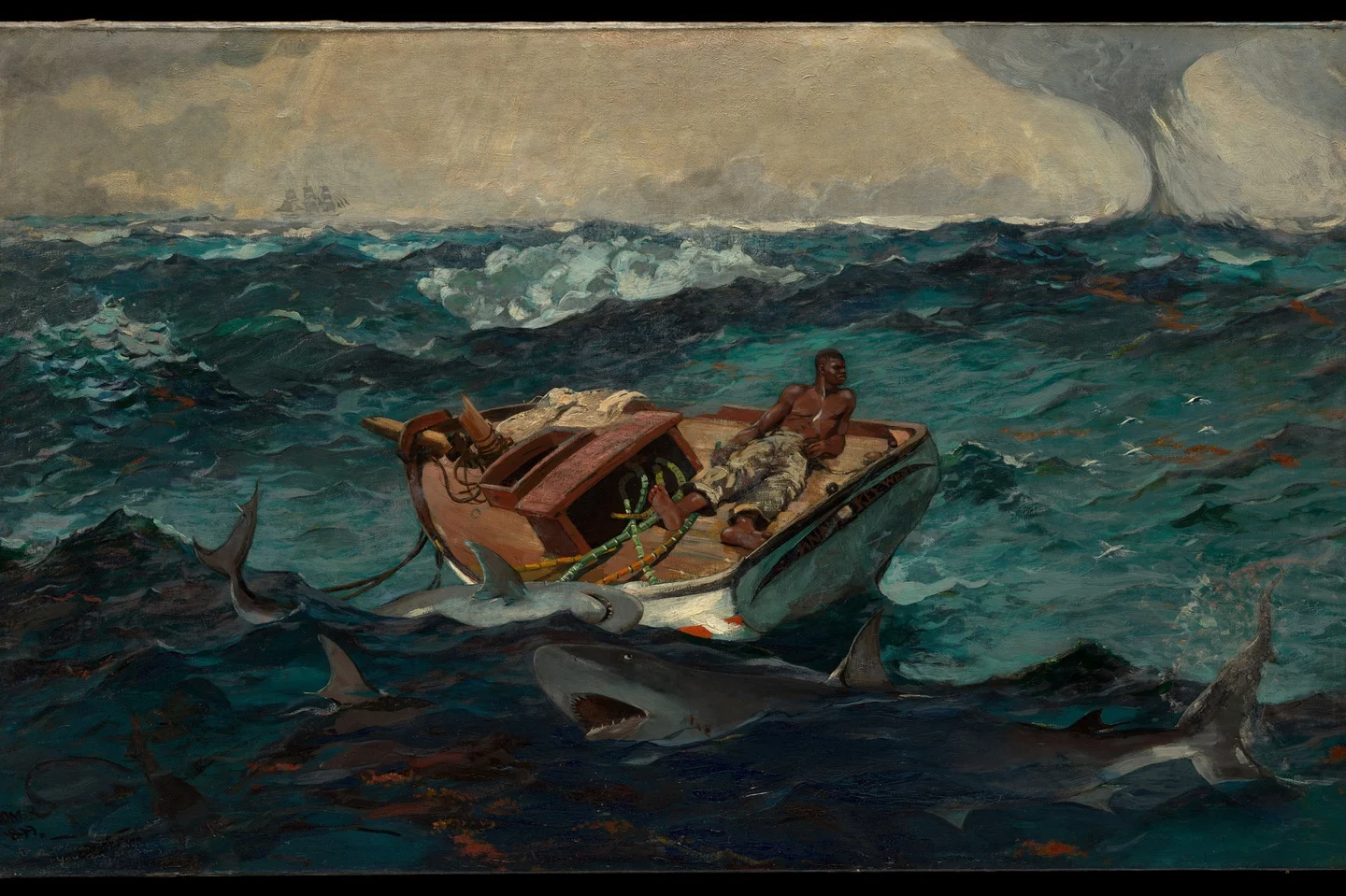
Winslow Homer. A man remains aboard a damaged boat surrounded by sharks and a waterspout. Sugarcane connects the scene with Caribbean plantation economies.
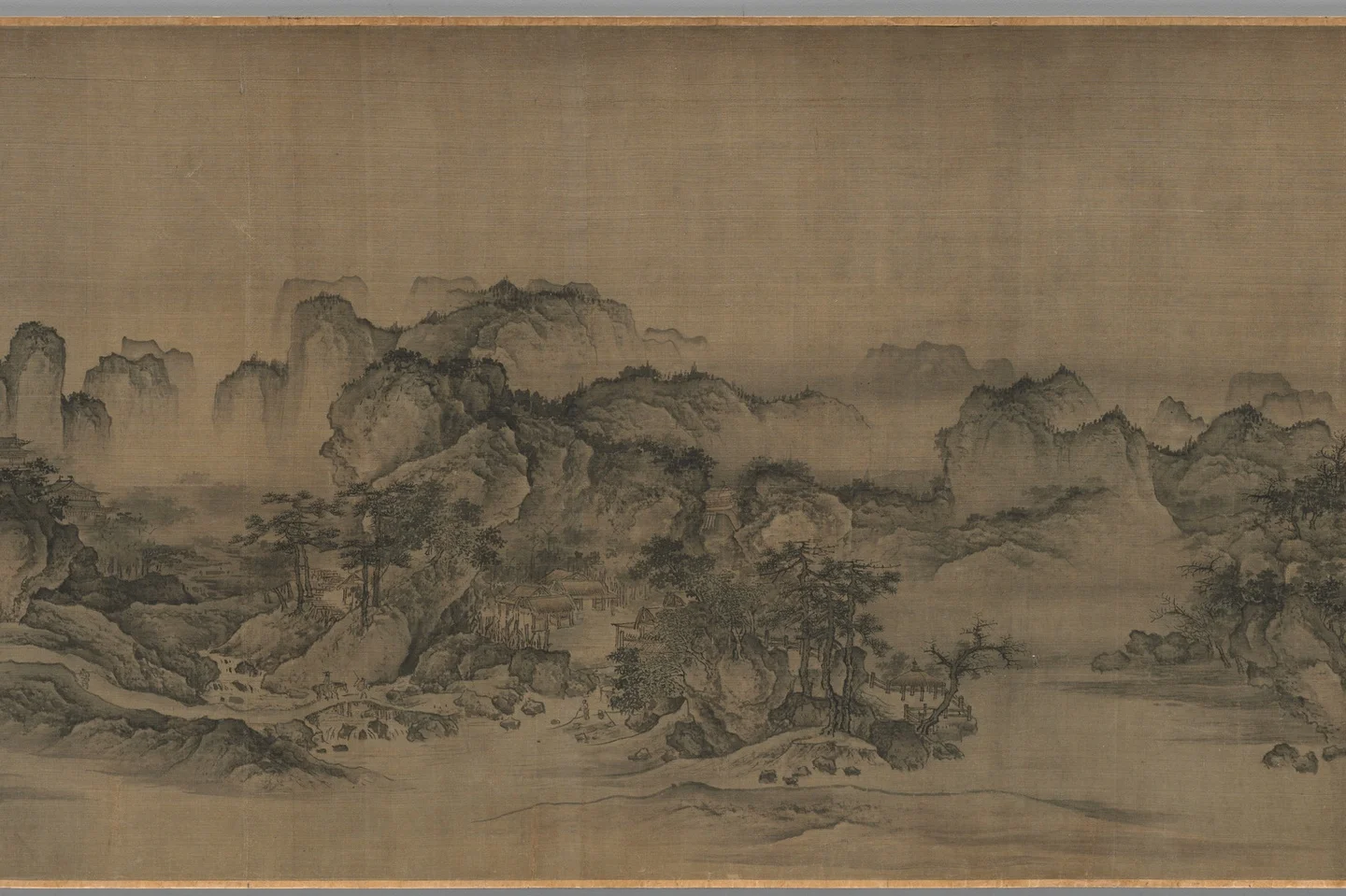
Unidentified Chinese painters. This landscape was made for a slow journey at a table. A handscroll was opened from right to left in small sections, rolling up what had already been seen.
Raphael. The blue garter on George’s leg refers to the English order named after him. The Duke of Urbino received the honour in 1504.
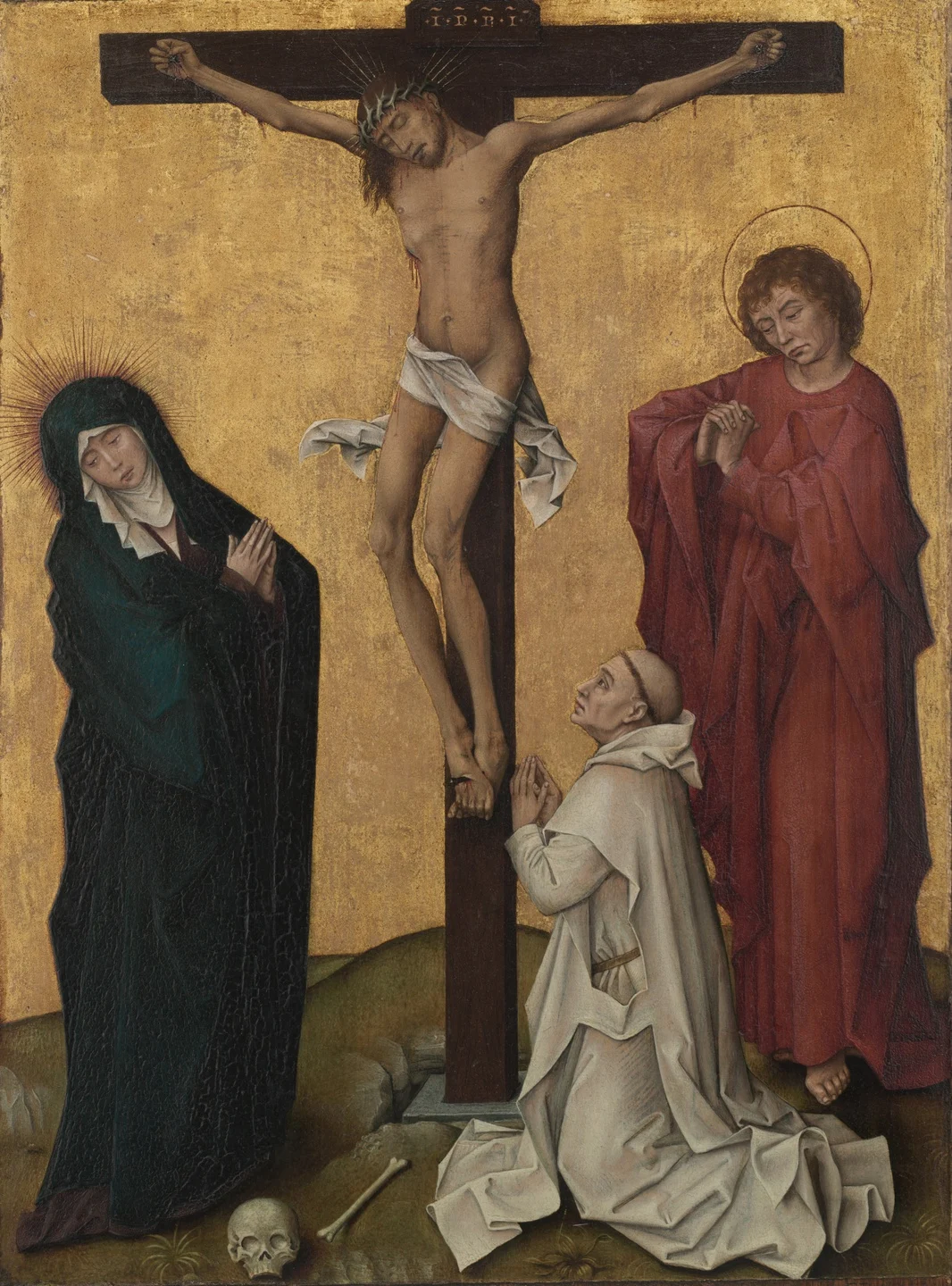
Workshop of Rogier van der Weyden. A Carthusian monk prays at the foot of the cross. This small panel was painted in Rogier van der Weyden’s workshop around 1460; its maker is unknown.
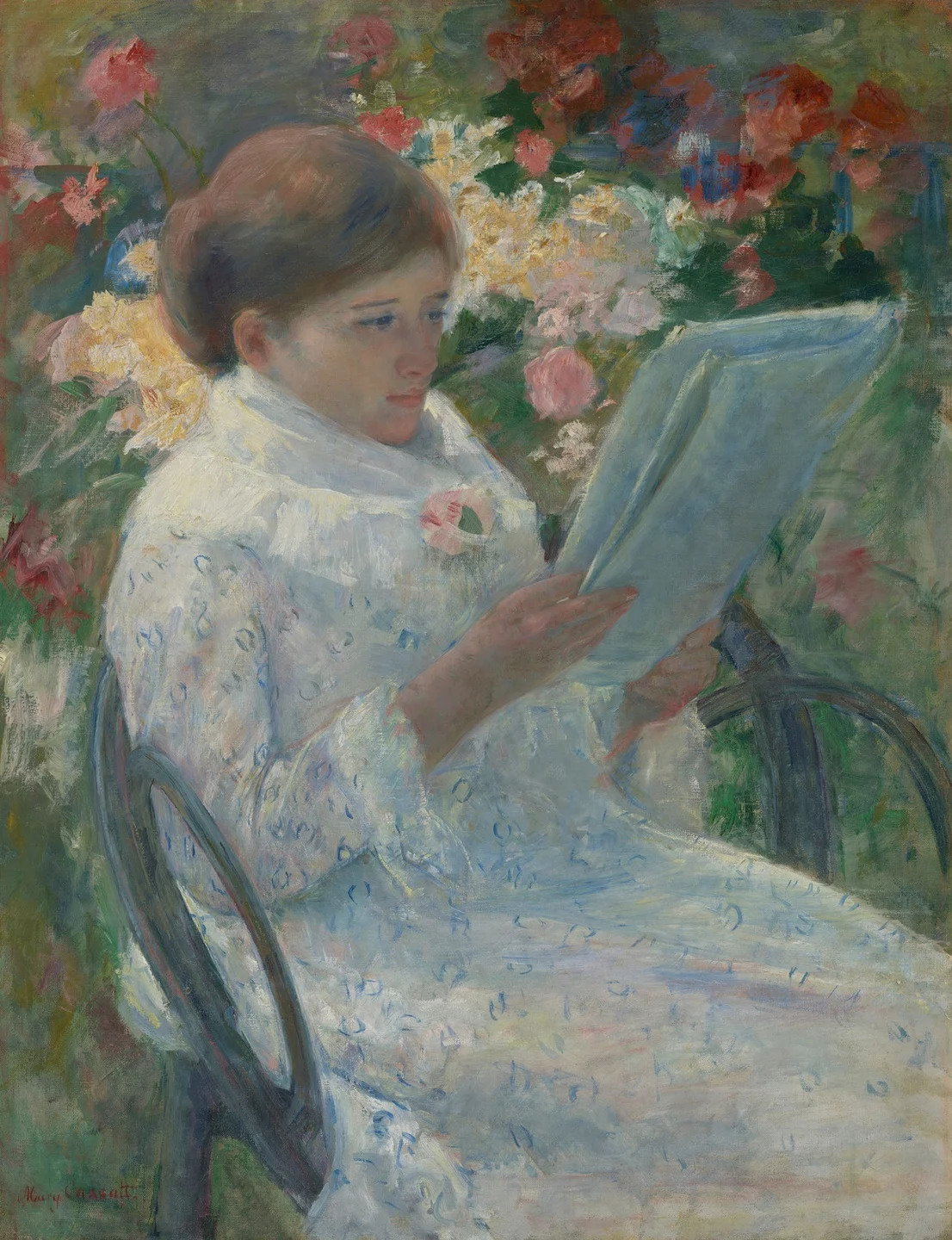
Mary Cassatt. A woman in a morning dress reads a newspaper among flowers. Cassatt exhibited the painting with the Impressionists in 1880.
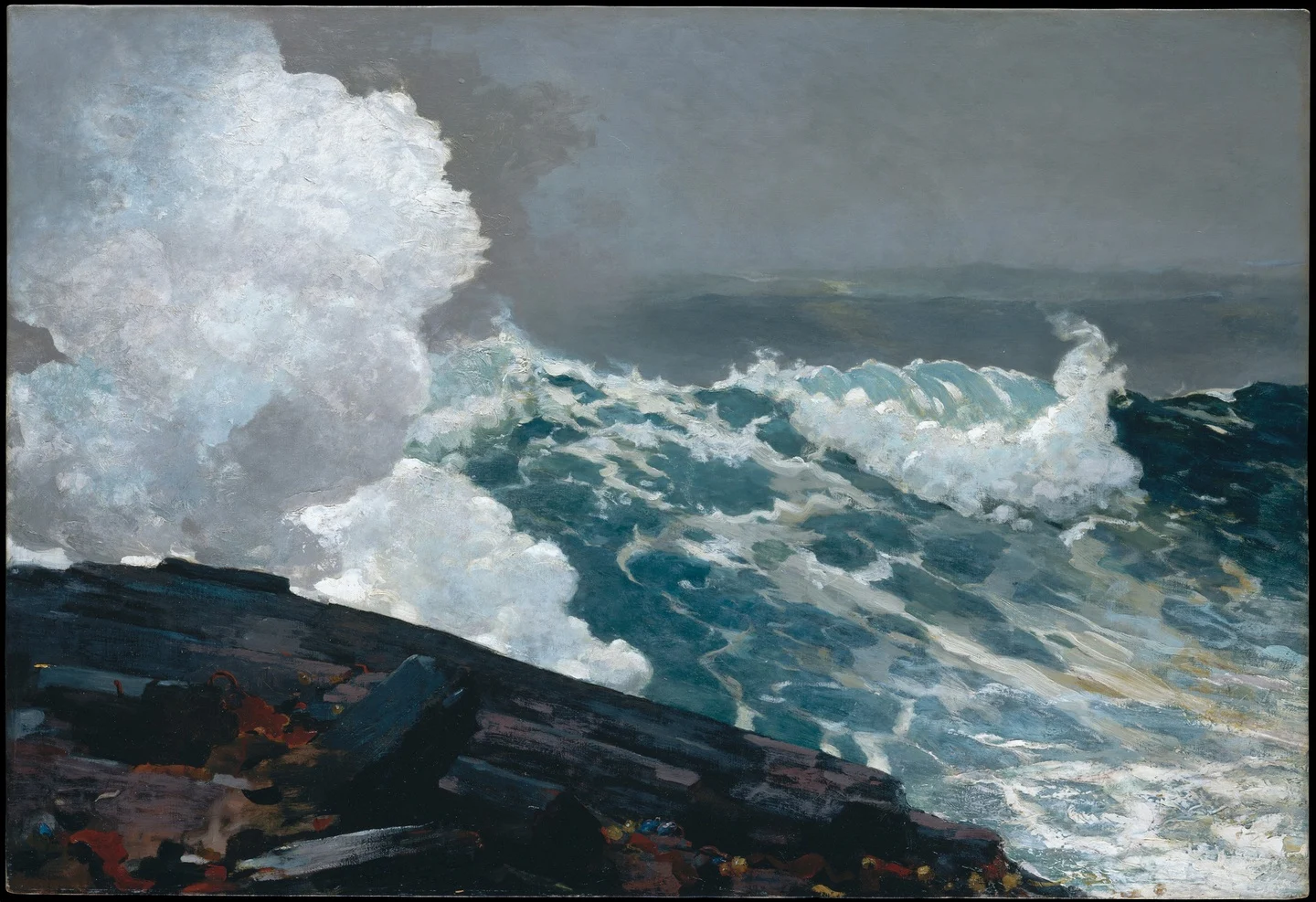
Winslow Homer. Two figures appeared on the rocks in the version exhibited in 1895. Homer later removed them and enlarged the spray. Revision changed the balance between people and sea.
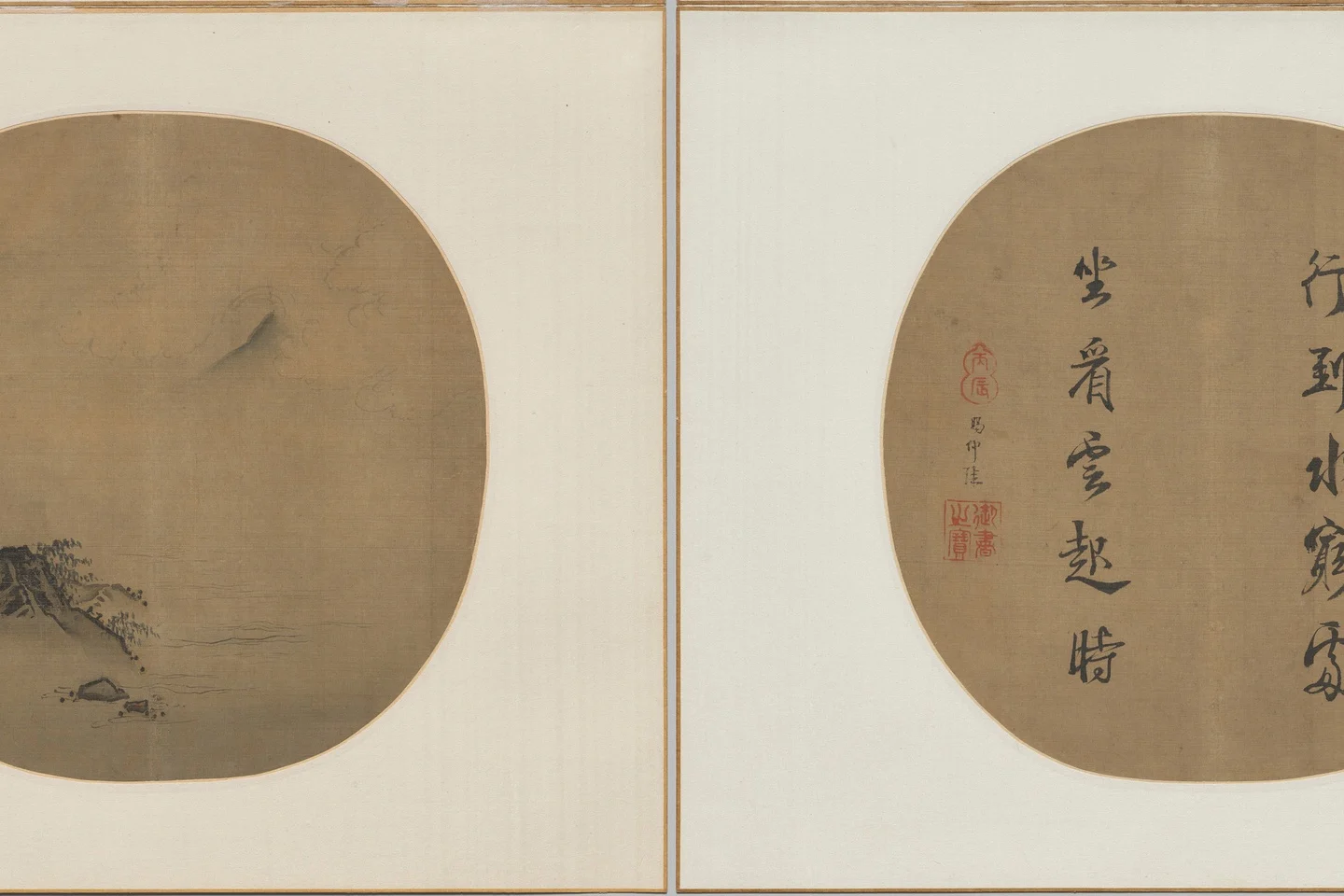
Ma Lin. A painter and an emperor responded to the same poetry in two different ways. Lizong transcribed lines by Wang Wei, and the court painter Ma Lin supplied a landscape around 1256.
Sandro Botticelli. Botticelli probably painted this version during his Roman work for Pope Sixtus IV.
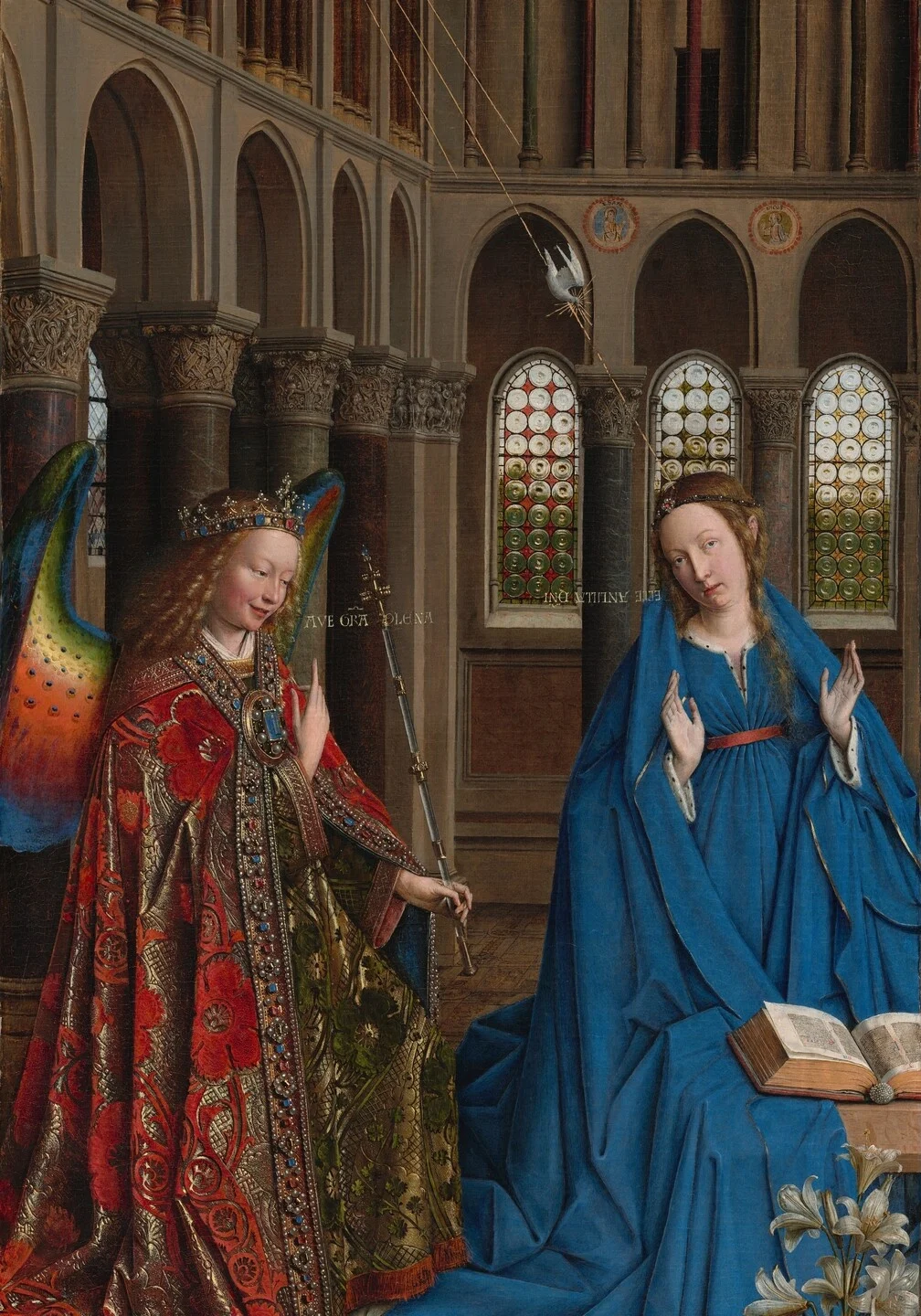
Jan van Eyck. Gabriel announces Christ's birth to Mary. Their words appear in gold, with her reply reversed for reading from above.
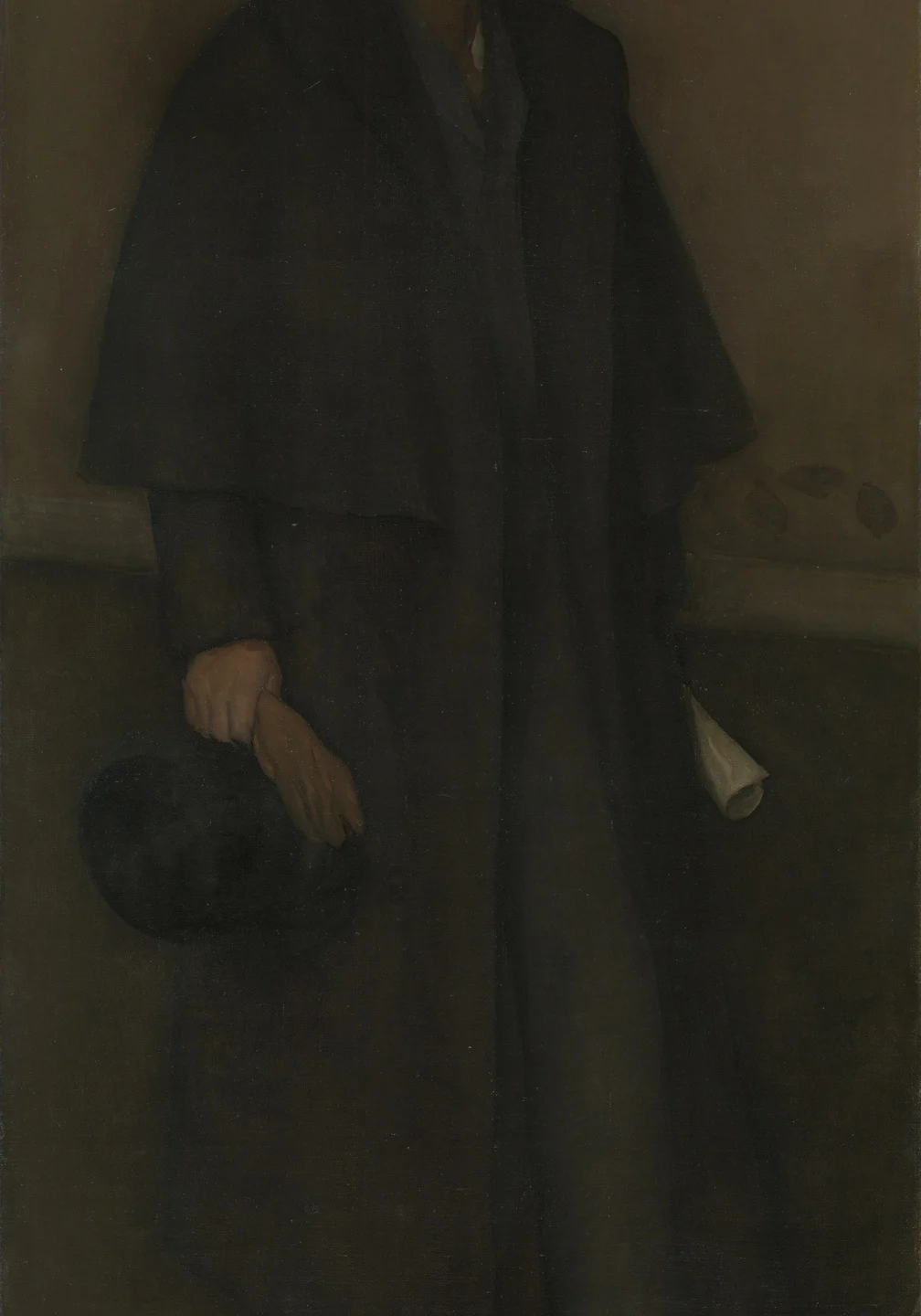
James McNeill Whistler. The Chicago lawyer Arthur Jerome Eddy saw Whistler’s work at the 1893 world’s fair and travelled to Paris to commission his portrait. It was painted in 1894.
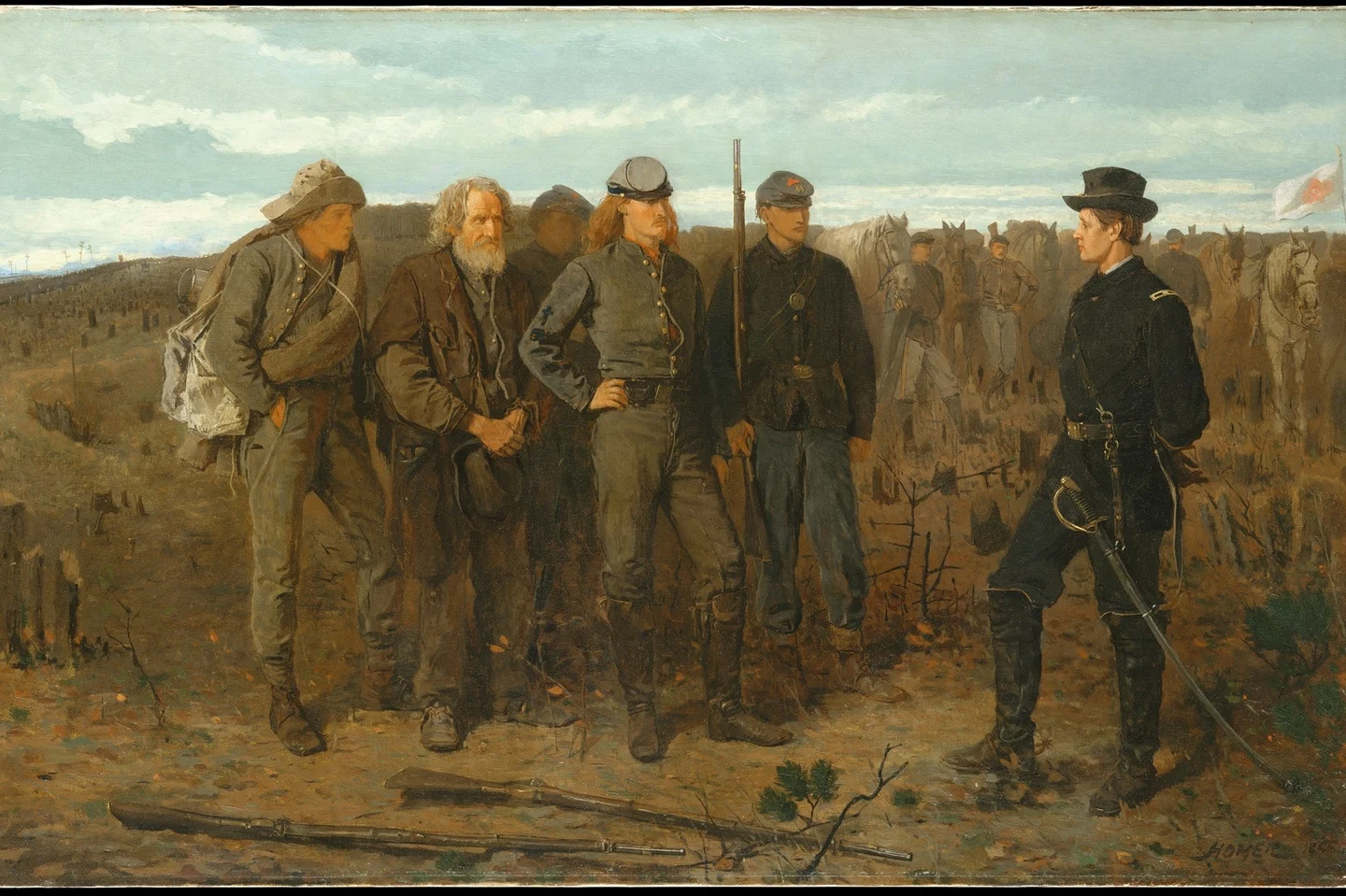
Winslow Homer. Homer painted the confrontation after the Civil War, drawing on General Francis Barlow’s capture of Confederate soldiers in 1864.
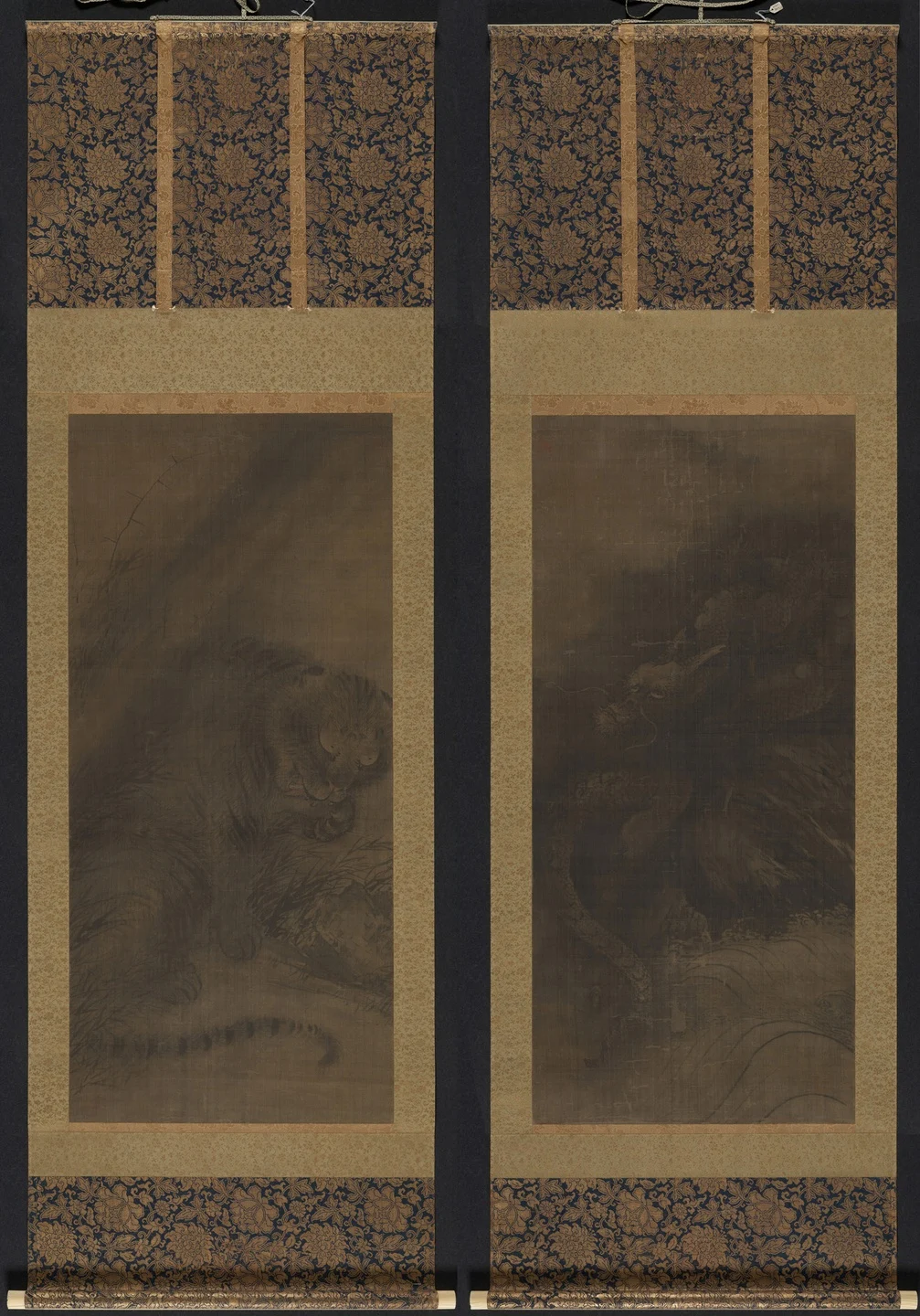
Fachang Muqi. A tiger washes itself while a dragon appears among water and mist. Fachang Muqi painted this pair of scrolls around 1250–1279.
Giovanni Bellini and Titian. Alfonso d'Este commissioned the painting for his study in Ferrara.
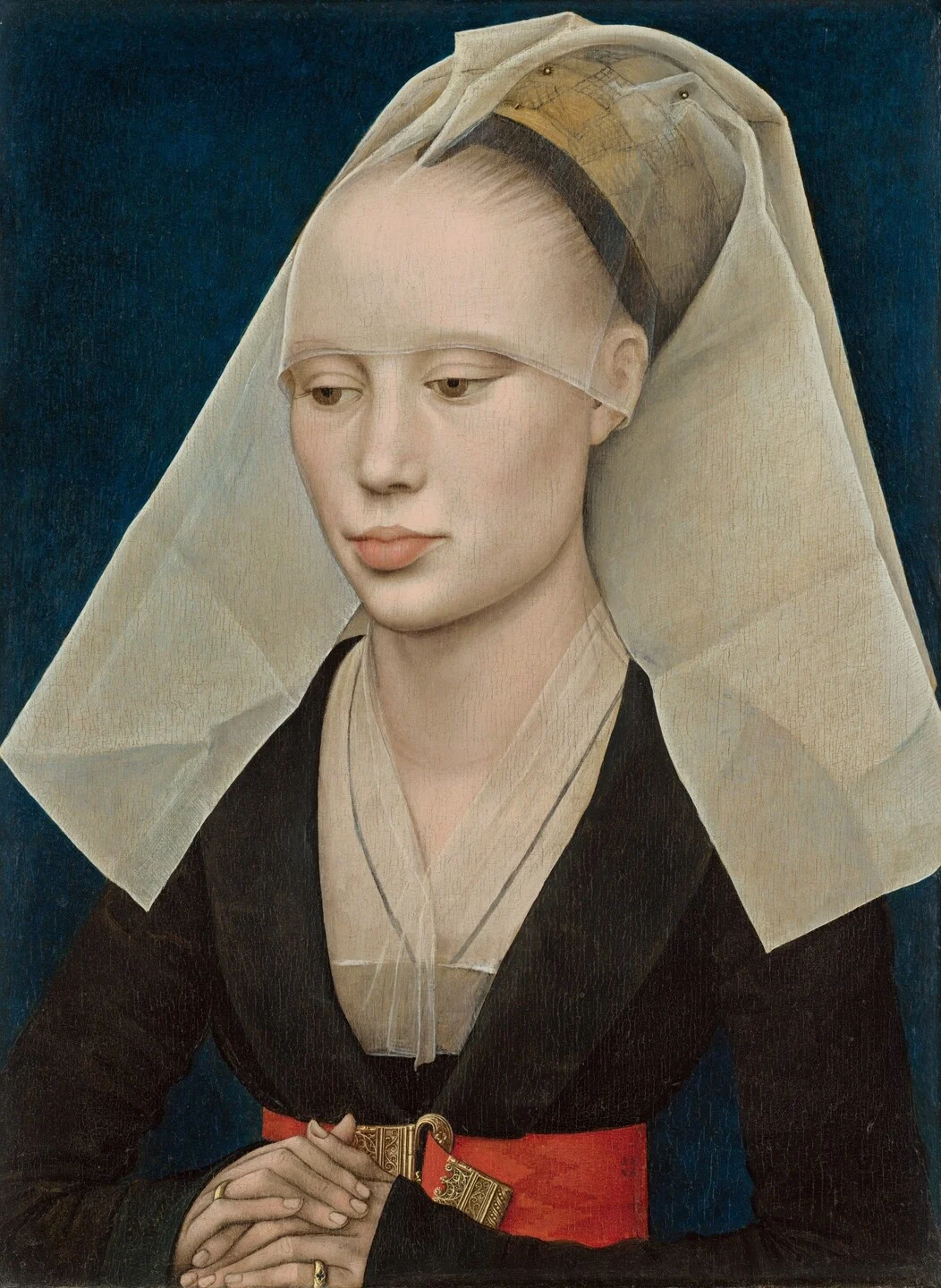
Rogier van der Weyden. The woman's identity is unknown. The costume's strict arrangement directs attention to her face and clasped hands.
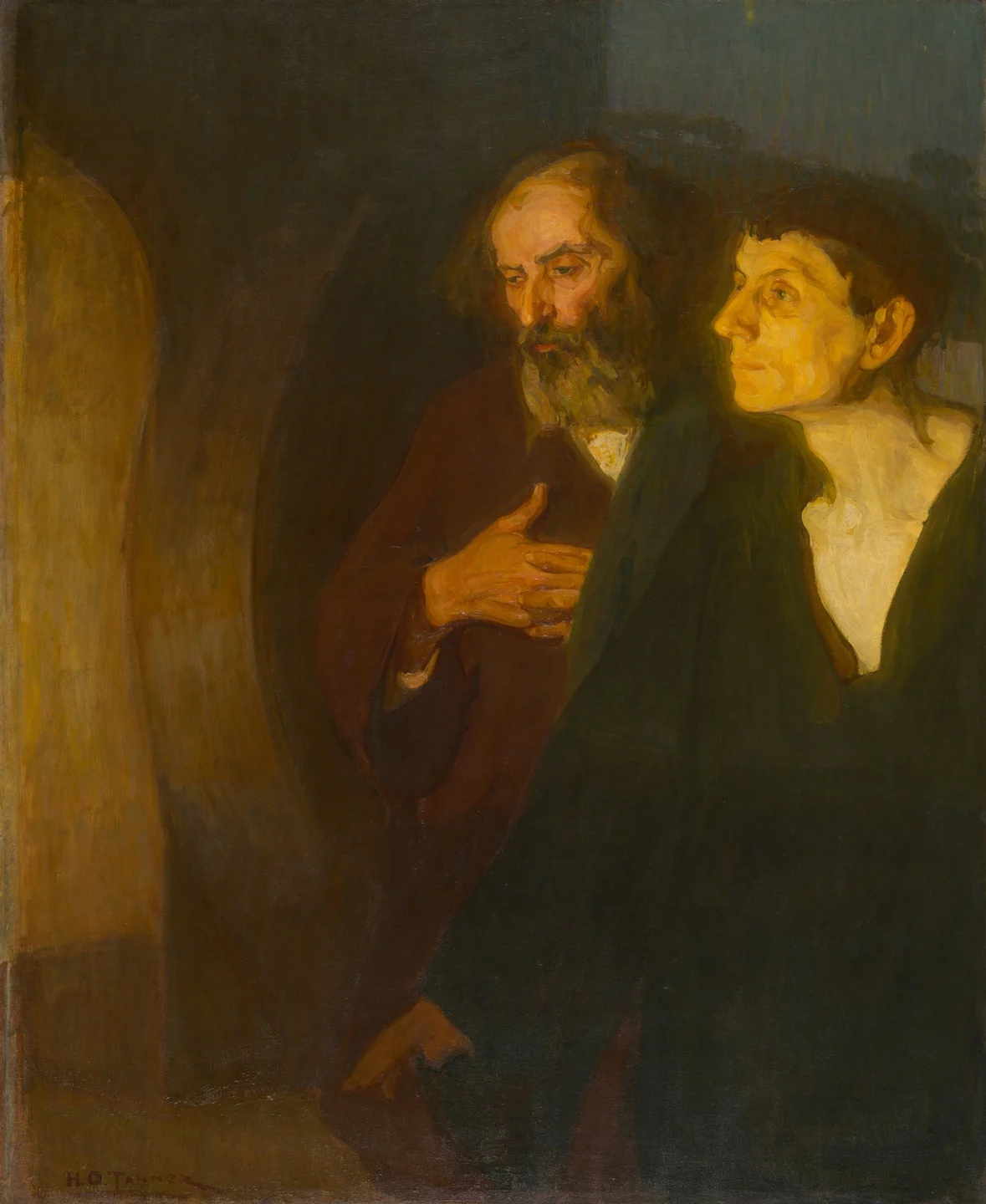
Henry Ossawa Tanner. Peter and John have reached Christ’s tomb and found it empty. Henry Ossawa Tanner painted this Gospel scene around 1906. The risen Christ does not appear.