polotnoРусский

Paintings

Open the gallery

The Holy Family on the Steps

Nicolas Poussin. Mary presents the child to the world while the young John offers an apple, recalling the Fall. Joseph's compass refers to his trade and to God the Father.

Reading

Berthe Morisot. Morisot's sister Edma posed for this woman reading in a field. X-rays show that she originally looked toward the viewer; Morisot later redirected her eyes to the book.

Berthe Morisot with a Muff

Édouard Manet. Manet portrayed Morisot in a winter coat and feathered hat. Broad brushstrokes and crosshatching recall the freedom of her own painting.

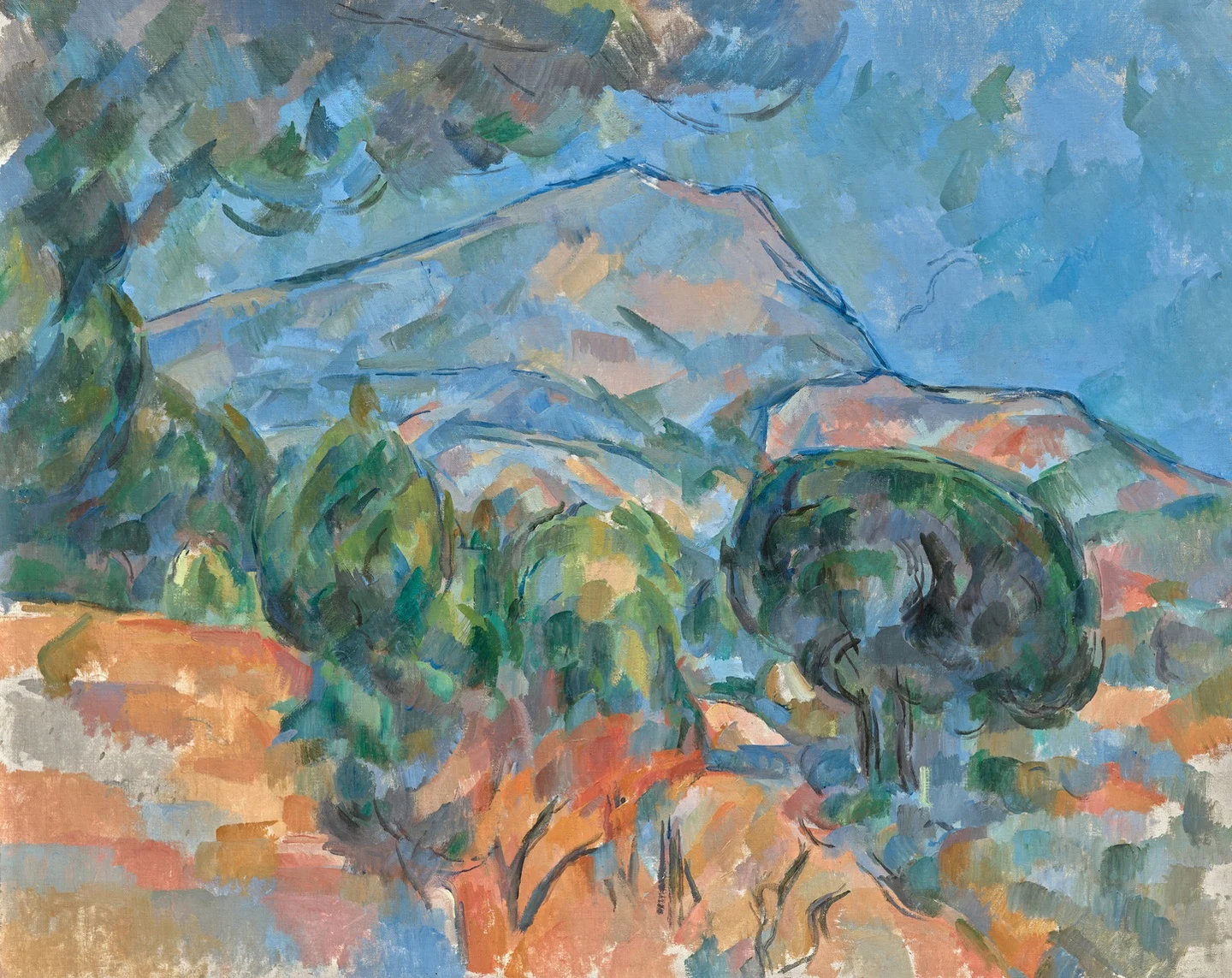
Mount Sainte-Victoire

Paul Cezanne. Cézanne painted this view from a road leading east from Aix toward the mountain. Two umbrella pines anchor the foreground, and a branch at the left echoes the distant slope.

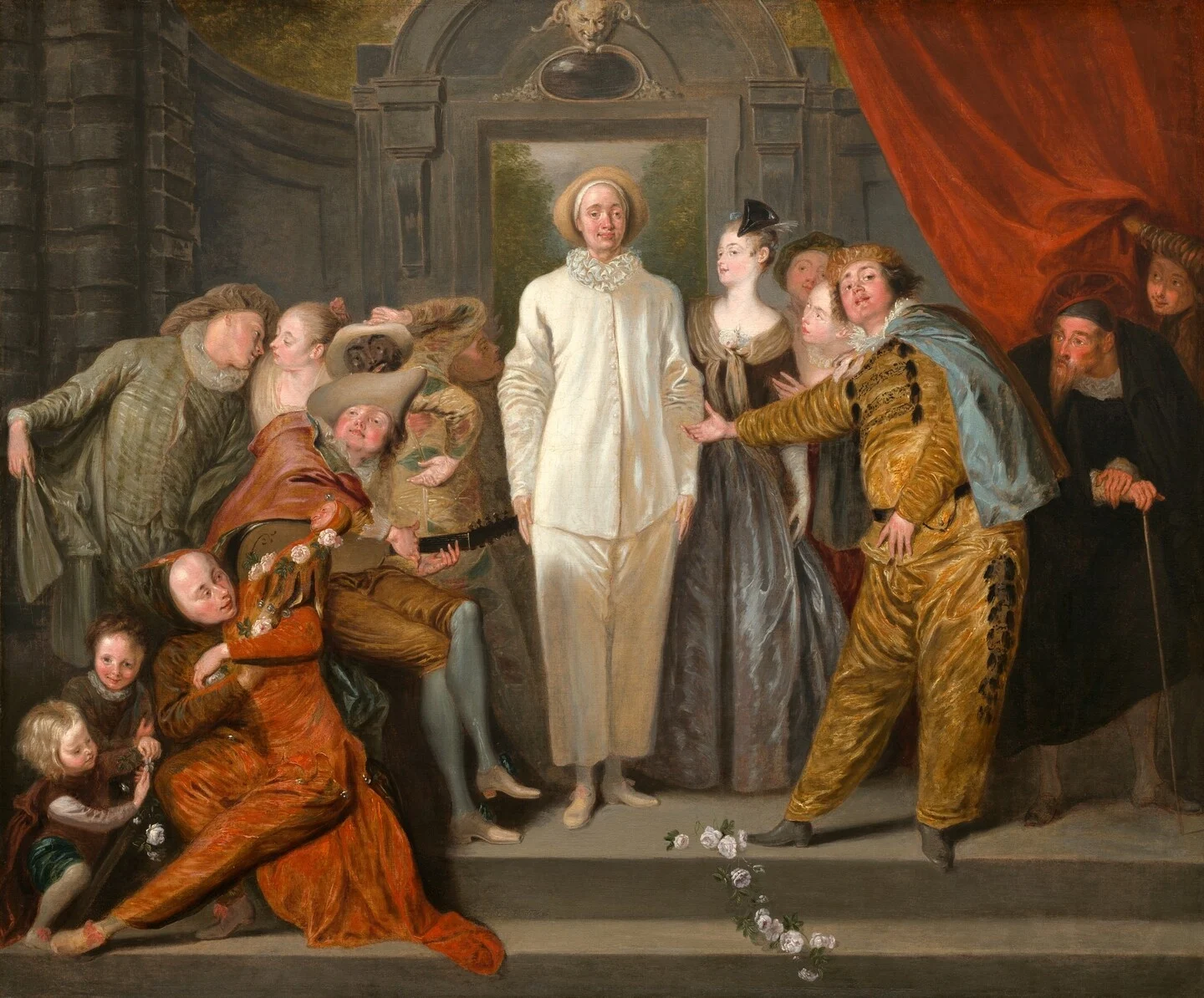
The Italian Comedians

Jean Antoine Watteau. The actors represent familiar commedia dell'arte roles. Pierrot's near stillness stands out among his gesturing companions.

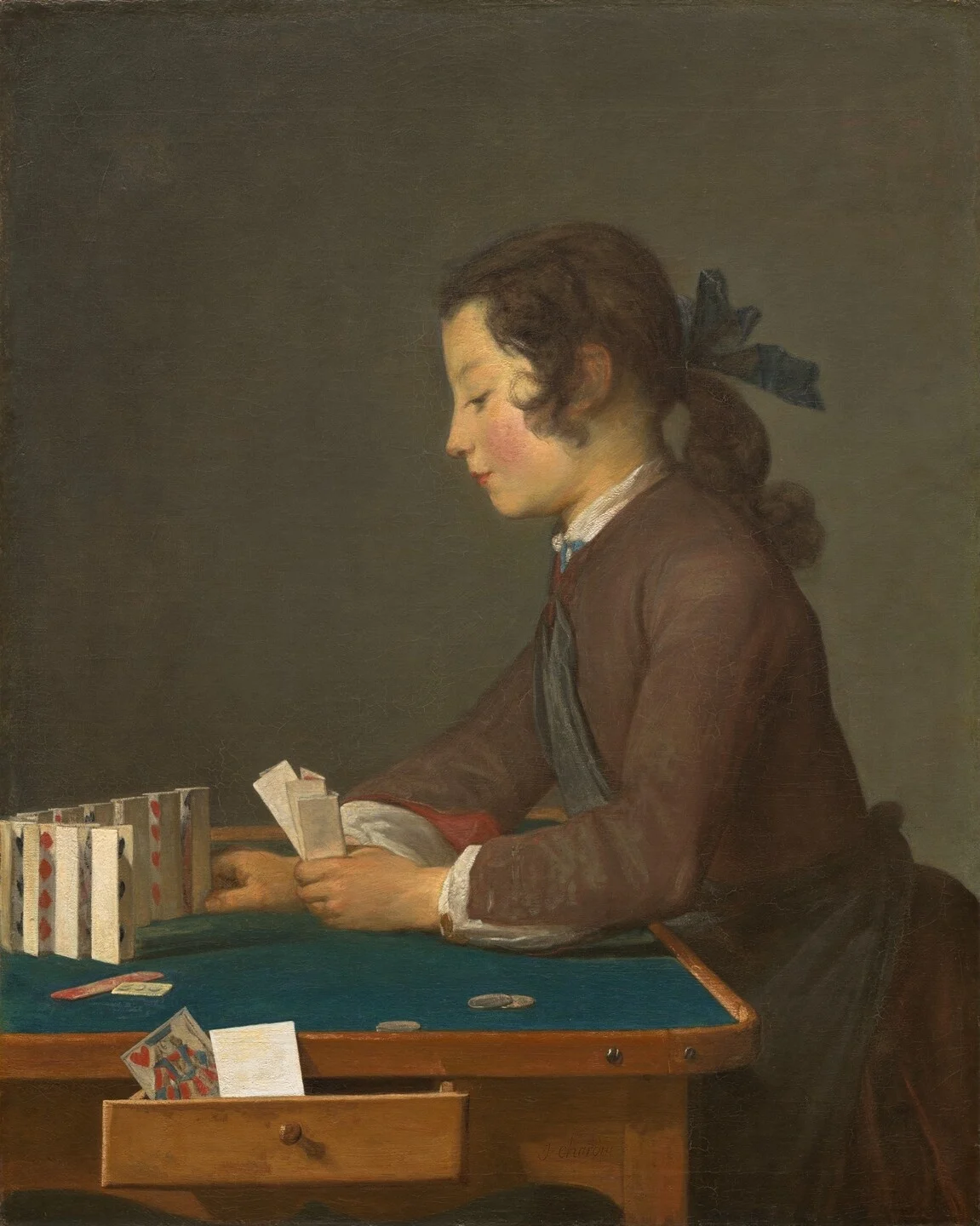
The House of Cards

Jean Siméon Chardin. Four versions of Chardin's card-building subject survive. This one was probably intended as a companion to Girl with a Shuttlecock.

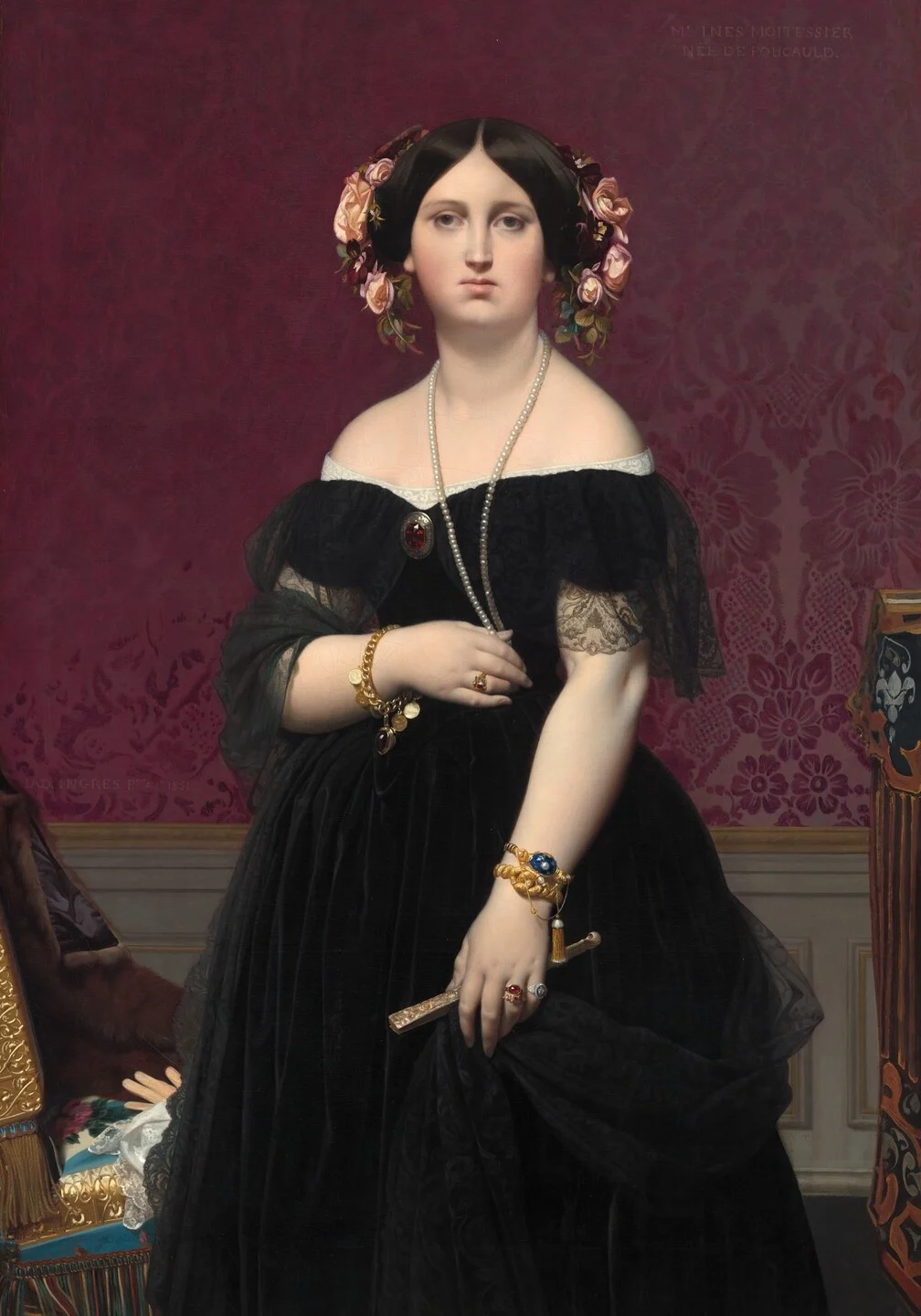
Madame Moitessier

Jean Auguste Dominique Ingres. Ingres initially declined to paint the financier's wife, then changed his mind after meeting her.

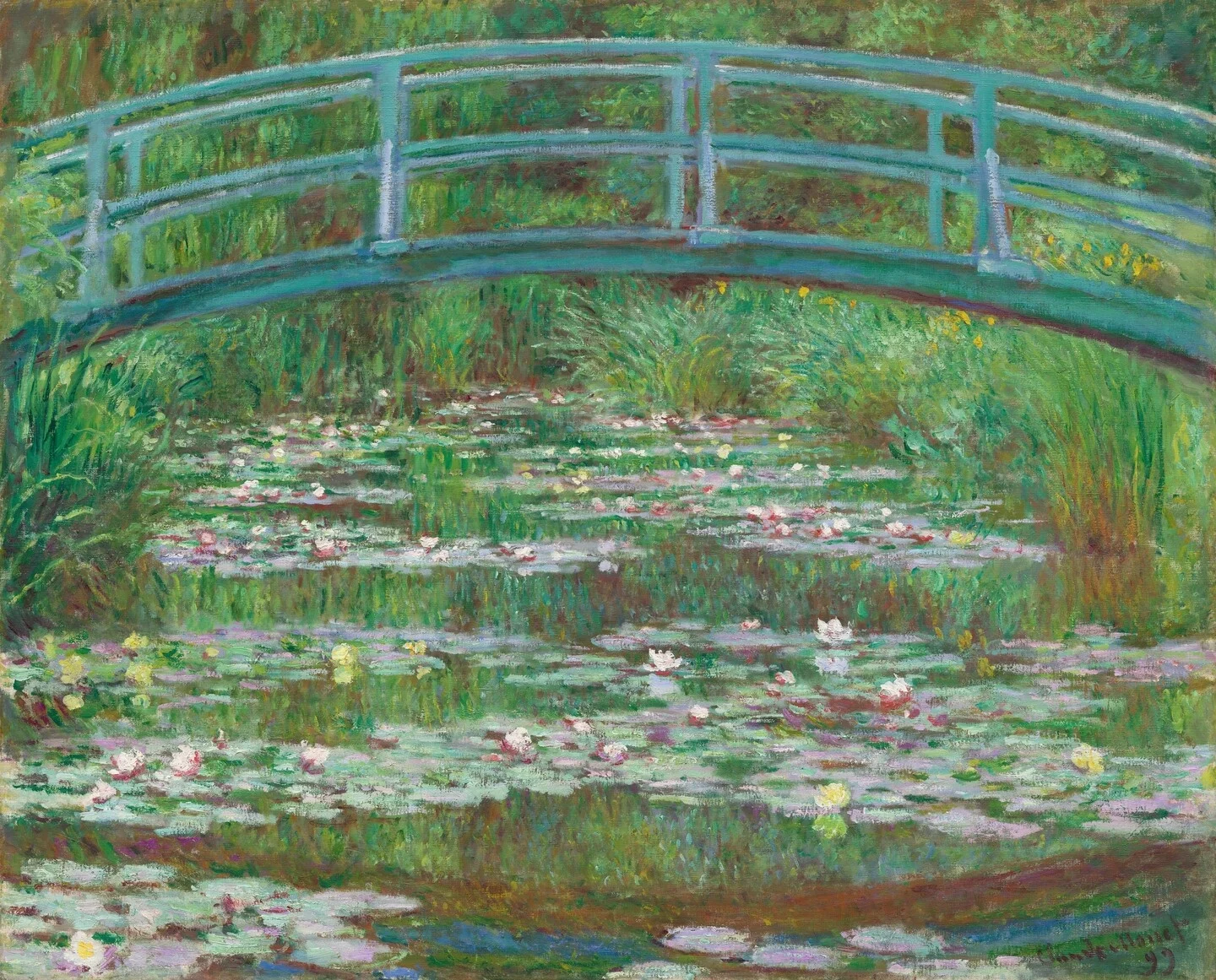
The Japanese Footbridge

Claude Monet. Monet designed the pond, planting, and bridge in his own water garden. In 1899 he painted twelve views from the same position.

The Railway

Édouard Manet. The woman faces the viewer while the child looks through the railing toward the railway. Their relationship is unestablished.

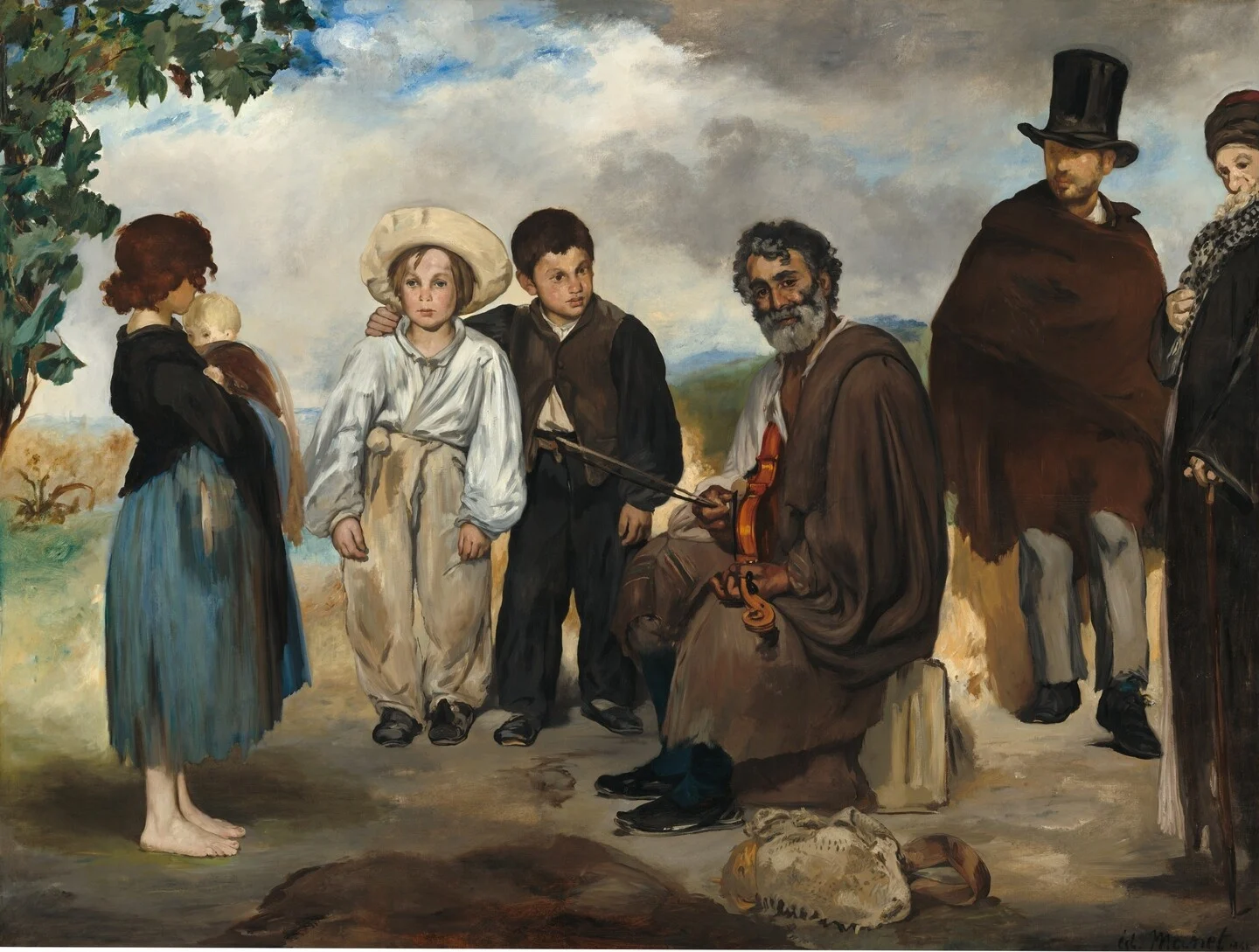
The Old Musician

Édouard Manet. Manet gave poor and displaced city dwellers the scale associated with major historical subjects. Paris's reconstruction changed neighborhoods and uprooted some inhabitants.

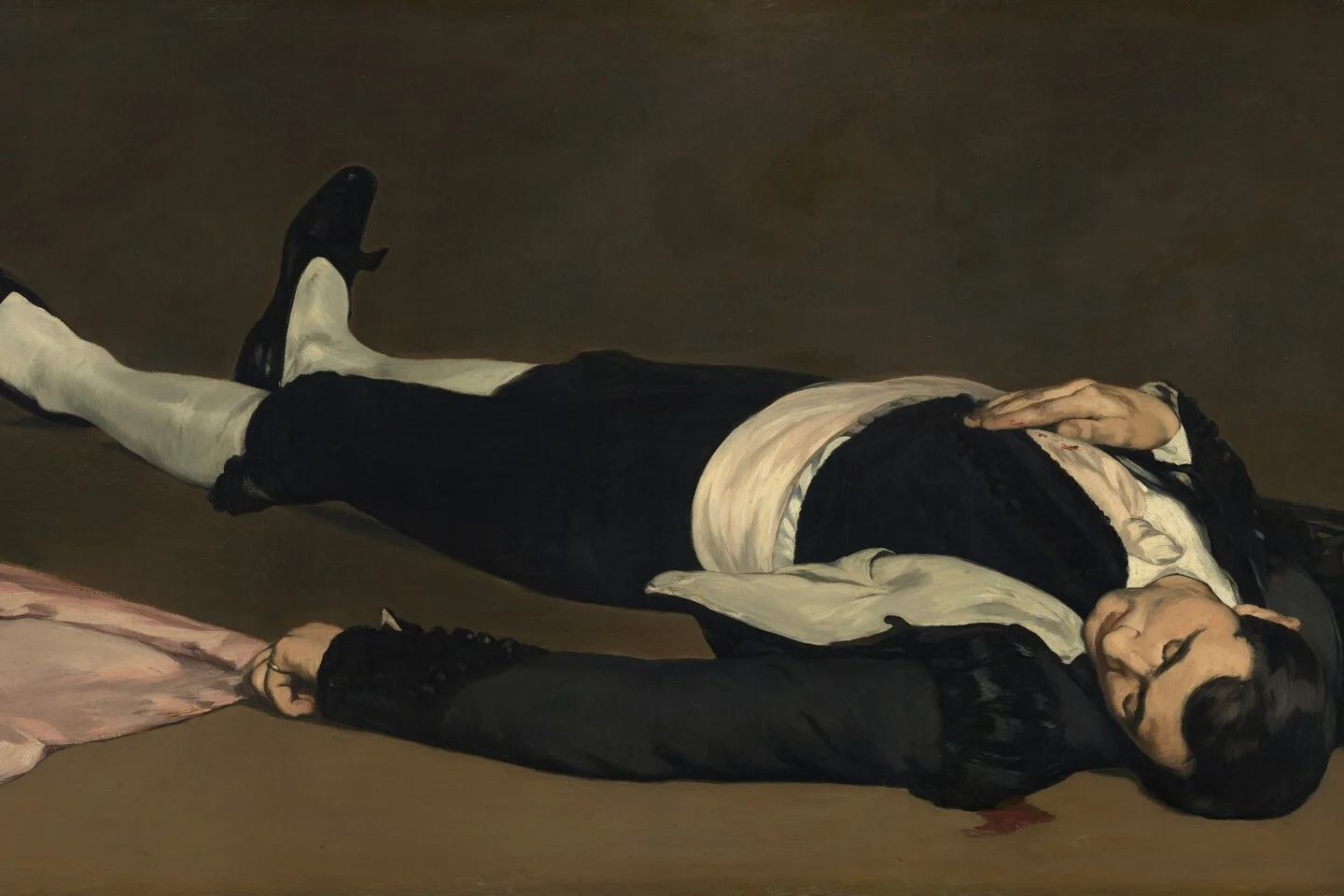
The Dead Toreador

Édouard Manet. The figure once belonged to Manet's larger Incident in a Bullfight, shown at the Salon of 1864.

The Artist's Sister at a Window

Berthe Morisot. Edma Pontillon, Morisot's sister, sits beside a window. The painting passed from the artist to Edma and remained in the family.

Fatata te Miti (By the Sea)

Paul Gauguin. Gauguin associated Tahiti with a search for life beyond French materialism and secular culture. His island scenes express that idealized vision.

Self-Portrait

Paul Gauguin. Gauguin painted this self-portrait on a cupboard door in a Le Pouldu inn. A halo, apples, and serpent combine signs of sanctity and temptation.

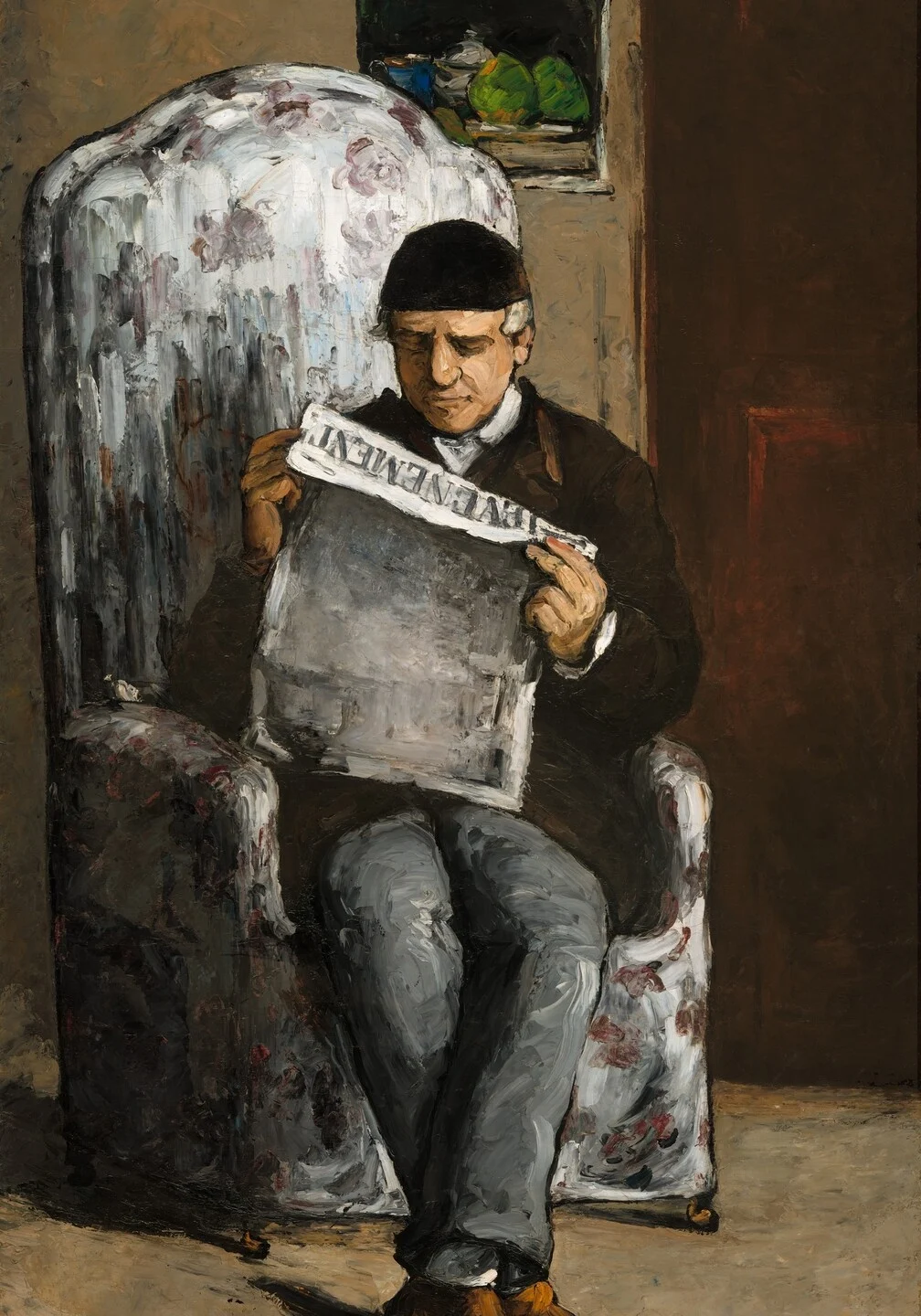
The Artist's Father, Reading "L'Événement"

Paul Cezanne. Cézanne's father expected him to follow the family's business career. The painter placed one of his own early still lifes above him, possibly asserting his chosen profession.

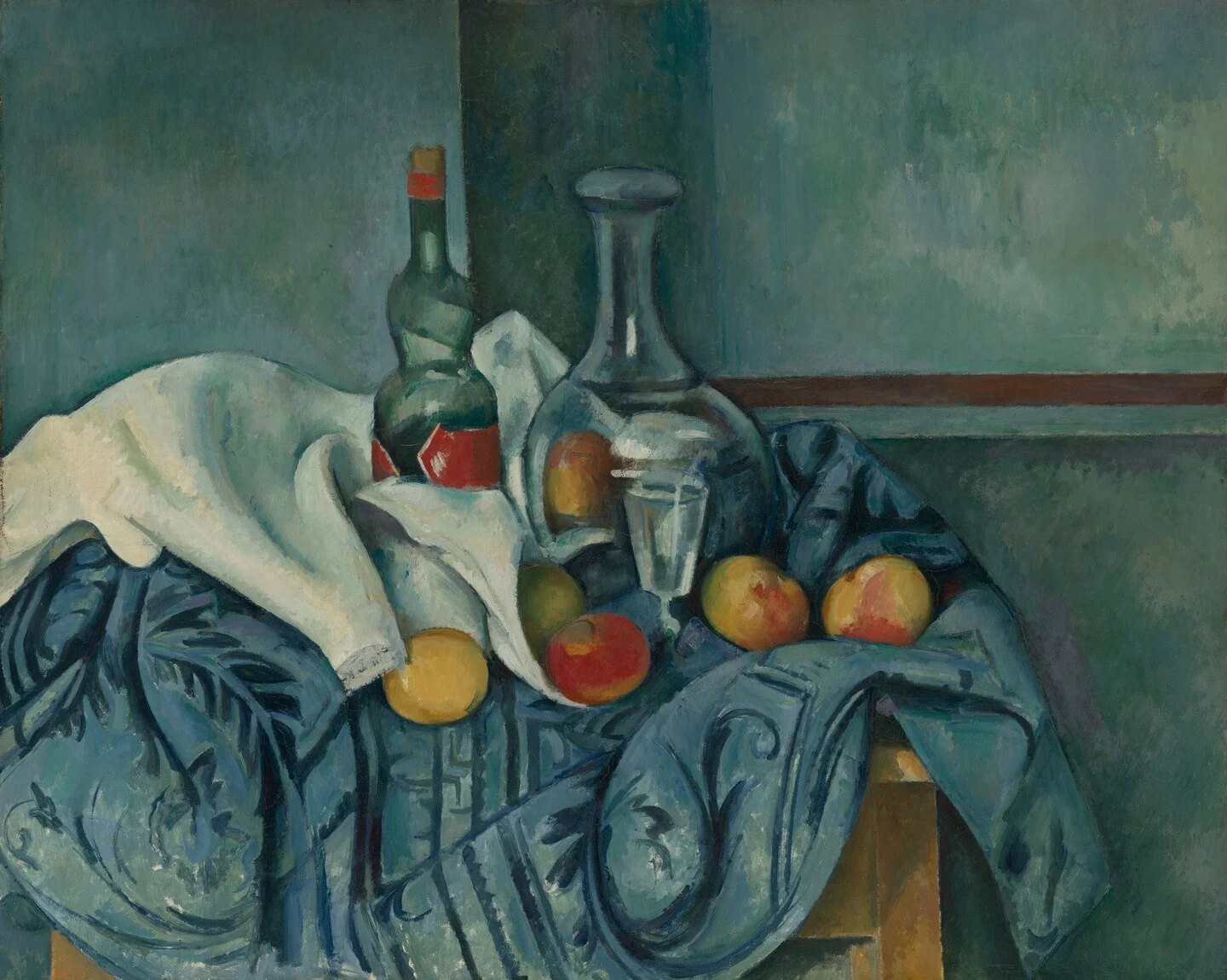
The Peppermint Bottle

Paul Cezanne. Cézanne returned to the same studio objects to study their relationships. He later included this very canvas within his Still Life with Plaster Cupid.

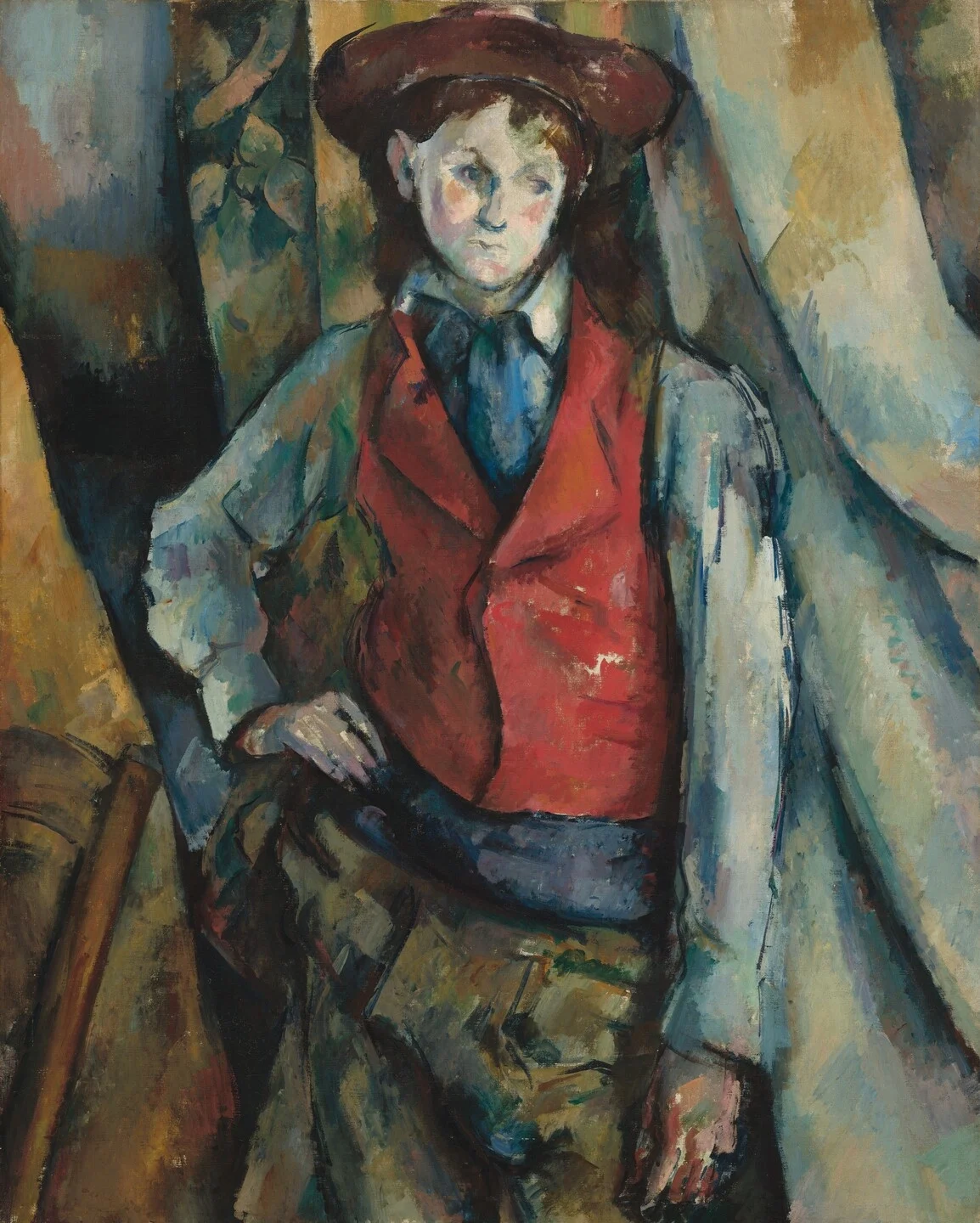
Boy in a Red Waistcoat

Paul Cezanne. The pose recalls sixteenth-century Italian aristocratic portraits. Cézanne simultaneously divides the face and setting into colored planes.

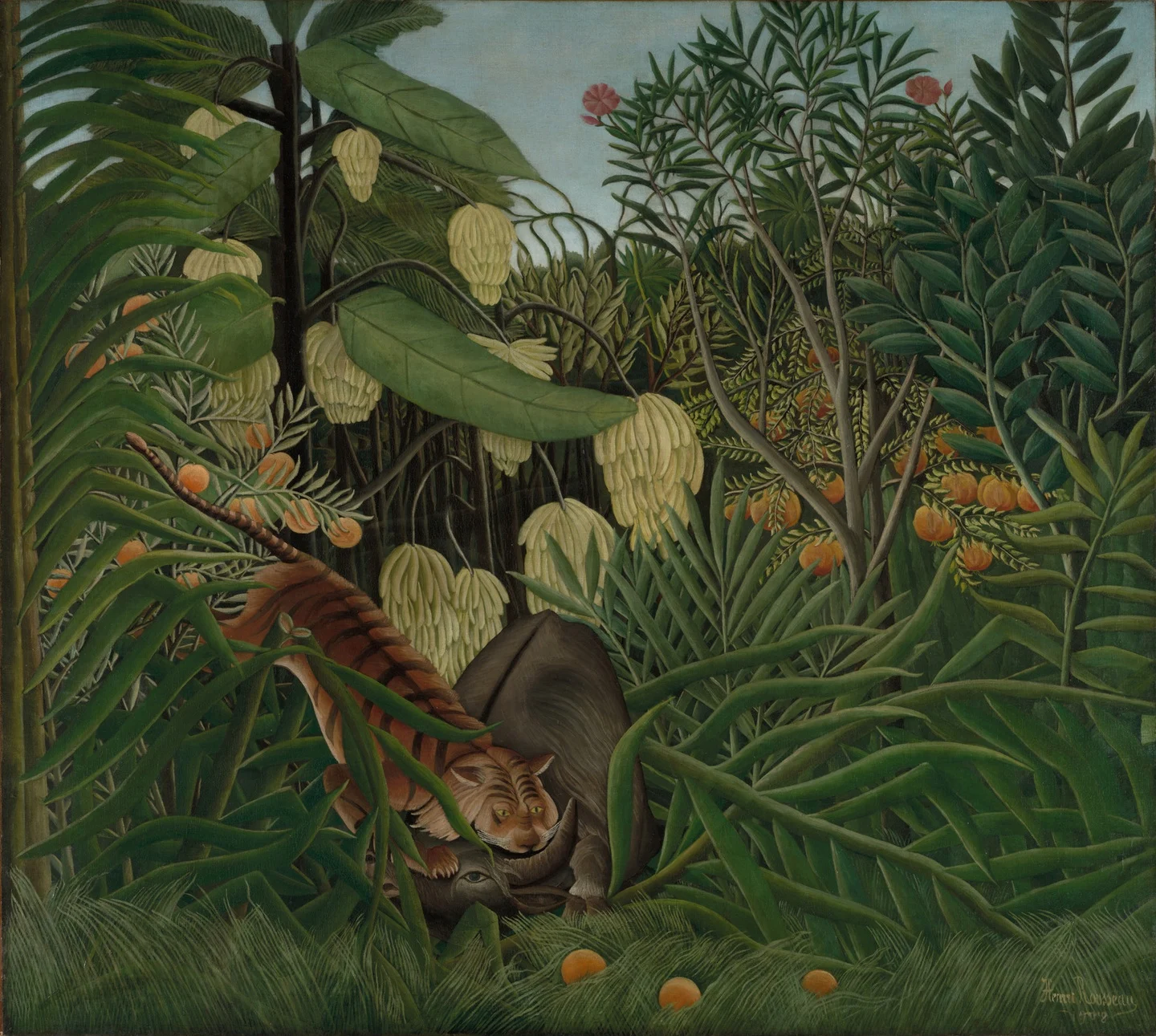
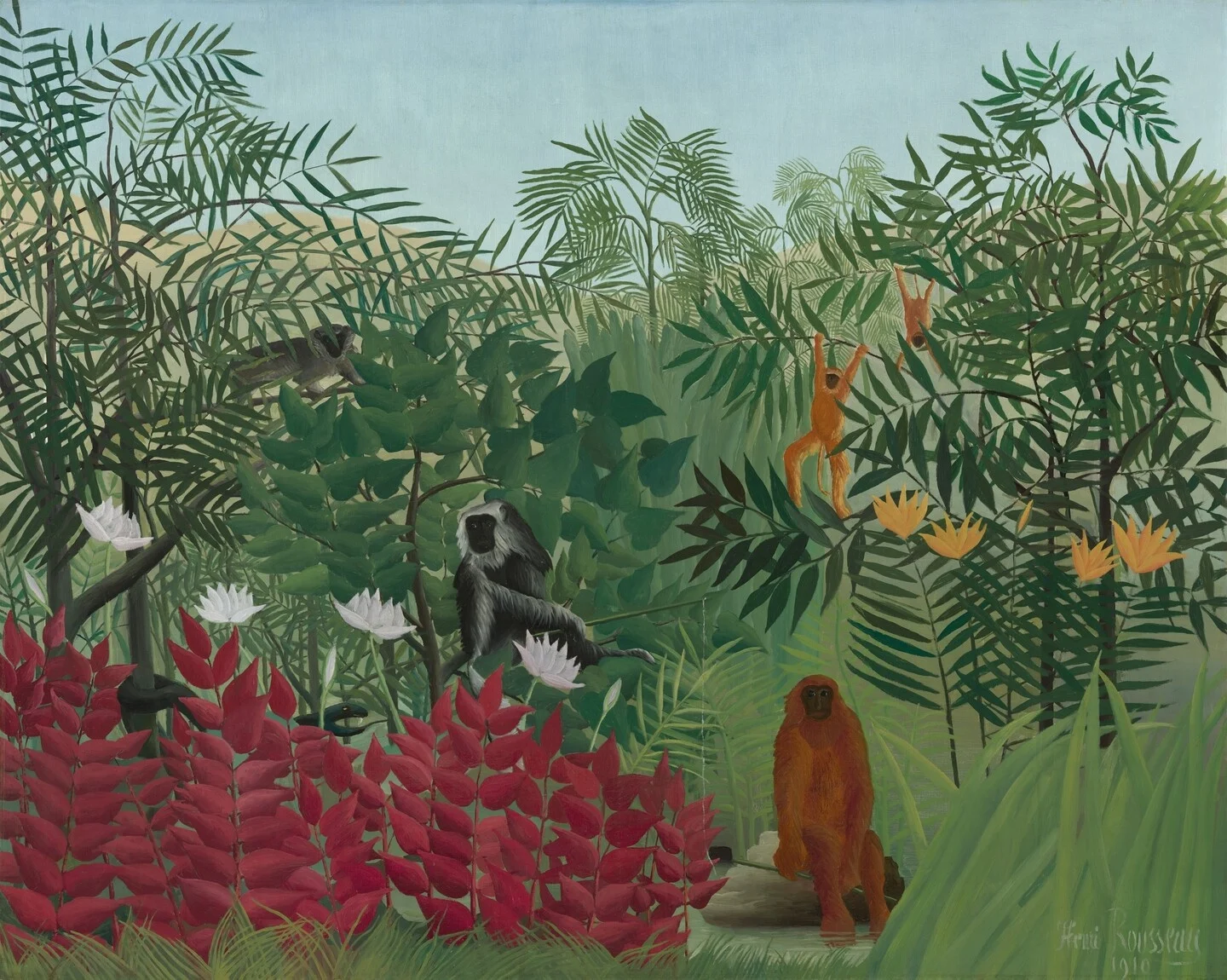
Tropical Forest with Monkeys

Henri Rousseau. Rousseau's tropics came from imagination, books, and Paris's botanical displays. The self-taught painter exhibited alongside the avant-garde, including the Fauves.

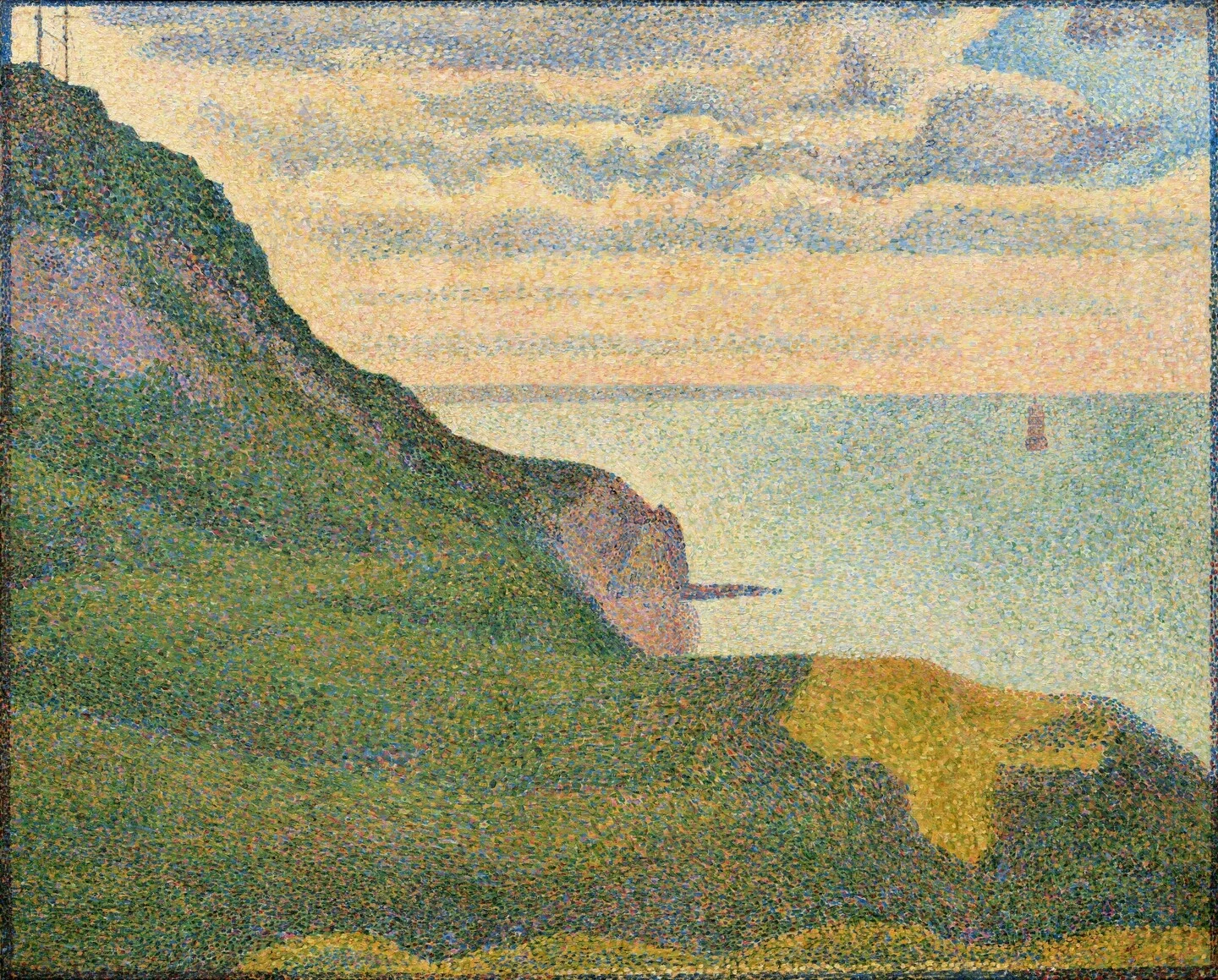
Seascape at Port-en-Bessin, Normandy

Georges Seurat. Seurat made six paintings during six weeks at Port-en-Bessin in 1888. Here he omitted a medieval tower and tourists on the cliff paths.

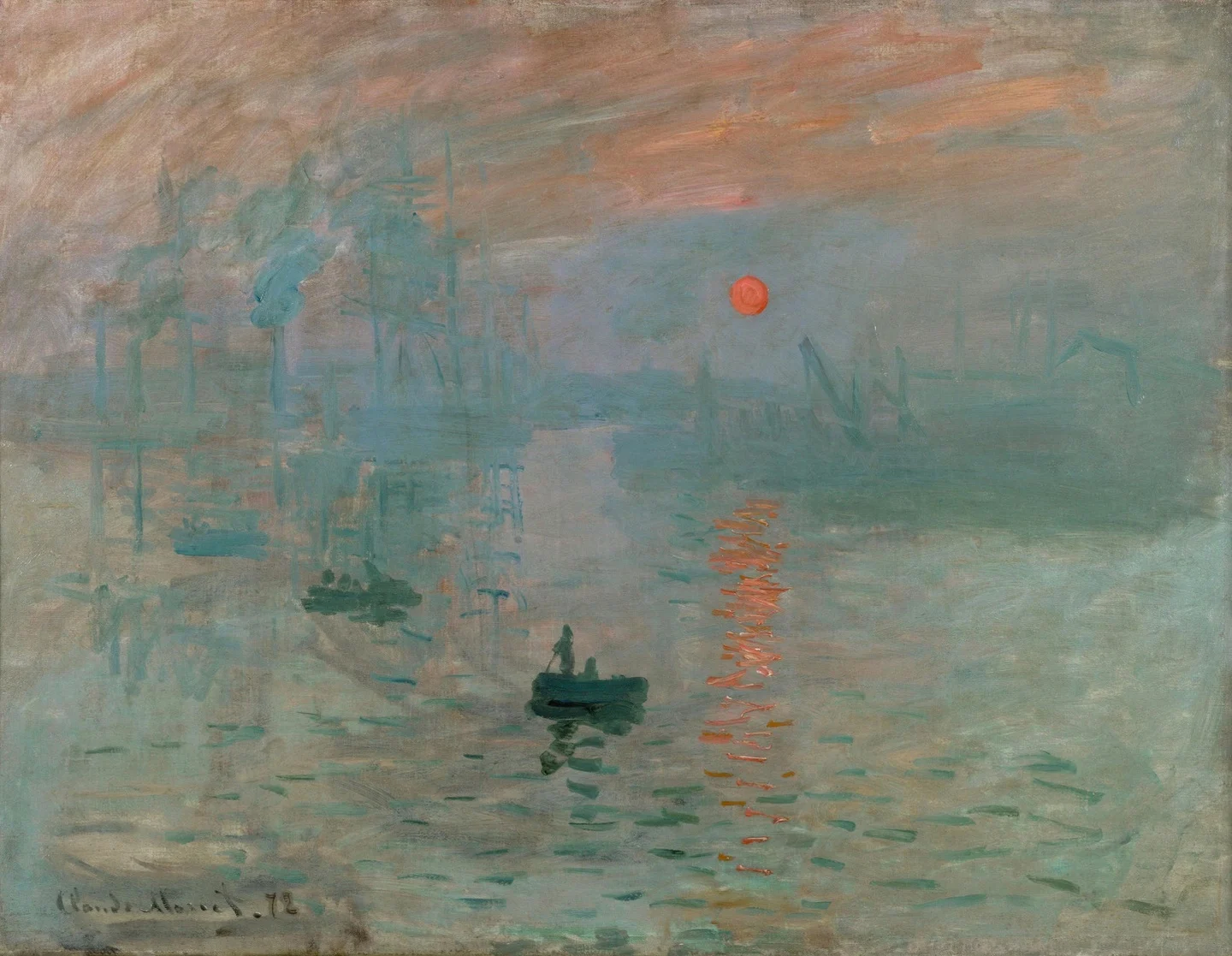
Impression, Sunrise

Claude Monet. In November 1872 Monet looked from a hotel window across the port of Le Havre. Before him lay the harbour, quays and structures of a major trading city.

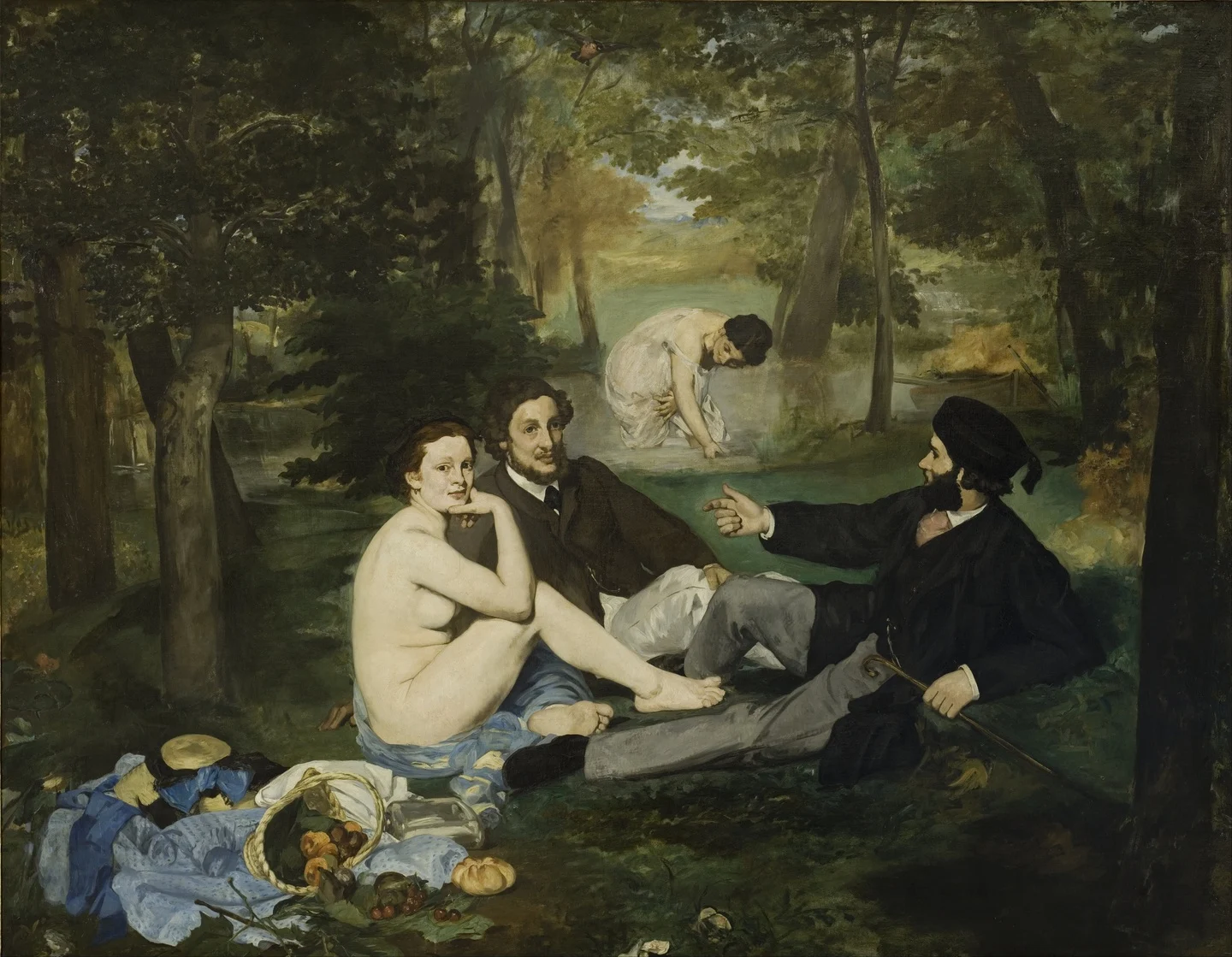
Luncheon on the Grass

Édouard Manet. In 1863 the Paris Salon rejected this large painting by Manet. It appeared at the Salon des Refusés under the title The Bath.

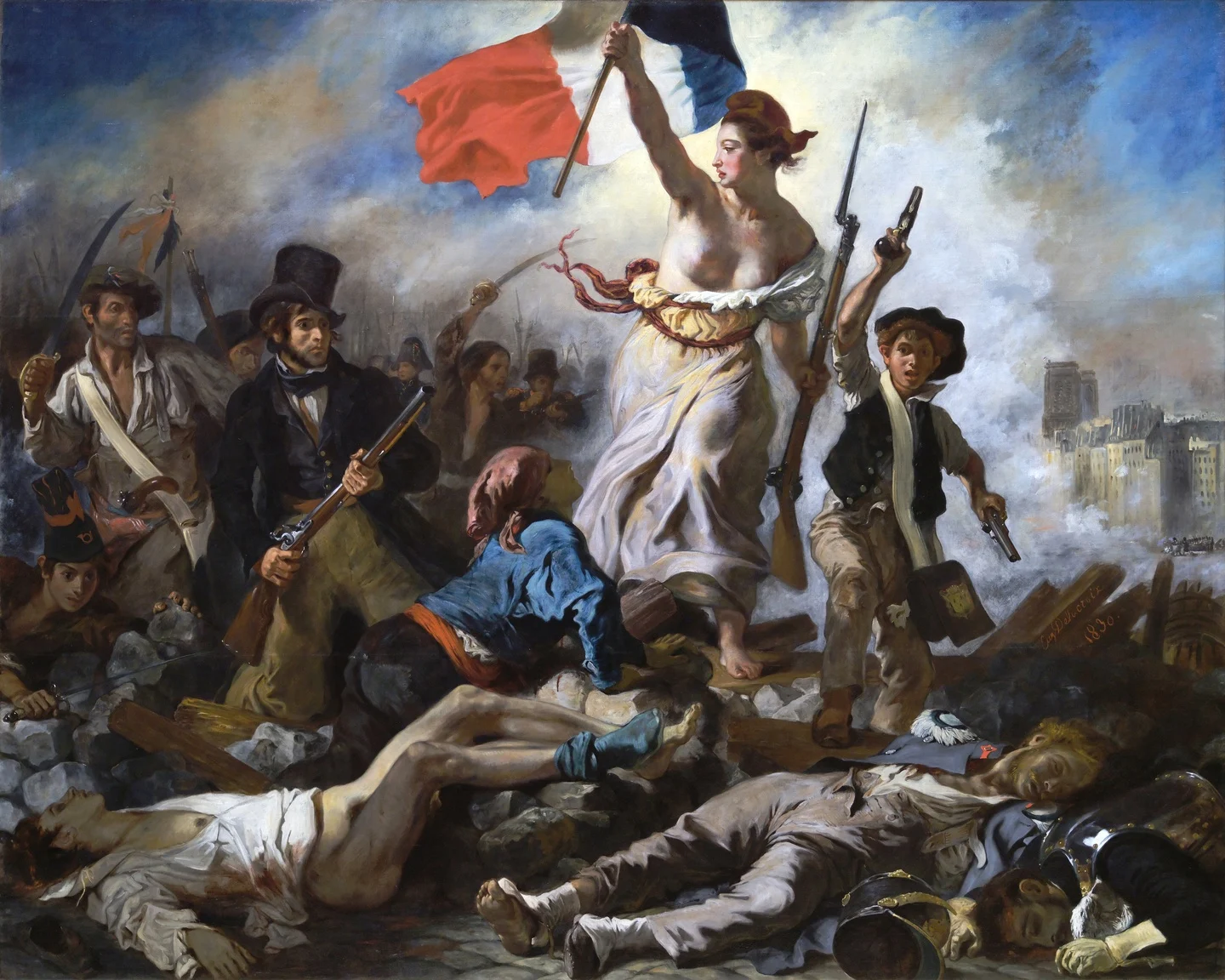
Liberty Leading the People

Eugène Delacroix. The Paris uprising of 27–29 July 1830 prompted Delacroix’s unusual turn to a recent event.

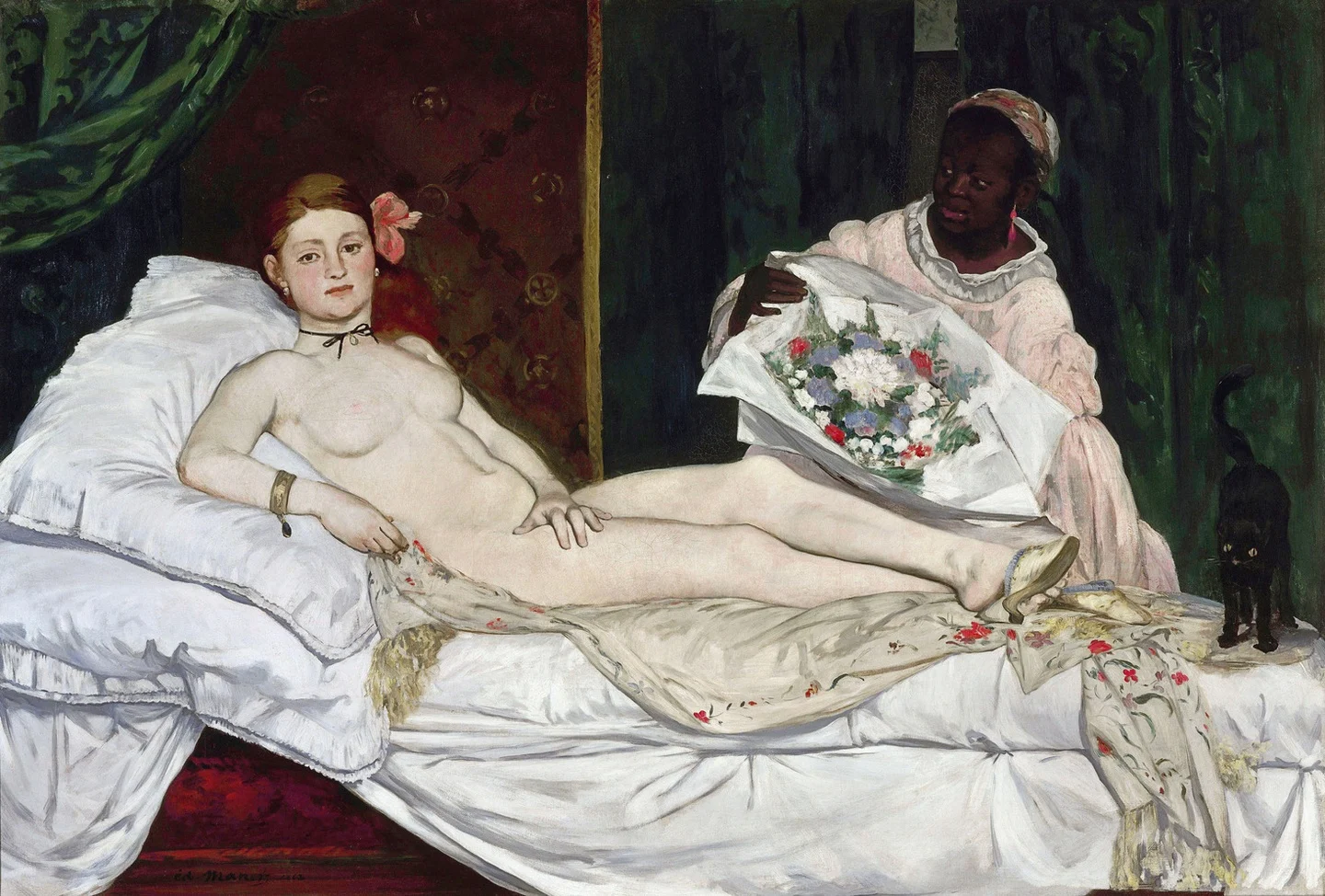
Olympia

Édouard Manet. Manet painted Olympia in 1863 and exhibited it at the Salon of 1865. The reclining pose refers to Titian’s Venus of Urbino, but contemporaries recognised a Parisian courtesan.

Dance at Le Moulin de la Galette

Pierre-Auguste Renoir. Renoir painted Dance at Le Moulin de la Galette in 1876 and exhibited it with the Impressionists the following year.

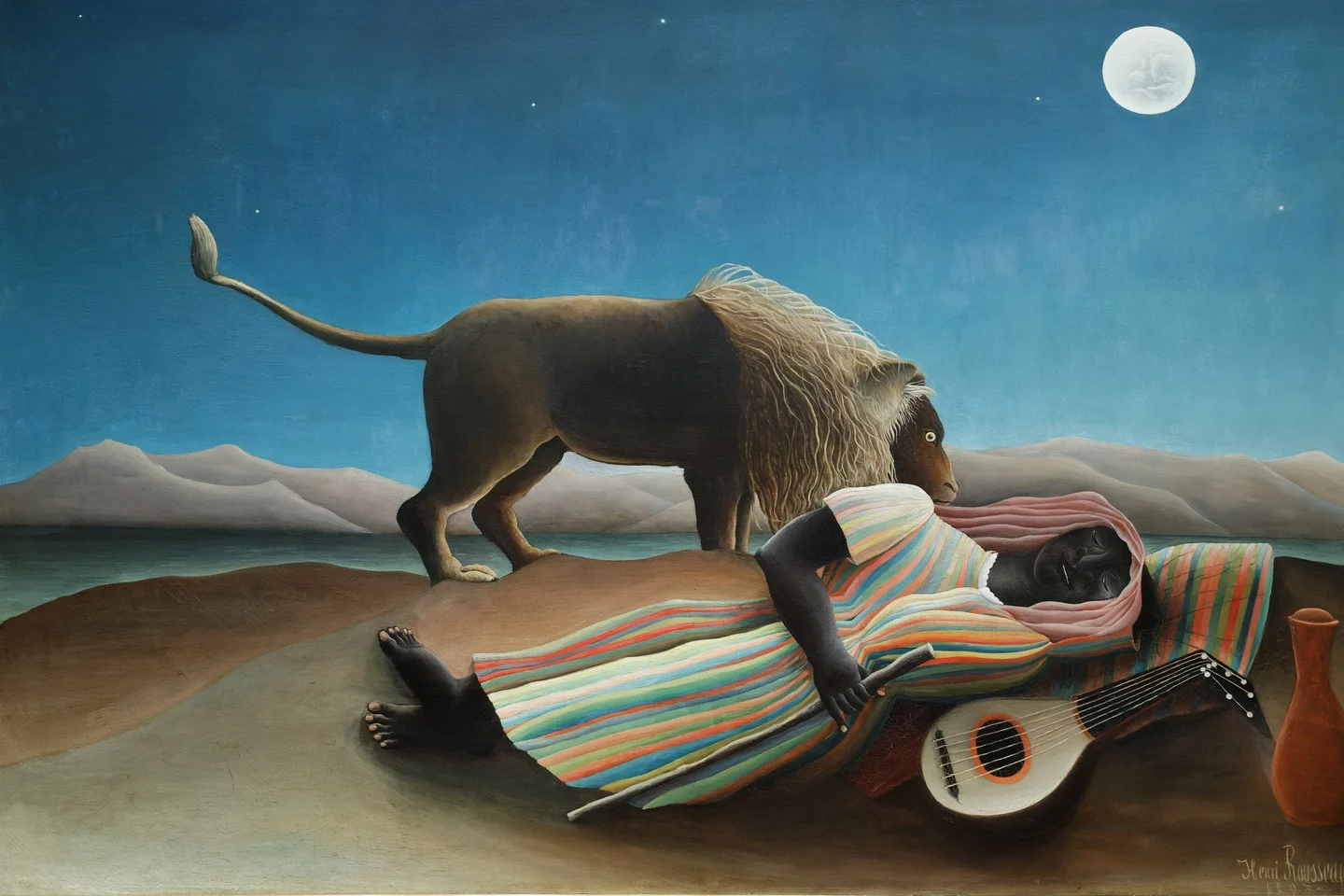
The Sleeping Gypsy

Henri Rousseau. A traveller sleeps beside a mandolin and a jar as a lion sniffs her hair. Rousseau exhibited the picture at the Salon des Indépendants in 1897.

Life Everywhere

Nikolai Yaroshenko. In 1888 Yaroshenko depicted people at the window of a prison railway car. A mother holds a child feeding pigeons.

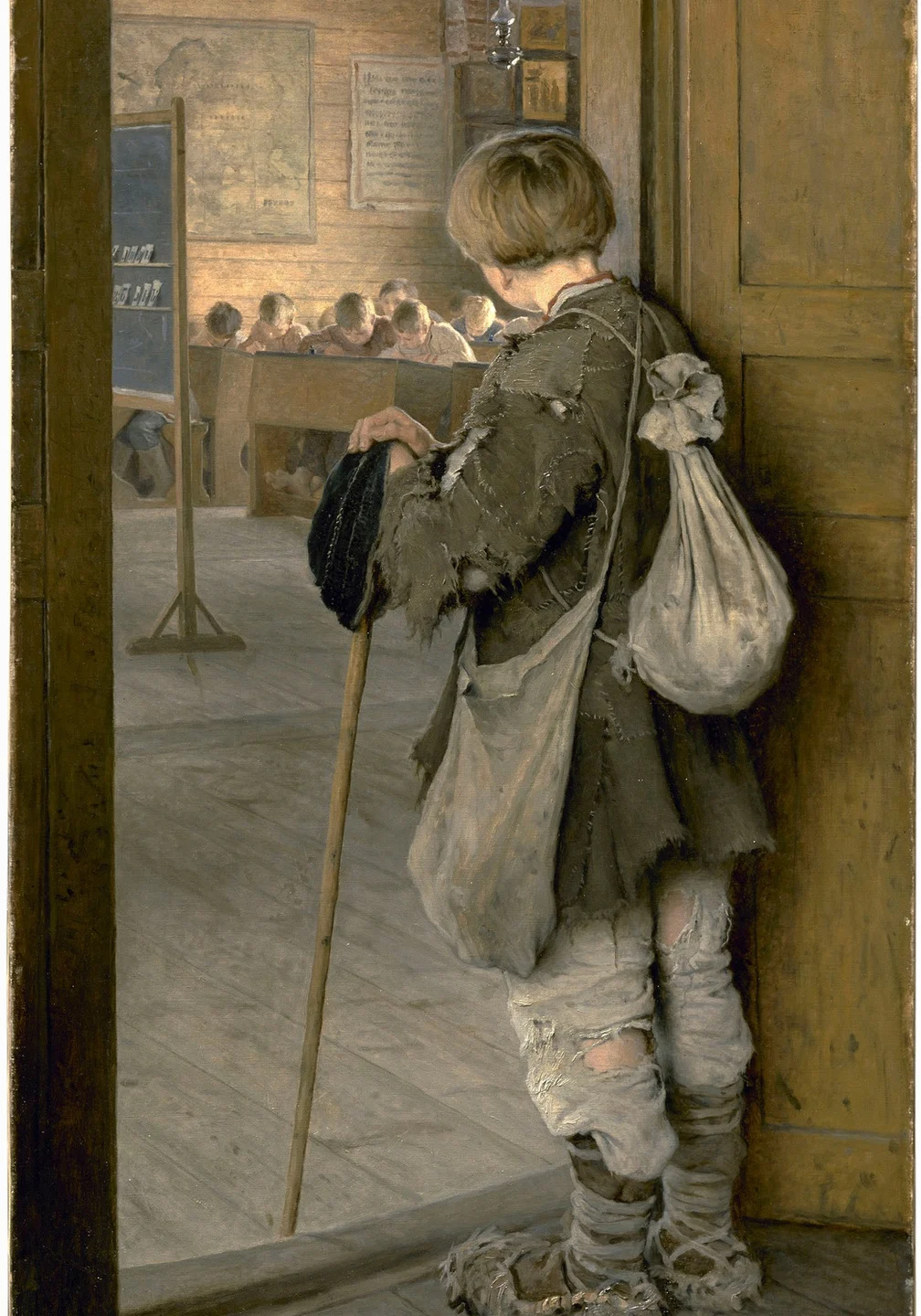
At the School Door

Nikolai Bogdanov-Belsky. Bogdanov-Belsky began his own education in a village school and later painted many peasant children.

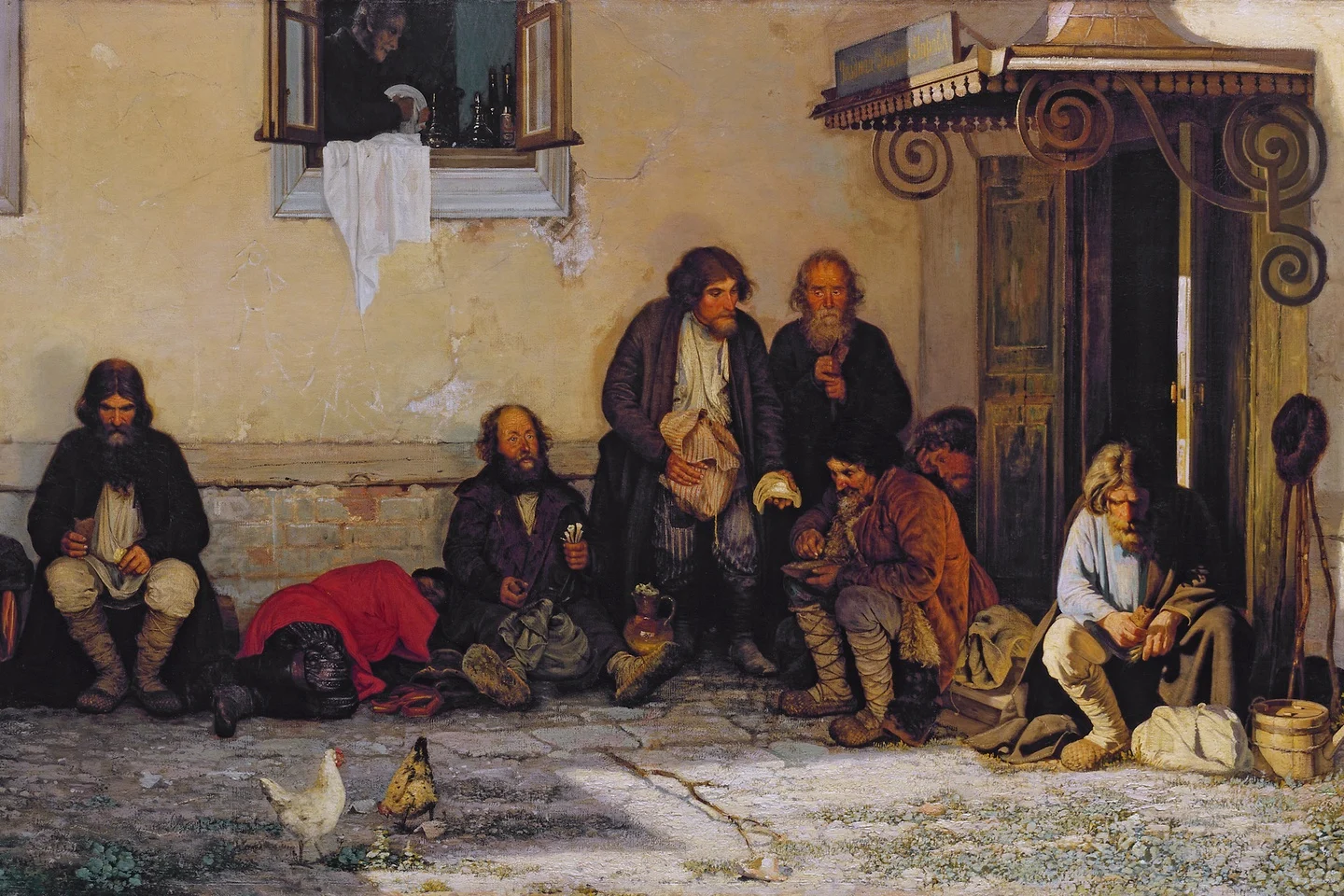
The Zemstvo Dines

Grigory Myasoedov. Zemstvos were established after the reform of 1864 to address local economic and educational affairs. Representatives of different social estates took part.

The Last Tavern at the City Gates

Vasily Perov. In 1868 Perov painted a winter road near the city gates. Sledges stand outside a tavern, with a woman waiting in one. She occupies very little space.